NAPLES, Fla. — A man has been arrested for illegally keeping two Whitetail deer, 15 birds and two banned bird traps in his home.
According to the Florida Fish and Wildlife Conservation Commission (FWC), officers responded to the home of a man identified as 30-year-old Ariam Diaz who was allegedly in illegal possession of multiple animals.
When officers arrived to the scene, Diaz told them that all of the animals in his home were his. Officers also found that Diaz was keeping Canadian geese without paperwork or proper caging, FWC said.
According to the report, the two deer were illegally transported across state lines from Ohio.
Over the last years the Iowa Legislature has automatically given hunters whatever they want. More seasons, longer seasons, use of silencers so they can shoot into private property without the resident knowing it, can have loaded and un-cased guns in vehicles so they can quickly shoot out the window, use of snowmobiles and ATVs, night vision equipment, a kill season on mourning doves rammed through at the last minute — just like this use of semi auto rifles to hunt deer and sent to the governor before the ink is dry, before there would be any public opposition to it. They’d legalize the use of helicopters if hunters had them. It’s not any “sport.” In true sport, both side are “equal” and “want” to have a contest. They legislate for the places where their money comes from, and…
The law was designed to get people’s attention and it appears to be working. Figures provided to FOX 13 News show a surge in court-ordered child support payments
SALT LAKE CITY —The law was designed to get people’s attention and it appears to be working.
Figures provided to FOX 13 News show a surge in court-ordered child support payments in the year since a law went into effect, blocking people from obtaining hunting and fishing licenses if they owe.
“This has been very successful. In the child support world, it’s very hard to move the needle on collections,” said Liesa Stockdale, the director of Utah’s Office of Recovery Services (a division of the Department of Health & Human Services) which is tasked with collecting child support.
Lumber companies and out of state hunters are DESTROYING our elk population and here’s how. According to lumber companies, they state that their goal is to replant after taking. So yes, the lumber companies are replanting and attempting to regrow the habitat that they took from. Though, they are taking new patches of trees every day before allowing the new trees to fully regrow. For a pine tree to provide cover and habitat for all of our animals, it would take more than seven to 10 years. Only then would it be even large enough to provide shelter and cover for animals. The other problem with this is they are taking a large amount of trees from our location, Unit 4 Cataldo.
The beautiful mountains of North Idaho (unit 4) are being stripped of its green forest which is affecting our elk population immensely…
Corinne Holmes concentrates as she loads a shotgun before a spring turkey hunt during a camp for new hunters on April 22 near Colville. (Tyler Tjomsland/The Spokesman-Review)
“Approval of legal, regulated hunting has decreased substantially, going from 88% in 2014 to 75% in 2022. Likewise, support for hunting is down for all given reasons or scenarios,” states the report conducted by a Virginia-based survey research company focused on outdoor recreation and natural resources. “However, this is not accompanied by notable increases in opposition; rather, higher percentages of residents are giving neutral or ‘do not know’ responses. In fact, some questions show decreases in both support and opposition.”
The report looked at a number of other issues including Washingtonian’s attitudes toward predator management and views on human-wildlife conflict.
Surveyors received 965 completed surveys from Washingtonian 18 years or older. The sampling error is 3.5% and the surveys were conducted via telephone and online. The same company has conducted similar surveys for Washington in 2002, 2008 and 2014.
Notable findings included:
Two-thirds of Washington residents (66%) are satisfied with the variety of options to enjoy fish and wildlife resources throughout the state; 37% are very satisfied. This compares to only 9% who are dissatisfied.
A majority of residents participated in hiking (65% did so) and wildlife viewing (56%) in Washington in the past two years, and 4% of residents hunted in Washington in the past 12 months.
Just over two-thirds of residents (68%) participated in any outdoor recreation activities on public land in Washington over the past two years, compared to 29% who did not.
In an even split, 47% of residents participated in outdoor recreation on private property in Washington in the past two years and 47% did not.
Over a quarter of residents (28%) are a member of or have donated to an organization that promotes wildlife conservation or habitat enhancement.
The survey also looked at attitudes toward predator management finding that:
The vast majority of residents (80%) support maintaining sustainable predator populations in Washington’s ecosystem, with 46% being strong support. Only 7% oppose.
Residents are divided on killing predators to reduce the loss of domestic animals: 42% support and 36% oppose.
A majority of residents (58%) supports killing predators to protect threatened or endangered species, whereas 18% oppose.
Only 19% of residents support killing black bears to protect private timberlands, compared to 62% who oppose
On July 15, the WDFW Commission approved more liberalized cougar hunting rules in the Blue Mountains in hopes of giving struggling elk populations more breathing room. During the same meeting, it voted to put off considering a spring black bear hunt until after rewriting the policy governing that hunt.
Finally, the survey asked respondents about human-wildlife conflict, finding that 19% of residents had two or more negative interactions with wild animals or birds within the past two years. The most common species with which humans came into conflict? Raccoons, deer, coyotes and rodents.
WDFW staff are still “analyzing these results, and we expect to incorporate findings into both internal and external communications in the weeks and months ahead,” WDFW spokesman Chase Gunnell said in a statement.
“This will also include consideration of a study on Washington hunters’ attitudes that was conducted in tandem with this survey of the broader public, and which we anticipate will be published soon,” he said.
Gunnell welcomed the news that a majority of Washingtonians are “satisfied with the options to enjoy fish and wildlife resources in our state, with more than a third of those very satisfied and only 9 percent dissatisfied.”
“We’re also glad to see findings showing strong participation in outdoor recreation, and that three -fourths of Washingtonians approve of legal, regulated hunting in general; with 44% strongly approving,” he said.
The fact that more people don’t care one way or the other about hunting should rally hunters and hunting organizations, said Marie Neumiller, the executive director of the Spokane-based Inland Northwest Wildlife Council.
“That tells me the hunting community needs to do more outreach,” she said.
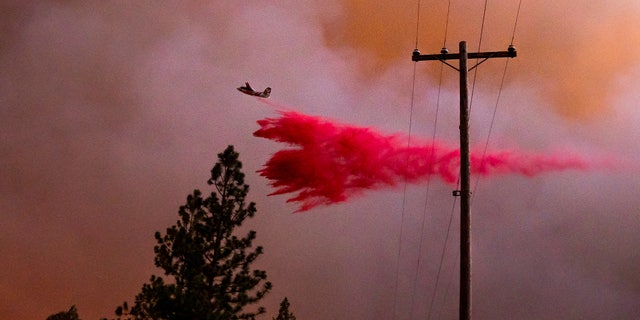
A fast-moving wildfire nearYosemite National Parkexploded in size Saturday and prompted evacuations even as firefighters made progress against an earlier blaze that burned to the edge of a grove of giant sequoias.
The Oak Fire, which began Friday afternoon southwest of the park near Midpines in Mariposa County, grew to 10.2 square miles (26.5 square kilometers) by Saturday morning, according to the California Department of Forestry and Fire Protection, or Cal Fire.
The International Union for Conservation of Nature has officially verified that the Chinese paddlefish and wild Yangtze sturgeon are extinct on their list of threatened species.
The Chinese paddlefish, or Psephurus gladius, was one of the largest freshwater fish in the world, weighing up to 660 pounds and measuring up to 10 feet in length. They were gray, had a white underbelly and small, round eyes. These fish were endemic to the freshwater wetlands in the Yangtze and Yellow River basins. They migrated upstream to their estuary in the East China Sea to spawn during mid-March to early April.
The Chinese paddlefish had been protected since 1989. Because the iconic fish species was economically valued for their rarity, they were fished for human consumption and often as bycatch.
In 1996, the International Union for Conservation of Nature declared…
It’s not too late to avert the climate crisis from becoming even more deadly – but the window is closing
‘High temperature records are being obliterated across western Europe. Raging wildfires are displacing thousands of people.’Photograph: Delcia Lopez/AP
High temperature records are being obliterated across western Europe, some of which had been previously set during the heatwave in 2003 that is estimated tohave left tens of thousands dead. Raging wildfires aredisplacing thousands of people, one of the many compounding impacts of the climate crisis. This heatwave is another reminder that we have already breached unsafe levels of global heating.
As our planet warms, these lethal heatwaves will becomemore frequent and more intense. In fact, we may look back on these years as some of the coolest, compared with what will come if we do not…
FILE – Cattle feed at a feed lot near Dodge City, Kan., March 9, 2007. Thousands of cattle in feedlots in southwestern Kansas have died of heat stress amid soaring temperatures coupled with high humidity and little wind in recent days, industry officials said Thursday, June, 16, 2022. (AP Photo/Orlin Wagner, File)
Dangerous heat and crushing drought conditions in southern U.S. states are unlikely to subside anytime soon, federal experts say, with many currently blighted regions expected to face a “whiplash” in extreme weather over the coming months.
That means period of rain may bring little relief, as summer heat squashes crop yields and forces farmers to sell off cattle, while also boosting wildfires and creating life-threatening conditions for outdoor work.
The heat wave across the middle of the country “will split next week and then gradually fade,” Greg Carbin, head of Forecast Operations at the National Weather Service told The Hill.
But don’t expect that to last. Within a couple of weeks, conditions will return to what they are now, “and you bring the heat back in with a vengeance to parts of the central U.S.,” Carbin said.
That tendency of summer heat waves and droughts to return — rather than breaking apart in a new wave of good weather — is “one of the big challenges facing all of us in the weather and climate community,” Victor Murphy, who runs the Climate Services program at the National Weather Service told reporters on Thursday.
“You can see an amazing amount of weather whiplash — from one extreme to the other, then right back to the first extreme again,” Murphy said.
He was pointing at a drought map of Oklahoma, where a nearly two-month spell of no rain had appeared to break in a rainy May and June.
The persistent high-summer heat waves is the result of the “layering” of unusual climate conditions atop normal summer heat waves, Carbin said.
Those abnormal conditions — which helped drive the unseasonable spring heat waves across the country — included the persistent drought, which cause land and air to heat up more quickly.
It also included the atmospheric phenomena known as heat domes, in which a dense mass of warm air becomes trapped over a broad area — creating in effect an enormous greenhouse.
Both of these phenomena create feedback loops that make heat waves and droughts more likely to return, as dry soil, warm air and summer temperatures bid each other up like contenders at an auction.
It is difficult to link any particular phenomenon to climate change. Summer heat waves are, in themselves, hardly unusual.
But fossil fuel emissions are helping “load the dice,” Carbin said.
Continuing combustion of coal, oil and gas is creating a world in which the current spate of anomalous, record-breaking temperatures are ever more likely, he said.
These conditions are already taking a toll across the Southern Plains.
In Texas, which is experiencing its hottest July on record, electricity demand has broken records 11 times since June as residents and businesses try to stay cool, Houston Public Media reported.
Ninety-four percent of the state is in drought, forcing some ranchers to rapidly sell off their herds. Cattle sales are at their highest level since the drought of 2008, agricultural economist Walter Kunisch of Hilltop Securities told The Hill.
In one troubling statistic, the number of breeding female cattle is at its lowest level since 2006 — a sign that operations across the South and West are “selling more animals than they’re breeding,” Kunsich added.
One slight regional bright spot is New Mexico, where the summer monsoon season “came not a day too soon,” Murphy said.
The summer rains offered some relief to the state, which stands at the extreme eastern edge of the Western zone gripped by a 20-year mega drought.
But the broader situation there remains grim. Destructive fires have already burned almost four times more land this year than the state average.
And the crucial Elephant Butte reservoir — a water supply it shares with Texas — was at just 5.2 percent capacity as of Thursday.
With heat and lack of water have come a heightened risk of fire, Nick Nosler of the Interagency Fire Center at the Department of Interior told reporters.






 Exposing the Big Game