Published 7:26, 29 August 2022 at BST | Last updated 7:26, 29 August 2022 at BSThttps://www.unilad.com/technology/teen-invents-device-to-track-elephant-poachers-in-real-time-20220829
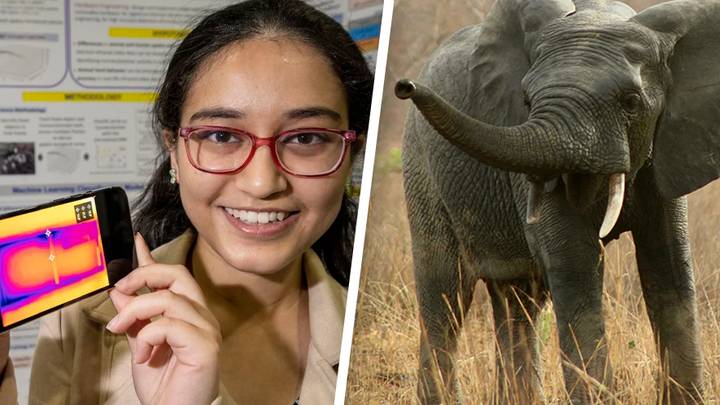
A 17-year-oldhas invented alow-costway to trackelephant poachersin real time.
High school studentAnikaPurihas created amachine-learning-drivenmodel observing the movement patterns of humans and elephants, according toBusinessNews.
And to think, when I was 17, I thought ludicrous was spelt like the rapper, but it’s good to know the future is in the hands of sometech-savvyteens.
While drones are mostly used to detectelephant poachers,Anikasays these devices can be inaccurate, which is what prompted her to inventElSa(short for elephant saviour).
According toAnika,ElSais four times more effective than drones as the technology can analyse movement patterns in thermal infrared videos of humans and elephants.
“I realised that we could use this disparity between these two movement patterns in order to actually increase the detection accuracy of potential poachers,” the New York native said.
Winamac, Ind. —Indiana Conservation Officers are investigating a hunting incident that occurred Thursday on private property in Pulaski County.
Just after 9 a.m., Dave Berry, 69, of Roachdale was dove hunting along a Sandy Prairie Hunt Club field when he was struck by a gunshot.
Initial investigation has revealed that Berry began searching for a downed dove in an uncut cornfield when he walked in the direction of another group of hunters.
At the same time, a juvenile hunter attempted to shoot at a low-flying dove striking Berry approximately 35 yards away with pellets from the 20-gauge shotgun.
According to the Indiana DNR, Berry was transported to Pulaski Memorial Hospital for treatment of non-life-threatening injuries to his arms, legs, and abdomen.
The incident remains under investigation and no further…
TWRA Sergeant Joe McSpadden says they received a call from the Hamilton County 911 for a hunting accident around 3:50 p.m.
“The details were that individuals have been injured while dove hunting and had been shot by another individual who was attempting to take a dove in the field,” says TWRA Sergeant McSpadden.
September 1st is the opening day for dove hunting season. So, Sergeant McSpadden says there are a lot of people out in the woods to dove hunt.
Ed Frampton is located right in the area where accident occurred.
For years, the 17-year-old whale gained the love of tourists and whale watchers in the state. She became the most photographed and most beloved, according to the Bay Area News Group.
On Sunday, Aug. 28, her nearly50-foot body was foundwashed up on California’s Manhattan Beach, SF Gate reported.
Fran died after she wasstruck by a ship, according to the online database Happy Whale. Her skull was detached from her spine, SF Gate reported.
“Ship strikes are tragic,” Ted Cheeseman, founder of Happy Whale, told SF Gate. “This is the most beautiful animal in the world, being killed literally as road kill.”
Fran was born in 2005 and was the daughter of Big Fin. She…
ALBANY, NY – New York State Department of Environmental Conservation (DEC) Commissioner Basil Seggos today reminded hunters that September marks the beginning of several hunting seasons in New York State.
Hunting seasons for squirrel and Canada goose begin Sept. 1 in upstate New York, and the early bear and antlerless deer seasons begin Sept. 10 in select wildlife management units (WMUs).
“Early hunting seasons are a great opportunity to mentor and introduce new hunters to hunting,” Commissioner Seggos said. “Early bear, antlerless deer, and September goose seasons are all designed to reduce or stabilize wildlife populations in particular areas. By participating in these seasons, hunters help manage wildlife populations toward socially and ecologically desirable levels while enjoying time outdoors with family and friends.”
Just after 6am, a fleet of 11 fishing boats left Taiji harbour on Japan’s southern Pacific coast. Within an hour, the boats were lined up in a formation, encircling a pod of 18 Risso’s dolphins and forcing them into a cove. Nets were set to trap the dolphins, and soon after, seven dolphin trainers from the Taiji Whale Museum arrived.
One by one, the divers caught the dolphins and took them under grey tarps that were meant to shield their work from the scrutiny of outside observers. Under the tarps, the dolphin trainers examined the sex and size of the dolphins, estimated their age and selected two for sale to aquariums — appearance and suitability for training are usually key factors. They were placed on stretchers and taken to sea pens set in a nearby bay.
Just an hour earlier, these dolphins had been swimming freely in the ocean with their family. Now, they were facing a life in a small concrete pool, performing tricks to entertain people who rarely think about how the dolphins ended up there.
The fate of the 16 unchosen dolphins was even more cruel. Hunters struck them with a sharp metal spike into their necks just behind the blowholes, making them suffocate in their own blood, turning the ocean water around them red. Their dead bodies were dragged into Taiji fishing port, soon to become meat products.
That was on December 2, 2021. In a matter of a few hours, an entire family of dolphins was destroyed as part of what some local fishermen and Japanese politicians call a “tradition”.
Inconvenient truth
On September 1, a new season of cruelty will begin. The small town of Taiji made global headlines after the 2010 Academy Award-winning documentary film, The Cove, highlighted Japan’s little-known dolphin hunting practice. While the film was highly acclaimed worldwide, it received a backlash in Japan as conservatives called it an attack on the country’s culture.
More than a decade has passed and the world has changed. Climate change is considered humanity’s biggest challenge. Governments and corporations around the world are working towards sustainability goals, including wildlife conservation. Sadly, in Japan, dolphin hunts continue as they did earlier, while the world’s attention has faded away.
During the six-month hunting season each year, I’m confronted with a truth that’s inconvenient for many people considering the enormous popularity of dolphins at aquariums. Dolphins form strong family bonds, moving together to protect the young and old who cannot swim fast enough when chased by hunters. Dolphins are also generally gentle and do not attack humans even to defend themselves. This makes it easy for hunters to catch entire pods.
Our investigation revealed that at least 563 dolphins were taken from the wild in Taiji alone during the 2021-22 season, of which 498 were slaughtered and 65 were kept for aquariums. The dolphin hunts are conducted across Japan, often using spearfishing. Taiji is particularly notorious because hunters here usually catch entire pods, leaving no chance for families to recover and causing a devastating impact on the dolphin population.
Already, the number of dolphins that hunters are trapping is declining — it has dropped almost to a quarter of the 2,077 dolphins caught in 2000 — even though they go out to the ocean searching for their prey every day during the season. Today, hunters are unable to meet the annual government-set catch quota of 1,849 dolphins.
Global public health continues to be threatened by zoonotic and pandemic influenza.The virus has a high mutation rate, owing to its interspecies transmissibility and adaptability. The influenza A virus has diverse avian and animal origins with several viral subtypes; those in aquatic birds differ in neuraminidase (N1-N9) and hemagglutinin (H1 – H16).
Subtypes H6 and H9 of the influenza A virus infect game birds like pheasants, quails, and domestic chickens. H9N2 viruses containing acquired neuraminidase (NA) and hemagglutinin (HA) genes generate H5N1, H5N6, H10N8, and H7N9 viruses that may infect poultry and thereby threaten another zoonotic outbreak and onset of a pandemic.
The study
A recent virological study published in theEmerging Infectious Diseasesjournal identified the novel influenza A virus (H3N8) in live poultry in Hong Kong, genetically similar to the zoonotic H3N8 viruses reported…
Catch up on the developing stories making headlines.
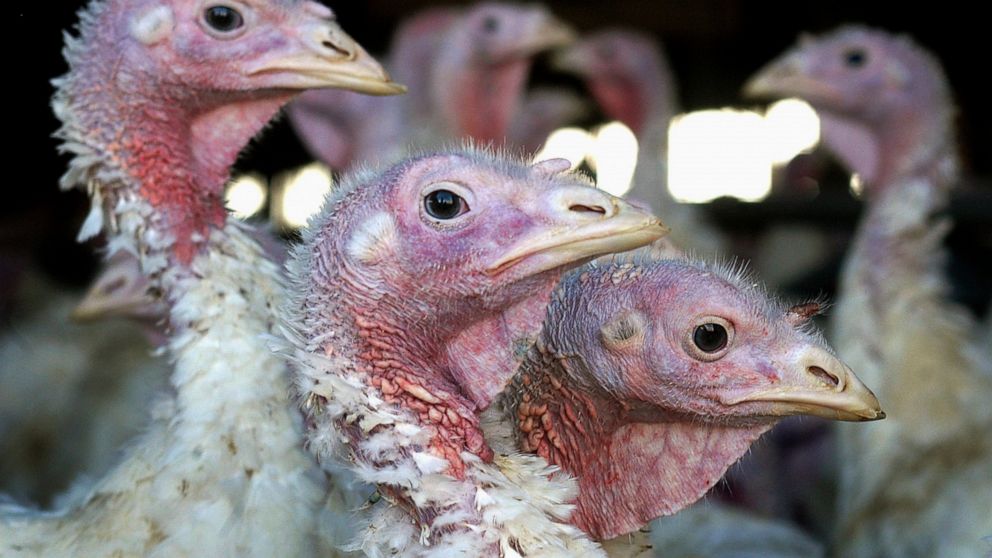
MINNEAPOLIS –Bird flu has returned to the Midwest earlier than authorities expected after a lull of several months, with the highly pathogenic disease being detected in two commercial turkey flocks in western Minnesota and a hobby flock in Indiana, officials said Wednesday.
The disease was detected after a farm in Meeker County reported an increase in mortality last weekend, the Minnesota Board of Animal Health said. The flock was euthanized to stop the spread. The board later reported that a second flock in the county tested positive Tuesday evening.
They were the first detections of avian influenza in Minnesota since May 31…
‘We don’t have a solution. But the fact that there aren’t easy and obvious solutions doesn’t mean that you can ignore the issue’ … An Inconvenient Apocalypse.Photograph: Zoonar GmbH/Alamy
In An Inconvenient Apocalypse, authors Wes Jackson and Robert Jensen style themselves as heralds of some very bad news: societal collapse on a global scale is inevitable, and those who manage to survive the mass death and crumbling of the world as we know it will have to live in drastically transformed circumstances. According to Jackson and Jensen, there’s no averting this collapse – electric cars aren’t going to save us, and neither are global climate accords. The current way of things is doomed, and it’s up to us…





 Exposing the Big Game