Ratanakiri’s Governor, Nhem Samoeurn, expressed his commitment to participate in educating and promoting the stop of trafficking and trapping of wildlife in the province.
He made the statement during the press conference on the Zero Snaring campaign in the province, held yesterday afternoon, at the Ratanakiri Provincial Department of Environment.
Samoeurn said that the stopping of the trapping and trafficking of wild animals is beneficial for the future generations. “Together, we should stop eating wild animals. When we go to restaurants, do not ask for wildlife, and we must join together to protect our wildlife, both now and in the future.”
“Apart from this, we need to take legal measures, there will also be additional educational measures for people who have been involved in the business,” said the governor.
REYNOLDSBURG, Ohio (WJW) — A highly contagiousbird fluhas been detected in twoOhiocounties,according tothe Ohio Department of Agriculture.
The Highly Pathogenic Avian Influenza was found in a backyard flock inAshland Countyand a commercial chicken flock inDefiance Countyand confirmed by the United States Department of Agriculture’s Animal and Plant Health Inspection Service.Who’s eligible for new COVID boosters?
No human cases in the U.S. have been detected in connection to the most recent cases, according to the release. The last U.S. human case reported was inMay 2022.
ADVERTISING
The CDC says there is no immediate public health concern at this time.
The highly contagious virus spreads quickly and can be fatal to flocks and devastating to poultry owners infecting poultry including…
After a three-month lull, highly contagious avian influenza is back in Wisconsin.
The state Department of Agriculture, Trade and Consumer Protectionconfirmedthe disease in a non-commercial flock in Washington County last week. It’s the first case in Wisconsin since the end of May. DATCP also reported that Minnesota and Indiana confirmed new cases last week after a summer without activity.
Last spring, eight commercial flocks and 14 backyard or small farm flocks were culled across Wisconsin because of the disease. It’s the first time the state’s poultry owners have dealt with the highly pathogenic…
Matt Brophy, left, of St. Clair, Pennsylvania, with his 11-year-old son, Rob, sells trapping scents and pack baskets at the New England Trappers Weekend on Aug. 19 in Bethel. Brophy taught his son to trap and runs a youth trapping contest in Pennsylvania.Deirdre Fleming photo
BETHEL — Two weeks ago the dirt road into Neil and Linda Olson’s property was packed with vendors in a yard-sale setting, many with historical trapping artifacts.
Tables were piled with animal furs, wood carvings, traps, lures and wildlife artwork. The adjoining dirt road out to a massive farm field owned by the Olsons’ neighbors was filled with booths tended bybeekeepers, woodturners, painters…
THUNDER BAY— The organization representing the province’sfur trappers has launched a public relationscampaign.
The Ontario Fur Managers Federation has purchased billboard space across the province, including one on the corner of Memorial Avenue and Harbour Expressway in Thunder Bay, with the message that “trappers work to maintain healthy wildlife populations.”
Katie Ball is a trapper from Thunder Bay who also runs Silver Cedar Studio, where she designs and makes fur garments.
Ball says she believes in explaining to non-trappers why the work of trappers is important.
“I have found that by talking to the public, educating individuals on our regulations, and standing behind our ethical practices, most get a bigger…
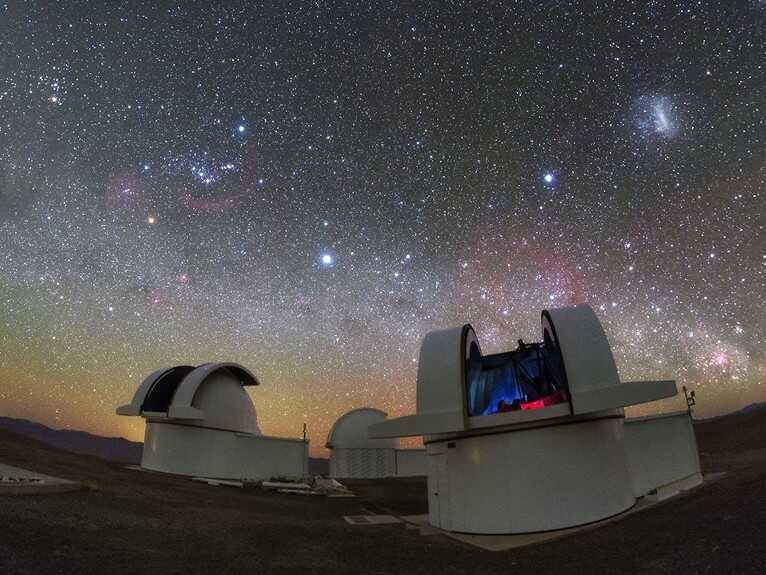
The telescopes of the SPECULOOS Southern Observatory in the Atacama Desert, Chile. The telescopes were used to confirm and characterize a new planet discovered by NASA, which led to the discovery of another nearby planet.
ESO/P.Holárek
An international team of scientists says it hasdiscovered two new “super-Earth” type planets about 100 light-years away, one of which may be suitable for life.
Unlike any of the planets in our solar system, the nearly 1,600 knownsuper-Earthsare larger than Earth, but lighter than icy planets like Uranus and Neptune.
Researchers at Belgium’s University of Liègeannounced Wednesdaythat they found another onewhile using Earth-based telescopes to confirm the existence of a different planet initially discovered by a NASA satellite in the same solar system.
Towards the end of 2022, the human population on Earth is expected to reach eight billion. To mark the occasion, BBC Future takes a look at one of the most controversial issues of our time. Are there too many of us? Or is this the wrong question?
O
One moment, the valley was a tranquil,swampy wetland. Grasses and palm trees cast fuzzy shadows on the water below. Fish lurked warily at the edges of mangroves.Orangutanssought out fruit with leathery fingers. Then a dormant giant awoke from its sleep.
It was around 72,000 BC on the island of Sumatra,Indonesia.The Toba supervolcano was erupting, in what is thought to have been the greatest such event in the last 100,000 years. A series of thunderous explosions blasted out
In the spirit of the annual University of Cambridge–ledhorizon scan of emerging conservation issues, 30 experts from around the world last year put their heads together to brainstorm and assess the potential impacts to ocean and coastal ecosystems over the next decade of a spectrum of human activities.
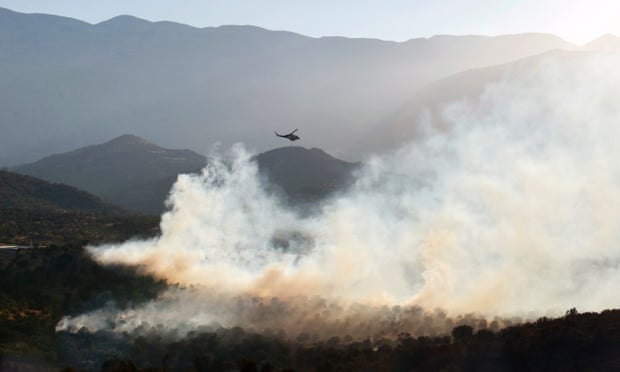
A helicopter releases water on to a wildfire in Rethimno, Greece, that was rekindled by strong winds.Photograph: Nikos Chalkiadakis/EPA
The increased frequency and severity of fires on land can have cascading impacts as wind and rain carry soot, nutrients, metals and other byproducts of burns…
The researchers stored astronaut blood for 20 years to see how short space shuttle flights affected spaceflyer health.
(opens in new tab)
(opens in new tab)
(opens in new tab)
(opens in new tab)
(opens in new tab)
Short-duration space shuttle missions may have put its astronauts at a higher risk for cancer, a new study concludes. (Image credit: NASA)
Astronaut cancer risk needs careful monitoring, concludes a study that stored spaceflyer blood for 20 years.
All fourteen astronauts in the study, from NASA’s space shuttle program, had DNA mutations in blood-forming stem cells, a Nature Communications Biology study(opens in new tab) Aug. 31 concluded. The mutations, though unusually high considering the astronauts’ age, was below a key threshold of concern, however.
While the study is unique for keeping astronaut blood around for so long, the results are not show-stopping. Rather, the researchers suggest that astronauts should be subject to periodic blood screening to keep an eye on possible mutations. (And it should be considered in context; another 2019 study, for example, found that astronauts are not dying from cancer due to ionizing space radiation.)
Monitoring programs will nevertheless be crucial as NASA reaches for long-duration deep space missions through its Artemis program on the moon and later, human excursions to Mars, the new study team said in a statement(opens in new tab). (The new study and the 2019 cancer study both largely considered short-duration mission astronauts.)
The team decided to pursue the new study in light of “the growing interest in both commercial spaceflights and deep space exploration, and the potential health risks of exposure to various harmful factors that are associated with repeated or long-duration exploration space missions,” study lead author Dr. David Goukassian and cardiology professor at Icahn Mount Sinai said in the statement.
NASA recently changed its lifetime radiation requirements for astronauts that critics said were discriminating against women, who historically had lower limits than male astronauts. (To date, other genders have not been disclosed in the agency population.)
The researchers found a higher frequency of somatic mutations in the genes of the 14 astronauts considered in the study, relative to statistics for the population who has been to space.
The space cohort flew between 1998 and 2001 on shuttle missions of an average of 12 days. Roughly 85 percent of the group was male, and six of the astronauts were on their first mission.
Researchers collected whole blood samples from the astronauts twice, exactly 10 days before spaceflight and on the day of landing. White blood cells were collected once, three days after landing. The blood samples were then left untouched in a freezer for 20 years, chilling at minus 112 degrees Fahrenheit (minus 80 degrees Celsius.)
The somatic mutations seen in the genes was less than two percent, however. Those individuals who breach that threshold face more risk in developing cardiovascular disease and some forms of cancer, the statement said.
“The presence of these mutations does not necessarily mean that the astronauts will develop cardiovascular disease or cancer, but there is the risk that, over time, this could happen through ongoing and prolonged exposure to the extreme environment of deep space,” Goukassian added.
Follow Elizabeth Howell on Twitter @howellspace(opens in new tab). Follow us on Twitter @Spacedotcom(opens in new tab) or Facebook(opens in new tab).
Fire crews are struggling to contain the deadly Fairview Fire in Hemet which expanded more than 7,000 acres Wednesday, officials said. Containment remains at just 5%.
Overnight video showed a wild scene as the intense flames at one point burst into a fire whirl.
The blaze, whichCal Fire tweetedwas at 7,092 acres by 10:25 a.m., started Monday afternoon near Fairview Avenue and Bautista Canyon Road.
ADVERTISING
Two people who tried to escape the fire on Monday were found dead inside their vehicle, Riverside County Sheriff’s Department Sgt. Brandi Swan said.
“The identifies of those individuals cannot be released at this time because they cannot be positively identified based upon the condition in which they were found,” Swan said during a Wednesday morning news conference.Helicopter video shows devastation of…







.jpeg;w=960)


 Exposing the Big Game