The United Nations (U.N.) published its latest climate change report Monday, which doubled down onglobal warming-related risksand which the intergovernmental organization dubbed a “survival guide for humanity.”
The synthesis report, assembled by the Intergovernmental Panel on Climate Change (IPCC), represents the U.N.’s latest attempt to sound the alarm on the risks posed by climate change and not taking aggressiveactions to halt global warming. According to the document, “unsustainable energy and land use” has caused the world to warm 1.1 degrees Celsius above pre-industrial levels, close to the 1.5-degree emergency threshold.
Residents in southern Malawi repair a home destroyed by heavy rain from Cyclone Freddy. Climate change is causing cyclones and hurricanes to get more intense and dangerous.
Thoko Chikondi/AP
The planet is on track for catastrophic warming, but world leaders already have many options to reduce greenhouse gas pollution and protect people, according to a major new climate change report from the United Nations.
The report was drafted by top climate scientists and reviewed by delegates from nearly 200 countries. The authors hope it will provide crucial guidance to politicians around the world ahead of negotiations later this year aimed at reining in climate change.
The planet faces an increasingly dire situation, according to the report. Climate change is already disrupting daily life around the world. Extreme weather…
After a large 85-pound canid was shot by a hunter in Otsego County in December 2021, the Department of Environmental Conservation (DEC) announced that the animal was a coyote. Despite possessing wolf-like size and physical characteristics—and the hunter’s own belief that he had mistakenly shot a wolf—DEC claimed that a DNA analysis showed that the animal was just a large coyote and cited the DNA study in its press comments.Mike Lynch at theAdirondack Explorerreported in July 2022 that DEC had a DNA analysis that showed the Cooperstown wolf was “closely identified as an Eastern coyote, with a mix of coyote, wolf, and dog genetics.”WTEN News 10in Albany reported the story with a quote fromLori Severino, a DEC spokesperson, saying “Initial DNA analysis conducted determined the wild canid to be most closely identified as an eastern coyote.”
A coyote basks in the sun. Credit: Dan Licht Cinematographer
Study of coyotes in new documentary ‘American Bolshevik’ shows human-provided food sources drive conflicts; lethal control often results in greater conflict.
When you have unsecured food sources associated with people, coyotes like to hang around, especially when you have some closet feeders embedded in the neighborhood.”
— Dr. Numi Mitchell
NEW YORK, NY, UNITED STATES, March 17, 2023 /EINPresswire.com/ — ‘American Bolshevik,’ the award-winning documentary from Lemon Martini Productions, explores conflicts with coyotes and the forces that have caused the expansion of their territory throughout the United States. The film is available onAmazon,Apple TV, Google Play, and VUDU in the US, Canada, and other countries.
The feature length film reveals that conflicts are primarily driven by…
A coyote basks in the sun. Credit: Dan Licht Cinematographer
Study of coyotes in new documentary ‘American Bolshevik’ shows human-provided food sources drive conflicts; lethal control often results in greater conflict.
When you have unsecured food sources associated with people, coyotes like to hang around, especially when you have some closet feeders embedded in the neighborhood.”
— Dr. Numi Mitchell
NEW YORK, NY, UNITED STATES, March 17, 2023 /EINPresswire.com/ — ‘American Bolshevik,’ the award-winning documentary from Lemon Martini Productions, explores conflicts with coyotes and the forces that have caused the expansion of their territory throughout the United States. The film is available on Amazon, Apple TV, Google Play, and VUDU in the US, Canada, and other countries.
The feature length film reveals that conflicts are primarily driven by human activities such as intentional or inadvertent feeding of coyotes, which can condition these wild animals to lose their fear of humans and results in greater numbers of coyotes.
“Coyotes reproduce more and have more offspring if they have a lot of food. If they don’t have a lot of food they drop their own population,” states Dr. Numi Mitchell of the Narragansett Bay Coyote Study (NBCS) in Rhode Island. The study found that the food that was making coyotes so abundant was being provided by local residents. “We found piles of dead livestock on farms that would sustain a coyote group all winter long. Feral cat colonies were a surprise. Coyotes learned, just as the cats do, that the lady comes every day and drops off food. Coyotes also eat garbage and compost. When you have unsecured food sources associated with people, coyotes like to hang around, especially when you have some closet feeders embedded in the neighborhood.”
The NBCS began nearly two decades ago in response to an increase in sightings and conflicts with coyotes on Aquidneck Island, which encompasses the tony resort city of Newport, Rhode Island, known for its sailing, polo, and music festivals. As a result of this ground-breaking study, each of the towns on Aquidneck Island have enacted “no-feeding ordinances” to ensure that residents are not conditioning coyotes to overcome their natural wariness of humans. The towns also actively educate residents on strategies to reduce conflict, including “hazing” to limit future contact.
Woven between this modern-day conflict with coyotes, American Bolshevik tells the story of the coyote’s expansion into New England long after the slaughter of the native wolf species. The film follows a century of escalating attempts to eradicate the species as detailed by historian Dan Flores, The New York Times best-selling author of Coyote America.
“Coyotes are fission-fusion animals,” explains Dr. Flores in the film, meaning that they are one of only a few species that can function either within groups or as individuals. “Whenever they go into fission mode as a result of being persecuted, what they often end up doing is scattering across the landscape and colonizing new places. By wiping out wolves in Eastern America we had basically opened up the niche for a mid-sized canid predator. And when the attempt to poison coyotes in the West had triggered their fission-fusion reaction, coyotes had begun colonizing into the South and the East where this niche for a mid-sized predator remained open.”
Today an estimated 500,000 coyotes are slaughtered annually in the United States in the name of “wildlife management,” often through inhumane killing contests and practices such as leg hold traps, aerial shooting, and poisoning, according to Camilla Fox, Executive Director of advocacy organization Project Coyote. “Killing coyotes has never, and will never work to manage them,” states conservation biologist Chris Schadler, Co-Founder of the New Hampshire Wildlife Coalition, who recounts her years of successfully farming sheep amidst coyotes. The adverse effects of lethal control on the local level is explained by Dr. Mitchell of NBCS. “The alpha male and alpha female are the primary defenders of the pack territory. If you bring a hunter in and shoot coyotes, it’s basically shooting holes in the fence. If a resident bunch is shot out, it’s anarchy. All those coyotes start flowing into the void and you end up with more coyotes than you had to begin with,” says Dr. Mitchell. There is also a biological response to killing coyotes, she notes, as coyote litter sizes will increase to compensate.
According to the experts interviewed in the film, coyotes can bring many benefits to their communities, and there are evidence-based strategies for successful coexistence with coyotes. These include diligently eliminating human-provided food sources, hazing to reinforce fear of humans, and ensuring pets are kept on leashes, particularly during denning season.
The total weight of Earth’s wild land mammals – from elephants to bisons and from deer to tigers – is now less than 10% of the combined tonnage of men, women and children living on the planet.
A study by scientists at Israel’s Weizmann Institute of Science, published this month, concludes that wild land mammals alive today have a total mass of 22m tonnes. By comparison, humanity now weighs in at a total of around 390m tonnes.
At the same time, the species we have domesticated, such as sheep and cattle, in addition to other hangers-on such as urban rodents, add a further 630m tonnes to the total mass of creatures that are now competing with wild mammals for Earth’s resources. The biomass of pigs alone is nearly double that of all wild land mammals.
The figures demonstrate starkly that humanity’s transformation of the planet’s wildernesses and natural habitats into a vast global plantation is now well under way – with devastating consequences for its wild creatures. As the study authors emphasise, the idea that Earth is a planet that still possesses great plains and jungles that are teeming with wild animals is now seriously out of kilter with reality. The natural world and its wild animals are vanishing as humanity’s population of almost eight billion individuals continues to grow.
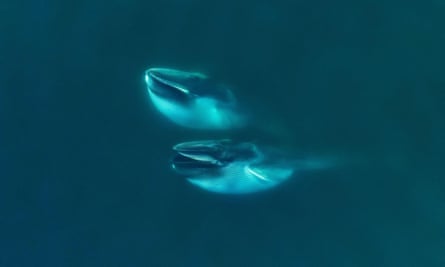
Fin whales feeding off the Gulf of California. The species was found by the study to have the highest biomass of ocean creatures. Photograph: Nature Picture Library/Alamy
“When you look at wildlife documentaries on television – for instance of wildebeest migrating – it is easy to conclude that wild mammals are doing quite well,” lead author Ron Milo told the Observer.
“But that intuition is wrong. These creatures are not doing well at all. Their total mass is around 22m tonnes which is less than 10% of humanity’s combined weight and amounts to only about 6lb of wild land mammal per person. And when you add all our cattle, sheep and other livestock, that adds another 630m tonnes. That is 30 times the total for wild animals. It is staggering. This is a wake-up call to humanity.”
The study, The Global Biomass of Wild Mammals, also reveals that those that do best – such as the white-tailed deer in the US and wild boars – are those that find it easier to adapt to the presence of humans. Both species can be found near settlements and are occasionally treated as pets. “Even within the wild, the fingerprints of humanity are obvious,” added Milo, whose team’s study is published in the US journal Proceedings of the National Academy of Sciences.
As part of the paper, researchers Lior Greenspoon and Eyal Krieger collected biomass data on about half of all known mammals and used machine-learning computational models on other zoological samples to calculate the other half.
The grim figures for land mammals were matched by those found in the oceans. The total mass of marine mammals was calculated to be around 40m tonnes. Fin whales have the largest total biomass with sperm whales and humpbacks coming into the second and third slots, respectively.
Domesticated-to-wild mass ratios emphasise the active role humans play in shaping the abundance of mammals on Earth
Study
Common pet species were also found to be major contributors to humanity’s planetary impact. Domestic dogs have a total mass of around 20m tonnes, a figure close to the combined biomass of all wild terrestrial mammals, while cats have a total biomass of around 2m tonnes, almost double that of the African savanna elephant. “These domesticated-to-wild mass ratios emphasise the active role humans play in shaping the abundance of mammals on Earth,” the researchers state in their paper.
Biomass studies are not the only way to quantify the animal world. Numbers of species are also revealing. As an example, it has been found there are 1,200 species of bats that account for a fifth of all land mammal species and two-thirds of all individual wild mammals by head count. However, they make up only 10% of the biomass of wild land mammals.
“Biomass is complementary to species richness and other diversity metrics, and can serve as an indicator of wild mammals’ abundance and ecological footprint on a global scale,” the researchers state.
Estimates made two years ago by the team suggested there were about 50m tonnes of wild mammals on Earth. The new figure, calculated using a host of techniques including AI, indicates that the crisis facing the planet’s wildlife appears to be much worse than first appreciated. Just how quickly the depletion of wild mammals is proceeding now needs to be assessed as a matter of urgency, they say, and is the focus of the study’s next phase which will assess how much of the biomass loss occurred over the past 100 years.
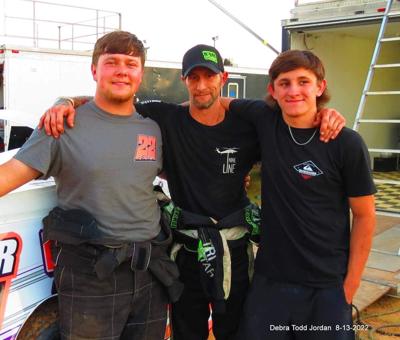
Tyler Doyle (left) poses with his father,Brian Doyle, and brotherReed Doyle. Tyler Doyledisappeared Jan. 26 while hunting in the Little River Inlet. Brian Doyle/Provided
LITTLE RIVER — S.C. Department of Natural Resource files revealmore details about missing duck hunter Tyler Doyle’s disappearance and the search operation, which is about to enter its third month.
Doyle, a 22-year-old husband and father to-be, disappeared after his boat capsized while duck hunting in Little River Inlet.
The search area so far has included Little River Inlet by the South Carolina-North Carolina border, south toward Cherry Grove in Horry County and north into Sunset and Holden beaches in Brunswick County, N.C.
Scientists have delivered a “final warning” on the climate crisis, as rising greenhouse gas emissions push the world to the brink of irrevocable damage that only swift and drastic action can avert.
The comprehensive review of human knowledge of the climate crisis took hundreds of scientists eight years to compile and runs to thousands of pages, but boiled down to one message: act now, or it will be too late.
The UN secretary general, António Guterres, said: “This report is a clarion call to massively fast-track climate efforts by every country and every sector and on every timeframe. Our world needs climate action on all fronts: everything, everywhere, all at once.”
In sober language, the IPCC set out the devastation that has already been inflicted on swathes of the world. Extreme weather caused by climate breakdown has led to increased deaths from intensifying heatwaves in all regions, millions of lives and homes destroyed in droughts and floods, millions of people facing hunger, and “increasingly irreversible losses” in vital ecosystems.
Monday’s final instalment, called the synthesis report, is almost certain to be the last such assessment while the world still has a chance of limiting global temperature rises to 1.5C above pre-industrial levels, the threshold beyond which our damage to the climate will rapidly become irreversible.
Kaisa Kosonen, a climate expert at Greenpeace International, said: “This report is definitely a final warning on 1.5C. If governments just stay on their current policies, the remaining carbon budget will be used up before the next IPCC report [due in 2030].”
More than 3bn people already live in areas that are “highly vulnerable” to climate breakdown, the IPCC found, and half of the global population now experiences severe water scarcity for at least part of the year. In many areas, the report warned, we are already reaching the limit to which we can adapt to such severe changes, and weather extremes are “increasingly driving displacement” of people in Africa, Asia, North, Central and South America, and the south Pacific.https://interactive.guim.co.uk/uploader/embed/2022/11/temperature-zip/giv-6562F1H3UQGm5JrH/
All of those impacts are set to increase rapidly, as we have failed to reverse the 200-year trend of rising greenhouse gas emissions, despite more than 30 years of warnings from the IPCC, which published its first report in 1990.
The world heats up in response to the accumulation of carbon dioxide and other greenhouse gases in the atmosphere, so every year in which emissions continue to rise eats up the available “carbon budget” and means much more drastic cuts will be needed in future years.
Yet there is still hope of staying within 1.5C, according to the report. Hoesung Lee, the chair of the IPCC, said: “This synthesis report underscores the urgency of taking more ambitious action and shows that, if we act now, we can still secure a livable sustainable future for all.”
Temperatures are now about 1.1C above pre-industrial levels, the IPCC found. If greenhouse gas emissions can be made to peak as soon as possible, and are reduced rapidly in the following years, it may still be possible to avoid the worst ravages that would follow a 1.5C rise.
Richard Allan, a professor of climate science at the University of Reading, said: “Every bit of warming avoided due to the collective actions pulled from our growing, increasingly effective toolkit of options is less worse news for societies and the ecosystems on which we all depend.”
Guterres called on governments to take drastic action to reduce emissions by investing in renewable energy and low-carbon technology. He said rich countries must try to reach net zero greenhouse gas emissions “as close as possible to 2040”, rather than waiting for the 2050 deadline most have signed up to.skip past newsletter promotion
Sign up to Down to Earth
Free weekly newsletter
The planet’s most important stories. Get all the week’s environment news – the good, the bad and the essential
He said: “The climate timebomb is ticking. But today’s report is a how-to guide to defuse the climate timebomb. It is a survival guide for humanity. As it shows, the 1.5C limit is achievable.”
John Kerry, the US special presidential envoy for climate, said: “Today’s message from the IPCC is abundantly clear: we are making progress, but not enough. We have the tools to stave off and reduce the risks of the worst impacts of the climate crisis, but we must take advantage of this moment to act now.”
Monday’s “synthesis report” is the final part of the sixth assessment report (AR6) by the IPCC, which was set up in 1988 to investigate the climate and provide scientific underpinning to international policy on the crisis. The first three sections of AR6, published between August 2021 and April 2022, covered the physical science behind the climate crisis, and warned irreversible changes were now almost inevitable; section two covered the impacts, such as the loss of agriculture, rising sea levels, and the devastation of the natural world; and the third covered the means by which we can cut greenhouse gases, including renewable energy, restoring nature and technologies that capture and store carbon dioxide.
The “synthesis report” contains no new science, but draws together key messages from all of the preceding work to form a guide for governments. The next IPCC report is not due to be published before 2030, making this report effectively the scientific gold standard for advice to governments in this crucial decade.
The final section of AR6 was the “summary for policymakers”, written by IPCC scientists but scrutinised by representatives of governments around the world, who can – and did – push for changes. The Guardian was told that in the final hours of deliberations at the Swiss resort of Interlaken over the weekend, the large Saudi Arabian delegation, of at least 10 representatives, pushed at several points for the weakening of messages on fossil fuels, and the insertion of references to carbon capture and storage, touted by some as a remedy for fossil fuel use but not yet proven to work at scale.
In response to the report, Peter Thorne, the director of the Icarus climate research centre at Maynooth University in Ireland, said next year global temperatures could breach the 1.5C limit, though this did not mean the limit had been breached for the long term. “We will, almost regardless of the emissions scenario given, reach 1.5C in the first half of the next decade,” he said. “The real question is whether our collective choices mean we stabilise around 1.5C or crash through 1.5C, reach 2C and keep going.”
Link copiedSAVECreate your free profile or log in to save this article
March 19, 2023, 2:06 AM PDT/Source:Associated Press
ByAssociated Press
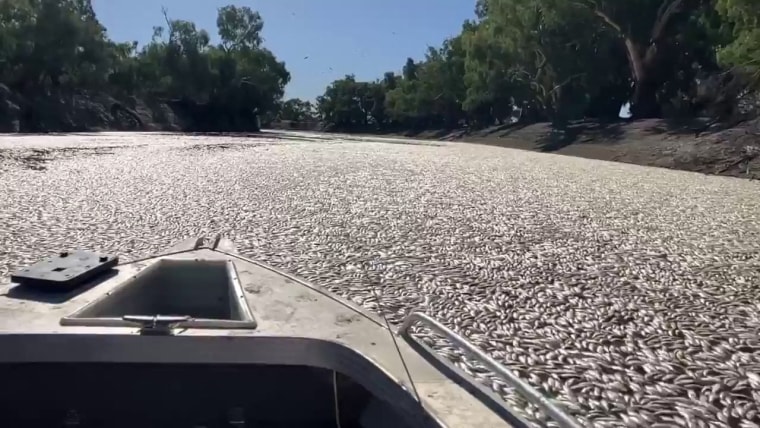
Millions of fish have washed up dead in southeasternAustraliain a die-off that authorities and scientists say is caused by floods and hot weather.
The Department of Primary Industries in New South Wales state said the fish deaths coincided with a heat wave that put stress on a system that has experienced extreme conditions from wide-scale flooding.
The deaths were likely caused by low oxygen levels as floods recede, a situation made worse by fish needing more oxygen because of the…
The sunflower sea star is the second largest sea star in the world, reaching up to 3 feet wide. With its impressive pinwheel of legs and bright colors, it used to be a ubiquitous part of the coast, with visitors eagerly pointing out and taking pictures with the echinoderm
However, the National Oceanic and Atmospheric Administration is making the recommendation that the star join the threatened species list after a pathogen called Sea Star Wasting Syndrome wiped out more than 90 percent of the species between 2013 to 2017.








 Exposing the Big Game