Sara SawyerProfessor of Molecular, Cellular and Developmental Biology, University of Colorado Boulder
Emma Worden-SapperPhD Student in Molecular, Cellular and Developmental Biology, University of Colorado Boulder
Sharon WuPhD Student in Interdisciplinary Quantitative Biology and Molecular, Cellular, and Developmental Biology, University of Colorado Boulder
Disclosure statement
Sara Sawyer is a co-founder of Darwin Biosciences. She receives funding from the National Institutes of Health.
Emma Worden-Sapper and Sharon Wu do not work for, consult, own shares in or receive funding from any company or organization that would benefit from this article, and have disclosed no relevant affiliations beyond their academic appointment.
Chad Waligura, co-host ofAble Outdoors, describes unit 16D in the Gila National Forest as “the promised land” for Rocky Mountain elk. He’s correct. A quick check online revealed that during the past handful of years nonresidents have about .5 percent chance (1 in 200) of drawing a rifle tag for bull elk in this unit.
The DEC confirmed two people were ticketed for alleged drunk driving and hunting. After a weeks-long investigation, ECOs charged two subjects in Onondaga County with more than a dozen violations related to a hunting incident and drunk driving arrest.
On Jan. 25, the Onondaga County Sherriff’s Office notified the DEC about a driver who was charged with DWI on Route 20 in the town of Lafayette.
JEFFERSON CITY, Mo. – The Missouri Department of Conservation has announced scheduled hunting seasons for black bear and elk in the state. Applications for hunting permits will be accepted beginning May 1.
The MDC will offer 400 permits for black bear and five permits for bull elk. Only Missouri residents will be allowed to apply for hunting permits. Persons must be 11 years of age by the first day of a respective hunting season will qualify.
The application period runs from May 1 to May 31, with a $10 fee per applicant. People can apply online atmdc.mo.gov/buypermits, through the Department of Conservation’s freeMO Hunting app, through a permit vendor, or by calling the MDC at 1-800-392-4115.
All permits will be assigned via a random drawing, according…
Bringing back long extinct animals, including the woolly mammoth, to once again roam the Earth might sound like the newest “Jurassic Park” movie, but it’s very much reality.
While we can’t bring dinosaurs back because their DNA is too old to be properly sequenced, scientists are working to bring back specimens including the woolly mammoth and dodo bird and have successfully restored some plants already, including the American chestnut tree.
Experts at South by Southwest spoke about the very real reality of de-extinction, or the process of bringing once extinct animals — or at least a close version of them — back to life. The scientists and industry experts discussed the process and progress of de-extinction technology, as well as the ethics of bringing animals and plants back in two different sessions.
How does de-extinction work?
Typically, when scientists look to bring back an animal or plant, it will not be exactly the same as its ancestors. Instead, scientists usually are looking to create a hybrid animal, crossed between the extinct animal and its closest living relative, that selects the specific traits most commonly associated with the animal and its ability to live in its natural environment.
During a SXSW session on de-extinction ethics, Beth Shapiro, a biologist at the University of California at Santa Cruz, said that while most people may think of cloning when they hear de-extinction, to clone something you need a living cell. Once an organism dies, there are no more living cells and any DNA that is there starts getting broken down by processes and elements such as UV radiation, freezing, thawing and fungi. For that reason, most de-extinction is focused on the DNA we can find, primarily in animals that died in the past 50,000 years such as mammoths, though the oldest DNA recovered from a bone is 1 million to 2 million years old.
To bring an animal back, scientists need to collect DNA from ground-up bones and sequence them. The scientists then compare the genes to the animal’s closest living relatives and count the number of differences. From there they figure out what they want to change and gradually tweak the genetic sequence. Once scientists do have a gene sequence in cell form, they can use cloning to swap for an edited cell.
The genetic differences between an extinct animal’s genes and its closest relatives’ can be in the hundreds of millions.
“We can’t actually create something that’s identical,” Shapiro said, explaining that even if we somehow could change all the genes in DNA to be the same, other factors such as gestation period and environment also can lead to changes.
But scientists are generally looking to change traits that will most make an animal like its ancient relative. With a wooly mammoth, for example, the change would include editing back cold-tolerant genes and shaggy hair. Bringing an animal back also can mean rewilding it, or putting it back in its original environment, so a de-extinct animal ideally fills the niche it once did.
“It’s resurrecting some traits, some physical attributes to fill the niche of that animal,” Shapiro said. “De-extinction is not a solution to the extinction crisis but can help fill the environments in which we live.”
De-extinction can also be done for plants. Jason Delborne, a professor at North Carolina State University, has been part of the efforts to bring back the American chestnut tree, which was important to Native Americans and colonial America, but died off in the late 1800s because of a fungus. Scientists have been working to bring back a functional version of the tree that would be resistant to the fungus.
How is Texas involved?
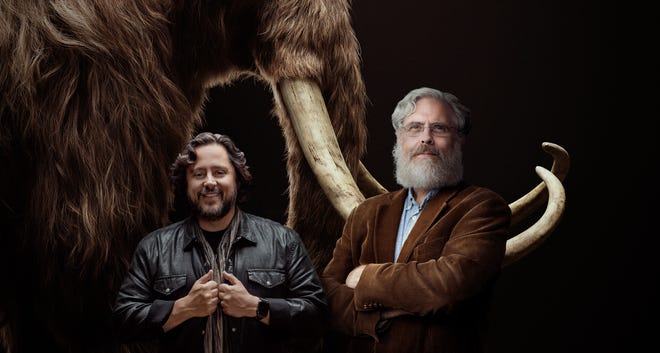
One of the best known companies involved in de-extinction work is Texas-based Colossal, which was co-founded by Austin entrepreneur Ben Lamm and geneticist George Church of Harvard Medical School. It formed in 2021 with the goal of advancing the field of de-extinction and combating climate change. The company is best known for its work to bring back the wooly mammoth and has also been working to bring back the dodo bird and the thylacine, also known as the Tasmanian tiger.
Lamm discussed de-extinction during a featured session, where he explained the company’s efforts, and how it fits into conservation.
“I don’t think that Colossal is the solution to the biodiversity crisis,” Lamm said. “I think that Colossal is bringing attention to the biodiversity crisis and developing tools.”
The ethics of bringing back extinct animals has been a hot topic among scientists and people following de-exinction efforts. Delborne, a social scientist, said it’s important to have conversations about who decides what gets brought back and why, and added there is no one right answer.
“One of the main arguments is we broke it so we should fix it,” Delborne said about de-extinction in general. “We have a responsibility to restore because we are responsible for its functional extinction.”
Lamm said that Colossal has only announced animals it thinks would be beneficial to restore the ecosystem, and that likely had a human hand involved in their extinction.
“We had this goal of what can we do, what should we do, and why should we do it? We eradicated the dodo, we eradicated the thylacine. Lots of paper suggest we had a hand in the eradications of mammoths,” Lamm said.
Mairin Balisi, a curator at the Alf Museum of Paleontology in California and who studies mammalian carnivores, said there is evidence that modern animals are filling some niches, and said scientists have to consider their goals when rewilding animals.
“Do we want to bring the animals back or their ecological functions? There’s some evidence we may not have to bring the animals back,” Balisi said.
For example, she has had discussions on whether we would need to bring back a saber-toothed cat when mountain lions exist in the ecosystem.
Lamm’s biotech company’s launch has been particularly controversial because it may be the first startup in the space, and Lamm acknowledged the company is not perfect. He said the company is working with indigenous groups, private landowners, state and federal governments and others ahead of rewilding any animals, and working on educating the public.
“We haven’t done everything right, Lamm said, but I think the more transparent and receptive we are to feedback, the better. We’ve got to be a good steward.”
Some also view the company as taking money away from conservation research, but both Lamm and Shapiro, who works on the company’s dodo efforts, say the money is largely tech money that would not have been going toward conservation. They said the company is also developing important tools to aid in conservation efforts.
“We have to be careful that we’re not so scared of taking risks that we take the tremendous risk of not allowing ourselves to explore what these new technologies can do.” Shapiro said. “Not doing it because we’re scared of it is a tremendously bad idea.”
When could we see animals and plants return?
Colossal has been vague on the exact timelines of when it will bring animals back, but Lamm said within a decade for most of its animals.
For woolly mammoths, Lamm said its hybrid could come as soon as 2028.
“I think it’s a realistic goal based on where we are today,” Lamm said, noting elephants have a 22-month gestation period. Other animals, while presenting their own challenges, have shorter gestation periods that could help speed up the process.
Whether or not the American chestnut tree is allowed to be planted anywhere is still up for debate. Its future is also being discussed by scientists and groups such as the Environmental Protection Agency and the Food and Drug Administration.
“It has been recommended for deregulation. Likely the U.S. government will let us plant the trees wherever we want soon,” Delborne said.
House Bill 372 would enshrine trapping as a Montana constitutional right. This makes no sense. Once in the Constitution, it would be very hard to get rid of. This awful bill would make lethal hunting, trapping and fishing the sole means of managing Montana’s wildlife.
Thanks to having some of the healthiest fish and wildlife populations in the nation, Montana has a great heritage of hunting and fishing. But do we need to trap our native wildlife as well?
Trapping means catching wild animals in metal jaws. Animals may suffer in terror and pain for hours. Many are maimed when they try to escape.
In a word, trapping is torture. Few people actually engage in this anachronistic pursuit, nor is fur fashionable.
Bobcats, ermine, martens, wolves, coyotes, mink, otters, muskrats and many other species are caught…
In a recent survey of Vermonters’ attitudes towards furbearer management commissioned by the Vermont Fish & Wildlife Department, 71% of respondents polled said they enjoy having river otters in their area. Only 1% of those polled regarded otters as a nuisance, which is why I found it so surprising and upsetting that Vermont allows unlimited trapping of otters for several months each year.
These magnificent creatures are usually trapped in body-crushing kill traps purported to kill the animal quickly. However, the Vermont Fish & Wildlife Department’s “Best Management Practices” (BMPs) for trapping allow trapped animals to suffer for up to five minutes in “kill” traps before losing consciousness and still meet their BMP criteria. These same best management practices allow 30 percent of trapped animals to suffer for an undetermined period of time before…
PostedWed, Mar 15, 2023 at 4:19 pm CT|UpdatedThu, Mar 16, 2023 at 10:08 am CTReply
The last time a coyote was captured and killed in Wauwatosa was in early 2022, a city spokesperson said. A recent trapping attempt in February did not capture any coyotes, the spokesperson said.(John Quinnies/Patch)
(John Quinnies/Patch)
WAUWATOSA, WI — A group of animal rights activists and Wauwatosa residents gathered outside of city hall Wednesday morning to protest the trapping methods used by the city to control nuisance coyotes.
The last time a coyote was trapped and killed in Wauwatosa was in early 2022, according to Eva Ennamorato, the city’s communications manager.Five coyotes were captured, Patch reported at the time. The city’s management plan requires a verified pet…
Last summer, the highly contagious strain of bird flu that had been spreading through North American birds made its way into marine mammals, causing a spike in seal strandings along the coast of Maine. In June and July, more than 150 dead or ailing seals washed ashore.
Now a study provides new insight into the outbreak. Of the 41 stranded seals tested for the virus, nearly half were infected with it, scientists reported Wednesday in the journal Emerging Infectious Diseases. It is likely that wild birds introduced the virus to seals at least twice, the researchers concluded. In several seals, the virus had mutations that are associated with adaptation to mammals.
The risk to humans remains low, and the seal outbreak waned quickly, the scientists said.
The avian influenza virus is currently having a large strain outbreak called H5N1, which researchers confirm can infect various species
With the possibility of another pandemic at hand, a global outbreak of avian influenza, mostly from wild birds, has raised concern amongst scientists, who label the H5N1 strain as ‘one of the more deadly strains’.
Concerning egg producers and backyard farmers, the spread of the virus is already affecting higher egg and poultry prices in the west and is raising alarms for fear of another human pandemic.
Causing sporadic outbreaks since the late 1990s, the outbreak of avian influenza H5N1 has led to the disease becoming endemic in some birds, currently spreading to wild and captive mammals and, in some cases, infecting humans also.
How does H5N1 evolve, and whom does it affect?
H5N1 evolves in two ways; one is through a linear series of mutations that makes the virus more efficient at spreading through a particular animal species.
The other is through recombination, which, according to researchers, is when two different strains of the virus affect host cells at the same time and swap genes, leading to greater evolutionary leaps.
The avian influenza virus can be transmitted by contaminated feed, food, and trucks.
The World Organisation for Animal Health noted that a rising number of cases had been reported in mammals in the west, “causing morbidity and mortality” in species such as otters and seals.
How is the H5N1 strain affecting the west?
The H5N1 strain originated in intensive poultry farms in Asia but has already spread around the world.
Now, in both the UK and US, governments have made plans to roll out a bird flu vaccine in poultry. In the UK alone, the disease has had an increasing impact on wild birds over the past two years, with 65 species affected.
In the UK specifically, the government are coming up with more plans for those who own 50 or more birds, such as chicken farmers, who will now have to register their flock with the government.
In France, there are plans to begin vaccinating farmed birds in September. Reports of infections in farmed mink in Spain have also raised concerns due to cases involving large numbers of animals kept close to one another exacerbated the risk of wider transmission.
Elsewhere, Ecuador has also unveiled plans for two million inoculations.
Avian influenza has been detected in the U.S. in crows, storks, robins, ravens, owls, egrets, and many other bird species across 2022 and 2023, according to records kept by the United States Department of Agriculture.
According to Gov.UK, these are the signs of avian influenza and bird flu:
Birds infected with the most serious strain of bird flu, called highly pathogenic avian influenza (HPAI), usually show some (or all) of the following signs.
Sudden death
Swollen head
Closed and runny eyes
Lethargy and depression
Lying down and unresponsiveness
Lack of coordination
Eating less than usual
Lethargy
Sudden increase or decrease in water consumption
Head and body shaking
Drooping of the wings
Dragging of legs
Twisting of the head and neck
Swelling and blue discolouration of comb and wattles
Haemorrhages and redness on shanks of the legs and under the skin of the neck
Breathing difficulties such as gaping (mouth breathing), nasal snicking (coughing sound), sneezing, gurgling or rattling


 We believe in the free flow of information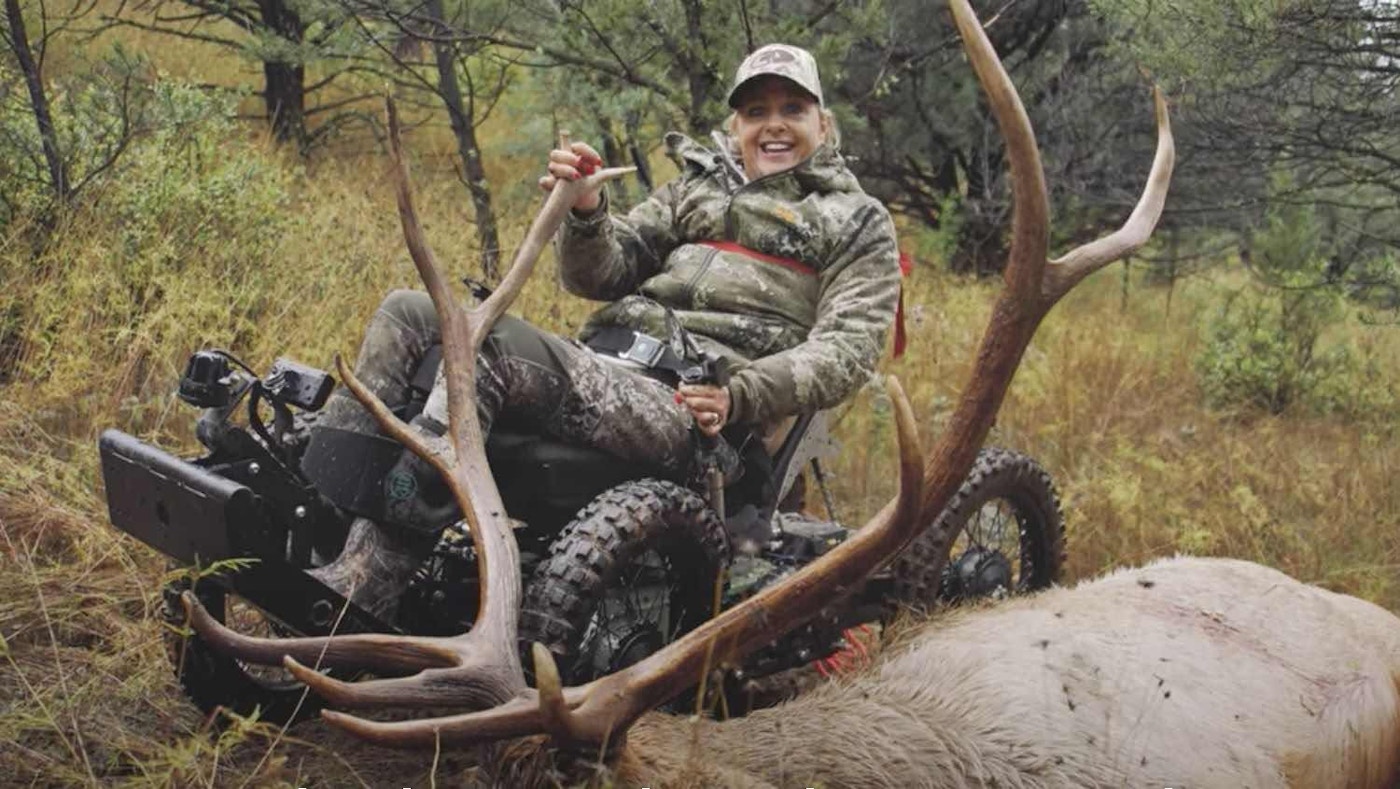




 The last time a coyote was captured and killed in Wauwatosa was in early 2022, a city spokesperson said. A recent trapping attempt in February did not capture any coyotes, the spokesperson said.(John Quinnies/Patch)
 (John Quinnies/Patch)

 Exposing the Big Game