
Seascape: the state of our oceansPlastics
Scientists find high levels of microplastics in wastewater from unnamed UK plant – and in air surrounding facility
Seascape: the state of our oceans is supported by

@karenmcveigh1Tue 23 May 2023 13.25 EDT
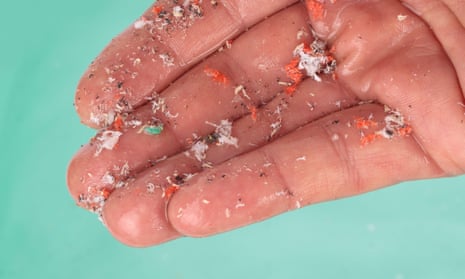
Recycling has been promoted by the plastics industry as a key solution to the growing problem of plastic waste. But a study has found recycling itself could be releasing huge quantities of microplastics.
An international team of scientists sampled wastewater from a state-of-the-art recycling plant at an undisclosed location in the UK. They found that the microplastics released in the water amounted to 13% of the plastic processed.
The facility could be releasing up to 75bn plastic particles in each cubic metre of wastewater, they estimated.
“I was incredibly shocked,” said Erina Brown, the lead researcher of the study, conducted at the University of Strathclyde in Glasgow. “It’s scary because recycling has been designed in order to reduce the problem and to protect the environment. This is a huge problem we’re creating.”
https://imasdk.googleapis.com/js/core/bridge3.575.0_en.html#goog_665681944
https://imasdk.googleapis.com/js/core/bridge3.575.0_en.html#goog_1708419226
https://imasdk.googleapis.com/js/core/bridge3.575.0_en.html#goog_1200503306


 US regulators launch investigation into worker deathat Amazon warehouse
The researchers tested the water before and after the plant installed a water filtration system and found the filter reduced the concentration of microplastics from 13% of the plastic processed to 6%.
The estimate of 75bn particles a cubic metre is for a plant with a filter installed. A majority of the particles were smaller than 10 microns, about the diameter of a human red blood cell, with more than 80% smaller than five microns, Brown said.
Microplastics, usually considered to be any particle of plastic measuring less than 5mm, have been found everywhere from freshly fallen snow in Antarctica to the depths of the ocean, and can be toxic for animals and plants.
The results also revealed high levels of microplastics in the air around the recycling facility, with 61% of the particles less than 10 microns in size. Particulate matter less than 10 microns has been linked to human illness.
The facility was a “best case scenario”, Brown said, given that it had made efforts to install water filtration while many other recycling plants may not.
“An important consideration is what other plants globally are emitting,” she said. “This is something we really need to find out.”
The study, published in the Journal of Hazardous Material Advances, suggests the recycling plant discharged up to 2,933 metric tonnes of microplastics a year before the filtration system was introduced, and up to 1,366 metric tonnes afterwards.
“More than 90% of the particles we found were under 10 microns and 80% were under 5 microns,” said Brown. “These are digestible by so many different organisms and found to be ingested by humans.”
“For me, it highlights how drastically we need to reduce our plastic consumption and production.”
Globally, only about 9% of the 370m metric tonnes of plastic produced gets recycled.
Judith Enck, a former senior official at the US Environmental Protection Agency, who now leads Beyond Plastics, a lobby group, said: “The findings are disturbing but not surprising. This one recycling facility, a state-of-the-art facility, demonstrates the serious problem of using plastics. It causes serious problems, even in terms of the infrastructure to recycle plastics. It is a clarion call to use less.”
 Exposing the Big Game
Reblogged this on The Extinction Chronicles.