

TOPICS:Carbon DioxideClimate ChangeDuke UniversityEcologyMicrobesPopularUC Santa Barbara
ByDUKE UNIVERSITYJUNE 3, 2023
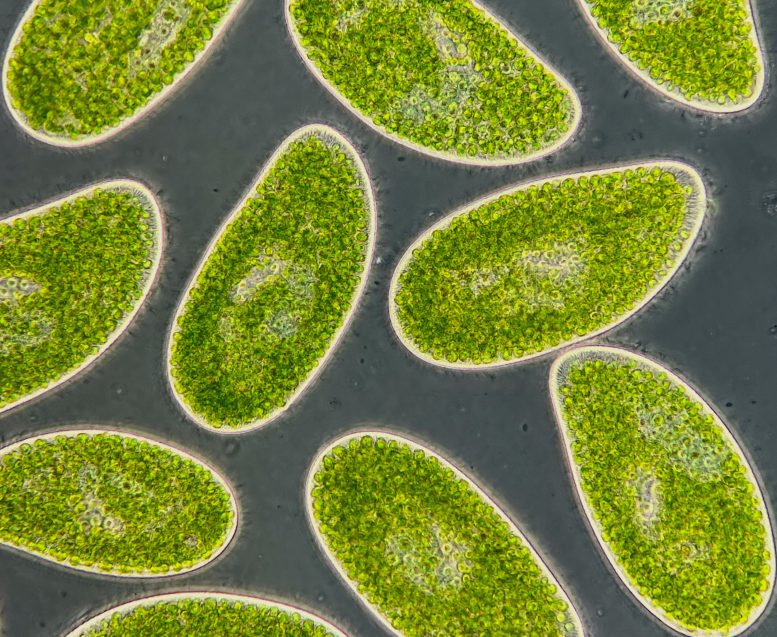
Found in lakes and rivers worldwide, single-celled creatures like theseParamecium bursariacan both eat and photosynthesize. Microbes like this play a double role in climate change, releasing or absorbing carbon dioxide — the heat-trapping greenhouse gas that is the primary driver of warming — depending on whether they rely on an animal-like lifestyle or a plant-like lifestyle. Credit: Daniel J. Wieczynski, Duke University
Increased heat levels might drive oceanic plankton and other unicellular organisms toward a carbon threshold, which could potentially exacerbate global warming. However, recent studies suggest that it might be feasible to identify early warning signs before these organisms reach that critical point.
A group of scientists researching a widespread yet frequently overlooked class of microbes…
View original post 842 more words

