How the US is preparing for a Chinese invasion of Taiwan
1

Considering the South Korean outbreak of avian influenza A(H5N1), scientists made suggestions to avoid future disease spillover and reduce the potential for disease to spread to humans.
January 30, 2024
Andrea Gantz
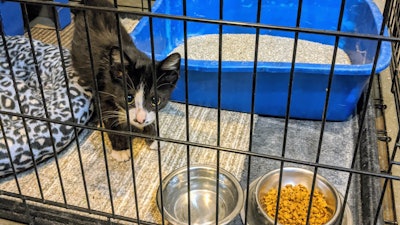
The SARS-CoV-2 coronavirus, which causes COVID-19 disease, seems to be zoonotic, having moved into humans from wild animals. Diseases can also pass from wildlife to livestock, zoo animals and companion animals, including a small number of dogs and cats that caught COVID-19. This phenomenon of one non-human species passing a disease to another can be called spillover. Those animals don’t need to be in direct contact with each other for spillover to occur. On July 25 and 31 of last year, health officials confirmed highly pathogenic avian influenza A(H5N1) infections in two cat shelters in Seoul, South Korea. A team of researchers examined this outbreak and published a summary in Nature Communications, along with suggestions for controlling future cross-species disease transmission.
“The influenza A(H5N1) outbreaks in the cat shelters in South Korea, along with an increasing number of reports of influenza A(H5N1) infection in mammals, suggest the need to enhance the effectiveness of infectious disease surveillance and prevention in any settings where a group of potentially susceptible animals are kept in close contact,” they wrote. “This is particularly important for groups of animals that typically are not covered by regulatory efforts aimed at maintaining or improving animal health and welfare standards. These animal groups could not only provide environments for cross-species viral transmission, promoting zoonotic risk, but could also serve as sentinels for detecting such events, thereby offering opportunities to assess and then mitigate such risk.”
H5N1 avian flu can spread to and kill humans. Between 2003 and 2023, the World Health Organization received 882 reports of human infection with H5N1 bird flu in 23 countries. Of these, 461 cases were fatal. Interspecies transmission of diseases can be fatal for the animals as well.
In the case last year at one of the cat shelters in South Korea, 38 out of the 40 infected cats died within a month. The shelter cats had all been kept indoors, so it seemed unlikely that wild birds had spread the pathogen to the cats. Instead, the virus may have spread to the cats through their food. Investigators with South Korea’s Ministry of Agriculture, Food and Rural Affairs (MAFRA) detected influenza A(H5N1) virus in cat food from one of the shelters. The cat foods were Balanced Duck and Balanced Chicken manufactured by Nature’s Raw at its facility in Gimpo, west of Seoul. The Ministry stated that the company had failed to follow necessary sterilization steps since May 25 due to an equipment malfunction. MAFRA officials then ordered the recall of all cat food batches considered at risk of harboring the virus. Approximately 13,200 units had already been sold to 286 pet owners. However, these pet owners reported no signs of infection in their cats.
The virus may have entered the cat food stream during an outbreak of the virus on South Korean poultry, including duck, farms that lasted until April 2023. While it seems likely that these farm infections may have been the source of the virus that infected the cats, the authors of the Nature paper noted that no conclusive evidence has been released by MAFRA. It is also unknown if the cats also spread the virus among each other, or if the disease always came from the cat food.
No humans in contact with the cats have tested positive for avian influenza. Although cats can contract highly pathogenic avian influenza, epidemiologists believe cats are not a significant vector for the disease and do not play a major role in transmitting avian influenza to people or other animals.
Avian influenza or bird flu naturally spreads among wild aquatic birds worldwide and can infect domestic poultry and other bird and animal species, according to the World Health Organization. Highly pathogenic avian influenza is a subtype of the virus. It can cause severe illness and high mortality rates in domestic poultry and wild birds. The viruses can devastate poultry industries and have economic repercussions due to trade restrictions. Some varieties, including H5N1, can cross species barriers and may cause severe illnesses in mammals.
In June, the IHR National Focal Point of Poland notified the World Health Organization of unusual deaths in cats across the country, suspected to be caused by highly pathogenic avian influenza. As of July 11, 47 samples had been tested from 46 cats and one captive caracal. Twenty-five samples tested positive for H5N1 avian influenza. Fourteen cats were euthanized. A further 11 died with the last death reported on June 30. Some cats developed severe symptoms, such as labored breathing, bloody diarrhea and neurological signs. Some of the cats deteriorated rapidly and died. In total, 20 cats had neurological signs, 19 had respiratory signs and 17 had both signs.
The outbreak of H5N1 avian influenza among the shelter cats was a rarity. The fact that the cats were all in one place may have been a major reason why the disease was discovered as the culprit, the study authors wrote. In individual homes, a cat infected with avian flu might have been diagnosed as suffering from another more common disease. Multiple cats getting the same disease were more easily observed in a shelter. Likewise in a home, the virus wouldn’t have had the opportunity to spread among various animals, if that indeed happened.
Considering the South Korean outbreak of avian influenza A(H5N1), the scientists made suggestions to avoid future disease spillover and reduce zoonotic potential.
1. Require pet shelters to systematically record adverse animal health events at individual animal and group levels. In outbreak situations, pet shelters should also record environmental factors (e.g. access to/from wildlife, and introduction of new animals) and husbandry conditions (e.g. food and water source).
“In the event of cross-species viral transmission, this information will help to better understand the source of infection and thus inform the implementation of preventive and control measures,” the scientists wrote. “Such a recording practice appears to have been lacking in these particular settings, very much in contrast to conventional livestock farming where the recording is routinely practiced.
2. Training shelter staff to report any unusual clinical signs or health trends among animals in the shelter. Animal health authorities need to precisely define reporting criteria and ensure shelter staff are familiar with those criteria.
3. The potential for undercooked poultry to transmit avian influenza justifies prohibiting or limiting the feeding of uncooked meat to animals kept for non-conventional production purposes, such as pet shelters and fur farms, and those in non-agricultural settings. These restrictions could minimise the risk of cross-species transmission of influenza A(H5N1) virus and other viruses.
4. Continue discussing how to implement measures to prevent and control cross-species viral transmission.
“It is crucial to involve all relevant stakeholders in this discussion, particularly the staff of the aforementioned animal settings, as their understanding of the implications of animal keeping for animal and human health might be less than amongst those involved in conventional livestock farming,” they wrote.
Dear editor:
Our family is tired of our tax dollars paying to capture and kill wild horses!
We DEMAND that this bait and trap of the McCullough Peaks wild horse herd in Cody, Wyoming, stop, IMMEDIATELY, before other horses are killed!
We are writing to demand that you use the powers of your office to IMMEDIATELY STOP the current bait and trap happening on the McCullough Peaks HMA!

A yearling filly was killed during the bait and trap last week! The public has NOT been given any details, and the BLM is well-known for its lack of transparency! No matter what they say, NO excuse makes this death okay! NO excuse makes this use of OUR tax dollars acceptable!
Diane M. Kastel and Family
Cody

Colorado Parks and Wildlife officials release 1 of 5 gray wolves onto public land in Grand County, Dec. 18, 2023. This wolf is known as 2302-OR. (Courtesy of Colorado Parks and Wildlife)
The Montana Fish, Wildlife and Parks Department says that hunting and trapping wolves is fine. But, it doesn’t have the resources to translocate — or move — them to another state.
In May 2023, Jeff Davis, Colorado’s Director of Parks and Wildlife, sent a request to Idaho, Montana, Oregon and Washington, seeking 30 to 50 wolves during the course of “several years,” because voters there had passed Proposition 114, which created a wolf re-introduction plan for the state.
Colorado media outlets reported that the state had reached out to other states, including Montana, but had to go to Oregon to get its first wolves, after Idaho and Montana declined.
Greg Lemon, spokesperson for the Montana FWP, said that Montana does not have adequate staff to handle the request, which would include locating the wolves, trapping them and then transporting them. For example, he said that contributing the animals to Colorado would have likely required an environmental impact statement and other documentation that could have monopolized staff time.
He told the Daily Montanan that Davis had reached out to former FWP Director Hank Worsech, who was contacted by letter by Colorado. He said that Worsech had a phone conversation with Davis, declining to help Colorado reintroduce wolves with Montana animals.
Lemon said the decision was made by Worsech and that the governor’s office was not involved with the decision.
In regards to public information requests and inquiries by media, the Montana FWP released this statement:
“Wolf management in Montana is controversial and demands a balance of sometimes competing values from landowners, hunters, trappers and the general public. This will remain our focus. Moving wolves to Colorado would involve a lengthy environmental review, public process and ultimately a commission decision. It would also involve staff time in the field to find, trap and move wolves. This effort would take our focus off managing wolves for the people of Montana. We are simply not willing to divert our attention from this important task.”
Even though Montana declined to “translocate” wolves, the state is currently involved with moving another species. Montana has agreed to move some of its grizzly bears to Wyoming in an effort to connect isolated bear populations and diverse their genetics.
“That’s part of our commitment to the conservation of the species,” Lemon said. “We have to ensure genetic exchange and that’s important.”
The Daily Montanan asked what made the two decisions different, and Lemon said wolves have proliferated in the state, whereas the bears’ recovery has been a slower process that could benefit from the new genetics.
“The reality is that we have finite capacity and resources for our wildlife,” Lemon said. “And, (the Colorado) request is just not where we’re at.”
By Jake Spring and Gloria Dickie
January 30, 20243:18 PM PSTUpdated a day ago
https://imasdk.googleapis.com/js/core/bridge3.616.1_en.html#goog_445465185
0 seconds of 0 secondsVolume 0%
Jan 30 (Reuters) – A deadly type of bird flu has been found in gentoo penguins for the first time, according to the Scientific Committee on Antarctic Research (SCAR), stoking concern that the virus could spread among Antarctica’s huge penguin colonies.
Researchers found, opens new tab about 35 penguins dead in the Falkland Islands in the South Atlantic on Jan. 19. Samples taken from two of the dead penguins came back positive for the H5N1 avian influenza virus, said Ralph Vanstreels, a veterinarian who works with SCAR.
Advertisement · Scroll to continue
The Falkland Islands government told Reuters that many more gentoos were dying under similar circumstances. As of Jan. 30, “there are over 200 chicks dead alongside a handful of adults”, said government spokesperson Sally Heathman.
The deaths confirm that gentoo penguins are susceptible to the lethal disease that has decimated bird populations across the world in recent months. However, gentoos rarely travel between the Falklands off Argentina’s coast and the Antarctic Peninsula, which lies some 1,300 kilometres (800 miles) to the south.
Advertisement · Scroll to continue
That means traveling penguins are unlikely to drive the spread to the southern continent, said Vanstreels, a researcher affiliated with University of California-Davis.
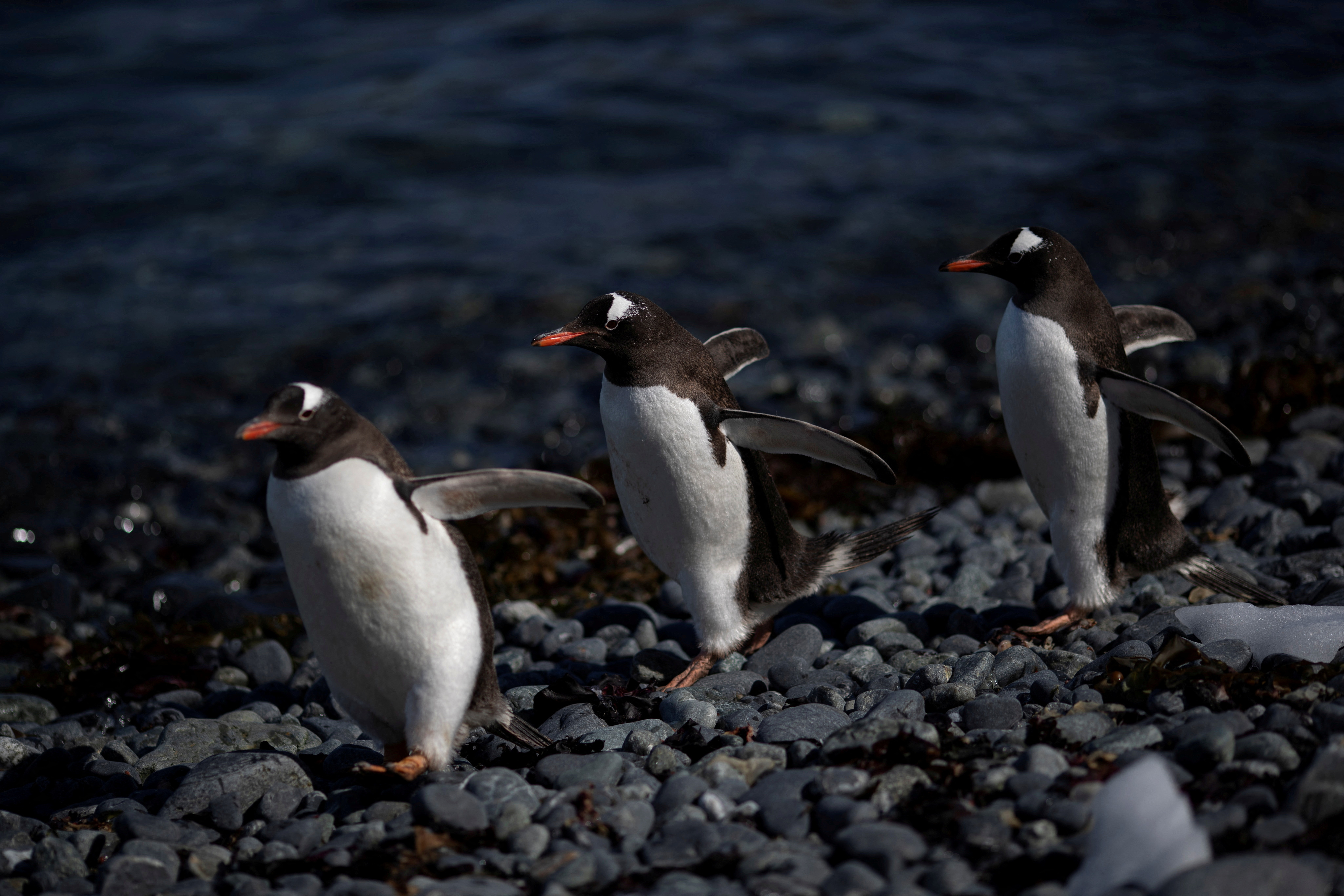
[1/2]A group of gentoo penguins walk along Quentin Point, Anvers Island, Antarctica, February 4, 2020. REUTERS/Ueslei Marcelino/File Photo Acquire Licensing Rights, opens new tab
“The role that gentoo penguins could have, instead, is to serve as local reservoirs of infection,” he said. “That is, maintain a pool of susceptible hosts that never leaves the islands.”
Heathman said the Falkland Islands government was also awaiting test results from rockhopper penguins and “preparing for a large-scale outbreak.”
Advertisement · Scroll to continueReport this ad
In nearby South Georgia, authorities ruled out a report of bird flu suspected in king penguins after a detailed survey of the site, said Meagan Dewar, who leads SCAR’s Antarctic Wildlife Health Network.
Hundreds of thousands of penguins gather in tightly packed colonies on the Antarctic continent and nearby islands, which could enable the deadly virus to easily jump between individuals.
Conservationists are more concerned about other species, Vanstreels said. Elephant seals and fur seals have died in larger numbers from bird flu in South Georgia, following mass casualties in those species in South America.
“This is especially concerning because South Georgia is home to 95 percent of the world’s population of Antarctic fur seals. If that population collapses, the species will be in a critical situation,” he said.
Reporting by Jake Spring and Gloria Dickie; Editing by Bill Berkrot and Ros Russell
0:00/ 0:00
By News TeamFOLLOWFOLLOW “” TO RECEIVE NOTIFICATIONS ABOUT NEW PAGES ON “”.
today at 11:17 AM
Share on FacebookShare on TwitterShare on Linkedin
BOISE, Idaho (KIFI) – A law working through the Idaho Legislature is hoping to stop some people from getting an edge over others when it comes to hunting.
Idaho Fish and Game sets the rules for hunting and fishing in the state.
ADVERTISING
The agency describes fair chase as pursuing an animal in their natural environment and overcoming its senses.
But a small number of Idaho hunters is looking to exploit animal tracking data.
The group is filing a public records request to get the GPS information.
ADVERTISEMENT
Start the conversation
Have your say.Leave a comment below and let us know what you think.
Be the First to Comment Open ad privacy settings
This website stores cookies on your computer. These cookies are used to collect information about how you interact with this website and allow us to remember you. We use this information in order to improve and customize your browsing experience and for analytics and metrics about visitors both on this website and other media. To find out more about the cookies we use, see our Privacy Policy.Enable personalized adsClose ad privacy settings
State lawmakers are now looking to limit that from happening with House Bill 404.
“Lot of people after the same big l people do whatever they think they can get away with,” Jim Runsvold said.
The tracking collars are used to map migration routes, behavior and monitor the health of a herd, but without safeguards around that data, there is fear it is ripe for misuse and abuse.
The bill was moved on by the House Resources and Conservation Committee.
It was sent to the full House Monday with a do pass recommendation.
 Exposing the Big Game