Scientists Warn American ‘Promotion of Hunting’ Is Ruining the Environment
Reply

| We need your help this week to stop Senate Bill 5939, a bill to allow livestock owners and their friends to kill wolves over bait. SB 5939 nominally sets up a pilot program to evaluate the effectiveness of allowing ranchers, their employees, and their “agents,” to kill the first wolf who returns to a livestock predation site. But unlike other carnivores, wolves do not cache prey and then return to feed. This bill would authorize baiting, pure and simple, and there is no scientific basis to believe that allowing ranchers to kill the first wolf to visit a bait site would reduce wolf-livestock conflict. In reality, SB 5939 would just give livestock owners and their friends a free license to kill wolves in the general vicinity of livestock—even as current “caught in the act” provisions are already being abused and wolf poaching is on the rise. The result could be potentially catastrophic, adding to annual wolf mortality rates that are already at record highs, and making state wolf recovery even more of a distant dream. The Senate Agriculture, Water, Natural Resources & Parks Committee will hold a public hearing on Senate Bill 5939 at 1:30 p.m. on Thursday, January 18, and we need you to raise your voice before then to make sure this bill does not get beyond the committee! |
| Please take these steps by noon on Thursday, January 18 1. Register your opposition to SB 5939 before Thursday’s hearing. It takes just a couple minutes to let the committee know that you oppose the wolf baiting bill. Please click here, select your position as “Con,” and enter your name, email, address, state, zip code, and phone number. Hit “Submit.” 2. Submit written testimony. Click here to submit written testimony to the Senate Agriculture Committee prior to Thursday’s hearing. Please reference the talking points below and tell committee members why it is important to you that they oppose SB 5939 and support Washington wolf recovery. 3. Write the sponsors of SB 5939. Some sponsors of SB 5939 seem to be under the mistaken impression that it presents a sensible solution to wolf-livestock conflict. If one of your senators is a sponsor of SB 5939, please write a personal note to explain that it is a reckless measure that would undermine state wolf recovery. The sponsors of SB 5939 are Sens. Keith Wagoner (R-39th), Kevin Van De Wege (D-24th), John Lovick (D-44th), T’wina Nobles (D-28th), and Mark Schoesler (R-9th). Click here to find out if one of these senators represents you and to send them a direct message. Talking Points: A vote for SB 5939 is a vote against wolf recovery! There is no scientific basis for killing the first wolf returning to a predation site. SB 5939 seems to be based on a fundamental misunderstanding of wolf biology, since wolves do not “cache” prey to return later. There is no reason to believe a wolf visiting a predation site was responsible for that predation.Leaving dead livestock out to attract carnivores is baiting, which is contrary to every sensible approach to resolving conflicts with livestock. Bait will only draw more carnivores toward the areas where livestock are kept—not only wolves, but also cougars, bear, coyote, and other carnivores.The best-available science shows that proactive, non-lethal deterrence measures are the most effective means to prevent wolf-livestock conflict. However, SB 5939 would not require livestock owners to take even the most basic steps to protect their livestock before allowing them to kill wolves.The proposal would move the Department of Fish and Wildlife even farther away from a science-based approach to wolf-livestock conflict. Unlike the Department’s current protocol, which Governor Inslee recently instructed the Department to consider enacting as a rule, SB 5939 would not require a minimum number of predations before allowing landowners to kill wolves—or even require the Department to confirm that wolves caused those predations.SB 5939 would lead to increased poaching. Last week, Governor Jay Inslee ordered the Department to take action to curb abuse of the provision that allows livestock owners to kill wolves “caught in the act” of attacking livestock. SB 5939 moves in the opposite direction, creating a program to allow livestock owners and their friends to kill wolves in the general vicinity of where livestock used to be—including even in public forests.SB 5939 would jeopardize Washington wolf recovery. Human-caused wolf mortality has more than doubled in recent years, with humans killing an average of about 30 wolves a year in the last two years. Even at lower levels of mortality, a population study completed last year estimated that Washington’s wolves would have less than a 50% chance of reaching state recovery goals within the next 50 years. SB 5939 would further increase wolf mortality, eliminating the hope of meaningful wolf recovery and placing the state wolf population in serious danger. Thank you for coming to the defense of Washington’s wolves! |
By: Mazhar Abbas
Published: January 15, 2024 at 8:56 am EST

In an unsettling turn of events, an alarming die-off of elephant seal pups has been recorded on the beaches of Valdes Peninsula in Argentina. The cause? A lethal strain of avian influenza, leading to the death of nearly 17,000 pups. This tragedy is not an isolated incident but a part of a wider, catastrophic panzootic affecting an estimated 320 bird and mammal species worldwide.
The potent H5N1 strain of avian flu, responsible for this devastation, has made its way through both wild and domestic animal populations across all continents, barring Australia and Antarctica. The pattern of this spread mimics migratory bird routes, indicating a connection between the two. Human infections from this strain have been rare so far, yet the potential adaptation and transmission of the virus between mammals, including humans, are raising the specter of a new pandemic.
Tracing the origins of the virus takes us back to the poultry farms in southern China in 1996. It made its way to wild birds by 2005, and a genetic mutation after 2021 led to its global spread. The toll on wildlife has been nothing short of disastrous, with large-scale deaths among various bird species and now, the virus has reached marine mammals such as sea lions and elephant seals.
The transmission of the virus to mammals has been sporadic so far, but it includes a wide range of species. This fact has scientists on edge, fearing the virus could evolve to spread more readily among mammals. The situation spells doom for unique animal populations in Antarctica, already grappling with numerous environmental challenges. The H5N1 avian flu serves as a stark reminder of the intricate interconnectedness of human activity, wildlife, and ecosystem health.
The consequences of practices that facilitate the spread of such pathogens are grave. As we witness the severe impact on wildlife, the looming threat of a possible pandemic underscores the urgency for immediate and effective interventions. The situation calls for global collaboration, extensive research, and stringent measures to curb the spread of the virus and safeguard both animal and human populations.
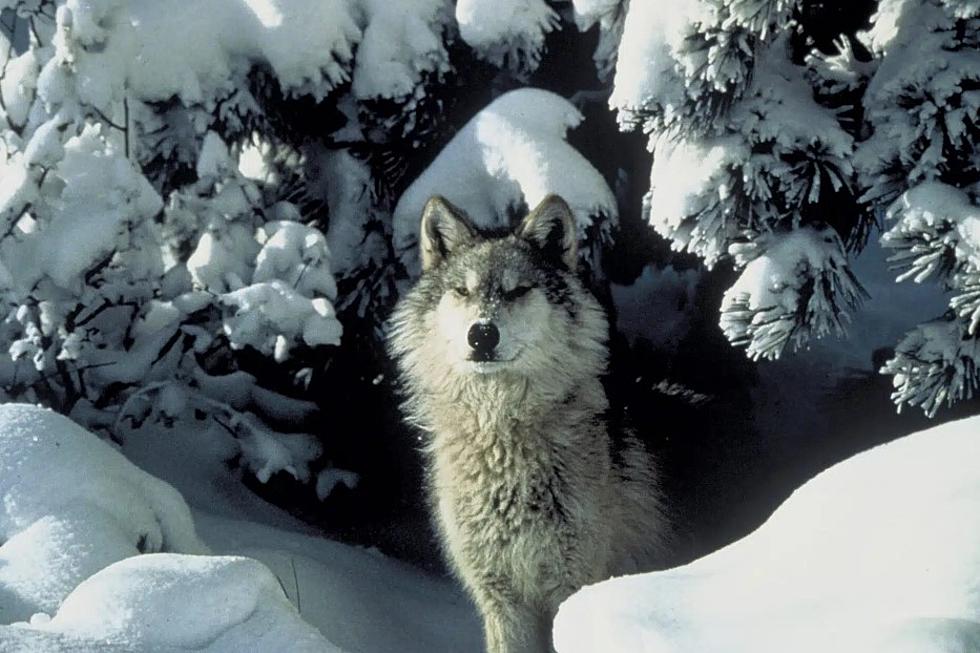
https://missoulacurrent.com/wolf-trapping-montana-2/
Courthouse NewsPublished: January 15, 2024(Tracy Brooks courtesy of Mission Wolf/USFWS via Courthouse News)
Edvard Pettersson
PASADENA, Calif. (CN) — The Ninth Circuit Court of Appeals on Friday took a skeptical view of an injunction issued by a federal judge last year, which prohibited wolf trapping in a broad swath of Western Montana outside of a narrow timeframe from Janunary 1 to February 15.
27.2M
1.1K
Imagine a Missing Girl + 50
The three-judge panel appeared puzzled by the injunction, which seemingly ignored the state’s scientific determination of where grizzly bears can be found. Conservation groups, though, stressed that grizzly populations were growing and their habitats expanding, especially as Montana sees warmer winters.
The injunction aimed to protect grizzlies, which are at risk of getting maimed by the wolf traps. And yet in the end, the order prohibited trapping in a much larger part of the state than what plaintiffs had even asked for.
Montana appealed the November ruling by U.S. District Judge Donald Molloy in Missoula, who issued the injunction at the request of two conservation groups. The groups claimed that the state’s plan to allow recreational wolf trapping as early as the first Monday after Thanksgiving — and continuing through March 15 — could cause harm to endangered grizzly bears who weren’t hibernating in their dens.
The state claims that Molloy did not adequately explain his reasoning. It says the judge created “out of whole cloth” a definition of Western Montana that went beyond what the conservationists had sought.
Montana permits recreational trapping of grey wolves, which aren’t endangered, to control the population. At the same time, it limits wolf trapping in areas where it knows grizzly bears live, except for a limited period during the winter when the bears are in their dens.
In court on Friday, lawyers for state stressed its success at keeping track of grizzly bear populations.
“Montana has successfully predicted where grizzly bears will be and when they will be there for the last decade,” Assistant Attorney General Sarah Clerget told the panel. “In the 35 years since grizzly bears were listed, no grizzly bear has ever been incidentally captured in any trap of any kind outside the place where Montana said the grizzly bears would be in the estimated occupied grizzly bear range.”
Tim Bechtold, an attorney for the Flathead-Lolo-Bitterroot Citizen Task Force and WildEarth Guardians, countered that because of increasingly warmer winters, along with the growth of the grizzly population and their territory, there was an increased risk that the charismatic bears could get caught in wolf traps.
The area that falls under the injunction against wolf trapping, Bechtold said, was essentially the area of Montana west of Billings where the state acknowledges grizzlies can be found.
The judges seemed unconvinced. “So, basically the fine mapping that counsel referred to, which apparently is now even more refined than it was before, is sort of out of the window, and we’re going to declare by fiat that all this area is now prohibited,” Senior Circuit Judge Richard Tallman said, referring to Clerget’s explanation of how the state determines where grizzly populations reside.
The judge also appeared unpersuaded by Bechtold’s position that regulations should be so stringent as to ensure not a single bear could be harmed. Tallman, a Clinton appointee, argued a similar case in Idaho had yielded what he said was a more reasonable injunction, which allowed for the possibility that one or two bears could be incidentally caught in a trap.
The appellate panel also included Circuit Judge Mark Bennett, a Donald Trump appointee, and Senior District Judge Robert Lasnik of the Western District of Washington, also a Clinton appointee. Lasnik was sitting on the panel by designation.
A range scientist in Colorado is claiming that wolf reintroduction will actually be good for ranchers and make things better for elk hunters. Further, he said Wyoming’s hardline approach to wolves in some parts of the state is detrimental to overall delisting.
January 13, 20248 min read
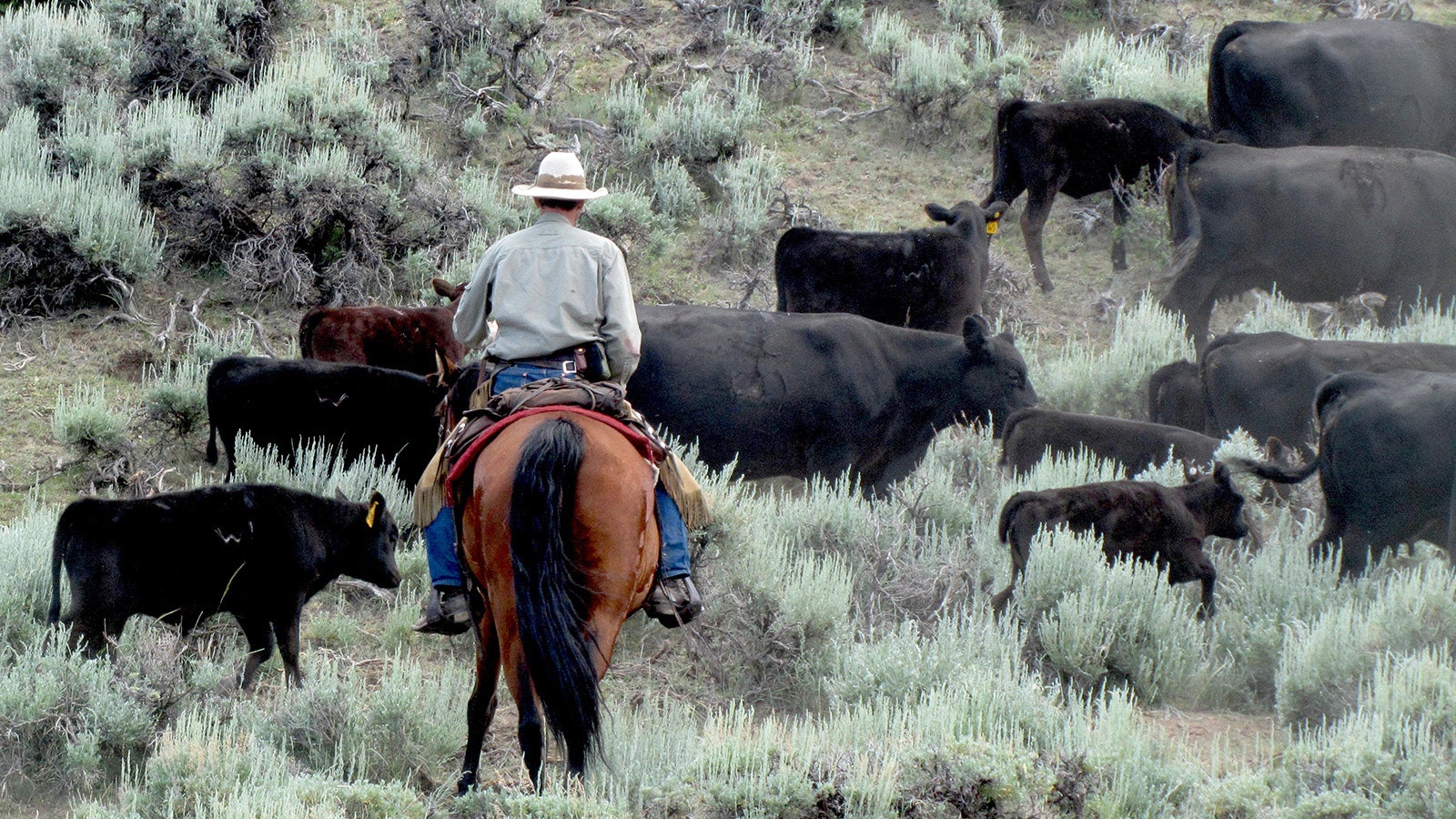
The ultimate outcome of Colorado’s wolf reintroduction might be unclear, but it doesn’t have to be the disaster some have made it out to be, a conservationist told Cowboy State Daily.
“People are worried that wolves are going to kill elk, kill deer, kill cattle and kill sheep. And they’ll do all of that, those fears are not unfounded,” said Matt Barnes, a range scientist who has worked on wolf and grizzly bear conflict mitigation on ranches in Wyoming and Montana.
But those fears also are likely blown out of proportion, Barnes told Cowboy State Daily, adding that wolves are responsible for only a fraction of a percent of livestock deaths in the Northern Rockies.

And roughly three decades after wolves were reintroduced in Wyoming, Montana and Idaho, those states still have ample elk herds and hunting tag availability with overall elk hunting success rates not being affected, Barnes added.
So, Colorado’s wolf program can succeed, although it will take a wide range of management strategies – including sometimes killing wolves, said Barnes, who lives in Colorado and is a research associate with the Northern Rockies Conservation Cooperative.
He was also part of a stakeholder’s advisory group during the planning stages of Colorado’s controversial wolf reintroduction program.
Colorado’s wolf reintroduction program was initiated by Proposition 114, which Colorado voters passed in 2020 by the slimmest of margins, 50.91% to 49.09%.
In December, Colorado Parks and Wildlife agents released 10 wolves at undisclosed remote locations in Grand and Summit counties in northern Colorado.
Some hailed the wolf reintroduction as a huge success, but others took a dimmer view.

In particular, some Wyoming ranchers near the Colorado border said they’re prepared to shoot any wolves that cross the state line. In that part of Wyoming, wolves are classified as a predatory species and may be killed on sight.
Wolves were already filtering into Colorado from Wyoming on their own, Barnes said.
“Physically, it’s possible for wolves to cross southwest Wyoming into Colorado. We know of about 10 times it’s happened since 1995,” he said.
However, there were only two documented incidents of male and female wolves that had come from Wyoming meeting up and breeding new pups in Colorado, Barnes added.
A full migration of wolves into Colorado from Wyoming might have eventually happened naturally, but too much of Wyoming is a “shoot on sight” zone for wolves for that to have happened, he said.
“I actually think that it’s because of Wyoming’s policies that Colorado had to resort to a reintroduction program to re-establish wolves,” Barnes said.

But now that wolves are in Colorado, as ironic as it might seem, he said a larger number of wolves might serve ranchers’ interest better.
That’s because if there are instances in which wolves must be killed to protect cattle, it wouldn’t threaten the overall Colorado wolf population if there is a healthy population of them, he said.
“If wolves are coming back to Colorado, it might — counterintuitively — be better for livestock producers if the population grows relatively quickly,” Barnes said. “If we want management flexibility, including lethal control of wolves involved in persistent livestock conflicts, we need to have enough wolves that each individual isn’t so valuable to the population as to preclude lethal control.”
That’s also why reintroduction might work out better than natural migration would have, he said.
“I originally thought that it might be better if wolves could return to Colorado on their own, but eventually concluded that would result in a long period with wolves being relatively rare, highly valuable and potentially involved in persistent conflict and subject to significant losses just across the Wyoming state line,” he said.
There should nuance in how cattle depredation is handled, Barnes said. That means if a suspected wolf killing of livestock is reported, wildlife agents must handle it promptly.
“They need to get there fast. They need to do an accurate and thorough investigation. They need to be unbiased and determine whether it actually was a wolf kill,” he said.
Some instances could be wolves simply being “opportunistic” and might not require removing wolves, Barnes said.
However, when wolves are persistently attacking a particular livestock herd, that’s another matter.
“If a wolf pack starts repeatedly killing livestock and it becomes a regular part of their diet, then lethal control is an option,” Barnes said.
If Colorado is to reach its goal of having a self-sustaining wolf population, conflict with human interests must be minimized, he said.
“We can prevent some of those conflicts, but we can’t prevent all of them,” he said. “Some livestock will be killed and some wolves will be killed.”
There are a range of nonlethal wolf deterrents available for ranchers, Barnes said. Some of those include using lights or loud recorded sounds to frighten wolves away.
Fladry is another option. It consists of brightly colored nylon flags that are sewn onto a long strand of woven plastic or metal wire, and sometimes the wire is electrified. Those methods work only in confined areas such as calving grounds near ranch headquarters, he said. And they might work only for a while until wolves get used to them.
“I wouldn’t string fladry all over the Southern Rockies. It would stop working eventually,” Barnes said.
When he worked on predator conflict reduction in Wyoming and Montana, an effective method was to keep cattle on the range close together and under the eye of range riders or cattle guardian dogs.
It also helped to frequently move cattle around, Barnes said.
Much has been made about how wolves affect hunting, Barnes said. As a hunter himself, he appreciates that Colorado has about as many elk as Idaho (or Wyoming) and Montana combined.
However, while wolves might dampen elk hunting in specific areas, overall they’ve hardly ruined it in the Northern Rockies, he said. Indeed, some of the best elk hunting can be in areas that have wolves.
“If I were to choose where to live based only on being an elk hunter, I’d want to live in northwestern Wyoming,” he said.
Wolves can push elk around and scatter them across the landscape, which in some instances can create more opportunity for hunters, Barnes said.
There’s also some evidence that mountain lions might be the “top apex” predators on elk in some areas. And wolves can drive down the mountain lion population, Barnes said.
Even so, what could happen with elk hunting in Colorado as wolves establish themselves there could remain to be seen, he said.
“I don’t think we know how that’s going to work in Western Colorado,” he said. “I don’t think we know if that’s going to be a positive or negative for elk hunters here.”
If the long-term goal is to have wolves delisted from endangered species protection all across America, the road to get there could be rough, Barnes said.
“I don’t think that national delisting of the gray wolf will be successful until there is a self-sustaining population in the Central and Southern Rockies with connectivity to the Northern Rockies and eventually to the Mexican wolf population in the Southwest,” he said.
Wyoming’s hardline approach to wolves in parts of the state might hold up the process, he added.
“Ironically, the delisting of the Northern Rockies, with the line drawn along Wyoming’s southern border, combined with Wyoming’s predator zone, has probably prevented a successful national delisting,” Barnes said. “If so, that’s another example of people having widely different ideas about predators, definitions of success and visions for the future of the West.”
The strong opinions that wolves generate – positive and negative – indicate broader cultural trends, Barnes said.
“Some would call that a clash between the Old West and the new West,” he said. “I expect that the next West will transcend and include our ideas of old and new, and will be a wilder West in at least this one way.”
 Exposing the Big Game