Bird flu: How can the poultry sector ensure global supply?

26-01 | Market trends/analysis | News

FacebookTwitterEmailLinkedInPrint

https://www.poultryworld.net/the-industrymarkets/market-trends-analysis-the-industrymarkets-2/bird-flu-how-can-the-poultry-sector-ensure-global-supply/

Ricardo Santin, president of ABPA, took over the International Poultry Council in the face of one of the biggest challenges ever for the sector. Photo: Supplied

Global poultry farming faces one of the biggest challenges in its history due to a prolonged and widespread avian influenza pandemic. Ricardo Santin, president of ABPA, took over the International Poultry Council in the face of this challenge. We asked for his thoughts…

Avian influenza has already decimated hundreds of flocks worldwide, generated trading barriers, and, therefore, threatens the global supply of one of the most accessible proteins.

Ricardo Santin recently assumed the presidency of the International Poultry Council with the challenge of guaranteeing the international supply of poultry products. The executive is a well known reference in the sector in Brazil and also holds the position of president of the Brazilian Animal Protein Association (ABPA), where he has worked since its foundation.

Perhaps the success of the national poultry industry also helped lead Santin to the leadership of the International Poultry Council. Brazil is already the second-largest producer and largest poultry exporter and has never recorded cases of the disease on commercial farms.

Poultry World spoke to Santin to find out more…

Santin, what is it like to be the first Brazilian to preside over the International Poultry Council?

It is a great honor to be there at the International Poultry Council representing the global poultry industry, which is the second most consumed protein in the world. Everyone already knows that, according to FAO and USDA projections, chicken will be the most consumed protein shortly as it is one of the most accessible.ALSO READBRICS expansion increases grip on poultry market

Being there with 27 countries and 50 of the largest industries in the sector, which represent 80% of production, is an honor and a great responsibility. Especially for continuing the good work that was done by Robin Horel and Jim Sumner, one from the US and the other from Canada, who preceded me.

The objective is to strengthen the institution, and to reinforce its presence as the voice of the poultry industry in the world.

What does it mean to keep up the good work?

We managed to build virtual working groups, in addition to holding an annual meeting that this year will be in Argentina from 6-8 May. In these working groups, we are comunicating about trading, the responsible use of antimicrobials, and topics that are common to the sector all over the world.

Debates cross borders with everyone focused on improving production. For example, the issue of avian influenza banned the trade in genetics. That is my priority: moving forward with regional compartmentalisation to ensure that the poultry industry around the globe does not run out of genetic material.

What are your other priorities?

The first is to strengthen the image of the International Poultry Council and, later on, attract more members. We will try to seek out more member countries and companies, as well strengthen the International Poultry Council’s presence with local governments.ALSO READBrazil renews poultry export highs in 2023

The International Poultry Council manages to find an average of expectations amongst its members, organising events and, sometimes, taking action all over entire world. We need to have strength with governments.

Some examples are the positions on avian influenza or the case study on the prudential use of antimicrobials. That study has been practically adopted as standard because we have speaking positions within the World Organization for Animal Health and the Food and Agriculture Organization of the United Nations.

Extraordinary situations may require outstanding measures. What more can be done to combat avian influenza and ensure healthy poultry meat for the entire planet?

First, avian influence does not transfer to meat, so the meat remains healthy. But many countries still block international commerce due to the precautionary principle.

The second point is to ensure that the world learns to live with this virus. Following technical recommendations, it means segregating only the regions where the disease is present to guarantee supply to all parts of the world. That’s what we want to do with the practically. Let’s work so that there is no trade interruption, maintaining people’s food security.

How is the acceptance of compartmentalisation by regions?

Brazil recognises compartmentalisation in France, Canada, and the US on genetic material, for example. We have reciprocity under OMSA compartment rules. That is why we continue to import genetic material even from countries that have had a case of bird flu in their commercial production.ALSO READEgg farmers shun avian influenza vaccination strategy

France, for example, exports egg-laying genetic material to Brazil, but has had cases in wild birds in the north. There’s no reason for us to block it. We must build a vision of solidarity and complementarity amongst countries. The world cannot have borders for food. I have this saying.

Japan had blocked exports from Brazilian Espírito Santo state and reopened. What happened?

Countries are accepting this type of compartmentalisation. In the case of Japan, we had a case of bird flu in a backyard production in the state of Espírito Santo. Japan understood that it is the same as a wild bird case. In other words, trade no longer closes.

In the case of Brazil, we are already working with many markets. More than half of those who import Brazilian products have already recognised the possibility of a zone or compartment with a radius of 10 km.

Can the sector help mitigate the risk, also for backyard production?

The entire sector already helps through training people in regions where companies are. We have cases where companies called their neighbours and provided materials or helped to build small and closed aviaries. Ideally, every producer should have at least sources of treated water, not lakes, for example. That’s what we’re doing: training campaigns to try to prevent it.Watch on demandAvian influenza summit webinar

Why did other countries have the problem in wild birds first and then in commercial farms and Brazil did not?

It is due to several factors, but the first is very high biosecurity work in the farm environment. In addition, very high dietary care is pivotal.

The third point is that Brazil has bird migration mainly in coastal areas, where there is no significant production. In other words, international migration routes do not bypass our production areas. They are far from production.

The last reason, and perhaps the most important, is that we don’t collect water in open places. Our poultry houses always receive treated water. That eliminates the risk of sick wild birds coming to a pond and livestock using that water. It’s a simple thing, but it’s a great transmission vector. We already did this naturally as a standard before the outbreaks.

In addition, Brazil adopts the total ban on visits to farms and strengthening the training of employees with simple measures such as washing hands and changing clothes.

Wisconsin Teen Babysitter Arrested in Connection to Brutal Killing of Family Dog

The chihuahua had been hidden under blankets and stuffed animals, and appeared to have been stabbed

Published 01/29/24 07:44 AM ET|Updated 7 hr ago

Nick Gallagher

https://themessenger.com/news/wisconsin-teen-babysitter-arrested-connection-brutal-killing-family-dog

The family said they had raised Batman, their 8-year-old Chihuahua, since he was a puppy.Lost Dogs of Wisconsin/Facebook

An 18-year-old Wisconsin babysitter is accused of brutally murdering her longtime client’s dog.

The family, who lives in the Milwaukee suburb of Sussex, was devastated when they came home Thursday to find that their dog was missing after the babysitter was at the house, local station WISN reported.

But on Friday afternoon, they found Batman, their 8-year-old chihuahua, dead under a bundle of blankets and stuffed animals. WISN reported that he appeared to have stab wounds and a bag over his head.

Police interviewed the 18-year-old suspect and arrested her on suspicion of cruelty to animals. Her name hasn’t been released because she has not yet been formally charged.

The family told police they’d had Batman since he was a puppy. They had originally reported him missing to Lost Dogs of Wisconsin, a non-profit that shares information about missing dogs on Facebook.

https://www.facebook.com/plugins/post.php?href=https%3A%2F%2Fwww.facebook.com%2Ffindfido%2Fposts%2F798169395682315&show_text=true&width=500

“That’s kind of scary to think that there’s somebody who would be willing to do that,” neighbor Scott Calmes told WISN. “I can’t imagine why anyone would want to kill a small dog.”

The Waukesha County Sheriff’s Office is investigating the incident.

All about Avian Flu outbreak that is devastating farms in the US

The Avian Flu outbreak has led to the destruction of over 1 million birds in the region, causing significant economic damage to farmers, workers, and customers alike.

Listen to Story

Live TV

Share

ADVERTISEMENT

https://www.indiatoday.in/health/story/all-about-avian-flu-outbreak-that-is-devastating-farms-in-the-us-2494853-2024-01-29

Avian Flu

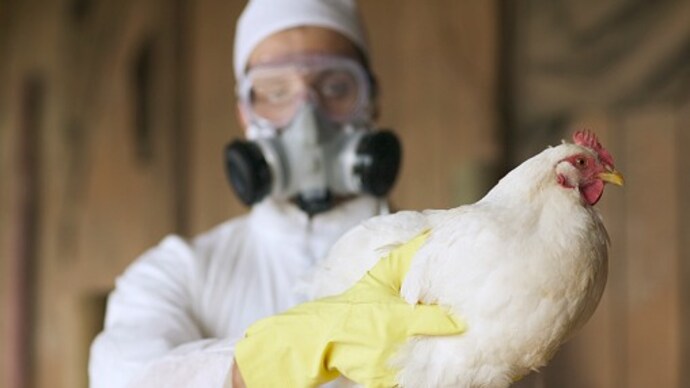
Avian flu or bird flu is caused by the influenza A virus. (Photo: Getty Images)

India Today Health Desk

India Today Health Desk

New Delhi,UPDATED: Jan 29, 2024 13:37 IST

In Short

  • Avian flu outbreak has led to the destruction of over 1 million birds in California farms
  • This highly contagious viral disease is seen in domestic poultry
  • In humans, the symptoms can range from mild to severe

Over the last few weeks, the US state of California, once known as the “Egg Basket of the World,” is facing a severe crisis as highly pathogenic avian influenza (HPAI) wreaks havoc across its poultry farms.

In Sonoma County, a state of emergency has been declared following the infection of Mike Weber’s Sunrise Farms, where 5,50,000 egg-laying hens had to be culled to prevent further spread of the disease.

ADVERTISEMENT

This outbreak has led to the destruction of over 1 million birds in the region, causing significant economic damage to farmers, workers, and customers alike.

/

MUST READ

‘Mummy, Papa, I can’t do JEE’: Teen dies by suicide in Kota, second this year

TRENDING TOPICS:

Bihar Political TurmoilRam MandirBharat Jodo Nyay YatraINDIA BlocIsrael-Hamas War

WHAT IS AVIAN FLU?

Avian flu or bird flu is caused by the influenza A virus which usually birds contract, but it can infect humans too.

This highly contagious viral disease is seen in domestic poultry including guinea hens, ducks, geese, and chickens. People can get this virus if they come in contact with a sick bird.

SYMPTOMS OF AVIAN FLU

Avian flu presents various symptoms in birds, including diarrhoea, breathing difficulties, swollen heads, and sudden death.

Avian flu or bird flu is caused by the influenza A virus which usually birds contract, but it can infect humans too.
Avian flu or bird flu is caused by the influenza A virus which usually birds contract, but it can infect humans too. (Photo: Getty Images)

ADVERTISEMENT

https://www.indiatoday.in/health/story/all-about-avian-flu-outbreak-that-is-devastating-farms-in-the-us-2494853-2024-01-29

In humans, the symptoms can range from mild, such as cough, headache, sore throat, and fever, to severe conditions like pneumonia requiring hospitalisation.

Other human symptoms include shortness of breath, chills, fatigue, congestion, muscle aches, and in some cases, conjunctivitis.

Transmission of Avian Flu to Humans

The transmission of avian flu to humans typically occurs through direct contact with infected birds, contaminated surfaces, or bird droppings.

It is unlikely for the virus to spread to people from consuming undercooked eggs or poultry.
However, people who handle infected birds or come into contact with their environments are at higher risk.

Preventive Measures

To prevent the spread of avian flu, experts recommend several measures:

  1. Properly handle and cook poultry and eggs to an internal temperature of 73.8°C to kill viruses.
  2. Practice good hygiene, especially when handling raw poultry.
  3. Use separate utensils for cooked and raw meat.
  4. Avoid contact with live birds and poultry.
  5. Implement biosecurity measures, such as restricting access to poultry farms and disinfecting clothing and equipment.

Treatment for Avian Flu

While there is no specific treatment for avian flu in birds, infected flocks are euthanised to contain the virus.

For humans, antiviral medications such as oseltamivir may be prescribed to treat the infection.

It is crucial for individuals who suspect they have been exposed to avian flu to seek medical attention promptly.

Traps set for boars accidentally capture two leopards in Shamli and Baghpat

Jan 28, 2024, 08:32 IST

SHARE https://timesofindia.indiatimes.com/city/meerut/traps-set-for-boars-accidentally-capture-two-leopards-in-shamli-and-baghpat/articleshow/107196869.cms

AA+

TEXT SIZE

  • Small
  • Medium
  • Large

FOLLOW US

New For You

Traps set for boars accidentally capture two leopards in Shamli and Baghpat

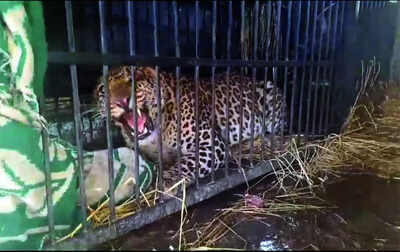
Shamli: Poachers’ traps, intended for wild boars, unexpectedly ensnared two leopards in Shamli and Baghpat districts, prompting a wildlife rescue team from Meerut to intervene.
According to forest officials, both trapped leopards are currently undergoing health tests, and on receiving health clearance, they will be released back into the forest.
In the first incident at Sunna village in Shamli district, locals informed forest officials about a trapped leopard around 10pm on Friday.

Toncerned

District forest officer (Shamli) Jaydev Singh said, “We received information and immediately dispatched a team from Meerut, which reached the spot around 2am on Saturday. The leopard was safely transferred to a secure enclosure.” In the other incident on Saturday morning in Shahpur Ban Ganga village field of Baghpat’s Binoli area, a second leopard was rescued from a trap set for illegal hunting. District forest officer (Baghpat) Vandana Phogat said, “Locals reported a trapped leopard, and an expert team conducted a meticulous operation to successfully rescue the injured animal. The leopard is currently under medical observation and treatment.” The Shamli leopard is identified as a female, approximately two and a half years old, while the Baghpat leopard is a male of around one and a half years. Both leopards sustained injuries while trying to free themselves from the traps.
Authorities are investigating the traps set in farmers’ fields, initially targeting wild boars and nilgai. Additionally, efforts are under way to scrutinise the activities of poachers engaged in illegal wildlife hunting in these areas. Notably, leopard sightings in Shamli and Baghpat districts are rare occurrences, according to locals.