Vegan advocate Dexter King, son of Martin Luther King Jr., dies at 62

JANUARY 23, 2024 BY MERRITT CLIFTON 3 COMMENTS

Dexter King book cover Growing Up King.

Martin Luther King Jr. (left) and Dexter King, right, who played his father in the 2002 film The Rosa Parks Story.  (Beth Clifton collage)

Going vegan in 1987,  advised by Dick Gregory,  may have almost doubled Dexter King’s lifespan in long fight against cancer

MALIBU,  California––Dexter Scott King,  62,  second son of Martin Luther King Jr.,  influential for more than 35 years in boosting vegetarianism and veganism among African-Americans,  on the morning of January 22,  2024 “transitioned peacefully in his sleep at home with me in Malibu,”  his wife Leah Weber King said in a media statement distributed by the Atlanta-based Martin Luther King Jr. Center for Social Change.

Dexter Scott King and Leah Weber King had been married since 2013.

Dexter King died from prostate cancer,  a disease he apparently fought for most of his life.

Left: Dick Gregory doubled as 5-kilometer runner and marching band member at St. Louis University in 1956. Right: Gregory running five miles to demonstrate his health, four months into a fast against the Vietnam War, during which he consumed only fruit juice.
(St. Louis Post-Dispatch photos, Beth Clifton collage)

“He faced this hurdle with bravery and might”

“He gave it everything and battled this terrible disease until the end.  As with all the challenges in his life,  he faced this hurdle with bravery and might,”  Leah Weber King said.

According to a 1997 profile by Kevin Sack of the Tampa Bay Times,  Dexter King “dropped out of his father’s alma mater,  Morehouse College,  because of an illness he will not discuss.  He said the condition became manageable after he adopted a vegan diet and took ‘a journey of self-discovery.’”

In 1987 Dexter King visited a health spa that athlete,  comedian,  and activist Dick Gregory founded in the Bahamas.

(See Dick Gregory, 50 years a vegan activist, dies at 84.)

(Beth Clifton collage)

Dexter King became vegan on 27th birthday

Influenced by Gregory,  “On January 30, 1988, my twenty-seventh birthday,  I became a strict vegetarian. I developed a passion for health and nutrition,”  Dexter King testified in 2003.  “My diet consists of fruits, vegetables, grains, nuts and legumes only,  and has for the past 15 years now.”

“His family – mother Coretta Scott King,  sisters Bernice and Yolanda,  and brother Martin Luther III – greeted his new regimen with curiosity,”  wrote Jill Howard Church in 1995 for Vegetarian Times.

Coretta Scott King in 2003. (Thomas Englund photo)

Mother & friends followed Dexter King’s example

“My family has always been very open-minded,”  said Dexter King,  “but certainly [veganism] was not their orientation.  They were not sure what to think.

“When I first became a vegetarian,  I was very self-righteous about it,”  Dexter King added.  “As I’ve aged and become more seasoned with time,  I’ve mellowed.  The best testimonial is the proof in the pudding.”

Part of that proof was that Dexter King’s mother,  Coretta Scott King (1927-2006),  also persuaded by her lifelong friend Barbara Reynolds,  became vegan in 1995 and remained vegan for the last 12 years of her life,  as did several of her other friends.

Martin Luther King Jr. next to the bus that Rosa Parks rode, #2857, in the incident that touched off the Montgomery, Alabama bus boycott.  (Beth Clifton collage)

Rosa Parks

Among them was Rosa Parks (1913-2005),  whose 1955 refusal to give up her seat on a bus to a white man in Montgomery,  Alabama,  led to her arrest and touched off a boycott of the city-owned bus company led by Martin Luther King Jr.,  then a young local minister.

This led to the November 1955 U.S. Supreme Court decision that abolished segregation in public transportation,  was among the first major victories of the 20th century civil rights movement,  and projected Martin Luther King Jr. to national prominence.

“I was not in the practice of eating a lot of meat,”  Rosa Parks explained.

In childhood,  she said,  “We had peach,  apple,  plums.  We would go into the woods and eat blackberries.  It was not hard at all for me to not eat meat.”

Adds the Vegetarians of Washington website,  “Among her favorite vegetables were broccoli,  greens,  sweet potatoes and string beans.”

“Higher level of awareness”

Deeply involved in the affairs of the Martin Luther King Jr. Center for Social Change,  and quiet by nature,  Dexter King except in that 1995 Vegetarian Times article relatively seldom spoke in public about veganism and animal advocacy.

Though noted in passing seven times in Dexter King’s 2004 memoir Growing Up King,  his beliefs about animals and food were usually mentioned by others almost as a footnote to articles focused on the legacies of his father,  Martin Luther King Jr.,  and,  sometimes,  Dick Gregory.

But Dexter King made his views clear to Jill Howard Church.

“Veganism has given me a higher level of awareness and spirituality,”  Dexter King said,  “primarily because the energy associated with eating has shifted to other areas.

“If you are violent to yourself by putting [harmful] things into your body that violate its spirit, it will be difficult not to perpetuate that [violence] onto someone else,”  Dexter King added.

From left: Dexter King, Yolanda King, Martin Luther King Jr., Bernice King, Coretta Scott King, and Martin Luther King III, in 1966.

“I know more African-Americans who are becoming aware”

Dexter King also observed that,  “Women in general are probably more sensitive to their health needs and sensitive to what they eat.  Men generally are not as concerned.

“I don’t know a heck of a lot of African-Americans who are vegetarian,”  Dexter King admitted,  “but I know more who are becoming aware.”

That was 28 years before his death.

By then the downtown Atlanta neighborhood surrounding the Martin Luther King Jr. Center for Social Change had become one of the national hubs of the fast-growing African-American vegan/vegetarian movement.

Traci Thomas.

Traci Thomas

Traci Thomas,  who founded the Black Vegetarian Society of Georgia in 2002,  the first of an international string of Black Vegetarian Societies,  credited Dick Gregory rather than Dexter King with inspiring her to give up meat in 1994,  but when in Atlanta,  Dexter King was a regular customer at the tiny Black Vegetarian Society of Georgia restaurant.

Thomas was among the first vegans––of any ethnicity––to win national media notice as a vegan teacher and advocate without initially achieving celebrity as an athlete,  entertainer,  or spiritual leader.  Her 2002 recommendation of corn on the cob as a simple vegan focal food for summer picnics won extensive notice in Midwestern small town newspapers that might never before have published the word “vegan.”

Thomas followed up by popularizing vegan recipes consisting of five ingredients or fewer,  to appeal to anyone whose time for shopping and cooking is limited.

(Beth Clifton collage)

Slutty Vegan

Later,  fellow Atlanta resident Pinky Cole founded her Slutty Vegan burger counter in the neighborhood.

“Slutty Vegan became the place to be seen waiting,  especially if you’re an African-American celebrity,”  observed New York Times reporter Kim Severson on July 1,  2019.

Since then,  the vegan burger restaurant has expanded successfully to five locations serving majority African-American neighborhoods around Atlanta;  Athens and Columbus,  Georgia;  Birmingham,  Alabama;  and Brooklyn and Harlem in New York City.

(Beth Clifton collage)

Taking care of business

Dexter King meanwhile established himself as a businessman on another front.

“After succeeding his mother as both the head of the King Center for Social Change and executor of Dr. King’s estate,  Dexter King quickly consolidated control over the family’s social agenda and financial affairs,”  recounted Kevin Sack of the Tampa Bay Times.

Dexter King’s first tenure heading the King Center,  in 1989,  was brief,  as his initial attempts to exercise leadership met intense opposition from within.

When Dexter King returned,  in 1994,  the King Center was reportedly almost bankrupt.

NFL defensive lineman David Carter, speaking for Vegan Outreach.

“Cobbled together a vision”

“Since then,  with halting,  often awkward steps,” Sack wrote in his 1997 profile,  Dexter King has cobbled together a vision for preserving his father’s legacy that relies more on the Internet and intellectual property rights than on the cause-oriented mission that Mrs. King established for the King center in 1968.

“In many ways,” Sack observed,  “the transition from mother to son has highlighted the generational differences between the marchers and dreamers of the civil rights era and the deal makers and realists of today.

James Earl Ray in 1959.
(Beth Clifton collage)

James Earl Ray

An early bizarre misstep was a March 1997 televised prison meeting with the terminally ill confessed Martin Luther King Jr. assassin James Earl Ray––who later recanted his own testimony.

(See  MLK assassin ex-wife Anna Ray busted for dog hoarding––again!)

“Without any showing of evidence,”  summarized Sack,  “Dexter King declared that his family believed Ray innocent of any knowing involvement in the killing.”

“Dexter King later implicated President Lyndon B. Johnson in a government conspiracy,”  Sack continued,  “a theory promoted by Ray’s lawyer,  William Pepper.”

“I have never seen myself the way the media has portrayed me, as a leader,”  Dexter King told Sack.  “I’m not trying to have a constituency.  I’m not trying to be preachy or be on a pedestal.  I’m not trying to effect change on that level,  not because it’s not something that should be done,  but that’s just not my best destiny.”

Dexter Scott King.  (X photo)

“Befuddlement”

Sack noted “intense opposition or,  at the very least,  befuddlement,”  from “civil rights veterans who marched at Dr. King’s side,  from board members of the King Center,  from the pulpit of the church where Dr. King,  his father,  and his maternal grandfather had been pastor,  and from the liberal black editorial page editor of the Atlanta Constitution.”

Lawsuits filed against Dexter King in 2008 by his sister Bernice King and brother Martin Luther King III  followed,  including a case filed by Bernice King on behalf of the estate of Coretta Scott King.  All three lawsuits were settled out of court in 2009.

The Dexter King legacy as regards the legacy of Martin Luther King Jr. may remain controversial for years to come.

Beth & Merritt Clifton.

His “best destiny,”  meanwhile,  may be a statistic:  when Dexter King became vegan in 1988,  only about 3% of Americans of European descent were vegans and vegetarians,  and barely 1% of Americans of African descent.

Today the percentage of Americans of European descent who are vegans or vegetarians is still only about 3%,  but the percentage of Americans of African descent who are vegans or vegetarians is at 8% and rapidly growing.

Please help our work:

www.animals24-7.org/donate

Related Posts

St. Pete residents fed up with duck hunting on Lake Maggiore

Photo courtesy of Juanita Suber. She says that she has been routinely woken up in the morning by the sounds of gunfire.

DUCK HUNTING

https://baynews9.com/fl/tampa/news/2024/01/26/duck-hunting-lake-maggiore-

BY JOSH ROJAS TAMPA

UPDATED 3:52 PM ET JAN. 26, 2024 PUBLISHED 7:01 PM ET JAN. 25, 2024

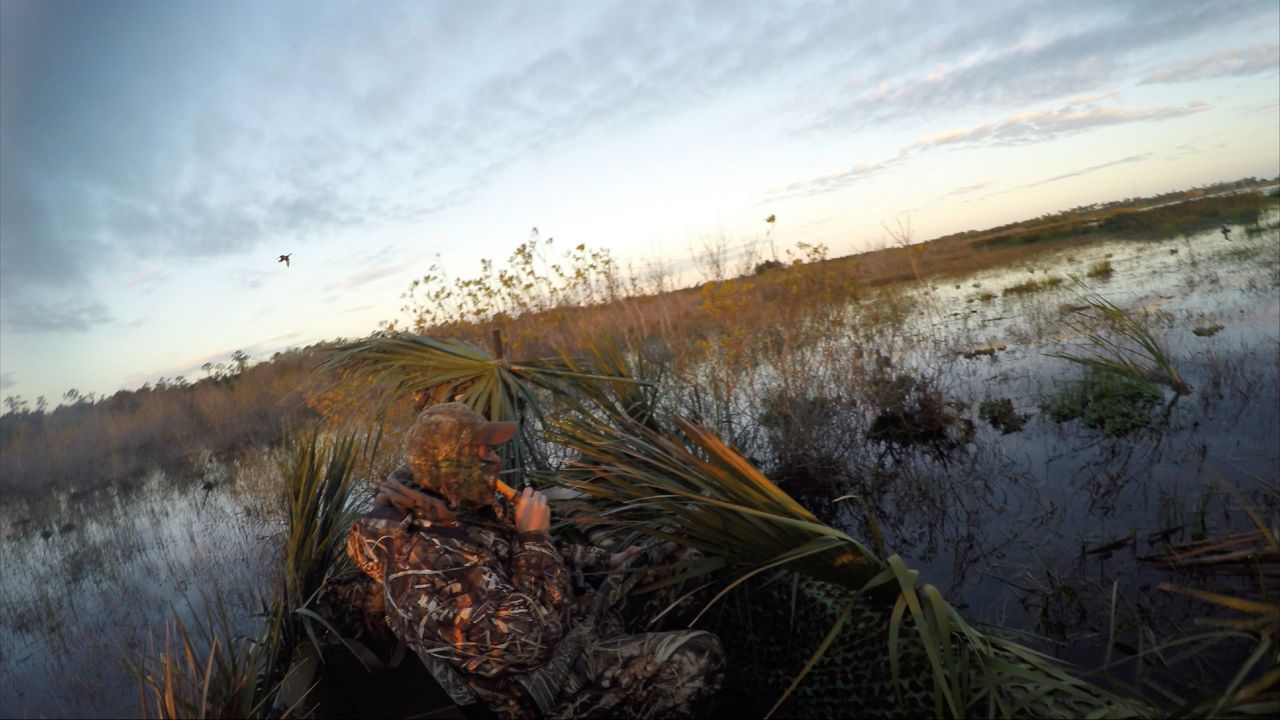
ST. PETERSBURG, Fla. — Residents who live along Lake Maggiore in St. Petersburg said they can’t believe it’s legal under state law for hunters to shoot at ducks near their homes, which has been happening since Thanksgiving, in the middle of a densely populated city.


What You Need To Know

Duck hunting season runs from Thanksgiving to Jan. 28
Lake Maggiore residents said hunters began showing up about 2 years ago
It’s legal under state law to hunt on a city lake that has public boat access or with permission from a private property owner
A duck hunting advocate called the practice “inherently safe”

“It’s really hard to send my children outside when shots are going off within a stone’s throw away from them,” said resident Danielle Imbody. “That’s just not an environment where I want to raise my kids.”

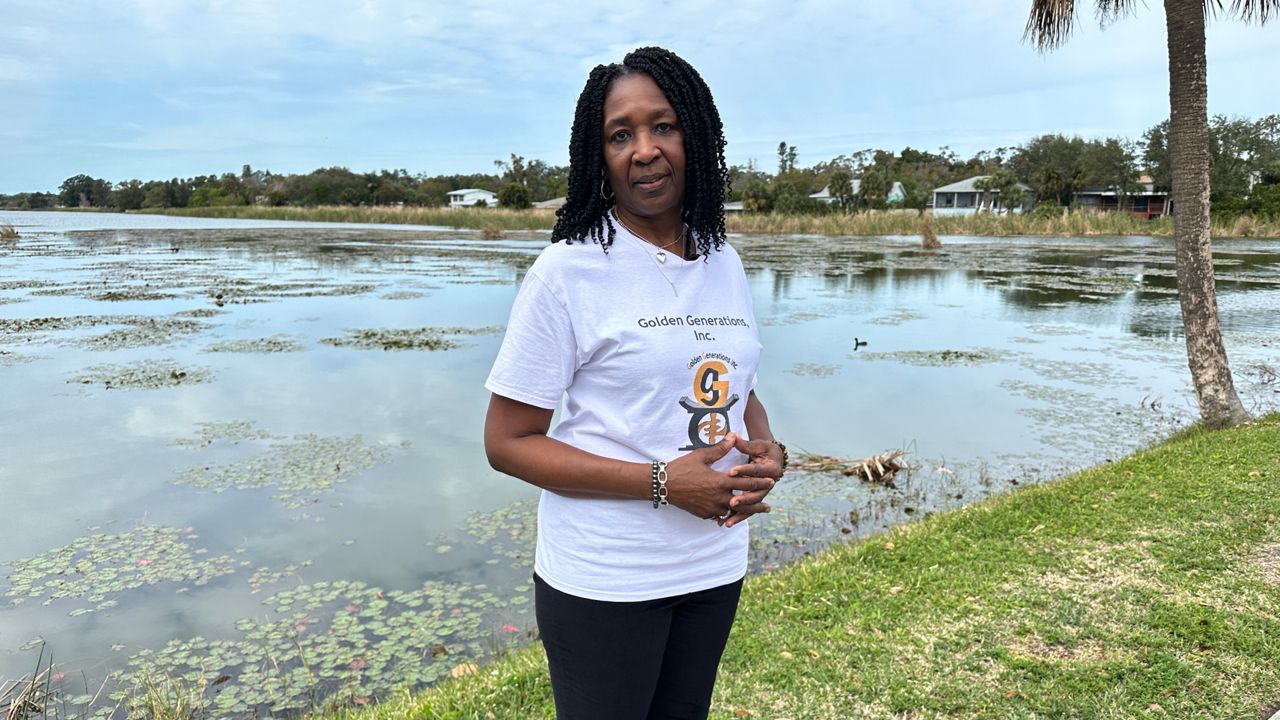
Duck hunting season runs from around Thanksgiving until Jan. 28. Hunters can begin shooting a half-hour before sunrise and must stop a half-hour past sunset. Resident Juanita Suber, 64, said she has been routinely woken up in the morning by the sounds of gunfire.

“Just extremely loud,” she said. “My whole body jumps and then my heart races and it’s just a lot to deal with.”

Next door to her home on Pollanza Drive South, Suber runs the non-profit, My Sistah’s Place, for teens who have aged out of foster care. Suber said she had to close down the transitional home because the hunting has been so disruptive.

“Our girls were so traumatized that we had to relocate them,” she said. “A lot of our girls come in here with trauma anyway having been in foster care … and the gunshots were unsettling.”

Suber said she has lived in the neighborhood for 20 years and hunters only began showing up about two years ago.

“I don’t know why it started all of a sudden,” she said. “We want to do something about it to ensure that we’re safe here living on this beautiful lake.”

According to the Florida Fish and Wildlife Commission, duck hunting is permitted on any water body that has public access or via private property with landowner permission. There’s also no minimum distance one can hunt from roads or private properties unless that area is a restricted hunting area which Lake Maggiore is not.

Travis Thompson, the executive director of All Florida, a conservation organization.

Travis Thompson, the executive director of All Florida, a conservation organization.

The rules also state firearms may not knowingly be discharged over a paved public road or any occupied premise and waterfowl hunters use shotguns with non-toxic bird shot that has an effective range of around 50 yards.

“Duck hunting is inherently safe,” said Travis Thompson, the executive director of All Florida, a conservation organization. “To my knowledge, there’s never been a recorded incident of someone harming a non-duck hunter on a duck hunt.”

It’s against the law to intentionally place bait or take other actions to prevent a hunter from legally hunting.

Thompson, 47, said complaints about duck hunting usually center around an unease with firearms and the noise, which the law states a wildlife take can’t be regulated for noise. He believes an uptick in urban hunting could be attributed to a change in the environment and over development.

“We’re starting to see hunters and waterfowl be pushed off some of the more traditional water fowl areas. So, I think this may be why a lake like this has become a new issue,” he said. “Hunters have kind of run out of some other options on where to hunt. No-one and I’m not saying it’s illegal but no-one wants to hunt where they’re looking at houses in the distance or in a more urban setting.”

Thompson said duck hunters are some of the most ardent conservationists and the season only lasts for 60 days per year. The residents said they have no problem with hunting they just don’t want to see it happening near their homes.

“It’s scary. I would never send my child out into a hunter’s woods to go play,” said Imbody. “Yet, I’m being asked to send my child out into the front yard where the hunters are playing.”

Juanita Suber said she has lived in the neighborhood for 20 years and hunters only began showing up about two years ago.

Juanita Suber said she has lived in the neighborhood for 20 years and hunters only began showing up about two years ago.

Resident Marshia Cox said the gunshots outside her front door scare her dog who walks around with a tail between its legs. Imbody said the hunters and the residents have already had some testy exchanges

“If you ask them politely to please move on (they respond), ‘Now is not a good time,’” she said. “They will taunt. Hang dead ducks above your head.”

Suber has been getting the upset residents organized and they plan to pressure lawmakers to amend the state law or get Lake Maggiore designated a restricted hunting area.

“We’re going to contact our state representatives and see if we can come to the table. We have a diverse group here,” she said. “Living next to a hunting range is not living. It’s just existing and nobody wants to just exist.”

People who believe a duck hunter is acting irresponsibly can report it to the FWC wildlife alert hotline at 1-888-404-3922. The FWC notes the vast majority of duck hunters adhere to safe, responsible practices that are passed down through generations and taught in hunter safety courses.

As frustration grows, Colorado rancher gets high-tech weapon to protect cattle from wolves

Miles Blumhardt

https://www.coloradoan.com/story/news/2024/01/26/colorado-rancher-takes-high-tech-aim-a-to-protect-cattle-from-wolf-attacks-by-high-tech-lethal-means/72358774007/

Fort Collins ColoradoanView Comments

0:49

0:58

https://imasdk.googleapis.com/js/core/bridge3.615.0_en.html#goog_602322574

Jackson County rancher Don Gittleson has tried numerous nonlethal means to deter the North Park wolfpack’s breeding male that keeps hanging around his ranch and killing his cattle.

But now he’s ready to bring out the big gun.

Gittleson has tried range riders, but the wolves attacked his cattle unbeknownst to the wolf advocates watching his herd at night from vehicles in his pasture.

He’s tried burros, longhorn cattle, fladry, fox lights and even hung bells around cows’ necks with varying degrees of short-term success.

Gittleson is now turning to a $6,000 thermal, night-vision, recording scope he mounted on his 30-06 rifle to shoot the wolf at night if he catches it in the act of attacking his cattle.

https://931f2cff51ff0cfe40d020732bd57feb.safeframe.googlesyndication.com/safeframe/1-0-40/html/container.html

The only problem, Gittleson said, is while the wolf continues to check out his ranch north of Walden — even as recently as Tuesday, he said — he’s been waiting for more than a month for Colorado to decide if he can use the scope.

“Not getting an answer to if I can shoot the wolf at night is like Colorado now having to see how other states define chronic depredation,” said Gittleson, who has had seven cattle confirmed killed or injured by the North Park pack, with all of those depredations involving the breeding male, No. 2101. “You would think in the three years they’ve been planning for wolf reintroduction, they would have answers to these kinds of questions.”

https://931f2cff51ff0cfe40d020732bd57feb.safeframe.googlesyndication.com/safeframe/1-0-40/html/container.html

He said Colorado Parks and Wildlife told him to not shoot a wolf using the scope until after the state attorney general’s office can determine the legality of shooting a wolf at night, which is when all of the North Park pack kills have taken place.

He said he first used the scope as a monocular, watching over his cattle herd near his ranch house at night. He said the scope has a range of 2,000 yards or more. The thermal imaging allows him to detect wolves, coyotes and cattle that stray from the rest of the herd.

https://cm.coloradoan.com/article-body/inline-desktop_010924_JanBAU

Catching a wolf in the act of attacking livestock is extremely rare. Given the chance, Gittleson said he would shoot the wolf, but first he needs to make sure he knows how to operate the recording device that would serve as critical evidence during an investigation.

“I absolutely would shoot it because I want to put a stop to what’s been happening up here,” he said. “Given the governor’s and first gentlemen’s opinions about ranchers, I know I will be investigated. I want to have all the evidence I can if I have to do it.”

Hunting at night with artificial light is allowed for a handful of wildlife, including coyotes and bobcats, but not all wildlife in Colorado. It is illegal to hunt wolves, which are an endangered species.

Under the state’s 10(j) rule, you can kill wolves to protect human life, if wolves are caught in the act of attacking your livestock and if the state deems them to be chronic depredators.

https://931f2cff51ff0cfe40d020732bd57feb.safeframe.googlesyndication.com/safeframe/1-0-40/html/container.html

Problem is, Colorado’s wolf recovery plan doesn’t define “chronic depredation,” an issue Gittleson brought up repeatedly in public hearings during the state wolf recovery planning process to no avail.

“I’m a stupid rancher and even I knew several years ago how other states defined chronic depredation, but CPW is just trying to figure that out now?” Gittleson said.

The North Park pack has confirmed depredations of 20 livestock, including 14 cattle, three working cattle dogs and three lambs at six different Jackson County ranches over the past two years. The wolves also killed a rancher’s pet dog. Those depredations slowed after three or four of the original pack were legally shot just across the border in Wyoming in October 2022.

The most recent confirmed depredations by the pack were:

  • The killing of three lambs in November 2023 by the grown black offspring of No. 2101.
  • No. 2101 badly injuring one of Gittleson’s calves Dec. 13, just days after the 10(j) rule was implemented.
Jackson County rancher Don Gittleson walks up to a heifer cow that was badly injured in a confirmed wolf attack Dec. 13, 2023, north of Walden, Colo.

Gittleson said he would prefer Colorado Parks and Wildlife remove the wolf and its grown offspring, the only two known members of the North Park pack left. He requested the state wildlife agency to do just that in December, but that request was denied.

In a letter, Colorado Parks and Wildlife Director Jeff Davis said the agency denied the request after looking at the entire history of livestock depredations in the area as well as most recent depredations in November and December 2023 and that the number and frequency events dropped in 2023.

https://931f2cff51ff0cfe40d020732bd57feb.safeframe.googlesyndication.com/safeframe/1-0-40/html/container.html

Colorado Parks and Wildlife has paid around $40,000 to ranchers for livestock depredation to wolves. Those include four depredations in fiscal year 2021-22 and eight in fiscal year 2022-23. There have been two depredations in fiscal year 2023-24, according to the state wildlife agency.

Polarizing predator: Separating fact from fiction to answer common questions about wolvesWill reintroduced Colorado wolves head into Wyoming and be killed there? What experts sayColorado gets final go-ahead to kill wolves that kill livestockColorado releases map showing movements of state’s 12 collared wolvesPublic captures first images of Colorado’s reintroduced wolves after December releases

Legislators request North Park wolves be removed

Colorado Parks and Wildlife’s denial prompted sharp criticism from Democratic Speaker of the House Julie McCluskie and Democratic Sen. Dylan Roberts, whose districts include Jackson, Grand and Summit counties. Their letter, dated Monday, Jan. 22, included copies sent to Dan Gibbs, executive director of the Colorado Department of Natural Resources, which oversees the state wildlife agency, and Democratic Gov. Jared Polis.

The letter requested Davis “take swift action to remove the depredating wolves” and for Colorado Parks and Wildlife to “immediately publish a draft rule for the definition of chronically depredating” or provide a reason a definition can’t be determined.

“We write to express our frustration and disappointment with the recent Colorado Parks and Wildlife (CPW) decision denying the request of Mr. Don Gittleson and his neighbors to remove the depredating wolves in North Park,” they said in the letter. “Further, we are confused by CPW’s refusal to assist livestock producers across the state by clearly and publicly defining the term ‘chronically depredating.’ “

https://931f2cff51ff0cfe40d020732bd57feb.safeframe.googlesyndication.com/safeframe/1-0-40/html/container.html

The Coloradoan sent an email to Colorado Parks and Wildlife on Thursday asking for a response by Davis regarding the legislators’ letter. The agency responded that Davis will provide a written response to McCluskie and Roberts addressing concerns mentioned in their letter as well as additional questions and information from Wednesday’s Joint Senate Agriculture and Natural Resources and House Agriculture, Water & Natural Resources Committee.

Gloves come off as legislators rip state wildlife leadership over issues involving recent wolf releases

Members of that legislative committee grilled Davis, Gibbs and Reid DeWalt, Colorado Parks and Wildlife’s assistant director after the state’s recent wolf releases during Wednesday’s hearing.

Topics included widespread complaints of Colorado Parks and Wildlife’s lack of transparency and communication, including the state wildlife agency’s failure to notify Grand County officials and ranchers near the initial releases; failure to define chronic depredation in its plan; and that half of the 10 released wolves were from packs with a documented recent history of depredation in Oregon.

https://931f2cff51ff0cfe40d020732bd57feb.safeframe.googlesyndication.com/safeframe/1-0-40/html/container.html

The harshest criticism during the highly contentious hearing came from Republican Rep. Michael Holtorf, a rancher who represents Eastern Plains counties and sits on the Agriculture, Water and Natural Resources Committee.

He characterized the wolf release as a “dismal failure” to ranchers, commissioners and communities where the wolves were released.

“It will be near impossible for you to win that trust of Colorado ranchers,” Holtorf said. “Our memories are very long. The wolf is an apex predator that wants to kill, and cattle and calves are easy targets.”

He characterized the wolf release like “putting a child predator in a grade school and expecting a different outcome. This is what’s happening to the ranching community.”

Roberts said ranchers in his district have lost trust in Colorado Parks and Wildlife and said they will shut their gates to the agency.

Gibbs responded that that has already been the case.

“That’s accurate in terms of landowners that were willing to work with us on conservation efforts that are now telling our staff, ‘Hey, I really don’t want to work with you anymore,’ ” he said. “That’s painful because the majority of our wildlife live on private lands even though we have a lot of public land on the West Slope. We recognize we have a lot of work to do to work with stakeholders to repair relationships.”

https://931f2cff51ff0cfe40d020732bd57feb.safeframe.googlesyndication.com/safeframe/1-0-40/html/container.html

Davis said he has already met with and will continue to meet with ranching organizations to rebuild that trust.

At Wednesday’s hearing, Roberts questioned the accuracy of Davis’ and DeWalt’s testimony in front of the Water Resource and Ag Review Committee at a Sept. 12 hearing. Roberts quoted Davis at the 2023 hearing as saying, “There are probably enough wolves between the two states (Oregon and Washington) that we will get our hands on wolves that don’t have a history of (depredation).”

Roberts asked Davis if he believed his testimony was accurate

“I do and I’m happy to explain,” Davis said. “I think sometimes people forget these are carnivores. There’s a fallacy that if we were to go get wolves from a wilderness that have never seen livestock that they would never depredate on livestock. When I testified in that hearing, it was not necessarily clear to me that we were talking depredation vs. chronic depredation. That’s the piece we were following in our plan and not taking wolves from packs that have a chronic depredation history.”

https://931f2cff51ff0cfe40d020732bd57feb.safeframe.googlesyndication.com/safeframe/1-0-40/html/container.html

Roberts asked Davis if he could definitely say that Colorado did not release wolves that have a history of chronic depredation.

Davis answered yes.

Roberts then asked DeWalt about the accuracy of his testimony at the same 2023 hearing regarding notification of people in the surrounding area. Roberts quoted DeWalt as saying, “the hope would be that the day of (release) we call them and say we are releasing wolves in this area. So it won’t be, like, a surprise. They will know they are in the area. Those relationships are super valuable to us with those landowners. We are not going to pull a ‘gotcha’ or surprise on anyone.”

Roberts then asked DeWalt if Grand County commissioners and ranchers he referenced in his 2023 testimony were notified that the Dec. 18 release was about to happen.

Regarding county commissioners, DeWalt responded: “To my knowledge; they were notified after the releases.’’

And as to landowners, he responded: “I’m unaware that happened.’’

Roberts then asked DeWalt if it was fair to say the testimony DeWalt gave in 2023 didn’t accurately reflect what actually happened.

“I would characterize it that that part of the testimony you just stated didn’t, but there (are) other parts of the testimony that did accurately reflect the communication,” DeWalt responded.

Davis said Colorado Parks and Wildlife decided not to release an additional five wolves from Oregon by mid-March, citing a need for the agency to pause for self-review and to address issues involving its recent releases.

The agency recently announced it secured up to 15 more wolves from the Confederated Tribes of the Colville Reservation in Washington that will be captured and released into Colorado between December 2024 and March 2025.

Montana proposes delaying start of bird hunting season for nonresidents

https://www.spokesman.com/stories/2024/jan/26/montana-proposes-delaying-start-of-bird-hunting-se/

Jan. 26, 2024 Updated Fri., Jan. 26, 2024 at 5:14 p.m.

Sharp-tailed grouse wander through the rows of a field south of Billings in 2021.  (Billings Gazette)
Sharp-tailed grouse wander through the rows of a field south of Billings in 2021. (Billings Gazette)

By Brett FrenchBillings Gazette

BILLINGS – Citing concerns about increasing hunting pressure in eastern Montana, two amendments have been proposed to push back by two weeks the start of the upland game bird and bird dog training seasons for nonresidents.

“This is really a response to comment after comment after comment and the desire by people to see something other than the status quo,” said Dustin Temple, director of Fish, Wildlife & Parks, during a Jan. 17 meeting in Scobey.

At Temple’s request, the amendments are being carried by Fish and Wildlife Commission chair Lesley Robinson, who represents Region 6 in northeastern Montana. The commission will consider the proposals at its Feb. 16 meeting. Public comment on the items will be taken until 31 Wednesday.

If passed, the nonresident bird dog training season would be pushed back from Aug. 15 to Sept. 1. Hunting for nonresidents would start on Sept. 15 instead of Sept 1. With the changes, resident hunters and dog trainers would have two weeks to themselves at the beginning of the seasons.

Last year, 300 residents and 100 nonresidents purchased dog training licenses, the first time the licenses have been offered.

Upland update

The proposals were first announced at meetings Fish, Wildlife & Parks held last week in Glendive and Scobey where regional wildlife managers updated the public on bird populations, hunter numbers and hunter days afield.

Contained in the slides flashed across the screen were trend lines showing nonresident hunter license sales and days afield climbing. For example, Region 7 has seen the average number of hunting days for residents climb from 3.3 in 2007 to 5.6 in 2022. Nonresident hunter days have been relatively flat, averaging 3.4 days over the 16-year timespan. No data was collected in 2013. Most information comes from annual hunter harvest surveys.

“I think it’s a fair assumption the trend will continue into the future,” said Brett Dorak, Region 7 wildlife manager, as social media has brought more attention to the region.

Region 7 also saw nonresident hunters outpace residents in harvesting Hungarian partridge, sage grouse and sharp-tailed grouse last year. Whereas residents took about twice as many turkeys in 2022 as nonresidents, roughly 1,400 compared to about 700 birds, respectively.

Dorak estimated the differences in hunter harvest is about the amount of time spent in the field.

Although not everyone who purchases an upland game bird license hunts the species, Dorak said southeastern Montana has seen a 5½-fold increase in license purchases from 2016 to 2023. One estimate put the number of license buyers who actually hunt upland birds at 20% to 30%.

https://6ee428a8ad5e669c4ee30ca048013844.safeframe.googlesyndication.com/safeframe/1-0-40/html/container.html

Region 6

In comparison in Region 6, resident hunter days afield have risen from 9.6 in 2014 to 13.2 in 2022 in just the eastern portion of the management area. Resident and nonresident hunters, on average, are spending about 2.5 to three more days afield than in the past.

Drought in the western portion of the region has hurt bird populations. For example, in 2023 the eastern portion saw sharp-tailed grouse numbers climb by 17% in a year, 31% above the long-term average. In comparison, the western portion of the region saw a 9% drop in 2023, 37% below the long-term average.

Among nonresidents, the eastern region has seen hunters average 10.6 days from 2014 to 2022 although climbing in 2021 and 2022 to 12.7 and 11.7 days, respectively. The Plentywood area and northern portion of Valley County have seen the largest increases in hunter numbers.

Two landowners spoke at the meeting saying they were surprised by the numbers, noting they see many more nonresident license plates parked at access points than resident vehicles.

“What you see on the ground is not always, certainly, reflected in the data,” said Ken Plourde, upland gamebird biologist for Region 6. “This is all self-reported. So take it all with a grain of salt. We certainly do. It gives you a general idea of what’s going on, but this is not perfect by any means.”

The upland bird harvest, of all species, has averaged more than 71,000 in Region 6. Almost 60% of that harvest is coming from the eastern portion of the region.

Sage grouse

Highlighting these meetings was the announcement that sage grouse numbers continue to fall in southeastern Montana. FWP bases its population trends on the number of males at sage grouse breeding grounds, called leks.

In Region 7, the number of males peaked in 2001 at 36 males. This spring the number of males was six.

If the trend continues for another year, FWP will shut down sage grouse hunting in Zone 3’s 18 counties.

Under the state’s adaptive harvest management plan for sage grouse, if populations are 45% or more below the long-term average for three years, more restrictive regulations are initiated, Dorak explained. Since other means to reduce harvest in Region 7 had been tried, the next step is to halt hunting entirely.

In Region 6, which has less sage grouse habitat, male counts in 2023 were down 26% in a year and 36% below the long-term average.

https://6ee428a8ad5e669c4ee30ca048013844.safeframe.googlesyndication.com/safeframe/1-0-40/html/container.html

Hunting is not believed to lead to sage grouse declines. Instead, the bird’s population is more likely to be affected by loss of habitat, construction of powerlines and roadways.

Moisture

While sage grouse numbers have deteriorated, other species such as sharp-tailed grouse and Hungarian partridges boomed this spring where moisture was sufficient to create habitat.

“This year we’ve seen more Huns than in the last 20 years,” Region 7 commissioner Bill Lane said.

The upland bird populations may have also been boosted by fewer cattle on grazing lands, said Brad Schmitz, Region 7 supervisor. Due to four to five years of drought, some ranchers have cut their herds by as much as 50%, he said.

“Most of the gamebird counts in our region, our year-to-year fluctuations, are really driven by moisture and precipitation,” Plourde said. “The moral of the story is: If you get good rain in this neck of the woods, bird populations follow. And when we see bird populations not doing well it’s often driven by weather.”