Covering the biggest sand desert with solar panels: 173 TWh and the biggest mistake in human history
Reply

‘Our wildlife is taking a very large hit with the growth of the population,’ animal control officer Amanda Heffron says
A young bobcat is back in the wild after facing a scary encounter.
By: Cassandra Garcia
Posted at 10:49 PM, May 09, 2024
and last updated 8:22 PM, May 09, 2024
JENSEN BEACH, Fla. — A young bobcat is back in the wild after facing a scary encounter.
Deputies in Martin County said the injured animal may have been hit by a car but managed to seek shelter under another vehicle.
As wooded areas of the county are torn down to make way for housing complexes and stores, it poses a problem for wildlife.
00:09
02:00
Read More
https://imasdk.googleapis.com/js/core/bridge3.640.0_en.html#goog_918852065
https://imasdk.googleapis.com/js/core/bridge3.640.0_en.html#goog_918852066
https://imasdk.googleapis.com/js/core/bridge3.640.0_en.html#goog_918852067
https://imasdk.googleapis.com/js/core/bridge3.640.0_en.html#goog_918852076
“I feel like it’s kind of unfortunate because there’s a lot of building going on,” resident Lauren Smith said. “The animals have nowhere to go, and they’re just going to where they can.”

“They really have no choice,” Scott Smith, Lauren’s husband, added. “The animals, if they’re there, they’re going to get pushed out into the environment.”
The Martin County Sheriff’s Office Animal Services unit on Thursday rescued an injured bobcat from the parking lot of the Treasure Coast Medical Pavilion in Jensen Beach. They believe it was clipped by a car and took shelter underneath a vehicle.
“[There was] a deputy on one side of the car [and] myself on the other side of the car, and it was just a game of cat and mouse basically trying to secure it so that we could get it evaluated at the wildlife hospital to make sure it was OK,” Amanda Heffron, a certified animal control officer with the Martin County Sheriff’s Office, said.

Heffron said the bobcat was transferred to the Treasure Coast Wildlife Center for care. The animal hospital said the bobcat had superficial scrapes on its front and back legs. It was treated and later released in a safe area. They believe the male bobcat was likely less than a year old.
Heffron, who facilitated the rescue, said calls about wild animals are becoming increasingly common and the animals don’t always walk away unscathed.

“Our wildlife is taking a very large hit with the growth of the population and all the building that’s going on,” Heffron said. “It’s taking away their habitat and their running looking for food.”
Jensen Beach resident Becky Smith said she wasn’t surprised to hear that a bobcat was rescued from an urban area, adding that she’s no stranger to wildlife roaming around.
“We used to have some of the clear lots basically that did have trees, but then homes and all that have taken over,” Smith said. “We do see a lot more animals, wildlife because they’re looking for their homes.”
Year after year, we hear the ridiculous arguments from polluter-friendly politicians that Floridians are somehow standing in the way of progress by asking for commonsense environmental protections.

Published May 10
ADVERTISEMENT
This time of year, endangered smalltooth sawfish are usually giving birth to their young in the waters at Florida’s southern tip. But this spring, people are watching, horrified, as dozens of sawfish thrash helplessly in circles before they die.
Marine experts are baffled, and they’ve raced to South Florida to try to pinpoint the cause and rescue ailing fish. They have tested the water and samples from dead fish and ruled out water temperature, red tide and other variables. Experts interviewed by the Tampa Bay Times and other media outlets say current evidence points to a type of toxic algae.
And it’s not just sawfish, which are a species of ray with unusually long, toothy snouts. People fishing and boating around the Florida Keys, southwest Florida and Everglades National Park’s coastal areas have reported over 50 different marine species acting erratically and then dying, including sharks, Goliath grouper, snook, snapper, sting rays, stone crabs and pinfish.
We are witnessing another wakeup call about Florida’s poor water quality. On South Florida’s reefs, corals are bleaching and dying from disease. Hundreds of manatees starved to death in 2021 when algae outbreaks — fueled by fertilizer, sewage and agricultural waste — shaded out the seagrass they eat.
Year after year, we hear the ridiculous arguments from polluter-friendly politicians that Floridians are somehow standing in the way of progress by asking for commonsense environmental protections. We hear false assumptions about why we don’t need to properly conserve wetlands and mangroves; and most of all, that it would be too harsh to set more effective limits on the agricultural waste, sewage and fertilizer that are fouling our public waters, spewing dead fish on our beaches and chasing away swimmers.
When the unprecedented 2021 manatee die-off happened, Earthjustice filed suit against the U.S. Environmental Protection Agency on behalf of the Center for Biological Diversity, Save the Manatee Club and Defenders of Wildlife. Our lawsuit, which focuses on Florida’s water quality standards, is ongoing.
The background: Years ago, when EPA approved Florida’s water quality standards, federal wildlife agencies had to assert, under the law, that the state’s measures would protect wildlife listed under the Endangered Species Act. But the hundreds of dead manatees in the Indian River Lagoon are proof that Florida’s water quality standards aren’t working. The lawsuit asks the court to require EPA to reinitiate consultation with the U.S. Fish and Wildlife Service and National Marine Fisheries Service to reassess its approval of Florida’s water quality standards for the Indian River Lagoon.
It is critical to remember that the United States has laws to protect clean water and the species that depend on those waters. The smalltooth sawfish, in fact, was the first marine animal to be added to the Endangered Species Act list in 2003. Southern Florida is their last stand; they used to roam as far north as North Carolina and Texas, and south to Brazil.

Subscribe to our free Stephinitely newsletter
Columnist Stephanie Hayes will share thoughts, feelings and funny business with you every Monday.
Sign up
Want more of our free, weekly newsletters in your inbox? Let’s get started.Explore all your options
Our leaders need to take these wildlife warnings seriously, set effective pollution limits, and do more than just pose for photo shoots in front of sparkling waves to prove they will protect our public waters.
Alisa Coe is deputy managing attorney in the Florida Office of Earthjustice.
BY PATRICK PENNER, LOCAL JOURNALISM INITIATIVE REPORTER ● COQUITLAM, WILDLIFE ● MAY 9, 2024
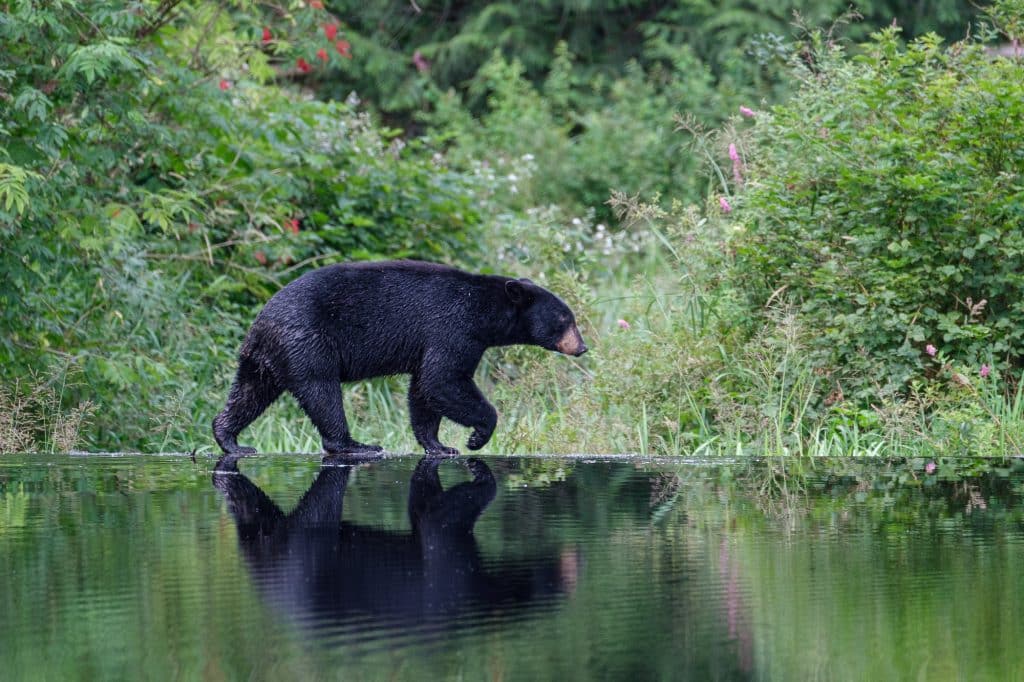
BC Conservation officers freed a black bear from a leg-hold trap in Coquitlam, and now an environmental group is offering a $1,000 reward to help catch whoever set it.
Just before 1 p.m. on April 30, the BC Conservation Officer Service (COS) received a report of a bear with its paw trapped in the pressure-activated snare set near the Pitt River Boat Club.
COS said its officers called in police to close the nearby trail before tranquilizing the bear to remove the trap and examine the animal for injuries.
Local news that matters to you
No one covers the Tri-Cities like we do. But we need your help to keep our community journalism sustainable.SUPPORT TRI-CITIES DISPATCH
The bear was determined to be in good health, and quickly relocated to a wilderness area outside the city, according to COS.
COS launched an investigation into the incident.
North Vancouver charity the Fur-Bearers has offered a $1,000 reward for information leading to the identification and conviction of the person responsible.
“Trapping has serious consequences, including the inarguable harm to non-target species and costs associated as seen last week,” says Lesley Fox, executive director of The Fur-Bearers. “This reward shows that we – and the people of British Columbia – take illegal trapping seriously and will not accept it in 2024.”
Although leg-hold traps are banned in many countries around the world, and several U.S. states, the immobilizing traps are still legal across Canada. Only leg-hold traps with metal teeth have been prohibited.
Municipalities, on the other hand, have an ability to ban their use within their jurisdiction, and Coquitlam did so with a bylaw back in 1979.
The bylaw cited animal cruelty when it banned all people, firms and corporations from setting these types of traps. Convictions result in a $500 fine.
Exemptions are only made for city employees or agents of the British Columbia Fish and Wildlife Branch in the course of their duties.
The Fur Bearers are warning anyone in the area to be on the lookout for traps, specifically warning dog walkers, families, bird watchers, and cyclists.
“This disturbing incident is a sign of the need for reforms to trapping and how traps are purchased in Canada,” the Fur Bearers’ website states.
The Fur Bearers advocate for an outright ban on leg-hold traps. They are joined by the American Veterinary Association, the American Animal Hospital Association, the World Veterinary Association, the National Animal Control Association, and the Sierra Club.
The traps typically target foxes, coyotes, raccoons, wolves, lynx, and bobcats, and are placed in areas where animals frequently pass.
The Fur Bearers say that once an animal is trapped, they often become so desperate they resort to chewing or wringing off the caught limb.
“Animals endure a painful and panic-filled period until they either die from exhaustion, blood loss, predation, dehydration, hypothermia, or are clubbed, choked, or stomped to death by the trapper (so as not to damage the pelt),” the Fur Bearers’ website states.
In response to the torture and killing of a wolf in Daniel, a hunter from Dubois says Wyomingites need to reform hunting and animal cruelty statutes themselves instead of waiting for outside groups and the federal government to force change.
May 10, 20246 min read
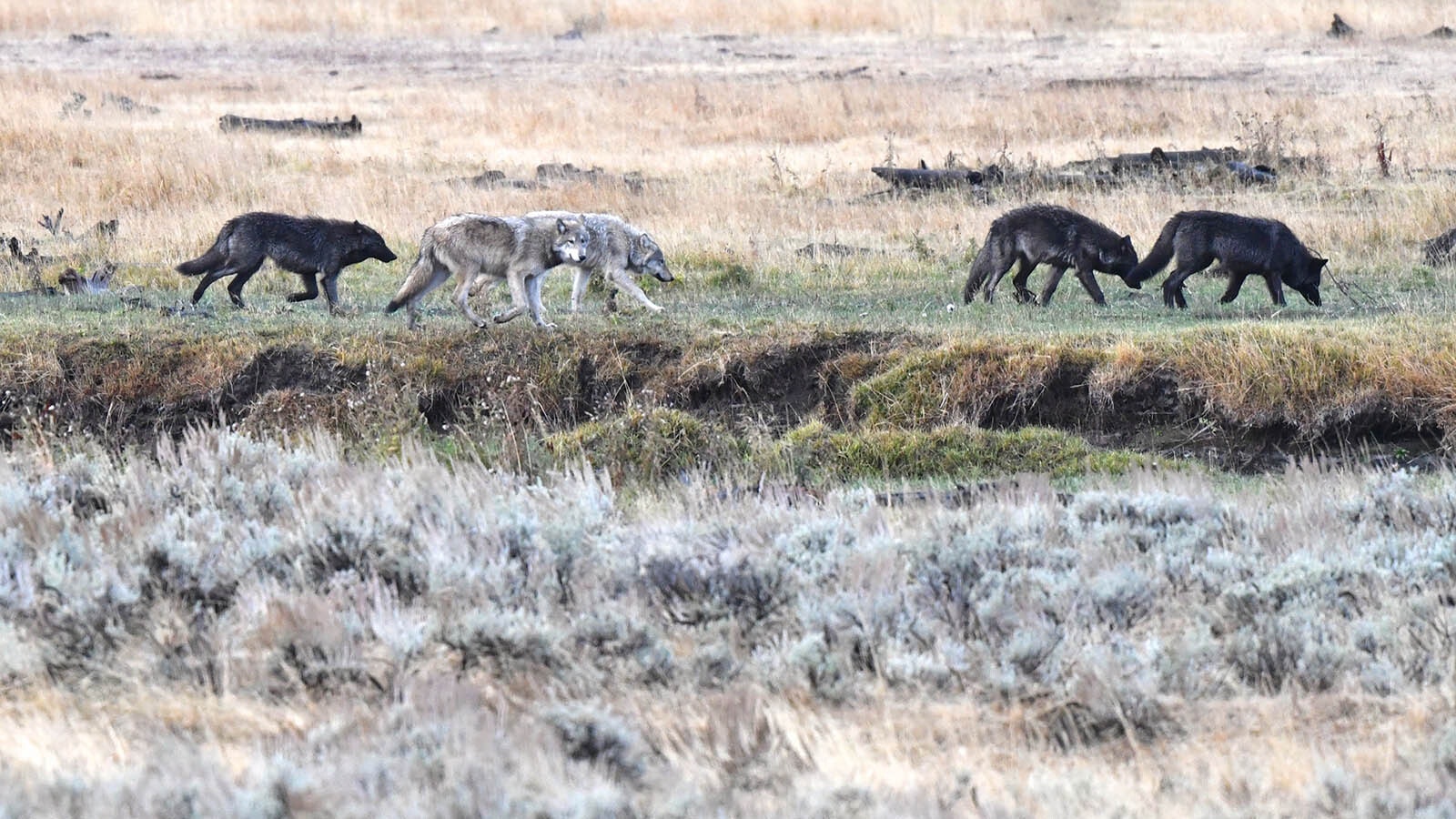
The eyes of the world have been on Wyoming since a wolf was tortured and killed in Daniel, but if reform is to come from the incident, it should be Wyoming’s business, not the world’s, an avid hunter from Dubois said.
“I think that here in Wyoming, we recognize that we have our own solutions to our problems. We don’t need outside organizations pressuring the federal government to come in and change things for us,” Jim Laybourn told Cowboy State Daily.
Along with conservationists, landowners and others, Laybourn is forming the Wyoming Wildlife Coalition and pushing for change in Wyoming’s predator hunting and animal cruelty statutes.

“We just want to give law enforcement the right tools to punish bad actors for extreme acts of torture, like the case in Daniel, Wyoming,” he said.
Laybourn said he and others plan to lobby the Wyoming Legislature for reform on two specific points: outlawing the use of motorized vehicles to chase down and run over predators, and changing animal cruelty statutes to include wildlife.
Another of the coalition’s members, Wyoming Wildlife Advocates Executive Director Kristin Combs, previously told Cowboy State Daily that her group will be among those pushing those same points before the Legislature during its 2025 session.
Whether any such legislative reform can succeed is a tough question, state Sen. Larry Hicks, R-Baggs, told Cowboy State Daily.
He said animal cruelty measures have come up before during his tenure in the Legislature. They’re tough, controversial bills to work.
“You have to figure out, what’s the level of penalty, how narrowly will the bill be crafted and what would the unintended consequences be?” Hicks said.

The coalition’s efforts are in direct response to a Feb. 29 incident involving Cody Roberts, 42, of Daniel.
According to accounts of events, Roberts ran a wolf down with his snowmobile and captured the injured animal, taping its muzzle shut. He later took it to his residence, and then to the Green River Bar to show it off before taking out behind the bar and killing it.
There was national and global outrage when court records indicated that Roberts was cited by the Wyoming Game and Fish Department for illegal possession of a warm-blooded animal, and forfeited a $250 bond.
Many felt that there should have been stiffer penalties in the case.
Laybourn said if Wyoming policy can be reformed from within, it will help prevent such outrageous acts in the future, as well as demonstrating that Wyoming is capable of solving its own shortcomings.
“My goal is to reach out to people in Wyoming who want to see reform,” he said. “We want this to be a Wyoming-based solution.”
May is usually busy for Wyoming hunters – the end of the month is the deadline to apply for hunting tags.
Laybourn is sitting it out this year.
During a recent meeting of Wyoming Game and Fish Commission, he told the commissioners and Cowboy State Daily that he would refuse to buy any more hunting tags until some of Wyoming’s predator hunting and animal cruelty statutes are reformed.
He was one of many who testified before the commissioners that day expressing outrage over the tortured wolf.
On Thursday, he said he’s sticking by his statements and hasn’t applied for any hunting tags.
“It’s hard for me, because I love to hunt,” he said. “It’s some of the strongest, most powerful experiences you can have, being out hunting in the backcountry.”
But by giving up hunting, at least for now, Laybourn said he hopes to inspire others. And he hopes it helps protect hunters’ reputation among the general public.
“I’m trying to make a stand for other hunters. It’s a sacrifice I’m trying to make for other hunters,” he said. “So that the public feels better about hunters. So that they understand that hunters are being ethical.”

Laybourn isn’t a predator hunter, but he doesn’t take issue with predator hunting in general.
“Personally, my own standard is, I only kill what I eat. But I realize a lot of people need to use predator control to protect their livelihood,” he said.
“This isn’t about wolf hunting, or Wyoming wolf management. This is just about the brutal act of running an animal down with a snowmobile and then torturing it,” he added. “I would have been just as upset if somebody would have brought a wounded deer into a bar, or a wounded coyote or any other animal.”
Hicks said he expects a bill of some sort to be brought before the Legislature because of the case in Daniel.
But to gain traction, it will require extensive research.
“Is there something similar out there in another state? Look at the court cases related to it, the disposition of them. Go look at the lawsuits that might have resulted,” he said.
An animal cruelty statute that’s too broadly written could be open to abuses related to trapping, poorly placed hunting shots or even roadkill, he said.
“What if you hit a prairie dog and somebody catches it on their dashcam, and then tries to claim that you deliberately swerved to hit that prairie dog?” he said.
Regarding legislation aimed at forbidding running animals down with vehicles, it would have wording that clearly defined deliberate, malicious intent as opposed to hitting an animal by accident, Hicks added.
He’s also not particularly concerned about federal intervention because it’s outside of the federal government’s authority to dictate a state’s animal cruelty statutes. Any changes on the federal level would have to go through Congress and apply to all 50 states.
“If somebody wants to bring it (legislation), we’ll take a look at it. It will be given a fair hearing,” he said. “I’m not saying it can’t be done. I’m saying it’s going to have to be narrowly crafted.”
 Exposing the Big Game
