
Elliott Wenzler

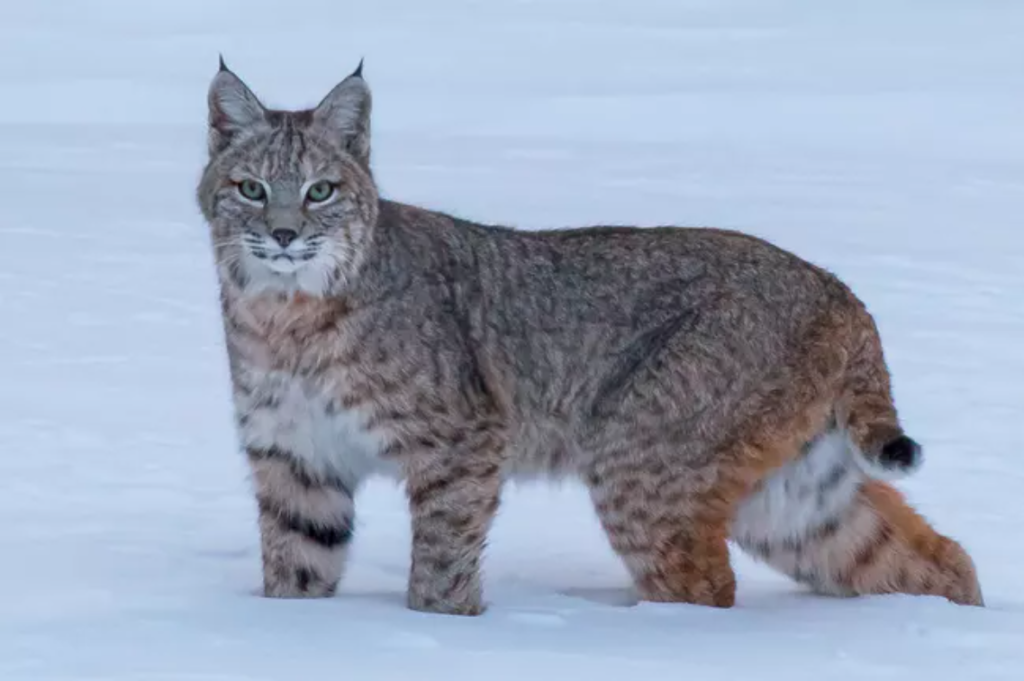
National Park System/Courtesy photo
Supporters and opponents of a ballot measure that would ban mountain lion and bobcat hunting in Colorado are arguing over the financial impacts of the proposal after a conservative-leaning think tank released a study on the topic this week.
The Common Sense Institute projected the change in hunting regulations — if approved by voters in November — would cost Colorado Parks and Wildlife millions of dollars annually.
But the group proposing the measure, Cats Aren’t Trophies, is calling foul on that math.
“It’s really just pseudoscience,” said Samantha Miller, the campaign manager for the group.
The Common Sense Institute report claims, based on 2023 data, the state would lose around $410,000 and $15,000 annually in mountain lion and bobcat hunting license sales, respectively. Those, combined, represent less than 0.4% of the revenue for the agency’s wildlife operations.
The analysis goes on to foresee a significantly greater loss in revenue if the mountain lion population increases due to the lack of hunting, ultimately diminishing game populations like elk and mule deer.
“The dynamic impact ranges from $3.6 million to $5.8 million — 9 to 14 times larger — when accounting for lost elk and mule deer permit revenue affected by an increase in mountain lion population,” according to the think-tank study, which references predicted annual impacts.
The authors came to that figure by assuming the mountain lions that wouldn’t be hunted would kill at least one elk or deer per week, resulting in a loss of hunting license sales for those animals.
While the impact on decreasing mountain lion and bobcat hunting licenses is accurate, the second calculation is flawed, said Erik Molvar, a wildlife biologist with the Western Watersheds Project and an advocate for Initiative 91.
“You cannot assume that because you will have more mountain lions on the landscape, that you will have fewer mule deer and fewer elk,” he said.
DJ Summers, an author on the Common Sense Institute report, said it was the organization’s assumption that those elk and deer kills would impact the overall species’ populations.
Parks and Wildlife is prohibited from taking a position for or against the initiative and declined to comment on the study that looked at budget impacts, said Travis Duncan, a spokesperson for the agency.
The state agency is an enterprise agency, meaning it’s almost entirely funded by fees, such as those from hunting tags, rather than taxes.
In 2023, there were nearly 30,000 elk hunted and about 500 mountain lions. Mountain lion hunting season, which has an annual cap set by Parks and Wildlife, is between November and March.
The initiative was approved for the November ballot earlier this month after proponents turned in enough signatures from registered voters to require a vote on the topic.
Initiative 91 reads, in part: “The voters of Colorado find and declare that any trophy hunting of mountain lions, bobcats, or lynx is inhumane, serves no socially acceptable or ecologically beneficial purpose and fails to further public safety.”
If approved by a majority of voters, those who violate the measure would be guilty of a Class 1 misdemeanor, punishable by up to a year in jail, a fine of up to $1,000 or both. They could also be subject to a five-year suspension of their wildlife license.
The initiative makes exceptions for killing the wild cats to defend a person, livestock, or pets. It also makes exceptions for depredating animals and accidents, such as vehicle and animal collisions.
Opponents of the measure and initiative have argued that biologists and wildlife experts at Parks and Wildlife should be left to manage the populations and hunting permits.
The Common Sense Institute study was one of several the think-tank plans to produce on Colorado ballot issues.
“We did this because we wanted to follow the wolf introduction that happened last ballot,” said Summers, one of the study’s authors. “We knew simply that this would be something that gets a lot of people’s attention.”
Other items that have been approved for the ballot relate to property taxes and abortion access.
Elliott Wenzler is the Western Slope politics reporter for The Aspen Times and its sister publications in Glenwood Springs, Vail, Steamboat Springs, Summit County, and Grand County.
 Exposing the Big Game
This Mouse found this tale of woe hard to believe. Calling “friend” Bob, who is not very nice because he gets into the weeds where snakes live when asked a question, and also has cats, this Mouse asked what happened to hunting revenues when mountain lion hunting was banned in California by Governor Ronald Reagan in 1972. He sent this table from USFWS License Sales records for the five-years preceding and following the moratorium. This confirms this Mouse’s thoughts that the Alternative Facts Think Tank is full of fishy calculations.
California hunting
Gross License sales
YEAR Dollars
1967 4,307,148
1968 4,388,080
1969 4,323,909
1970 4,361,882
1971 4,255,007
1972 3,995,858 Mountain Lion Hunting Moratorium
1973 5,265,537
1974 5,566,180
1975 5,414,117
1976 6,731,539
1977 6,595,719
Hunter math, “Think Tank” oxymorons, hunters can think!? Self-serving math and hunter mythology inform the hunter math. Besides we have to get away from this kind of thing (the positive economic of killing wildlife. Does wildlife only exist for hunter-thrill killing? RDH
How’s this? IDGAF. The more it costs them the better.
I was reading an article about Cody Roberts and making killing-by-snowmobile illegal incidentally, and not surprisingly, the Predators Working Group, as well as being deathly boring themselves, are balking.