A young grizzly bear exits a bear trap in Wyoming, July 30, 2024. The bear was captured in northwest Montana and relocated in the hope it will breed with Yellowstone-area grizzlies.
Wildlife officials in Montana and Wyoming are shipping bears across ecosystems in an attempt to meet court-imposed conditions to delist their grizzly populations and take over management from the federal government.
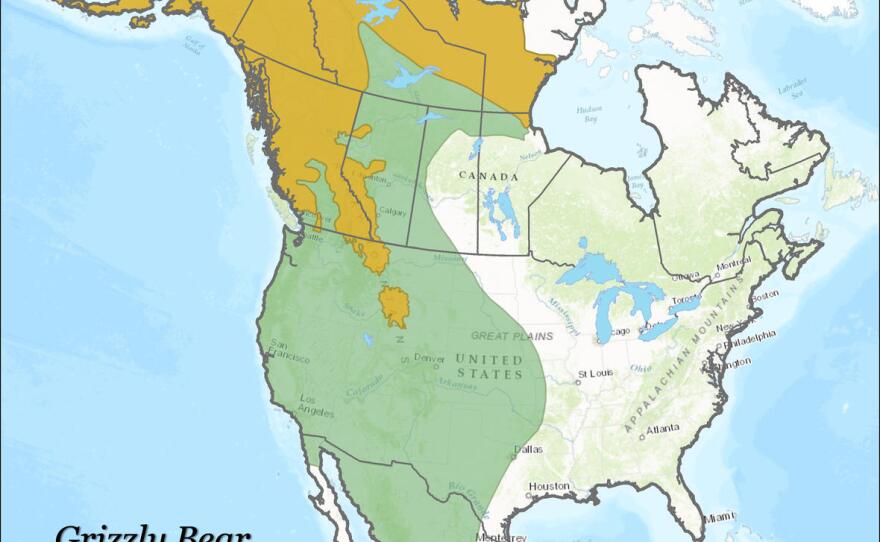
A federal court in 2019 ruled Yellowstone’s grizzlies could not be delisted until they achieved reliable genetic exchange with bears in and around Glacier National Park.
Scientists say roaming grizzlies are only a few years away from connecting the ecosystems themselves. But Montana, Idaho and Wyoming are not waiting. The three states signed an agreement this year promising to transfer at least one bear per generation from Glacier down to Yellowstone.
The first transfers this week relocated one young male and one young female. In a statement, Gov. Greg Gianforte said the transfer demonstrated the states’ commitment to grizzly conservation and called on the federal government to delist their populations.
The U.S. Fish and Wildlife Service is reviewing the endangered status of grizzly bears, and says it expects to have a decision by January 2025.
The proposed rule creates 53 new hunting and fishing opportunities across 12 refuges and 211,000 acres. However, the new ‘opportunities’ are only available to hunters and anglers not using lead ammunition or fishing tackle. Stemming in part from a sue-and-settle scheme by the Center for Biological Diversity, which was first uncovered and continually called out by the Sportsmen’s Alliance, recent hunt fish rules have included pathways to phase-out the use of lead ammo and tackle for existing opportunities, and FWS has adopted a ‘no new lead’ policy for its hunting and fishing ‘expansions.’
“The Fish and Wildlife Service is again trying to hoodwink hunters and anglers with talk of new and expanded opportunities,” said Todd Adkins, vice president of government affairs at Sportsmen’s Alliance Foundation. “We won’t be distracted by shiny objects and bright lights, though. ‘Expansion’ is a misnomer for any new opportunity that excludes lead-based ammo or tackle. The science doesn’t support it, and the service is doing nothing more than giving into the ideologies of animal extremists.”
The current science – which hasn’t evolved in recent years and which FWS does not cite in its proposed rule – on the environmental impacts of lead ammunition and tackle does not warrant a full ban on their use across the NWRS. In fact, an outright ban is neither logical nor feasible, and expansions that limit or ban the use of lead ammo and tackle hardly qualify as new opportunities. Options and availability for non-lead ammo and tackle are limited, and when they can be found on store shelves, they’re significantly more expensive than lead-based options.
The Sportsmen’s Alliance Foundation does appreciate FWS’ yearly effort to expand hunting and fishing on the NWRS – a system financed by hunter dollars and designed for wildlife-dependent recreation, of which hunting and fishing are priority uses as a matter of law with the passage of the 1997 Refuge Improvement Act, which was written and shepherded through Congress by the Sportsmen’s Alliance. But we also call a spade a spade, and this is no expansion. We’ll continue to educate and aid FWS is making new opportunities truly accessible, including through comments on the proposed 2024-25 Hunt Fish Rule.
“We have litigated lead-ammo restrictions on the refuge system in the past, are currently litigating one now in a case involving the Canaan Valley Refuge in West Virginia, and we will continue to do so in the future,” said Michael Jean, litigation counsel at Sportsmen’s Alliance Foundation. “Hunter dollars are the primary source of funds for acquiring new lands in the refuge system. Hunters should be able to use and enjoy the refuge system that they paid for – unburdened by arbitrary restrictions.”


 Exposing the Big Game