
- Bill Cooper
- Sep 17, 2024 Updated Sep 17, 2024
- Comments
- https://www.thesalemnewsonline.com/dent_county_life/article_6d57844c-7540-11ef-866f-df810234b8eb.html
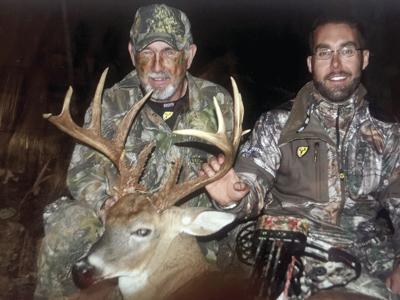
Sportsmen all over America have celebrated the success of the North American model of hunter-funded conservation, but the approach contained a flaw that is now threatening to undo the grand works of an entire generation of conservation minded people.
Hunters and conservationists have been so single-mindedly focused on saving, enhancing, and restoring wildlife habitat, that they forgot to tell the 95 percent of Americans who do not hunt what we were doing to vastly improve the fish, wildlife and landscape of our country. In the wake of our many conservation success stories, a coalition of animal rights groups have exploited our blind spot to make hunting culturally toxic to an ever-growing number of Americans. Simply stated, we were distracted by meaningful work while anti-hunting groups reinforced their stranglehold on the court of public opinion.
While sportsmen were busy renewing forests, creating the national wildlife refuge system, managing prairies and other habitats, anti-hunting organizations ran largely unopposed in the cultural realm as they co-opted corporate media, intimidated big brands into submission with mass social media campaigns, harnessed big tech, and cultivated celebrity ambassadors for their cause that included famous names like Leonardo DiCaprio, Paul McCartney, Ricky Gervais, Alec Baldwin, Pink, and Olivia Moon, and many others.
The top ten anti-hunting organizations alone boast a combined 31 million members, have almost 7,000 employees, and generate $1.1 billion annually. Humane Society of the United States and PETA alone account for 19 million members, about 4 million more members than America has hunters. And there are hundreds more anti-hunters groups. Think about that.
While our hunting community was planting seeds of a better future for wildlife, anti-hunting groups were busy sewing seeds of doubt about hunters in the minds of the majority of Americans who do not hunt. One of the most recent prices of our negligence to educate is the rise in the idea of ballot box biology-the ability of animal welfare groups to buy signatures and place anti-hunting propositions on state ballots. These groups know that fewer than 5% of Americans now hunt, so the vast majority of the country’s citizens are vulnerable to being swayed with emotional campaigns that, to date, have trumped the narrative that science-based wildlife management is the only logical path forward. In the process the antis have marginalized the role of fish and wildlife agencies by attacking their science and credibility in the eyes of non-hunters.
While we often see outdoor industry funded polls that show that the majority of Americans support hunting as a wildlife management tool. The results of those polls do not seem to hold up in the face of ballot measures with emotionally charged media and well-organized educational campaigns. Anti-hunting groups have defined ‘trophy hunting’ as abhorrent to the mainstream (although it doesn’t represent reality) and are looking to change the language to make it synonymous with all types of hunting. They have successfully influenced the public as hunting groups have largely left those assertions unchallenged. Big mistake. Hunters are often so insulted from mainstream viewpoints they are sometimes dismayed that most people in this country do not realize all the good that have done for wildlife.
Roughly 26 states have the referendum process, which is often referred to as ‘direct democracy,’ where citizens, not elected officials, make key decisions. That is the apparatus the sporting community has built to lobby legislatures and the Congress is mostly irrelevant against propositions decided by the will of uninformed voters or a public under the media influence of special interests. As noble as direct democracy may sound, the process has become little more than fertile ground for anti-hunting groups to wield their influence in the court of public opinion.
Colorado is the frontline of this new war on wildlife, a proving ground where anti-hunting groups are perfecting the model they will most assuredly transport to a state near you very soon. This November it’s an effort to ban mountain lion, bobcat and lynx hunting (never mind that lynx barely exist in Colorado and aren’t currently hunted or trapped). The strategy behind it is clear: If successful, the anti-hunting groups will eventually create an abundance of apex predators on the landscape through their ballot measures (wolf introductions, black bears—which cannot be hunted over bait or with hounds—and mountain lions). When that happens, the question will be why do we need hunters to control elk and deer populations? Guess what the answer will be by the 95% of the population that does not hunt?
It’s easy to write Colorado off as having been surrendered to the Californication of the West, an isolated island of irrationality. But, ask yourself if hunters in your state are prepared for a vote on the efficacy of hunting when 95 percent or more of the population has no vested interest and limited understanding of its benefits? Would your hunting friends and family be prepared to push back against well-funded emotional campaigns that are not bound by truth, where our opponents have bought scientists to support their specious narratives?
As a hunting community, we’ve been flat-footed in our response and are very late to the mainstream messaging wars. We celebrate our conservation successes mostly with ourselves, convincing one another that we are the true champions of conservation, and we are. Problem is, few in the mainstream know the species and habitats that have been resurrected because of the efforts and dollars of hunters, that we have cleaner air and water, and healthier soils because of the efforts of those same people.
We have reached an inflection point now where the camo coalition of hunter-funded unlimited, society, and forever groups must pivot and embrace a broader mission to build enduring connections to the mainstream. Self-imposed Pittman-Robertson taxes (our money) must be shifted to include managing hunting as a brand to the mainstream, something far bigger and bolder than the well-intentioned but limited R3 program (the industry’s effort to Recruit, Retain and Reactivate more hunters). Simply put, if we do not have hunting, who will care about habitat efforts anyway? No hunting means no conservation funding and, with that reality, is this how the celebrated North American conservation model dies?
The question we all have to answer is, what are we willing to do to win and preserve the lifestyle of hunting, which defines our very existence?
Sportsmen all over America have celebrated the success of the North American model of hunter-funded conservation, but the approach contained a flaw that is now threatening to undo the grand works of an entire generation of conservation minded people.
Hunters and conservationists have been so single-mindedly focused on saving, enhancing, and restoring wildlife habitat, that they forgot to tell the 95 percent of Americans who do not hunt what we were doing to vastly improve the fish, wildlife and landscape of our country. In the wake of our many conservation success stories, a coalition of animal rights groups have exploited our blind spot to make hunting culturally toxic to an ever-growing number of Americans. Simply stated, we were distracted by meaningful work while anti-hunting groups reinforced their stranglehold on the court of public opinion.
While sportsmen were busy renewing forests, creating the national wildlife refuge system, managing prairies and other habitats, anti-hunting organizations ran largely unopposed in the cultural realm as they co-opted corporate media, intimidated big brands into submission with mass social media campaigns, harnessed big tech, and cultivated celebrity ambassadors for their cause that included famous names like Leonardo DiCaprio, Paul McCartney, Ricky Gervais, Alec Baldwin, Pink, and Olivia Moon, and many others.
The top ten anti-hunting organizations alone boast a combined 31 million members, have almost 7,000 employees, and generate $1.1 billion annually. Humane Society of the United States and PETA alone account for 19 million members, about 4 million more members than America has hunters. And there are hundreds more anti-hunters groups. Think about that.
While our hunting community was planting seeds of a better future for wildlife, anti-hunting groups were busy sewing seeds of doubt about hunters in the minds of the majority of Americans who do not hunt. One of the most recent prices of our negligence to educate is the rise in the idea of ballot box biology-the ability of animal welfare groups to buy signatures and place anti-hunting propositions on state ballots. These groups know that fewer than 5% of Americans now hunt, so the vast majority of the country’s citizens are vulnerable to being swayed with emotional campaigns that, to date, have trumped the narrative that science-based wildlife management is the only logical path forward. In the process the antis have marginalized the role of fish and wildlife agencies by attacking their science and credibility in the eyes of non-hunters.
While we often see outdoor industry funded polls that show that the majority of Americans support hunting as a wildlife management tool. The results of those polls do not seem to hold up in the face of ballot measures with emotionally charged media and well-organized educational campaigns. Anti-hunting groups have defined ‘trophy hunting’ as abhorrent to the mainstream (although it doesn’t represent reality) and are looking to change the language to make it synonymous with all types of hunting. They have successfully influenced the public as hunting groups have largely left those assertions unchallenged. Big mistake. Hunters are often so insulted from mainstream viewpoints they are sometimes dismayed that most people in this country do not realize all the good that have done for wildlife.
Roughly 26 states have the referendum process, which is often referred to as ‘direct democracy,’ where citizens, not elected officials, make key decisions. That is the apparatus the sporting community has built to lobby legislatures and the Congress is mostly irrelevant against propositions decided by the will of uninformed voters or a public under the media influence of special interests. As noble as direct democracy may sound, the process has become little more than fertile ground for anti-hunting groups to wield their influence in the court of public opinion.
Colorado is the frontline of this new war on wildlife, a proving ground where anti-hunting groups are perfecting the model they will most assuredly transport to a state near you very soon. This November it’s an effort to ban mountain lion, bobcat and lynx hunting (never mind that lynx barely exist in Colorado and aren’t currently hunted or trapped). The strategy behind it is clear: If successful, the anti-hunting groups will eventually create an abundance of apex predators on the landscape through their ballot measures (wolf introductions, black bears—which cannot be hunted over bait or with hounds—and mountain lions). When that happens, the question will be why do we need hunters to control elk and deer populations? Guess what the answer will be by the 95% of the population that does not hunt?
It’s easy to write Colorado off as having been surrendered to the Californication of the West, an isolated island of irrationality. But, ask yourself if hunters in your state are prepared for a vote on the efficacy of hunting when 95 percent or more of the population has no vested interest and limited understanding of its benefits? Would your hunting friends and family be prepared to push back against well-funded emotional campaigns that are not bound by truth, where our opponents have bought scientists to support their specious narratives?
As a hunting community, we’ve been flat-footed in our response and are very late to the mainstream messaging wars. We celebrate our conservation successes mostly with ourselves, convincing one another that we are the true champions of conservation, and we are. Problem is, few in the mainstream know the species and habitats that have been resurrected because of the efforts and dollars of hunters, that we have cleaner air and water, and healthier soils because of the efforts of those same people.
We have reached an inflection point now where the camo coalition of hunter-funded unlimited, society, and forever groups must pivot and embrace a broader mission to build enduring connections to the mainstream. Self-imposed Pittman-Robertson taxes (our money) must be shifted to include managing hunting as a brand to the mainstream, something far bigger and bolder than the well-intentioned but limited R3 program (the industry’s effort to Recruit, Retain and Reactivate more hunters). Simply put, if we do not have hunting, who will care about habitat efforts anyway? No hunting means no conservation funding and, with that reality, is this how the celebrated North American conservation model dies?
The question we all have to answer is, what are we willing to do to win and preserve the lifestyle of hunting, which defines our very existence?
 Exposing the Big Game
Here comes the spin to make hunters out to be the victim because they can’t kill cougars.
Hunters have helped preserve the environment? No. Conservationists? Don’t make me laugh!
Destroying ecological stability, weakening genetics, breaking apart family ties, wiping out entire families, running roughshod through areas that are supposed to be protected from human interference (look up the word refuge maybe?), gutting wildlife protections, polluting the soil, air and water, torturing wildlife and driving species into extinction. The public owes them nothing and they are not entitled to wildlife. Everyone who pays taxes pays for the preservation of the environment.
If hunters aren’t allowed to kill one particular species, are prosecuted for breaking the law and are handed out restrictions to favour wildlife a bit more, hunters scream persecution and destruction of their “way of life”.
No one thinks you’re awesome for killing a cougar, wolf or bear. Coyotes, opossums and other wildlife hunters/trappers call “varmints” aren’t target practice or weeds to be pulled. No one gives a damn about your self proclaimed achievement “twelve point buck” or “monster elk” you decided to gun down on the weekend because you were bored or needed to prove something to yourself/others (you’re certainly not going to starve), people are horrified that you unashamedly kill dogs (wild and domestic) and pets and run over animals for entertainment (and defend the practice). Hunters are not noble or essential to the wilderness. They’re sick in the head – despicable waste of human genes.
To hell with their “way of life”.
Agreed.
Hunting conservation is not conservation. Hunting is the recreational killing of wildlife and funding state wildlife agencies (through licensing and refund of excise taxes on hunting), with the result being wildlife focused on hunters and fishing, not the general public’s interest in wildlife. The North American Model of Wildlife Management and state focus on hunters, trappers, and fishermen results in a distortion of wildlife ecology, a minimization and marginalization of predators, and a major concern for recreational killing targets such as ungulates and fur-bearing animals. Further distortion of wildlife ecology happens due to hunters focusing on healthy trophy animals. Hunters call what they do harvesting, illustrating the essential difference with true conservationists who see animals as sentient and deserving of life and desire balanced wildlife biodiversity. Hunting is not sporting, not fair chase. Hunting is not conservation and not scientific management of wildlife. Hunters are constantly putting forth their hunter mythologies, such as presenting themselves as conservationists managing wildlife populations, preventing human-wildlife conflict, killing wildlife primarily for food, and seeing themselves as subsistence hunters. Hunters are primarily thrill killers. They also see themselves as funding wildlife, so they are entitled to kill it and manage it according to their interests. Hunters only fund sound 6% of wildlife. The general public funds the rest. We need a new model of wildlife management on coexistence, biodiversity, rewilding, habitat protection, and replacing wildlife agency hunter funding with general public funds. If all this threatens the hunting culture then Amen. RDH 09-19-2024
This is laughable. First of all, the NA model of wildlife conservation promotes science-based management, of which hunting may be used as a tool. It does not support trophy hunting, nor “plinking” of prairie dogs or other “pest” animals. Hunters like to parade it around as their bible to saving the world, but few have ever read anything but the abridged version that state game agencies put in their hunting proclamations. Science-based management requires data, and for most hunted species, except big game and some waterfowl, there are no numbers on population sizes nor the number taken by hunters. Second, some of the “anti-hunting” groups they list are not anti-hunting, just anti-trophy hunting. Killing an animal to hang a head on your wall is obscene, and most of the public knows that. But trophy hunting brings in a huge amount of money to state game agencies, so it continues and is heavily promoted. Non-consumptive users contribute a lot to wildlife conservation and should have a seat at the table in wildlife management decisions.