LDWF Agent Cites Three Subjects for Waterfowl Hunting Violations in Assumption Parish
Reply

Idaho’s bear identification test is intended to prevent mistaken identity and potential killing of grizzly bears.
Starting January 1, 2025, anyone hunting black bears in Idaho must show proof that they have passed a bear identification test to help them differentiate between black bears and grizzly bears. These rules were approved by the Idaho Fish and Game Commission in 2024 in anticipation of grizzly bear removal from the federal endangered species list.
Note: These rules are temporary and will undergo review by the Idaho State Legislature during the 2025 legislative session.
In Idaho, grizzly bears are listed as a threatened species under the Endangered Species Act. It is illegal to harm, harass, or kill grizzly bears, except in self-defense or the defense of others. It is important to know the difference between grizzly bears and black bears because both reside in portions of Idaho. Grizzly bears occur in portions of the Panhandle and Upper Snake Regions and their presence has also rarely/infrequently been documented outside those areas.
All hunters will need to successfully complete a bear identification test from one of the sources listed below. IDFG recommends saving a digital copy of the completed certificate and storing the certificate number on their GoOutdoorsIdaho.com customer license account.
The certificate number will not be required when purchasing a black bear tag, but all hunters will be required to confirm they understand the legal requirements of the new rule, and all hunters in the field hunting black bears will be required to provide their certificate number to an IDFG conservation officer.
Test and Certification Instructions: Before you take the test, review the educational materials listed at the bottom of this page to help you study for the test. Note that the test will not include educational materials.
When you’re ready to begin the test:
Note: You can download and print the certificate. You will also receive an email with the certificate. Certificates can be reprinted by logging into your Hunter Education account.
Idaho will recognize completed bear identification certificates from the Montana and Washington bear education programs. If you have received certification from either of those states, simply input that certification number using any of the above options.
There are several useful physical features that can help you tell the difference between grizzly and black bears. Each of these features can vary by individual bear, so no one feature should be used alone to determine species, a combination of features is most useful. Color and size are not reliable indicators and should not be used to identify species.
The training materials at the links below, will highlight each of these characteristics one by one, but here is a brief overview of the useful features. In many cases, it’s not possible to identify a bear by using just one feature. Take your time and look for as many features as possible to help ensure you make the right call.
Resource
– Full other, 9 Page(s) [PDF, 4.4 MB]Download Document
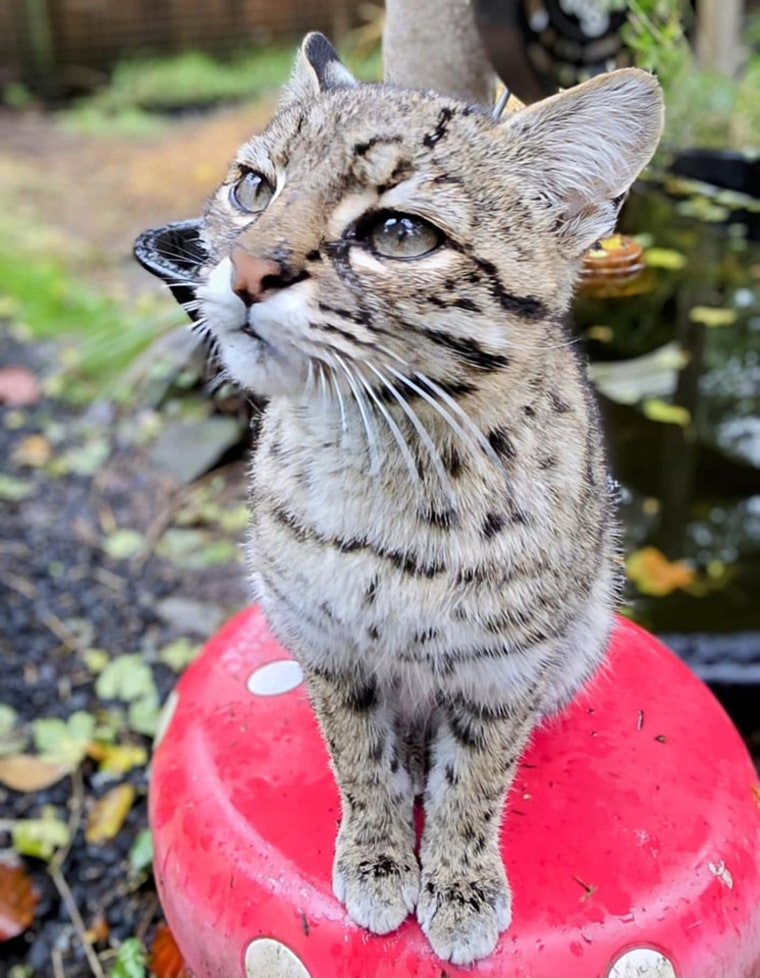
African servals, cougars and bobcats were among the animals that died at the Wild Felid Advocacy Center.
0 seconds of 30 secondsVolume 0%
Bird flu reaches zoos, further threatening endangered species
Dec. 25, 2024, 10:44 AM PST
Bird flu ripped through a Washington state wildlife sanctuary, killing 20 big cats, the center said in a Facebook post, calling the deaths a “significant loss.”
The first cat got sick around Thanksgiving, Mark Mathews, director of the Wild Felid Advocacy Center in Shelton, told NBC affiliate KING of Seattle. By early December, the state had confirmed cases of bird flu in their cats.
ADVERTISING
In a Facebook post Friday, the sanctuary announced the deaths. They include five African servals, four cougars, four bobcats, two Canada lynx and one each of the following: Bengal cat, Amur/Bengal tiger, African caracal, Geoffroy’s cat and Eurasian lynx.
“This tragedy has deeply affected our team, and we are all grieving the loss of these incredible animals,” the sanctuary said, asking the community for assistance.
Mathews told KING that at the end of November, he had 37 cats and now he has 17.
Some of the cats were featured on the sanctuary’s website. Tabbi, an endangered half-Bengal and half-Amur tiger, enjoyed playing in the water, the site states. Hannah, a cougar, was brought to the sanctuary as a cub from Wyoming after her mother was killed. The website described Hannah as “sweet” and said she liked “sneaking up on volunteers.” Mouse, a Geoffroy’s cat and one of the smallest animals at the sanctuary, captured the hearts of everyone who met her, the website stated.
Mathews told KING that the deaths were a living nightmare.
“Every day, it’s just kind of you wake up and you think hopefully it’s a bad dream, but it’s not,” he said.
Health officials confirmed that more than half of the sanctuary’s animals had contracted avian influenza, the Facebook post stated. The virus primarily spreads through infected bird secretions and droppings. Carnivorous mammals can contract it by coming into contact with infected birds or a contaminated environment.
The sanctuary said cats are particularly vulnerable to bird flu and symptoms can progress rapidly, “often resulting in death within 24 hours due to pneumonia-like conditions.”
To protect the other animals and prevent further spread, the sanctuary is under quarantine and will remain closed until further notice.


The deaths come as zoos across the country have started taking precautionary measures. Five zoo animals died from bird flu outside Phoenix and one animal died at a zoo in Seattle.
 Exposing the Big Game