
The Ultimate Goal of the Animal-Rights Movement Gains Steam
Brian Lynn, Vice President of Marketing and Communications
What once was an absurd thought has begun to take hold and is slowly gaining traction, and the societal, and more importantly, legal, acceptance or rejection of this still-absurd idea will impact every endeavor involving an animal – from hunting and ranching to fashion and pet ownership.
That idea: animals are inherently equivalent to humans, and therefore deserve the same civil rights. Think personhood.
The premise has been debated since Pythagoras and Aristotle. The 19th Century saw the rise of early legal arguments in the form of animal-welfare laws. But it wasn’t until the 20th Century, and more pointedly the 1970s, that the modern animal-rights movement began to use today’s legal system in the U.S. and abroad to advance their moral belief that killing an animal is equivalent to killing a human.
For more than four decades, the Sportsmen’s Alliance has fought to protect hunting from this belief system, which would ultimately end our way of life and doom wildlife and conservation in the process.

The animal-rights movement manipulates state legislatures, state and federal court systems and the ballot box to advance their beliefs and to end hunting, fishing and trapping. But now, more than ever, the animal-rights movement is gaining steam with more and more legal footing and sympathetic mainstream media coverage all fueled by misbegotten fundraising efforts and celebrity endorsements.
In fact, just a few years ago we saw a very brazen evolution of the animal-rights movement’s ultimate goal play out nationwide in a single legislative session. And that’s just the beginning – a once-fringe organization that made wild claims in court has announced they will take their beliefs that animals possess the same rights as humans to the legislative-friendly state of California.
Evolution of the Legislative Kind
During 2019, the Sportsmen’s Alliance saw the typical flood of legislation introduced nationwide. From banning trapping on public lands to importing African game, nothing was off limits for the Humane Society of the United States, Center for Biological Diversity, Born Free USA and legislators sympathetic to their misguided morality.
One of the most concerning trends we saw was a coordinated, nationwide attack by animal-rights organizations to ban coyote-hunting contests in more than half a dozen states.
The evolution of the ban on coyote-hunting contests was a microcosm look into the animal-rights movement’s tactics and ultimate goal. And they showcased for everyone to see exactly how they will write, change and abuse law to accomplish that goal all in a single legislative cycle.
In New Mexico, Oregon, Montana, Wisconsin, New York, New Jersey and Nevada, various forms of legislation was introduced which made competitions involving wildlife illegal. Arizona was considering a regulatory change through their commission to do the same thing.

The initial contest bill in New Mexico specifically called for a ban on coyote contests and defined the parameters. Coincidentally, New Mexico simultaneously had legislation ending trapping on public lands moving, too, and had already seen the governor ban coyote contests on 9 million acres of state trust land by executive order.
The fact that animal-rights activists and legislators would ban an organized method of population control for the highly adaptive and plentiful coyote is bad enough, but that was just the beginning.
From there, a bill in Montana that was ultimately tabled included a contest ban on any predator capable of taking livestock – coyotes, mountain lions, bears or wolves. But that’s not where it ended.
In Oregon, Wisconsin, New York and New Jersey, the legislation was so broadly written that any type of contest involving wildlife would become illegal. A hunting club’s big-buck contest, an organized youth squirrel hunt or even two buddies tracking how many each killed could see them run afoul of the law.
But even those all-encompassing, catch-all bills weren’t the end of it for the animal-rights movement.
In Nevada, we saw what the end goal is for radical zealots who eschew scientific management of wildlife populations in favor of the emotional individualization of specific animals. Nevada’s Senate Bill 487, which would ban competitions where coyotes were killed for prizes or “entertainment,” carried a penalty of a Class D Felony, a mandatory prison term of 1-4 years and a possible fine of up to $5,000. This is the same penalty imposed for manslaughter and arson! Even more ridiculous, promoting an event, perhaps even just posting on social media about it, would subject someone to the same felony penalties and mandatory jail time.
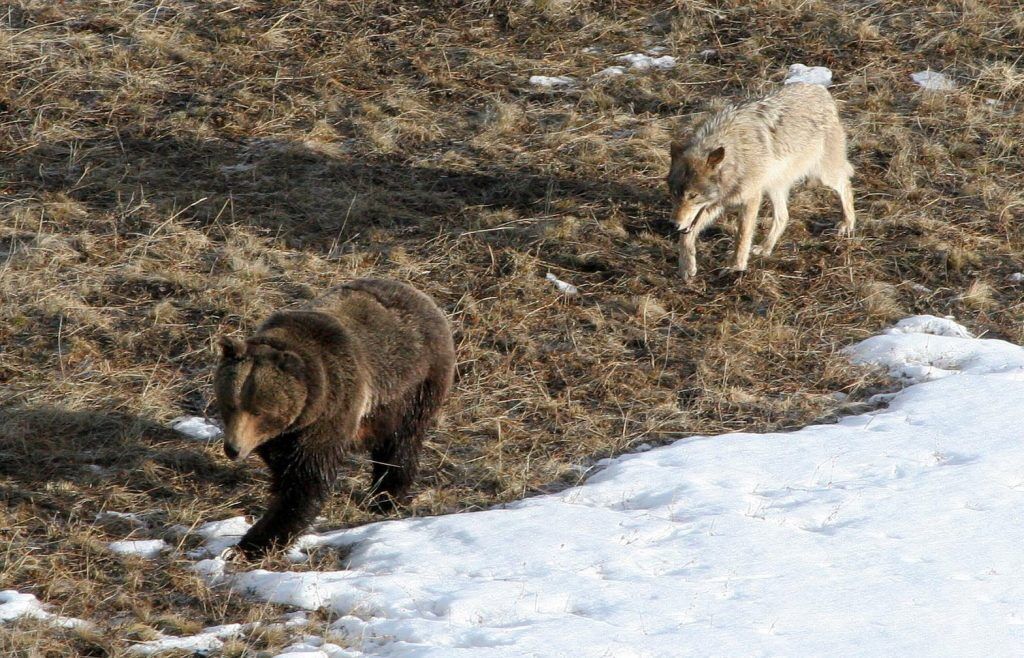
The progression and culmination of these coyote-contest bills is exactly how the animal-rights movement is working to end all hunting on a larger scale. Specifically written bills seek to slice at lower participation methods, such as contests, trapping or the use of hounds and bait, thereby decreasing political resistance and fracturing the various camps of sportsmen.
Broadly written bills ensnare sportsmen and management techniques not purported to be the target of the legislation, but by the letter of the law, or depending upon the mood of law enforcement, prosecutors or a judge, the legality could be questionably justified.
In either scenario, sportsmen lose. We must win every defensive battle just to maintain the status quo; the animal-rights movement only has to win once to gain ground and remove a method of take or season from a state forever.
At the end of the day, however, the ultimate goal of the animal-rights movement isn’t just to end hunting, meat eating or the use of animals in any way; it is to equate animals with humans in every way.
As the penalties in Nevada illustrate, the animal-rights movement believes the death of an animal is equivalent to the death of a human and should carry the same legal penalty. But the madness extends even further, with people now appointing themselves as legal counsel for animals and filing lawsuits for civil, or even intellectual, rights violations on their behalf.
Enter the Nonhuman Rights Project

A relatively new organization, the NonHuman Rights Project (NhRP), bills itself as “the only civil rights organization in the United States dedicated solely to securing rights for nonhuman animals.”
The NhRP’s stated goal is “to change the common law status of great apes, elephants, dolphins, and whales from mere ‘things,’ which lack the capacity to possess any legal right, to ‘legal persons,’ who possess such fundamental rights as bodily liberty and bodily integrity.”
While their campaigns have focused on apes, elephants, whales and the like, NhRP makes no qualms about the fact that these species are more appealing to people and will play better in court and legislatively. Their objectives and criteria upon which they are based, are admittedly fluid so as to include other species and rights in the future.
And although they are a new organization on the animal-rights scene, their tactics are familiar and fall in line with the Humane Society of the United States. They profess on their website that they will “secure actual legal rights for nonhuman animals through a state-by-state, country-by-country, long-term litigation campaign.”
But where HSUS often disguises their animal-rights ideology within carefully crafted animal-welfare messaging, NhRP makes no such distinction. They seek actual legal rights and protections for animals that have historically been reserved for humans.
To date, the NhRP has toiled in the realm of legalese, leveraging the broadly applicable and malleable theories of common law and Habeas Corpus in legal arguments, and concentrating on releasing apes and elephants from various forms of captivity.
Now, however, the organization has announced that it will begin to seek change legislatively. And, not surprisingly, they have identified California as the starting point upon which to begin that precedent-setting change.
With messaging pushed by controversial headlines, celebrity spokespeople, such as Jane Goodall, who serves on NhRP board of directors, and an ultra-progressive state such as California, get ready to see more and more legal challenges and legislative campaigns taking unabashed aimed at the animal-rights movement’s ultimate goal: the humanization of wildlife.
 article

 Exposing the Big Game