
The tribe’s hunting, fishing and gathering rights have had strict limits under a 1980 agreement with the state and federal government, now set to be repealed.
- Next up in 5San Antonio Spurs’ Season: How many more wins can they add? | Locked On Spurs
- BEST & WORST MOVES: New Orleans Saints’ Justin Reid BEST Free Agency Signing So Far
Author: Blair Best
Published: 5:08 PM PDT March 17, 2025
Updated: 7:01 PM PDT March 17, 2025
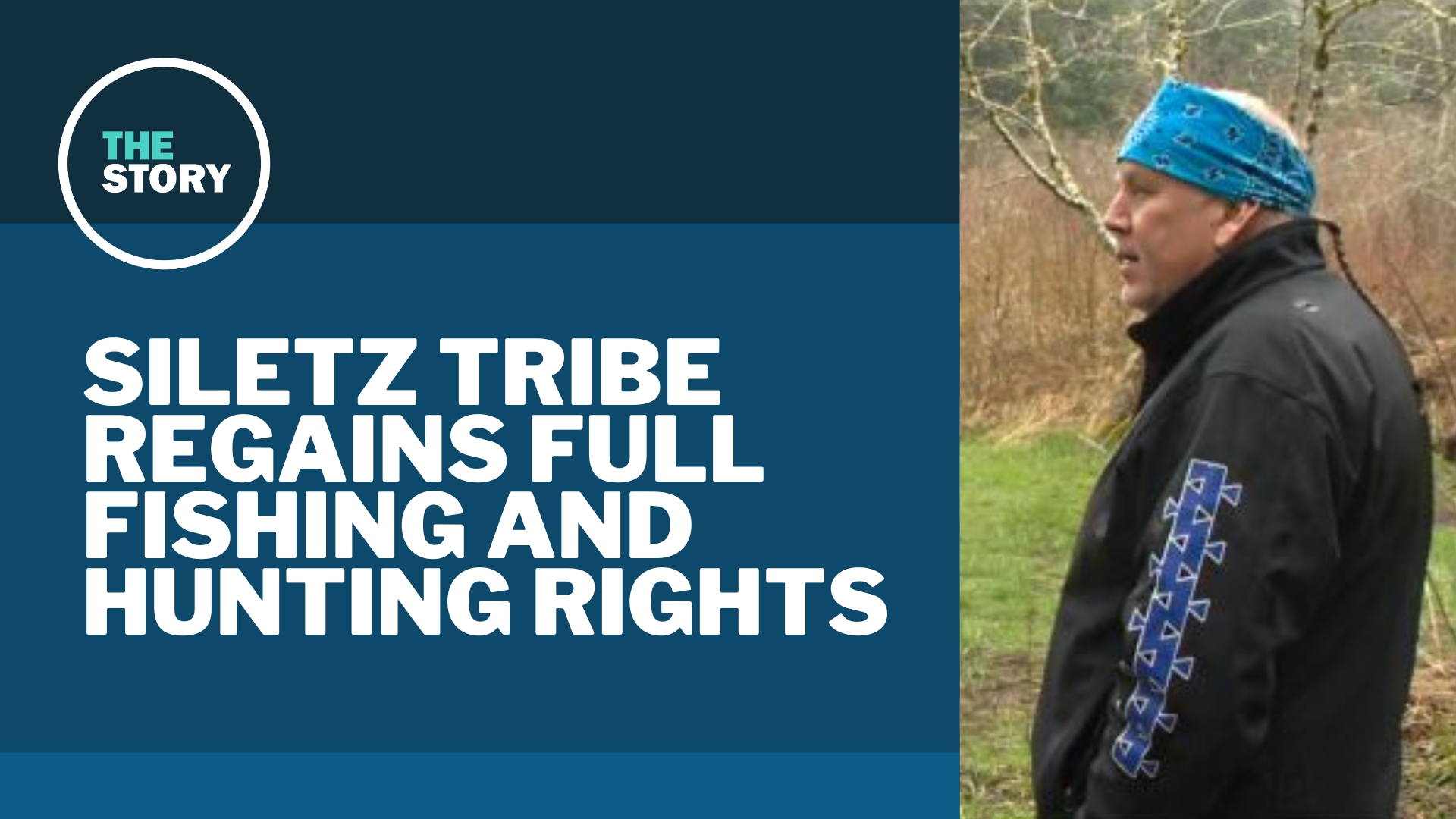
SILETZ, Ore. — For decades, the Confederated Tribes of Siletz Indians have faced strict limitations on their hunting, fishing and gathering under a 1980 agreement between the tribe, the state of Oregon and the federal government. That agreement is now set to be repealed, restoring the tribe’s full right to its traditional foods.
In western Oregon, the Siletz River winds its way through the heart of the Siletz reservation. The name comes from the Tillamook language and refers to something coiled up like a rope, according to Siletz Tribal Council Member and Treasurer Robert Kentta.
“The town of Siletz is almost like an island because of this big loop the river takes,” he said.
The river is rich in resources like crawfish, Kentta said, but under the 1980 agreement, it’s been a struggle for tribal members to access those resources. Tribal member Kevin Goodell described it as a horrible change for tribal members who grew up eating indigenous foods.
The Siletz reservation was first formed in the 1850s, and is the most diverse confederation of tribes on a single reservation, according to Kentta. By the 1950s, they had lost their land under the Congressional Western Oregon Termination Act, part of a U.S. Indian termination policy.
“It meant the last bit of our reservation land was sold by the Bureau of Indian Affairs, and a small check was received by each tribal member,” Kentta explained.


Credit: KGW
The tribe reorganized in the late 1970s, and the Siletz reservation was restored in 1980 — but in exchange, the tribe was forced to sign the agreement with the state and federal governments that placed limits on their fishing and hunting rights.
“Even though there was lots of pressure, lots of Oregon newspapers had headlines of ‘if the Siletz tribe is restored there will be nets all over the rivers and the fish will disappear.” Kentta said. “Well, that didn’t happen.”
The restrictions included limited fishing spots, and only several hundred deer and salmon tags, and just 25 elk tags handed out, lottery style, to about 6,000 tribal members — a system Kentta described as very competitive and not very fair.
“It was horrible, because I grew up with my dad who didn’t have any limits,” Goodell said. “And he would hunt and fish and do what he wanted with the community hunting and fishing.”
The decades-long restrictions forced the tribe to go elsewhere for food, falling into what Kentta described as more of a “Safeway and McDonalds culture,” which went against the tribe’s traditional beliefs.
“It means everything,” said Goodell. “I think it’s in our DNA, and what we’re eating today and what you buy in the stores, I have no clue what it’s doing to us.”


Credit: KGW
Two years ago, the tribe and the Oregon Department of Fish and Wildlife (ODFW) entered a new, voluntary agreement, giving the tribe the power to manage their own hunting and fishing rules — but the 1980 agreement was still technically on the books.
That changed late last week, when the state finally repealed it — a move that ODFW Federal Policy Director Davia Palmeri called long overdue. The federal government had already done its part to leave the agreement in the past, so the state’s repeal was the final step to officially remove the restrictions after 45 years.
“It is important to the department and to the state that we can work together with tribal governments to give their members access to those culturally significant resources,” she said.
Gov. Tina Kotek’s office applauded the move in a statement, declaring that “No tribe should have to choose between their land or their sovereign rights.”
Tribal members who spoke to KGW expressed relief, saying that even though they’ve already been operating under the new agreement for the past two years, it felt like the old restrictions were hanging over their heads as long as the 1980 agreement still technically existed.
“It’s awesome for our people,” Goodell said. “Yeah, it’s a big step for us.”

