Earth Is Approaching Dangerous, Irreversible Climate Tipping Points, Scientists Warn

The Weather ChannelFollow

1.8M Followers

Earth Is Approaching Dangerous, Irreversible Climate Tipping Points, Scientists Warn

Story by Jennifer Gray

 • 2h • 

3 min read

about:blank

Loaded: 44.88%Play

Current Time 0:03

/

Duration 0:40Quality SettingsCaptionsFullscreen

The Weather Channel

Earth Is Approaching Dangerous, Irreversible Climate Tipping Points, Scientists WarnUnmute

0

View on Watch

Our planet is headed toward several catastrophic climate tipping points, according to new research. This matters because once these “tipping points” are crossed, they can trigger dramatic environmental shifts that cannot be reversed.

A new study published in the European Geosciences Union paints a remarkably grim picture. It highlights threats such as the collapse of the Greenland Ice Sheet, dieback of rainforests and rapid thawing of permafrost. These changes would severely impact human well-being and global stability.Extra Arm Skin? This Is The #1 Over-The-Counter Skin Tightener

Ad

Extra Arm Skin? This Is The #1 Over-The-Counter Skin Tightener

Miami MD

Learn more

What’s most concerning about these tipping points is that once triggered, the changes often escalate on their own, without additional human input. This endless loop can amplify global warming and make it even more difficult to mitigate the effects of climate change.

Key Tipping Points to Watch

  • Permafrost Thaw: Permafrost, covering vast areas in the Arctic, holds large amounts of carbon in frozen organic matter. As temperatures rise, permafrost begins to thaw, releasing greenhouse gases like methane into the atmosphere. This release accelerates warming in a dangerous feedback loop. If significant portions thaw, billions of tons of carbon could enter the atmosphere, further fueling Earth’s warming.
  • Greenland Ice Sheet Melting: If it melts significantly, it could raise global sea levels by several feet. The melting of this ice sheet is triggered by rising global temperatures, and once it reaches a certain threshold, it could begin to melt much faster. This would lead to widespread coastal flooding, threatening millions of people who live near sea level.
  • Amazon Rainforest Dieback: The Amazon rainforest, often referred to as the “lungs of the Earth,” plays a vital role in absorbing carbon dioxide. However, increasing deforestation and climate change are pushing the Amazon toward a tipping point. If temperatures rise too high or deforestation continues at its current pace, the rainforest could begin to die back, releasing stored carbon and turning from a carbon sink into a carbon source. This would significantly amplify global warming.
  • Atlantic Meridional Overturning Circulation: The AMOC is a vital ocean current that helps regulate global climate. If the AMOC slows or collapses due to rising temperatures and melting ice, it could lead to more extreme weather patterns in Europe, Africa and the Americas. A collapse of the AMOC would severely impacting agriculture and ecosystems.

How Close Are We To Triggering These Tipping Points?

Researchers calculated the probabilities of triggering 16 known climate tipping points. They factored in uncertainties like climate sensitivity to greenhouse gases and the exact temperature thresholds at which tipping points occur. The scientists concluded that there is a 62% chance of triggering at least one tipping point, and nine tipping elements have more than a 50% probability of being crossed. These include the Greenland Ice Sheet collapse, abrupt permafrost thaw and Amazon rainforest dieback.Top 5 Advantages Of Owning Physical Gold And Silver

Ad

Top 5 Advantages Of Owning Physical Gold And Silver

Gold And Silver Kit

Learn more

Findings show that if we drastically cut emissions we can cut our chances of triggering a tipping point by roughly half. However, there’s growing concern that it might already be too late for some systems, as some tipping points could be triggered at as little as 1.8 degree Fahrenheit of warming, a threshold we have already reached.

Tipping Points Still Not As Impactful As Human-Driven Emissions

Carbon cycle tipping points like permafrost collapse and Amazon rainforest dieback do increase warming, however, the warming effects are relatively small compared to human-driven emissions. In fact, the added warming from these tipping points are as much as ten times smaller on average than the warming from human-driven emissions. Still, these tipping points can’t be ignored.Custom Engagement Rings That Turn Heads (Take a Look)

Ad

Custom Engagement Rings That Turn Heads (Take a Look)

QuestionHero

Learn more

A swift move to reduce greenhouse gas emissions could mitigate the risk of triggering these climate tipping points. The closer we get to these tipping points, the harder it will be to reverse their effects. While these carbon tipping points alone won’t cause runaway warming, they amplify our risks and shorten our window for action.

Jennifer Gray is a weather and climate writer for weather.com. She has been covering some of the world’s biggest weather and climate stories for the last two decades.

Scientists Found Bird Flu in Dairy Cows – Here’s Why That’s Terrifying

By American Association for the Advancement of Science (AAAS)7 Comments3 Mins Read

FacebookTwitterPinterestTelegram

Share https://scitechdaily.com/scientists-found-bird-flu-in-dairy-cows-heres-why-thats-terrifying/

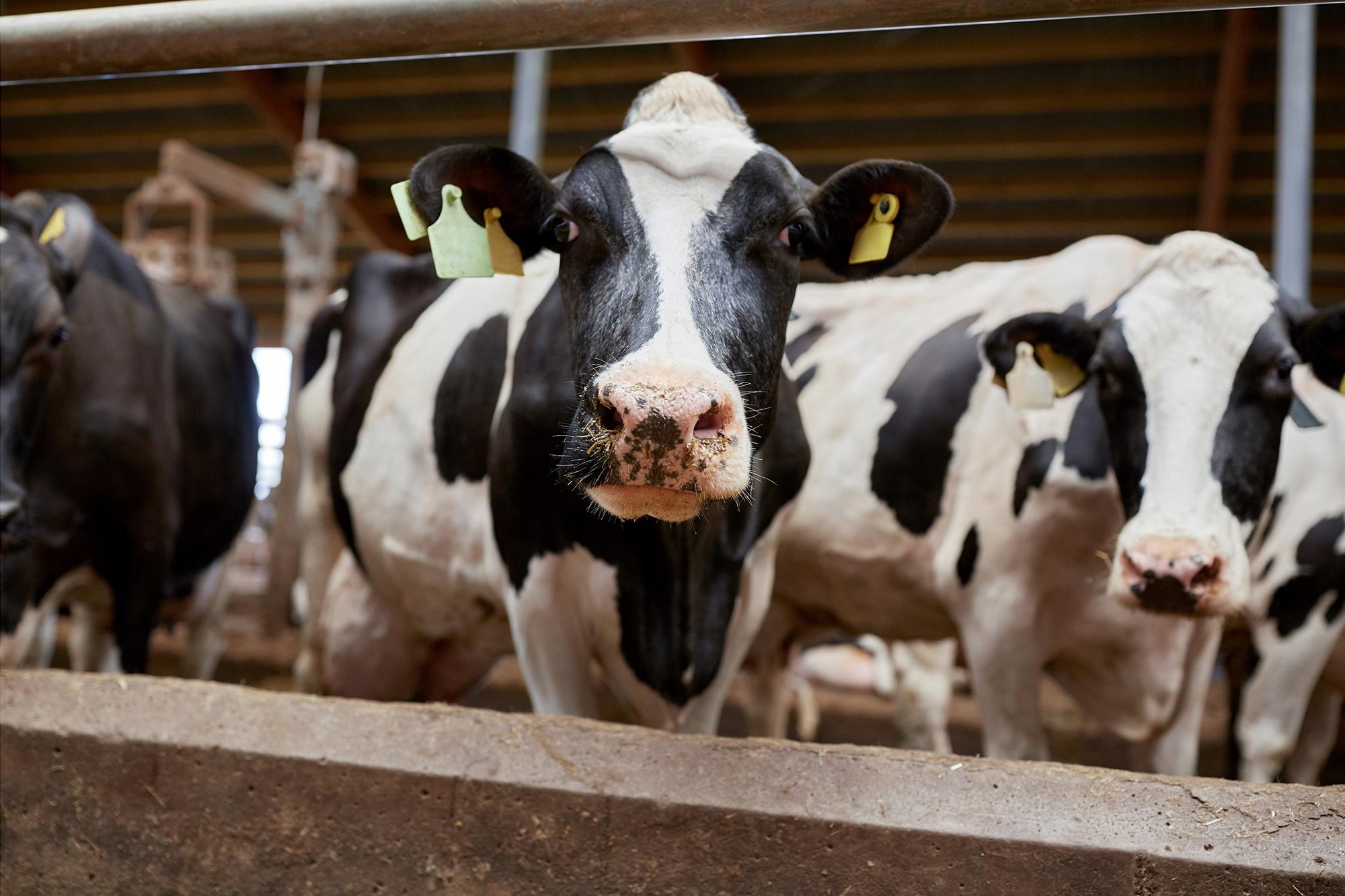
Cows in Cowshed on Dairy Farm
A mutated strain of bird flu has made its way into U.S. cattle, spreading rapidly after a single spillover event. The virus adapted for mammalian transmission, leaping across species and states, sparking new worries about pandemic readiness.

H5N1 bird flu has now crossed into U.S. dairy cattle for the first time, and alarmingly, it did so through just one spillover from a wild bird.

This single event, traced back to Texas in mid-to-late 2023, led to months of undetected cow-to-cow spread across multiple states. Genetic data show that the virus is adapting to mammals, jumping not only between cattle but also into cats, raccoons, and birds. These developments significantly heighten pandemic concerns, with scientists calling for urgent, coordinated public health responses.

H5N1 Jumps to Dairy Cattle: A Concerning Shift

Researchers have traced the spread of highly pathogenic avian influenza (HPAI) in U.S. dairy cattle to a single spillover event from a wild bird. This finding has raised alarms about the virus’s growing pandemic potential as it continues to evolve and move between species.

HPAI viruses are known to pose serious risks to animal health, agriculture, and potentially human health, due to their ability to cross species barriers. One particular strain, H5N1 clade 2.3.4.4b, has already spread globally, infecting wild birds, poultry, and various mammals — including a small number of humans — highlighting its potential to cause a future pandemic.

Tracking the 2024 Dairy Outbreak

In 2024, this H5N1 strain was detected in dairy cattle across several U.S. states — an unexpected and worrisome shift into a host species not commonly associated with the virus. To understand how this happened, Thao-Quyen Nguyen and colleagues studied how the strain evolved and spread after it arrived in North America in late 2021.

The team analyzed genetic data from more than 100 virus samples that had mixed with local, less dangerous bird flu strains. They also included newly sequenced genomes from infected cattle and outbreak reports. Their analysis points to a single bird-to-cow transmission event in Texas during mid-to-late 2023, which went undetected for several months as the virus spread silently from cow to cow.

Cow-to-Cow Transmission Speeds the Spread

Once inside the cattle population, the virus spread quickly. Movement of infected or presymptomatic cows helped carry the virus from Texas to several other states, including North Carolina, Idaho, Michigan, Ohio, Kansas, and South Dakota.

The virus didn’t stop at cattle — it continued to infect other species, including poultry, raccoons, domestic cats, and wild birds such as grackles, blackbirds, and pigeons.

Mammalian Mutations Deepen the Risk

Genetic analysis revealed that the virus has developed mutations associated with adaptation to mammals. Alarmingly, some of these mutations are now firmly established in the viral population.

“Our study demonstrates that [influenza A virus] is a transboundary pathogen that requires coordination across regulatory agencies and between animal and public health organizations to improve the health of hosts and reduce pandemic risk,” Nguyen et al. write.

Reference: “Emergence and interstate spread of highly pathogenic avian influenza A(H5N1) in dairy cattle in the United States” by Thao-Quyen Nguyen, Carl R. Hutter, Alexey Markin, Megan Thomas, Kristina Lantz, Mary Lea Killian, Garrett M. Janzen, Sriram Vijendran, Sanket Wagle, Blake Inderski, Drew R. Magstadt, Ganwu Li, Diego G. Diel, Elisha Anna Frye, Kiril M. Dimitrov, Amy K. Swinford, Alexis C. Thompson, Kevin R. Snekvik, David L. Suarez, Steven M. Lakin, Stacey Schwabenlander, Sara C. Ahola, Kammy R. Johnson, Amy L. Baker, Suelee Robbe-Austerman, Mia Kim Torchetti and Tavis K. Anderson, 25 April 2025, Science.
DOI: 10.1126/science.adq0900

Kansas ranchers and hunters want a year-long night hunting season for coyotes

NPR

By Calen Moore

Published April 23, 2025 at 5:02 PM CDT

Listen • 3:29

JUANA SUMMERS, HOST:

Coyotes – they’re pesky and largely unwelcome across the Great Plains. They can harm livestock and pets, and there are a lot of them. So many so that Kansas has even legalized hunting them using night vision for three months of the year. But now the state is considering expanding the hunting season to the whole year. Calen Moore of the Kansas News Service reports.

(SOUNDBITE OF COYOTES HOWLING)

CALEN MOORE, BYLINE: It’s around midnight in rural southwest Kansas. David Hampton stands in a field scanning the landscape for coyotes – or coyotes, as they’re called in these parts. He’s using a handheld night vision device and a night vision scope on his gun. This allows him to hunt in complete darkness.

DAVID HAMPTON: My dad used to drop me off when I was 10 years old in the sticks to go deer hunting. And one thing I am not is afraid of the dark.

MOORE: Hampton goes out a few yards and sets up a device that calls coyotes. It can mimic howls or prey in distress.

(SOUNDBITE OF COYOTES HOWLING)

MOORE: Coyote hunting is wildly popular in the Plains states, with wide-open spaces and large coyote populations. In the truck, Hampton says he enjoys the difficulty of coyote hunting compared to other species.

HAMPTON: You’re coming into a predator’s world, you know, and then you’re trying to bring them to you.

MOORE: Kansas introduced a night hunting season for coyotes back in 2021. It lasts the first three months of the year. The hope was to better control exploding coyote populations and give hunters more opportunities. But coyote populations have tripled since 1980, no matter what people throw at them. As the populations have increased, hunters and ranchers are asking the state to consider expanding the night vision season to year-round. Coyotes are incredibly resilient and eat about anything available. They are the most abundant large predator in the country. Geoff Nemnich hosts a show on YouTube called “The Last Stand” where he teaches people tips on coyote hunting.

(SOUNDBITE OF ARCHIVED RECORDING)

GEOFF NEMNICH: Together, we aim to bring you the best predator hunting tips, tricks and tactics right down to the last stand.

MOORE: Night vision is the newest evolution in hunting technology. Nemnich says that he has shot up to 23 coyotes in a single night hunt.

NEMNICH: At night, there’s less traffic, less people out, so the coyotes move around a lot more. So, you know, as a hunter, you can usually have a little more success because the coyotes are just naturally up running around.

MOORE: Kansas is one of the top states that has an abundance of coyotes. Coyotes can cost ranchers millions of dollars across the Plains. The Kansas Department of Wildlife is holding meetings around the state to gather opinions on the night season. From a rancher’s perspective, like Nick Zerr, coyotes are pest animals that prey on cattle from his ranch. He loses money every time a calf is killed.

NICK ZERR: The financial aspect of it is probably – is 750 to a thousand bucks.

MOORE: Zerr would like to see the season expanded to protect livestock during the late spring when calves are born, but not everyone is fully on board. Rural residents and other hunters pushed back against the night season. Tad Kramar strongly opposed night vision hunting.

TAD KRAMAR: As a rural resident, I would find it very disturbing to hear loud gunshots and see bright lights throughout the night.

MOORE: Some law enforcement groups have also opposed the night season over fears of people using firearms at night and the possibility of deer poaching. The majority of Kansans support night vision hunting of coyotes, according to the state’s secretary of wildlife, but the department is weighing the pros and cons. If it approves the expansion of night hunting, like neighboring states Nebraska and Oklahoma, it could happen as soon as next year.

For NPR News, I’m Calen Moore in Liberal, Kansas.