Vietnam reports H5N1 avian flu case with encephalitis
Reply

Betty Lin-Fisher, USA TODAY
Mon, April 21, 2025 at 11:53 AM PDT
5 min read433

Scroll back up to restore default view.
Children and families were expected to use 30,000 real eggs at the White House Easter Egg Roll on April 21 as retail egg prices remain higher than normal and egg supplies continue their recovery amid a bird flu crisis.
Wholesale egg prices have continued to drop, as they have since mid-March, but the steep decreases have not yet fully been reflected at the grocery store. The eggs used at the White House event were donated by farmers and are not in sizes meant for retail and grocery channels, the American Egg Board said.
The annual White House tradition dates back to 1878 when Rutherford B. Hayes issued an order that allowed children to roll eggs down the White House lawn after banning them from using the White House grounds as a playground two years earlier.
The White House South Lawn is opened once a year for families and children chosen in an online lottery to roll colorfully painted eggs and join in other activities. President Donald Trump, in remarks during the roll, said about 42,000 guests were expected throughout the day.
Advertisement
Families with children under 13 joined Trump, the first lady, White House staff and their families for the 147th edition of the egg roll.
In a new controversial twist that has raised ethics concerns, the 2025 egg roll is the first iteration of the tradition to be open to corporate sponsorships. The decision led some Trump opponents to suggest it is an ethics violation. Proceeds from companies that paid for their names to be attached to the event benefit the nonprofit White House Historical Association, the lead organizer of the egg roll.
The country’s largest tech companies make up some of the corporate sponsors, according to a list released by the White House, including Amazon, Meta and YouTube.
What the Trump administration means for your wallet: Sign up for USA TODAY’s Daily Money newsletter.
NBC News reported that the egg roll would use real eggs even as bird flu continues to cause supply constraints that have sent prices soaring.
Advertisement
“They were saying that for Easter, ‘please don’t use eggs. Could you use plastic eggs?’ I say we don’t want to do that,” NBC quoted Trump as saying in early April.
The Cool Down
Stop Moisturizing Crepe Skin! Tighten Skin With This DIY Trick InsteadMiami MD・
Bankrate
Playstation Lifestyle
The 30,000 real eggs, or 2,500 dozen, are donated every year by egg farmers represented by the American Egg Board.
In a news release, American Egg Board President and CEO Emily Metz said the eggs for the White House event would “not create additional strain on the nation’s egg supply or egg prices.”
The eggs represent a small percentage of the nearly 9 million dozen eggs, or 108 million eggs, sold at retail stores each day, Metz said.
“Additionally, the eggs used for the White House Easter Egg Roll will be in sizes small and medium, which are not meant for the retail and grocery channels,” she said.
The price of eggs has continued to be volatile, even as wholesale egg prices in recent weeks have declined and demand for eggs increased with the Passover and Easter holidays. The rise in prices and supply constraints have been largely driven by the outbreak of highly pathogenic avian influenza, or bird flu.
Advertisement
But egg prices at the grocery store, prices reported in some data reports like the consumer price index and prices on the wholesale market don’t always match, USA TODAY reported.
For instance, the latest consumer price index, released April 10 by the U.S. Bureau of Labor and Statistics, shows the highest price for a dozen large grade A eggs since the price hikes began.
But that price and the CPI cost of eggs overall, which was up 5.9% in March, may not accurately reflect the drop in wholesale prices that started in the middle of the month. The index is an average of data collected through the month and retail prices were higher at the beginning of March, one expert said.
Additionally, retailers may not have dropped prices of eggs proportionately with the drop in the wholesale egg market, which may have to do with retailers wanting to take advantage of worries about scarcity to keep prices high, particularly with the demand for Easter, some experts say.
According to the CPI, the average U.S. city price of a dozen large Grade A eggs at retail stores, not seasonally adjusted for March, was $6.23. That’s up from $5.90 in February and $4.95 in January.
Advertisement
In the latest weekly report from the U.S. Department of Agriculture on April 18, the average wholesale price of loose, white large shell eggs was $3.14 a dozen, up slightly from $3.08 a dozen reported on April 11 but lower than the $3.26 a dozen reported April 4.
Egg crisis: Why are egg prices so volatile?
The CPI is a lagging indicator, and it takes some time for wholesale prices to be reflected in the grocery store, industry experts have told USA TODAY. Plus, some retailers are using pricing strategies to keep egg prices elevated or aren’t reducing prices to match lower wholesale costs as quickly as other goods, some said.
How much you pay for eggs varies widely depending on where you live. Data gathered by USA TODAY shows the prices on April 21 at several retail stores in Wildwood, Missouri, a suburb of St. Louis, for instance, are lower than the U.S. city average reported in the March CPI, released April 10.
Advertisement
Prices for a dozen large Grade A eggs at an Aldi, Costco, Kroger, Target, Sam’s Club, Walmart and Whole Foods on April 21 ranged from a low of $4.19 at Whole Foods to a high of $5.49 at Aldi. The Whole Foods price was taken from the grocer’s website, and the Aldi price was from Instacart. Instacart prices are set by the grocer. The high and low prices match the prices gathered April 10.
Contributing: John Heasley, James Powel, Joey Garrison and Bart Jansen
Betty Lin-Fisher is a consumer reporter for USA TODAY. Reach her at blinfisher@USATODAY.com or follow her on X, Facebook or Instagram @blinfisher and @blinfisher.bsky.social on Bluesky. Sign up for our free The Daily Money newsletter, which will include consumer news on Fridays, here.
This article originally appeared on USA TODAY: Why were 30,000 real eggs used at the White House egg roll?
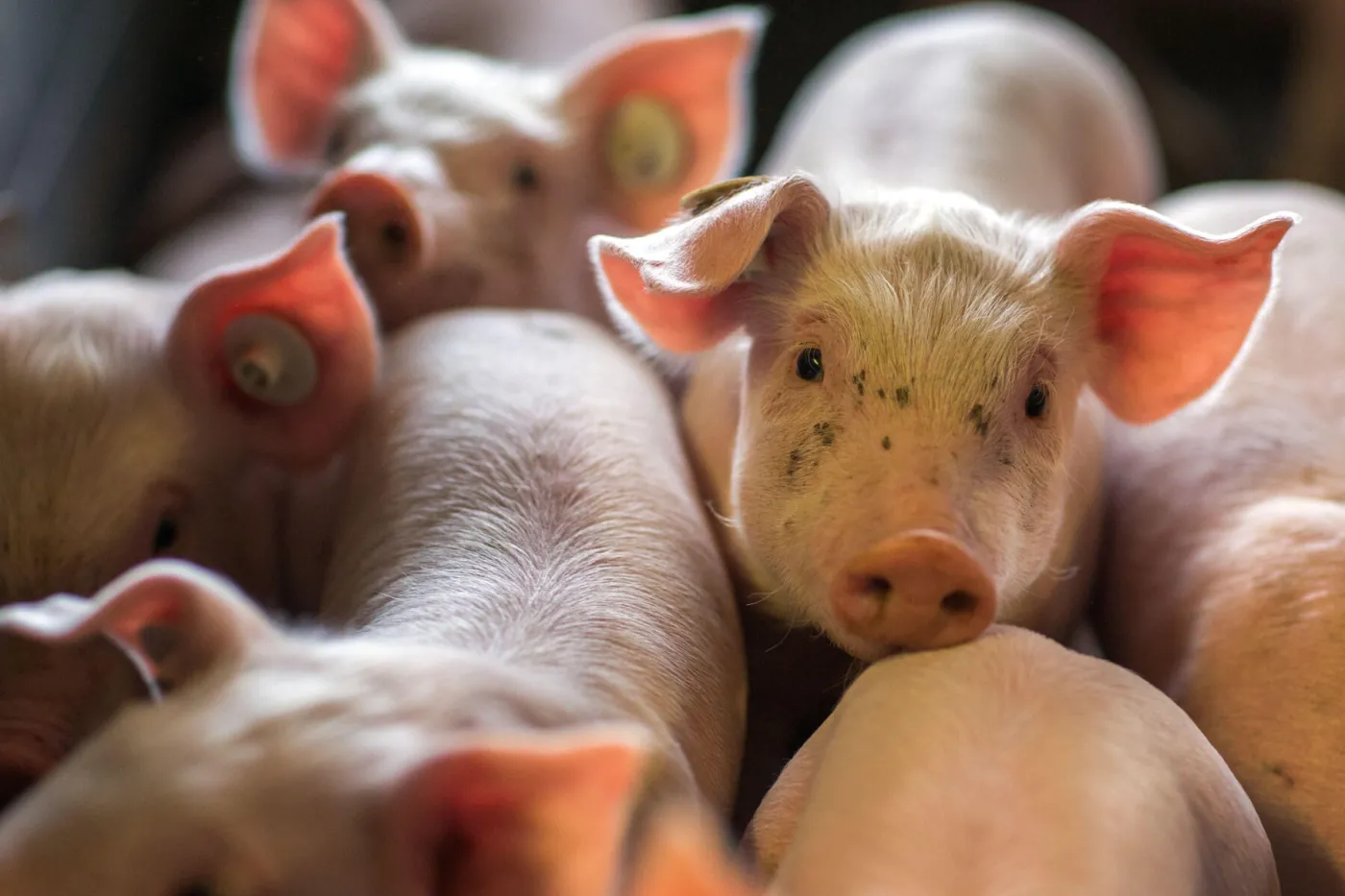
Date: April 9, 2025
Author(s): Kitty Block and Sara Amundson
Those who are determined to defend the cruelties of factory farming are never at a loss when it comes to sowing chaos and distortion on the subject, especially in the U.S. Congress.
Now they’re at it again, offering their blustering support for a new Senate bill, the Food Security and Farm Protection Act, introduced by Sen. Joni Ernst (R-IA). Her bill is a warmed-over successor to the EATS Act, and it too seeks to nullify all state laws concerning animal welfare and public health standards relating to the production and sale of animal products within a state’s own borders.
Please act now to help stop this dangerous overreach in the Senate by contacting your elected officials and asking them to oppose it.
Throughout the course of our campaigns to secure passage of higher animal welfare and public health standards in the states, we have consistently made the point that the merciful treatment of animals and its implications for public health should not be a matter for partisan politics or bickering.
Nor are we alone in this. A survey by Kellyanne Conway’s firm, KAConsulting LLC, showed that states’ rights received strong “tri-partisan” support (i.e., a majority of self-identified Republicans, Independents and Democrats) from respondents. This included higher majorities of Republicans, who wanted states to retain their constitutional power to set state standards for goods and agriculture.
A diverse set of more than 6,000 entities, including over 5,000 farmers and producers, have also gone on the record opposing this kind of attack on state and local laws that uphold higher animal welfare and public health standards. In their ranks, as with the public, there is widespread agreement that animals raised for food should not be kept in cages or crates so tight they cannot move around.
The fingerprints of Big Pork are all over this special favors legislation. In the last session, when it was the EATS Act, we fought it off in Congress and in the arena of public opinion. There’s no catchy acronym this time around, but we may as well call it what it is: the same old race to the bottom of the pork barrel.
Whatever else happens, Big Pork itself will be primarily responsible for the chaos that will ensue should this measure ever pass. It is Big Pork that seeks to make the fundamental principle of humane treatment of animals contentious. Having lost their legal challenges to California’s Proposition 12 and similar laws at every level of our judicial system, including the U.S. Supreme Court in 2023, the National Pork Producers Council and allied organizations are again seeking to bend the Congress to their will and have it overturn duly enacted laws in 15 states (red, blue and purple) across the country.
Never mind the interests of American farmers and producers, the preferences of consumers, and the political autonomy of state legislatures, and never mind the billions of animals whose suffering lies in the balance. Whenever Big Pork and its allies invoke the common good, it’s a sure bet that they’re getting ready to ram something indigestible down our throats.
Urge your rep to say NO to wiping out critical state laws on animal protection and many other concerns
Whatever form this legislation takes, the pork lobby will persist in peddling the claim that the passage of state laws on animal welfare and public health will lead to an impossible patchwork of laws across the country and a general confusion in the market. They’re so wrong about this. No chaos has resulted from Proposition 12 and similar laws going into effect, nor has any state proposed or announced a plan to propose a farm animal confinement standard higher than California’s. The markets have been steadily and successfully adjusting, and countless producers have embraced higher standards, with a keen appreciation for where the market is going and a respect for the voters and consumers whose preferences drive such changes.
To the contrary, it is Ernst’s bill that would be the driver of chaos, punishing and pulling the rug out from under the many farmers and producers who have embraced higher animal welfare standards and made substantial investments to meet consumer demand. It is her bill that will cause severe uncertainty and endless litigation over a multitude of state and local laws on the books. It would also tie states’ hands when they seek to address emerging issues such as disease risks at a time when Congress has difficulty completing action on any legislation.
Ultimately, the senator’s proposal seeks to reward the laggards of Big Pork who are unwilling to spend money or take steps to mitigate the massive animal cruelty (and public health risks) for which they hold all the blame. In their smugness, they would prefer to force the rest of us—whoever we are, however we vote, and wherever we live—to accept their bottom-scraping standards or, as some of them admit in candor and Ernst’s bill itself specifies, no standards at all.
Year after year, we’ve stood at the heart of the fight for improved standards of treatment for animals in agriculture. We spearheaded passage of California’s Proposition 12, and our litigators successfully defended its implementation in the courts. We have also worked closely with congressional allies and mobilized a broad coalition to stop every previous federal legislative threat to hollow out states’ rights and good laws on animal welfare and public health, from the King Amendment to the EATS Act. Now we’ll have to do so again, and we will.
Sara Amundson is president of Humane World Action Fund.
The Food Security and Farm Protection Act could wipe out many state laws aimed at promoting animal welfare and food safety, as well as state laws on a wide range of other issues including environmental and labor standards. Please urge your rep to say NO.

Kitty Block is the chief executive officer and president of Humane World for Animals, as well as chief executive officer of Humane World Action Fund.
April 19, 2025

Listen to this article · 5:33 min Learn more
By Sy Montgomery
Ms. Montgomery is the author of “What the Chicken Knows” and other books on animals.
Every spring, I’d eagerly await my special package — a box that arrived peeping. Inside were just-hatched chicks, still egg-shaped and covered in down.
I would raise the chicks in my home office. During our first month together, there was always a chick or two in my sweater, on my shoulder or perching atop my head. They considered me their mother.
Later, when they moved outside to a coop, they ranged freely over the eight acres my husband and I own in rural New Hampshire. Whenever they caught sight of me, they would greet me as if I were a member of the Beatles, racing toward me with wings outstretched. When they began to lay eggs, I was elated. I had gotten the hens to keep me company, but nothing tastes better than an egg from a free-range chicken you know personally. I’ve been a vegetarian since 1980, so I felt great about accepting this gift from my sweet little flock, which I called the Ladies.
I had no idea that while the Ladies enjoyed shelter and sunshine, fresh bugs and freedom, their newborn brothers faced a gruesome fate shared by 6.5 billion male chicks around the world each year. These male birds can’t lay eggs but also aren’t raised for meat. Because they come from egg-laying breeds, they don’t grow big or fast enough to be used for food. So they are ground up alive or gassed to death.
The practice is especially egregious because unlike many baby mammals and songbirds, which are born blind, naked and helpless, newborn chicks are capable little creatures. Within hours of hatching, they are standing, running and successfully finding food. When they are thrown into the grinder or gasser at only a day old, these male chicks are alert and aware.
Unwittingly, I was complicit in this monstrosity.
The good news is that a new technology can help end it. Called in ovo sexing, it determines the sex of the chick embryo long before it hatches, allowing the producers to get rid of the male eggs and hatch only the females. Eggs from in ovo sexed hens have been available in some European countries since 2018 and now make up about 20 percent of Europe’s market, driven in large part by bans on chick culling in several countries, including Germany and France. Come summer, the first such eggs are due to become available in U.S. supermarkets.
Thank you for your patience while we verify access. If you are in Reader mode please exit and log into your Times account, or subscribe for all of The Times.
Thank you for your patience while we verify access.
Already a subscriber? Log in.
Want all of The Times? Subscribe.

Follow
1.6M Followers
Story by Eric Lagatta, USA TOD
• 4d •
4 min read
This artist’s concept shows what exoplanet K2-18b could look like based on scientific data. NASA’s James Webb Space Telescope has observed K2-18b, an exoplanet 8.6 times as massive as Earth, revealing conditions that could support life on the exoplanet.© Illustration: NASA, Illustration: NASA / USA TODAY NETWORK
Humanity may be one step closer to finally answering the question of whether we’re alone in the cosmos with a definitive “no.”
A team of astronomers said it has found signs of what could be extraterrestrial life on a distant planet located far outside of our own solar system.
Fisher InvestmentsWhen to Retire: A Quick Guide
But don’t go imagining little green aliens with big oblong eyes. Using observations from NASA’s James Webb Space Telescope, the researchers were able to find possible hints of molecules that on Earth are signs of living organisms like marine algae.
Start the day smarter. Get all the news you need in your inbox each morning.
The discovery was made on a massive exoplanet known as K2-18b that is much larger than Earth but smaller than Neptune. For years, the exoplanet orbiting more than 120 light-years away has captivated scientists who have considered it among the best potential life-harboring ocean worlds.
The latest findings on K2-18b comes from a team of researchers led by Nikku Madhusudhan, an astrophysicist at the University of Cambridge in England. While Madhusudhan stopped short of claiming the findings as a conclusive discovery, he said in a statement that the results serve as the strongest evidence yet that life may exist anywhere else besides Earth.Related video: Planets That Could Be More Habitable Than Earth (What If)
about:blank

Planets That Could Be More Habitable Than Earth
“Decades from now, we may look back at this point in time and recognize it was when the living universe came within reach,” Madhusudhan said in a statement. “This could be the tipping point, where suddenly the fundamental question of whether we’re alone in the universe is one we’re capable of answering.”
More news about our planet: Sign up for USA TODAY’s Climate Point newsletter.
1 / 25




©Handout, Getty Images
NASA’s James Webb Space Telescope reveals the Rho Ophiuchi cloud complex, the closest star-forming region to Earth on July 12, 2023 in space. The young stars at the center of many of these disks are similar in mass to the Sun, or smaller. The heftiest in this image is the star S1, which appears amid a glowing cave it is carving out with its stellar winds in the lower half of the image. The lighter-colored gas surrounding S1 consists of polycyclic aromatic hydrocarbons, a family of carbon-based molecules that are among the most common compounds found in space. These images are a composite of separate exposures acquired by the James Webb Space Telescope using the NIRCam instrument. Several filters were used to sample wide and narrow wavelength ranges. The color results from assigning different hues (colors) to each monochromatic (grayscale) image associated with an individual filter.See more
The exoplanet known as K2-18b was first discovered in 2015 more than 120 light-years from Earth during NASA’s planet-hunting K2 mission.
A whopping 8.6 times bigger than Earth, K2-18b orbits a red dwarf star in the constellation of Leo in what’s known as a habitable zone – a region where planets could have water, providing a key ingredient for life to flourish. In a nod to the classic fairy tale, astronomers even refer to these regions as “Goldilocks” zones because conditions have to be just right – neither too hot nor too cold – for water to remain in liquid form and pool on planetary surfaces.
Smart Lifestyle TrendsWho Has the Cheapest Car Insurance in 2025?
Observations in 2019 with Webb’s predecessor, the Hubble Space Telescope, previously indicated that the exoplanet could be a Hycean world covered by ocean water underneath a hydrogen-rich atmosphere.
In September 2023, another investigation with Webb – an advanced telescope launched in 2021 outfitted with a gold-coated mirror and powerful infrared instruments – revealed something more: traces of carbon-bearing molecules in K2-18b’s atmosphere, including methane and carbon dioxide.
At the time, the discovery served as the best evidence yet that the exoplanet had the potential to support life.
Intrigued, astronomers took another look at Webb’s observations.
This time, Madhusudhan and his team used a different instrument outfitted to Webb that allowed the researchers to analyze K2-18b in another wavelength range of light so as not to overlap with the previous observations.
fedarb.comPremier Arbitration Services – View Our Special Masters
Astronomers can determine the chemical composition of the atmospheres of faraway planets by studying the light from its parent star as the planet passes in front of it as seen from the Earth. During K2-18b’s stellar transit, Webb was able to detect some starlight being absorbed into the planet’s atmosphere that left clues for astronomers to piece together the gases in the atmosphere.
That’s what led the researchers to detect a possible biosignature.
The biosignature came in the form of hints of sulfur-based gases dimethyl sulfide (DMS) and dimethyl disulfide (DMDS) in the atmosphere – both molecules from the same chemical family.
On Earth, the gases are only produced by life, primarily microbial life such as marine phytoplankton, according to the researchers. Though an unknown chemical process could still be the source of these molecules in K2-18b’s atmosphere – which were also observed to be much more concentrated than on Earth – the researchers are still encouraged by the results.
“Given everything we know about this planet, a Hycean world with an ocean that is teeming with life is the scenario that best fits the data we have,” Madhusudhan said in a statement.
Finding life on another world would be a monumental discovery, but Madhusudhan isn’t getting ahead of himself just yet.
The observations could have occurred by chance or could be the result of previously unknown chemical processes at work on K2-18b. For that reason, the researchers say an additional 16 to 24 hours of follow-up analysis with Webb could help them reach a more definitive conclusion.
“It’s important that we’re deeply skeptical of our own results, because it’s only by testing and testing again that we will be able to reach the point where we’re confident in them,” Madhusudhan said. “That’s how science has to work.”
The team’s findings were published April 17 in the Astrophysical Journal Letters.
Eric Lagatta covers breaking and trending news for USA TODAY. Reach him at elagatta@gannett.com
This article originally appeared on USA TODAY: We may not be alone in the universe: Astronomers find possible alien life on planet



 Exposing the Big Game