Israel ‘ready to strike Iran’ as US evacuates bases and embassies
Reply

June 11, 2025
By Shaun Holt
News
Article
The ongoing H5N1 avian flu outbreak has severely impacted U.S. poultry and dairy industries, prompting a $1 billion USDA response strategy that includes biosecurity, vaccination research, and innovation funding. With growing concern over viral mutations affecting humans and livestock, rapid, field-based diagnostic tools offer critical support in accelerating detection and containment efforts.

Alveo Technologies CEO Shaun Holt

Since H5N1, more commonly known as avian or bird flu, first appeared in commercial poultry and backyard flocks in the US in February 2022, the threat of the Highly Pathogenic Avian Influenza (HPAI) virus has wreaked havoc among the poultry and livestock industry for producers, veterinarians and government agencies.1
As of May 2025, the Centers for Disease Control and Prevention (CDC) reports that more than 169 million birds have been affected, and avian flu has been detected in flocks in all 50 states and Puerto Rico.2 The total number of egg-laying chickens during December 2024 averaged 373 million,3 according to the U.S. Department of Agriculture (USDA); however, in March 2025, the total layers in the U.S. was about 351 million.4 Since November 2024, the costs associated with the ongoing outbreak have exceeded $1.4 billion,5 including $1.25 billion in indemnity and compensation payments to producers whose flocks were culled.
The ongoing threat and economic toll have led the United States Department of Agriculture (USDA) to initiate a $1 billion dollar comprehensive strategy 6 to curb HPAI, protect the US poultry industry and lower egg prices, in addition to its existing funding to indemnify growers for depopulated flocks. The agency is taking a five-pronged approach to prevent the introduction or spread of avian flu, as well as support America’s farmers and ranchers by:
Poultry aren’t the only agricultural animals being affected by the virus. H5N1 has spread to dairy cows in 17 states.9 The B3.13 variant of H5N1 is spreading so quickly among dairy cattle in California that the governor declared a state of emergency. Not only are sick cows less productive, but their milk is heavily infected with the virus and must be destroyed. Following California’s lead, Iowa, Louisiana and Colorado, have also issued emergency/disaster declarations. Representatives from Louisiana and Colorado, as well as Pennsylvania, presented on their surveillance, public health actions, and overall emergency preparedness and response efforts to H5N1 at the National Governors Association in February.
The risk to humans is low, but real and growing larger all the time, even though the virus does not currently spread efficiently among people. The virus has already mutated, is spreading among cattle and appears to be making progress toward doing so in people. To date, there have been 70 reported human cases in the US and 1 death.9
A study published mid-January 2025 10 demonstrated that the H5N1 virus isolated from a human patient displayed mutations that enabled it to replicate efficiently in human cells, which has the potential to make it even more deadly to people. Other analyses show that just a single mutation could let the virus target receptors on human cells. The virus has been detected in pigs, which increases the risk because pigs can contract both human and bird variants of influenza allowing the two variants to exchange genes.
The B313 variant, which is most common in cattle, hasn’t posed a serious threat to individuals who have contracted the virus as a result of contact with infected cattle or contaminated milk. Globally, however, there is a 50% mortality rate among the roughly 900 confirmed cases of H5N1 infection in cattle. Unfortunately, cattle have been shown to be infected with the dangerous N1.1 variant, which had previously been found only in birds. This is the same variant that killed a man in Louisiana and hospitalized a child in British Columbia.11 It’s a very concerning spillover event.
Effectively fighting any contagious disease requires the ability to test for it, and in the US, only authorized USDA laboratories can do so using polymerase chain reaction (PCR)-based diagnostics. PCR is a highly precise test, but slow to return results due to the time it takes to ship samples to the lab and process them. Since many of these labs don’t have infinite capacity, bottlenecks occur in heavy outbreaks, which further slows results.
While waiting days or weeks for results, the virus spreads through flocks or herds and health authorities work with data from tests that are days, maybe even weeks old. The slow response also makes proactive testing extremely challenging. For instance, if cattle need to be transferred from one herd to another, testing them for H5N1 could help prevent it from spreading, but centralized testing is only effective if results come quickly.
The slow rate of getting test results is also a problem for people. Antivirals are only effective early in the course of the disease, and differentiating seasonal flu from H5N1 requires a daisy chain of multiple laboratories. By the time results arrive, it may be too late for early treatment to have any effect. These delays also make it difficult to regularly test dairy workers who are in close contact with cattle and milk that could be infected.
In its $1 billion dollar strategy to curb HPAI, the USDA has recognized the need for increased bio-surveillance and other innovative solutions to get ahead of outbreaks and minimize depopulation of egg-laying chickens. At Alveo Technologies, we have developed a paradigm-shifting solution to help with biosecurity and surveillance. The Alveo Sense Poultry Avian Influenza Test is a portable molecular test for H5N1 made possible by IntelliSense, a patented method of direct electrical sensing of nucleic acid amplification. The palm-sized analyzer allows users to test at the point of need— on the farm and in the field—for different pathogens and receive accurate and rapid results in about 45 minutes via a mobile app. Through our Alveo Vista portal, the raw data and analytics from these results can be automatically geotagged, uploaded to the cloud in a private and secure environment, and then exported for regulatory agencies and state veterinarians to have actionable insights at light speed. Our technology is already in use in the EU and Middle East.
The ability to know sooner and act faster will allows producers, veterinarians and government agencies to better manage and make decisions quickly regarding the avian flu. Our technology could also expedite and support processes within USDA labs to help make their testing more cost-effective and efficient.
The USDA has a superb record of ensuring that diagnostics are effective and safe, and its commitment to help curb the avian flu catastrophe is encouraging. The agency’s current initiatives, along with biotech’s existing testing technology, have the potential to further accelerate development of innovative solutions, while simultaneously informing evidence-based policy. We believe that every problem has a clear and oftentimes simple solution when you apply the right knowledge and are open to different perspectives and collaboration. By working together, we can keep ahead of this growing risk to help ensure animal and public health safety.
06-11-2025
Earth.com staff writer
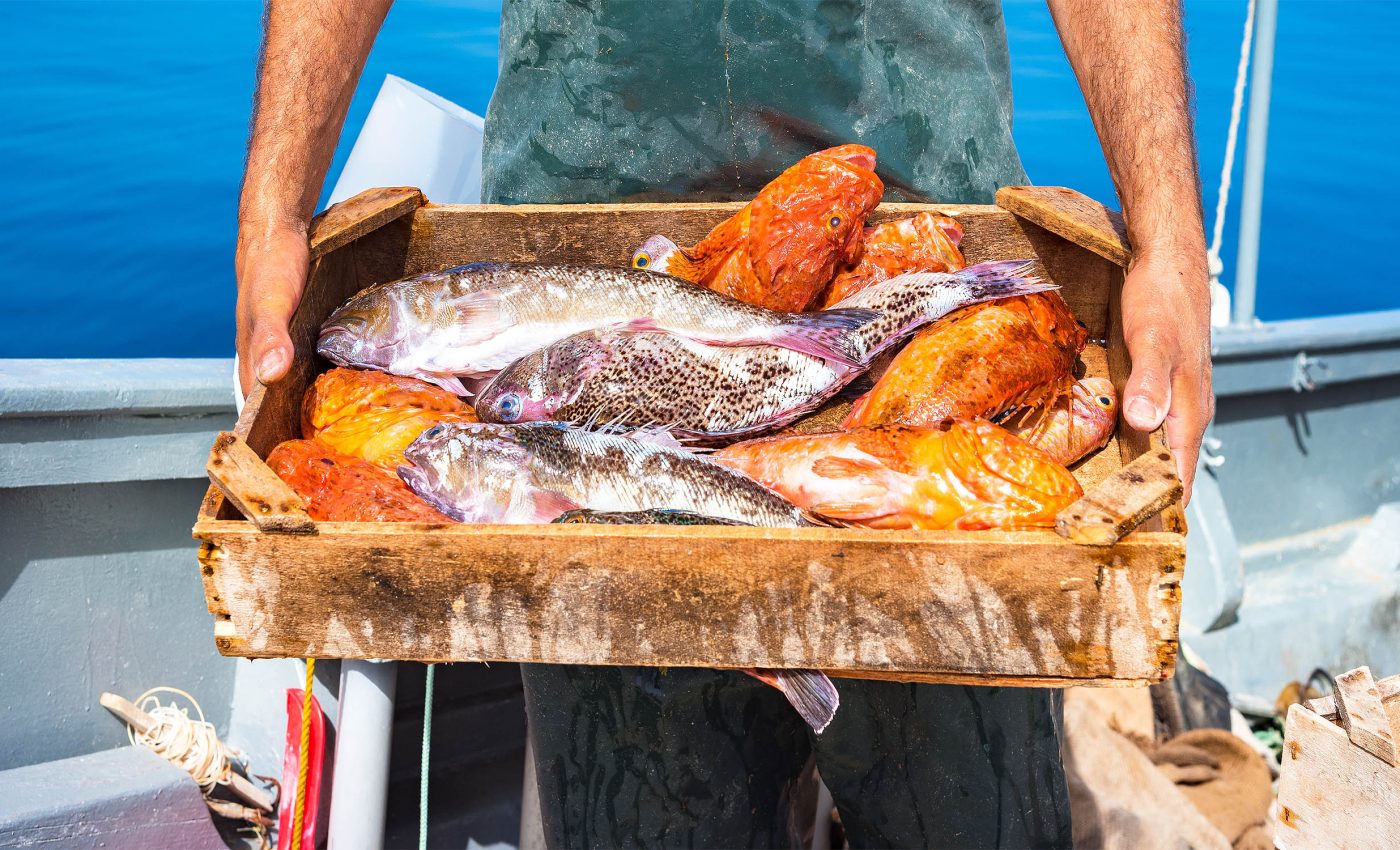
Each year, more than two trillion wild and farmed fish are killed to feed humanity. Their deaths often go unnoticed. Yet beneath the surface is a simple biological fact: fish can suffer.
Rainbow trout, a species farmed and consumed across the globe, experience not just death – but a prolonged and intense form of distress when killed by air asphyxiation.

A new study published in the journal Scientific Reports shines a light on this pain and offers a pathway to reduce it.
Unlike environmental impact or public health, animal suffering lacks a universal metric. There are no equivalents to carbon footprints or life years lost. To address this, scientists developed the Welfare Footprint Framework (WFF).
This tool measures pain in minutes, allowing researchers to compare welfare outcomes across species and conditions. The research team applied this method to trout slaughter, where air exposure is still a widely used technique.
Fish, when pulled from water, begin a slow and stressful decline. Their gills collapse. They gasp in panic. Their blood chemistry spirals. Oxygen disappears while carbon dioxide builds.
These biological reactions unfold as the fish continues to move, gasp, and suffer – sometimes for as long as 25 minutes.
The researchers divided the trout’s suffering into four time segments. These range from alarm at removal to the final depression of brain activity before unconsciousness.
Through behavioral, neurological, and pharmacological evidence, the team estimated that the average trout endures about ten minutes of pain that qualifies as hurtful, disabling, or excruciating.
In some conditions, this could stretch beyond 20 minutes. When adjusted by weight, that translates to 24 minutes of such pain per kilogram (about 11 minutes per pound) of fish killed.
The team used neurophysiological data like EEG signals and reflex loss to identify unconsciousness. They reviewed how fish respond to CO₂, pH imbalance, muscle exhaustion, and fear-inducing stimuli. Each pain level had specific criteria, ranging from annoyance to total disruption of basic functions.
Air asphyxiation is still legal and common in many parts of the world. But it is neither quick nor painless. Chilling in ice or using ice slurry might sound gentler, yet for cold-adapted species like trout, this method just slows down metabolism.
This can delay loss of consciousness even further, compounding the suffering. Ice exposure also risks tissue damage, thermal shock, and prolonged fear.
The research shows that suffering does not always begin at the point of slaughter. It often starts well before.
Crowding, transport, and handling all add to the fish’s cumulative pain. These pre-slaughter stressors can cause physical injury and hours of distress. Yet, regulations usually overlook them.
The study evaluated two types of stunning: electrical and percussive. Electrical stunning, if properly used, could spare 60 to 1,200 minutes of suffering for every dollar spent. This makes it one of the most cost-effective welfare interventions known.
But implementation remains inconsistent. In many commercial settings, electrical stunning fails to reliably render fish unconscious. Poor placement of electrodes, inadequate voltage, or faulty machines may undermine the potential benefits.
Percussive stunning – a physical blow to the head – has shown better consistency in lab settings. But it’s difficult to scale. Fish vary in size. Equipment must be precisely calibrated. Worker fatigue also reduces effectiveness. Any slip means the fish remains conscious while bleeding out.
What makes the Welfare Footprint Framework powerful is its transparency. Instead of assigning a fixed label to pain, it works with probabilities. If scientists believe there’s a 40% chance the pain is disabling and a 40% chance it is excruciating, the framework includes both.
This makes the model flexible and more reflective of real-world uncertainty. Pain, like emotion, varies between individuals. Some fish may suffer more than others, even under identical conditions.
“The Welfare Footprint Framework provides a rigorous and transparent evidence-based approach to measuring animal welfare, and enables informed decisions about where to allocate resources for the greatest impact,” noted Dr. Wladimir Alonso from Welfare Footprint Institute.
This approach mirrors models used in public health or environmental science. Just like life years lost to disease, we can now talk about minutes of suffering saved.
Fish slaughter occupies only minutes in an animal’s life – but these minutes can be extremely painful. Compared to long-term reforms on farms, slaughter improvements are easier to implement and affect billions of lives.
The study’s authors argue that investing in better stunning tools and training workers can provide enormous welfare gains.
For policy makers, this research offers a scientific foundation to reform outdated practices. Certification schemes can set minimum stunning effectiveness based on real pain data.
Governments can use this to guide humane slaughter laws. For consumers, it gives a new way to think about what ends up on their plate.
Though this study focused on rainbow trout, the underlying stress pathways – oxygen deprivation, acidosis, metabolic failure – are common across fish species. That means the Welfare Footprint Framework can be adapted.
Salmon, catfish, seabass, tilapia – they all may suffer in similar ways during air exposure. However, each species will need specific data.
Some tolerate low oxygen better. Others may react more strongly to ice. Future research must expand to include this diversity.
The world is just beginning to reckon with the sentience of fish. For decades, their pain was denied or ignored. But science no longer allows that.
With trillions of fish slaughtered every year, even small improvements can have vast impact.
The WFF doesn’t just measure pain. It opens a language of empathy grounded in evidence. It lets regulators, producers, and consumers weigh the cost of change.
And perhaps, most importantly, the framework acknowledges what fish have felt all along – suffering that deserves to be seen and reduced.
The study is published in the journal Scientific Reports.

 Exposing the Big Game