Tragic Death of American Teen Caught in Cartel Crossfire in Mexico Sparks Urgent Call for Action on FIGHT Act

News Provided By

ANIMAL WELLNESS ACTION

January 24, 2024, 19:06 GMT

Share This Article
     

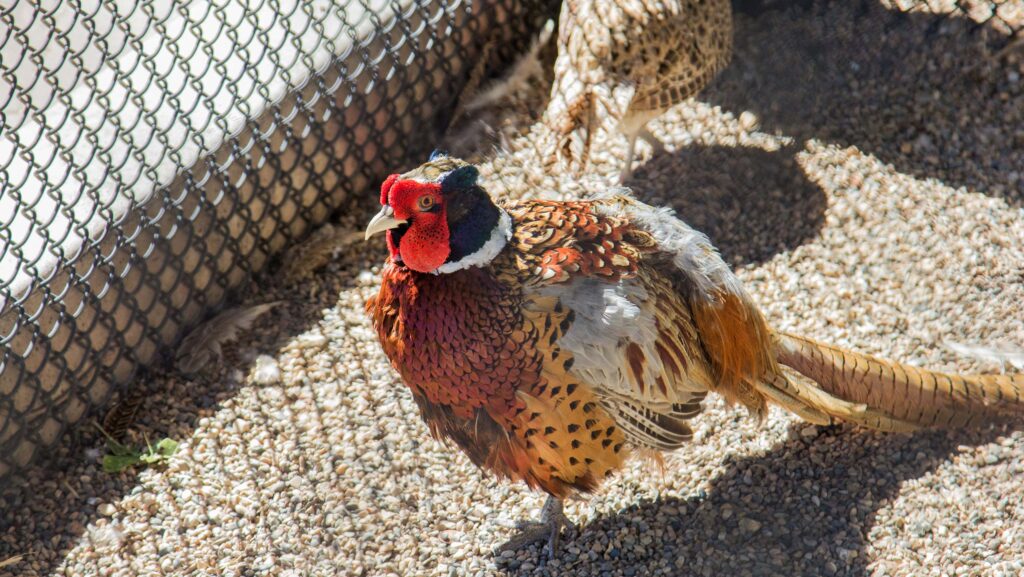
Cockfighting Match

Violent killing is the very purpose of cockfighting, and all too often, it’s just not the animals who die.”

— Wayne Pacelle, President of Animal Wellness Action

WASHINGTON, D.C., UNITED STATES, January 24, 2024 /EINPresswire.com/ — Animal Wellness Action reacted to the shooting death of a Washington state teenager at a cockfight in Mexico, as reported by SourceOne News.

Christian Herrera, 16, was killed and his dad injured from being in the crossfire of a shootout between rival cartels on Jan. 6. It is just the latest example of outbursts of violence at cartel-controlled cockfighting arenas in Mexico that are consorting and doing business with American cockfighters.

Wayne Pacelle, president of Animal Wellness Action, issued this statement:

“Violent killing is the very purpose of cockfighting, and all too often, it’s just not the animals who die,” said Wayne Pacelle, president of Animal Wellness Action. “There is violence spillover with regularity at these spectacles, and it happens with numbing frequency at cartel-controlled fighting venues in Mexico.”

“American cockfighters are trafficking fight animals to Mexico and they are partners in these spectacles of cruelty and organized crime,” Pacelle added. “It’s time for the United States to pass the FIGHT Act to give law enforcement more tools to arrest U.S.-based cockfighters on our side of the border and halt their trade with some of the world’s worst organized criminals.”

In Mexico last year, in a spasm of cartel violence, 20 people were massacred at a cockfighting derby, including an American. The latest shooting in January claimed 6 lives and resulted in 13 others wounded.

The smuggling of cockfighting birds from Mexico was the cause of 10 of 15 outbreaks of virulent Newcastle Disease to hit the U.S. in recent decades.

The FIGHT Act, H.R. 2742/S. 1529, aims to halt the transport of mature roosters through the U.S. mail, ban simulcasting and gambling on animal fights, enhance forfeiture provisions, and empower citizens to take civil action against illegal animal fighters.

ABOUT
Animal Wellness Action is a Washington, D.C.-based 501(c)(4) whose mission is to help animals by promoting laws and regulations at federal, state and local levels that forbid cruelty to all animals. The group also works to enforce existing anti-cruelty and wildlife protection laws. Animal Wellness Action believes helping animals helps us all. X: @AWAction_News.

The Center for a Humane Economy is a Washington, D.C.-based 501(c)(3) whose mission is to help animals by helping forge a more humane economic order. The first organization of its kind in the animal protection movement, the Center encourages businesses to honor their social responsibilities in a culture where consumers, investors, and other key stakeholders abhor cruelty and the degradation of the environment and embrace innovation as a means of eliminating both. The Center believes helping animals helps us all. X: @TheHumaneCenter.

WAYNE PACELLE
ANIMAL WELLNESS ACTION
+ 12024200446
email us here
Visit us on social media:
Facebook
Twitter

Legal Disclaimer:

EIN Presswire provides this news content “as is” without warranty of any kind. We do not accept any responsibility or liability for the accuracy, content, images, videos, licenses, completeness, legality, or reliability of the information contained in this article. If you have any complaints or copyright issues related to this article, kindly contact the author above.

You just read:

Tragic Death of American Teen Caught in Cartel Crossfire in Mexico Sparks Urgent Call for Action on FIGHT Act

News Provided By

ANIMAL WELLNESS ACTION

January 24, 2024, 19:06 GMT

Share This Article


Mother, son contract H5N1 bird flu in Cambodia

Source: Xinhua

Editor: huaxia

2025-06-29 19:36:45


PHNOM PENH, June 29 (Xinhua) — A 46-year-old Cambodian mother and her 16-year-old son have been confirmed positive for H5N1 human avian influenza, bringing the total number of cases to 10 so far this year, the Ministry of Health said in a statement on Sunday.

Both victims live in Lbeuk village of Puok district in northwest Siem Reap province.

“According to queries, there were sick and dead poultry at the patients’ home and their neighbors’ homes as well as in the village, and the patients had been in contact with sick and dead chickens and cooked them for food,” it added.

Health authorities are looking into the source of the infection and are examining any suspected cases or people who have been in contact with the victims in order to prevent an outbreak in the community.

Tamiflu (oseltamivir), an antiviral drug to prevent the bird flu from spreading, was also given out to people who had direct contact with the patients, the statement said.

So far this year, the kingdom recorded 10 human cases of H5N1 bird flu, with five deaths, according to the Ministry of Health. ■

Lost Humpback Whale Guided Into Deeper Waters by Dolphins

Tuesday June 24, 2025

Alexander Haro

Senior Editor

Staff

Humpback whale

The dolphins appeared to help the humpback out of the bay. Photo: Dolphin Discovery Center//Screenshot


The Inertia

In the middle of June, the Dolphin Discovery Center, a conservationist group doing amazing work in Western Australia, spotted a lost humpback whale. It was seen in Koomnana Bay, and the team that saw it decided to keep an eye on it. When they sent up a drone and took a boat out to get a closer look, something pretty amazing happened.

“What started as a grey and drizzly day in Bunbury turned into quite a lot of excitement very quickly,” the Dolphin Discovery Center wrote on Facebook. “Our volunteers on the lookout spotted an animal in the bay that was a bit too large for being one of the Bunbury dolphins. With spotting scopes and binoculars equipped, they could identify a whale near the Outer Harbor. We immediately deployed a drone and the Dolphin Eco-Cruise boat, having been in the vicinity, to check up on the animal and look for entanglements or injuries.”

https://www.facebook.com/plugins/video.php?height=476&href=https%3A%2F%2Fwww.facebook.com%2Fdolphindiscoverycentre%2Fvideos%2F769887368728550%2F&show_text=false&width=476&t=0

Luckily, the lost whale appeared to be in good health. It’s not uncommon this time of year for humpbacks to be moving along that particular stretch of coastline. They’re heading north for their breeding grounds, but this one was in a strange place, tucked away in the bay.

“Sometimes it happens that an animal gets spooked by a predator, is in poor health or injured, or might have a fishing gear entanglement,” the Facebook post explained. “These animals then often seek shelter in calmer and more shallow parts to rest up.

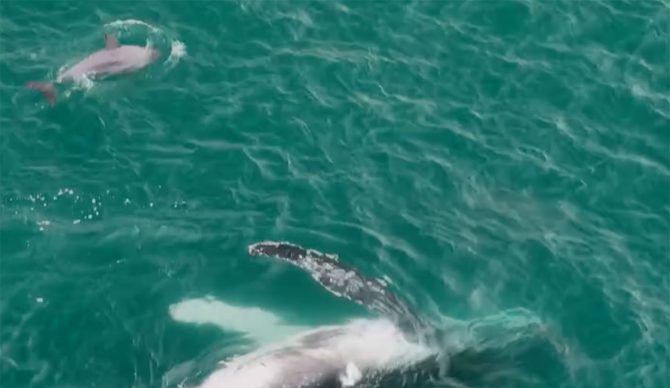
As the volunteers watched, they were treated to a pretty amazing sight: a pod of dolphins appeared to guide the whale out of the bay and into the deep waters of Geographe Bay, so that it could continue on its northward journey.

Gamebird keepers urged to be vigilant amid bird flu outbreaks

© Adobe Stock© Adobe Stock

Gamekeepers and farmers with game birds are being urged to remain vigilant and maintain strict biosecurity measures after further bird flu outbreaks in captive birds made a return this week.

A case of H5N1 highly pathogenic avian influenza (HPAI) was confirmed by the Welsh government at a commercial game bird premises near Glyn Ceiriog, Wrexham, on Wednesday (24 June).

It is believed to involve about 6,000 birds, as well as in a flock of 120 hens on a smallholding near Haverfordwest, Pembrokeshire.

See also: Concern as two separate bird flu outbreaks reported in Wales

“While the overall risk of avian influenza has declined, the recently confirmed cases highlight the importance of remaining vigilant to the symptoms of the disease,” said a spokesman for the British Association for Shooting and Conservation (Basc).

Advertisement

Basc added that it was essential for anyone keeping birds of any type to follow strict biosecurity measures, as per the relevant avian influenza prevention zones, which remain in place.

Explore moreKnow How

Visit our Know How centre for practical farming advice

“The implementation of disease control zones following a confirmed case has significant impacts for those keeping birds within in these areas.

“Additionally, for the gamebird sector, there is a prohibition on any release until these disease controls are lifted,” the spokesman added.

The latest outbreaks have occurred at the start of the game bird release “season”, when keepers are opening their pens to let the birds wander freely.

Game and Wildlife Conservation Trust head of communications Joe Dimbleby added: “Any outbreak of bird flu is a concern not only for the game management sector, but for the wider countryside and its wildlife. 

He pointed to a clear biodiversity net gain from “best practice” gamebird releasing, including 100 times more songbirds per hectare in game cover crops compared to conventional crops, and up to 32% more songbirds in woodland managed for pheasants.

Scientists issue warning after detecting concerning surge in infection in domestic cats: ‘Should be closely monitored’

“Domestic cats are susceptible.”

by Tina DeinesJune 29, 2025

"Domestic cats are susceptible."

Photo Credit: iStock

scientific review of two decades of information found a dramatic uptick in feline infections of the avian flu in recent years. 

What’s happening?

Scientists at the University of Maryland conducted a systematic review of scientific literature from 2004 to 2024 to assess the epidemiology and global distribution of avian flu in cats. They found what they described as a “drastic flux” in infections among domestic cats in 2023 and 2024 after the emergence of H5N1 clade 2.3.4.4b — a specific genetic lineage of highly pathogenic avian influenza that emerged around 2020 — in other mammals. They also discovered an uptick in the number of ways that cats were being infected with the illness, according to the University of Minnesota, which summarized the findings.

Around 63% of the cases involved domestic cats — they also studied other feline species, including tigers — and most infections were confirmed or suspected to be the result of bird-to-cat transmission, most often from eating dead pigeons, chickens, or other birds. Cats were most commonly infected at zoos, animal shelters, and farms or on private rural land.

Why is this research important?

Cats infected with the avian flu often develop a fever, lose their appetite, and suffer lethargy early on, according to the Cornell University College of Veterinary Medicine. Symptoms can worsen rapidly and include nasal and ocular discharge, sneezing, coughing, respiratory difficulty, and neurologic signs such as incoordination, tremors, seizures, and blindness.

But the scientists are also worried about the implications of an uptick in feline bird flu for people.

“Infections among mammalian species in frequent contact with humans should be closely monitored,” the researchers stated, per the University of Minnesota. “Domestic cats are susceptible to [avian influenza virus] infection and provide a potential pathway for zoonotic spillover to humans.”

Watch now: Giant snails invading New York City?

Bird flu in humans is still relatively rare, although several cases related to contact with dairy cows have been reported in the U.S. An infection can lead to complications such as pneumonia, acute respiratory distress, bacterial infections, sepsis, brain swelling, and respiratory failure, according to the Cleveland Clinic.

Free-roaming cats not only open the door for the spread of zoonotic diseases, but they are also a major threat to wild animals. According to the American Bird Conservancy, cats have contributed to the extinction of 63 species of birds, mammals, and reptiles. The International Union for Conservation of Nature lists domestic cats as one of the world’s worst invasive species. For instance, one birder took to Reddit to vent about a neighborhood cat that was killing birds at their backyard birdhouse.

What can I do to protect my cat and myself from the bird flu?

The American Veterinary Medical Association recommends a variety of precautions to help owners protect themselves and their cats from the avian flu. These include thoroughly cooking meat before feeding; keeping cats away from livestock, poultry, and their environment; keeping cats indoors to prevent exposure; and thoroughly washing hands after encounters with poultry, livestock, or wild birds.

Meanwhile, scientists, including a team at the Texas Biomedical Research Institute, continue to investigate how the avian flu mutates. Such research can help inform more effective preventive methods in the future.