Final Spring Wild Turkey Hunting Season Results
Reply

idfg-tjross
Monday, June 2, 2025 – 9:59 AM MDT
Managing against chronic wasting disease requires playing the long game
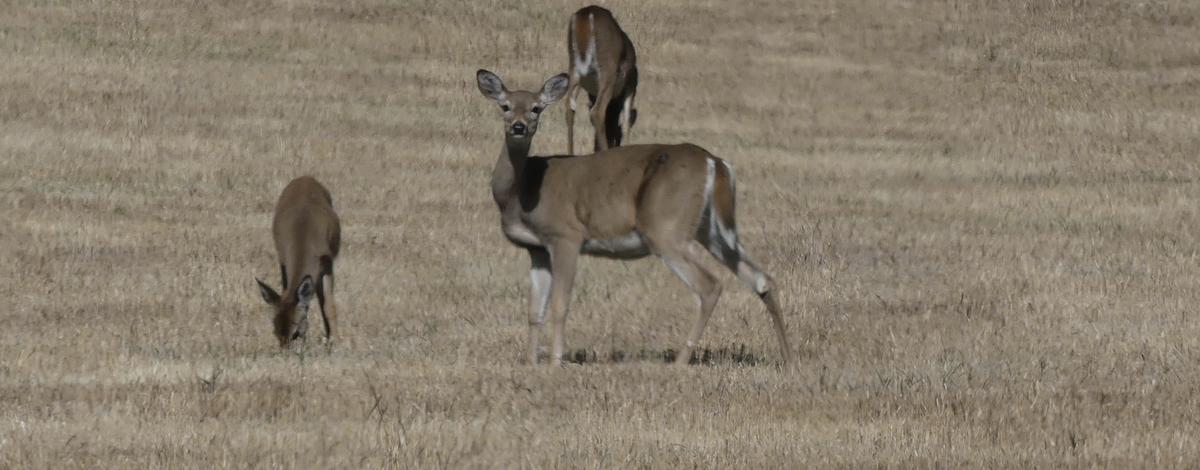
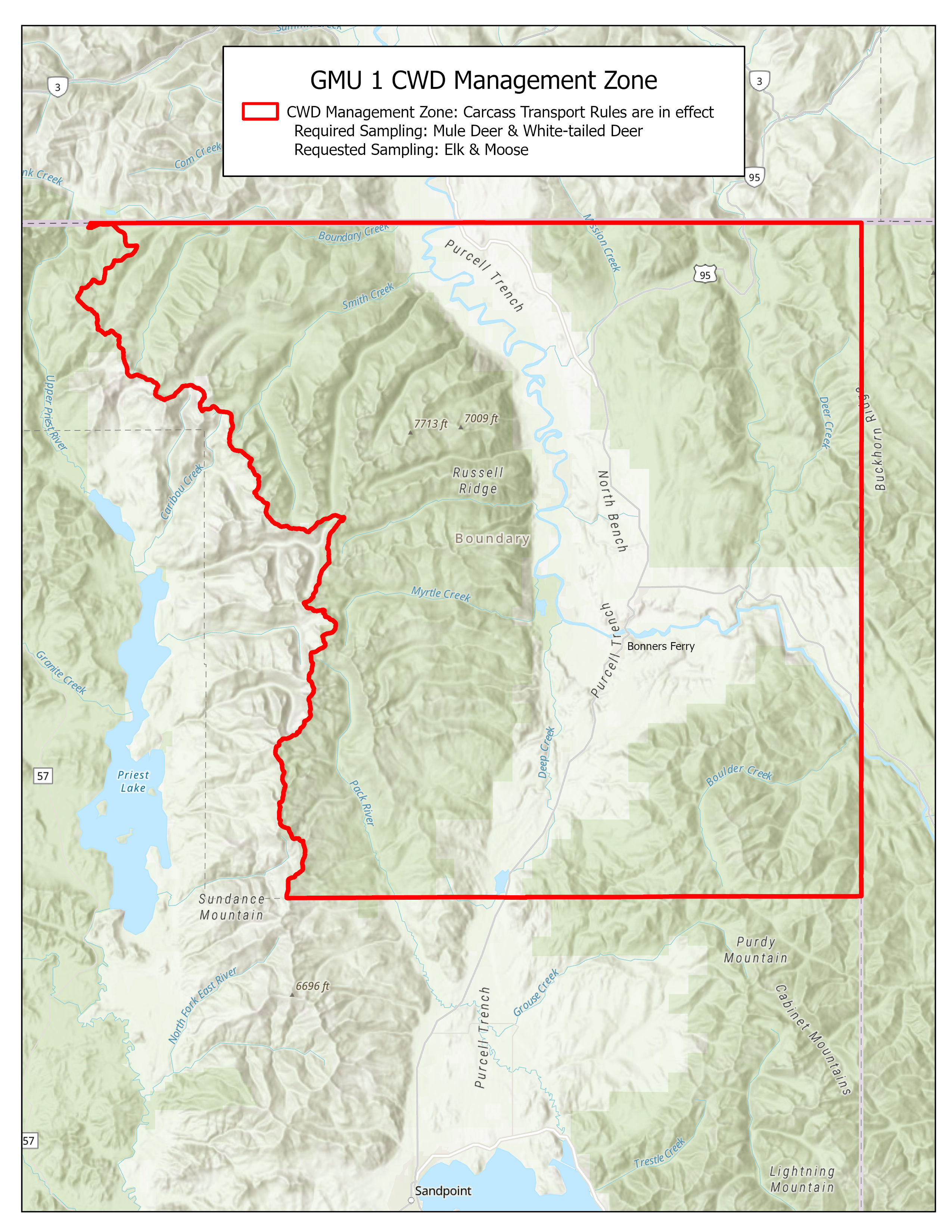
Throughout the course of the 2024 hunting season, three additional white-tailed deer in Unit 1 tested positive for chronic wasting disease, bringing the total number of positive detections to six since the initial detection in July 2024. The three additional positives came from deer harvested by hunters within the bounds of the Unit 1 CWD management zone.
Timeline

Takeaways
A total of 936 white-tailed deer was sampled within the Unit 1 CWD management zone during the 2024 regular deer season, representing a drastic increase from 2023. Fish and Game would like to genuinely thank hunters for their contributions of samples and therefore a better understanding of CWD in Unit 1.
Relative to many other states, the current estimated prevalence rate (less than 1%) of the disease in the management zone is low. Low prevalence rates suggest that Fish and Game in collaboration with hunters detected the disease early. Early detection of CWD is critical, as it creates opportunities to take action to slow the rate of spread of the disease. Recent studies in Wisconsin and Wyoming, states where CWD has been present for longer periods of time, have begun reporting major declines in big game herds, underscoring the potential risks of CWD in Idaho.
The future
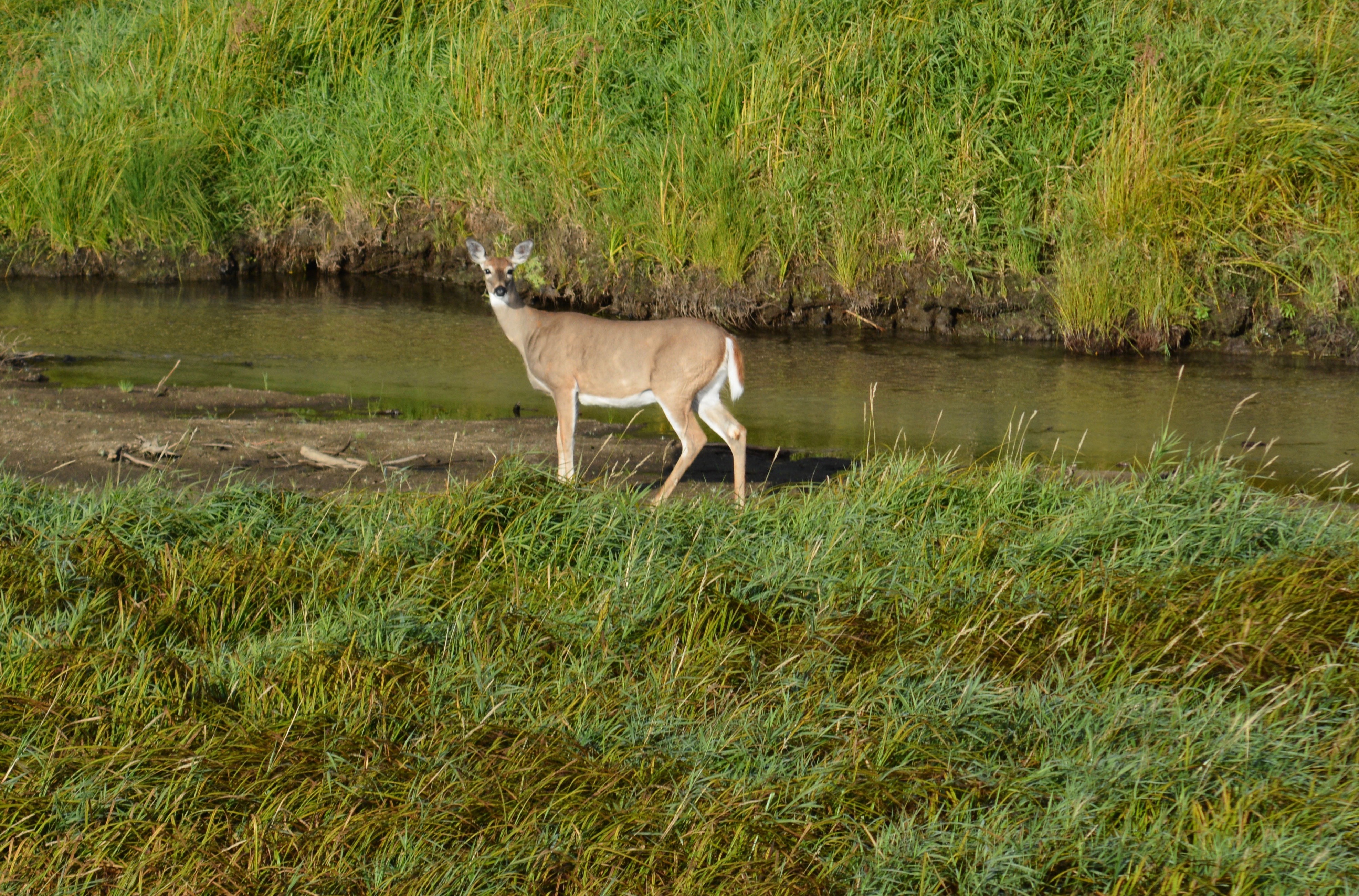
Recent studies have found that hunting can help keep CWD rates of spread and prevalence in check for the long haul. As such, during the 2025-26 Big Game Season Setting process, Fish and Game staff in the Panhandle Region proposed five new controlled hunts for white-tailed deer in the Unit 1 CWD management zone. All five hunts were well supported by the public; therefore, they were recommended to and adopted by the Fish and Game Commission at their March 2025 meeting.
The intent of the new hunts is to reduce CWD transmission and spread, consistent with Fish and Game’s 2021 CWD management strategy. The new hunts numbers are 1115, 1116, 1120, 1121 and 1122 in the Idaho Big Game 2025 Seasons and Rules book.
Between the addition of 100 extra antlered white-tailed deer tags, addition of 1,000 extra antlerless white-tailed deer tags and reduction of 750 antlerless white-tailed deer tags in Unit 1, there is a net increase of 350 extra deer tags available in Unit 1, with a targeted focus to increase harvest within the CWD management zone.
Unit 1 is a popular hunting destination for many white-tailed deer hunters, with almost 7,100 Idaho hunters harvesting more than 2,900 white-tailed deer in Unit 1 in 2023. Fish and Game needs hunters’ help to learn more about CWD to help keep white-tailed herds healthy in north Idaho.
Fish and Game’s goal is to maintain healthy big game herds by slowing the spread of CWD and keeping the prevalence rate low. Achieving this goal is not possible without assistance from hunters.
Please contact the Panhandle Regional office at (208) 769-1414 with any questions.
News brief
Today at 9:06 a.m.
Topics
Avian Influenza (Bird Flu)Share

Researchers conducting a lab study published on the preprint server medRxiv detected infectious flu viruses in raw cow and sheep milk for over a day at room temperature and more than a week when refrigerated.
The results of the non–peer-reviewed research highlight the risk of contracting H5N1 avian flu from consuming unpasteurized dairy products and from occupational exposure in dairies, the UK investigators said.
After the emergence of H5N1 in US dairy cattle in late 2023, “high viral titres were detected in milk from infected cows, raising concerns about onwards human infections,” they wrote. “Although pasteurisation was shown to effectively inactivate influenza viruses in milk, unpasteurised milk still poses a risk of infection, both from occupational exposure in dairies and from the consumption of raw milk.”
H5N1 has been detected in more than a thousand US cattle herds, other mammals, dozens of dairy workers, and several people with no direct contact with infected animals.
The team assessed the stability of H5N1 highly pathogenic avian influenza virus (HPAIV) and other influenza A and D viruses by incubating them in pasteurized cows’ milk at room temperature to represent exposure in dairies and at 4°C [39.2°F] to simulate exposure to refrigerated raw milk. They also conducted similar experiments with a lab strain of avian flu in sheep’s milk.
Our results highlight the zoonotic risk of H5N1 HPAIV in raw milk from infected animals and reinforce the importance of taking measures to mitigate this risk.
“Although the survival of influenza viruses in milk was variable, we consistently found that under laboratory conditions substantial viral infectivity remained over periods when people might reasonably be exposed to infected milk—for over a day at room temperature and for more than 7 days when refrigerated,” the authors wrote.
“Our results highlight the zoonotic risk of H5N1 HPAIV in raw milk from infected animals and reinforce the importance of taking measures to mitigate this risk,” they added. “Our experiments aimed to model the ‘worst case scenario’ for the persistence of viral infectivity in milk and should be seen as providing an upper-bound estimate for viral survival under real-world conditions.”
 Exposing the Big Game