The Refuge from Cruel Trapping Act was reintroduced today in the U.S. House of Representatives by Rep. Jerrold Nadler (D-NY). This bill would prohibit the use of archaic body-gripping traps within the National Wildlife Refuge System (NWRS), with limited exceptions. Body-gripping traps include steel-jaw leghold traps, Conibear traps, and snares.
“Why should anyone—people, companion animals, or wildlife—have to fear stepping into a bone-crushing trap while enjoying our nation’s beautiful wildlife refuge system?” said Susan Millward, Animal Welfare Institute’s executive director and CEO. “Public lands belong to all of us—not just the select few who wish to set traps that smash limbs or agonizingly strangle airways. Thank you to Representative Nadler for your commitment to ending the use of cruel traps in our country’s refuges.”
“When Americans visit their local National Wildlife Refuges, most expect to enjoy nature without worrying that they—or their pets—will fall victim to a dangerous trap,” Nadler said. “However, trapping is still allowed in many of the more than 570 refuges across the country, putting people, pets, and endangered species in danger of serious injury. These cruel devices have no place on protected public lands, and my bill will make sure our refuges are safe from this inhumane practice.”
The purpose of these protected lands is clear: to be a refuge where native wildlife can thrive and all Americans can enjoy our great outdoors. The NWRS contains one of the most diverse collections of fish and wildlife habitats in the world and provides a home for more than 380 endangered species. Yet, nearly half of these refuges allow trapping. Body-gripping traps are inhumane and inherently nonselective, meaning they indiscriminately injure and kill nontarget animals.
These dangerous traps pose a threat not only to wild animals but also to the pets of countless visitors who frequent the nation’s refuges each year. Numerous incidents have occurred where pets have been fatally harmed. For example, in December 2022, a three-year-old Shetland sheepdog tragically lost her life after a Conibear trap closed around her neck near a wooded trail in Vermont. This marked the state’s 13th pet-related trapping incident of the year.
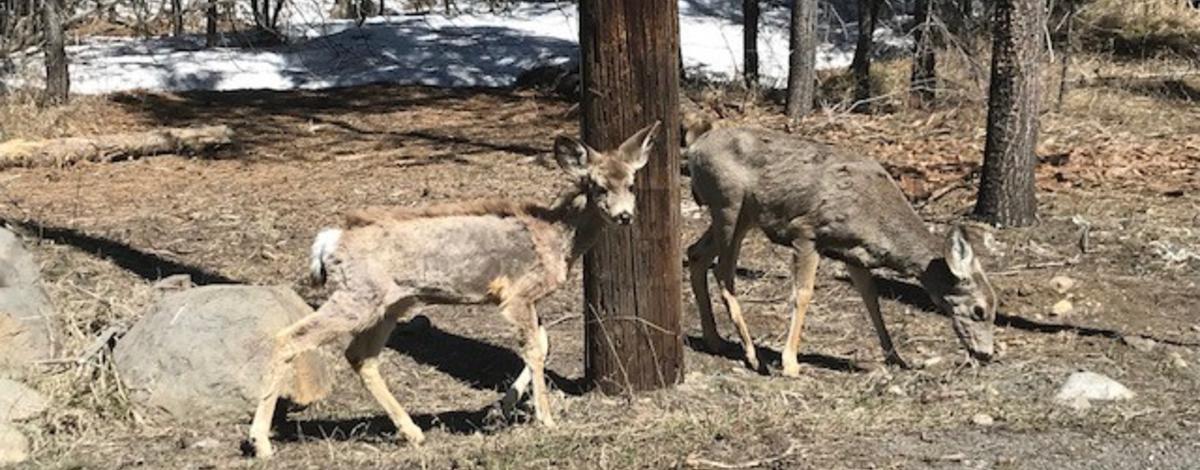
Every year, in mid-June or early July, Fish and Game staff in the McCall office start to receive reports of aggressive deer. Right on time, Fish and Game received their first report up Warren Wagon Road last week. Now, staff are reminding area residents to give deer space and keep dogs on leashes to avoid potential conflicts.
“There are a couple of areas where we know of does that tend to become pushy or threatening when they have fawns hidden nearby,” says Nathan Borg, Regional Wildlife Biologist. “For the last few years, there’s been one up Warren Wagon Road and another near the Woodlands.”
Although it can seem like strange behavior, it’s pretty normal for does to become aggressive, especially in a place where deer have fawns right in town. All wildlife have a choice between fight or flight when they feel threatened, and even typically docile animals like deer will sometimes choose fight.
According to Borg, deer can be particularly aggressive when they encounter domestic dogs, which they see as predators.
Fish and Game has few options to resolve these situations, since young fawns are usually hidden somewhere away from mom, and removing the doe from the area would result in orphaning the fawn, which would then likely die from predation or starvation.
Luckily, this behavior only lasts a few weeks. By the end of July, deer shift more towards flight, because fawns are more mobile and able to keep up. Until then, keep dogs close and on a leash. If you observe a deer, stay well away from it. If it behaves aggressively, back away and yell until you are a safe distance away.
Nick Klein points out the differences in male and female quail feathers on June 14, 2025 at his home in Casa Grande, Ariz. (Photo by Elizabeth Agazaryan/Cronkite News)
CASA GRANDE – As bird flu has spread across 10 states, causing over 30 million chickens to be euthanized, quail breeders are seeing increased interest in alternatives.
In Arizona, at least four commercial farms in Maricopa County have experienced an outbreak that has decimated their chicken flocks.
Hickman’s Family Farms, the largest egg company in the Southwest, has said it lost 6 million hens – 95% of its flock. It said in May that it would lay off most of its employees and will need up to two years to replenish the flock.
On three acres just outside of Coolidge in Pinal County, in a shipping container turned bird castle, resides an alternative food advocate.
Breeder Nick Klein started raising quail because his homeowners association at the time did not permit chickens. His decision eventually turned into a business.
“There’s a lot of people that want an alternative to being at the whim of the grocery store supply,” Klein said.
About 100 feet from Klein’s house, large Coturnix hens and roosters live side by side in cages in his makeshift roost. Most of the birds were born on the property. Klein cycles through his egg producers about every eight months, when they are ready for sale.
The flock is smaller than normal, he said, with about 15 birds. The container is rigged with air conditioning and an incubator and usually holds 50 to 100 birds.
In captivity, quail consume less food than chickens. They require higher protein feed, according to Klein, but they are also more efficient at laying eggs. Quail as young as eight weeks old can begin laying eggs; chickens start laying at seven months.
“They lay 300 eggs a year on average, whereas the chicken is 260 to 280 eggs a year,” Klein said. “So it’s kind of like the quail lay an egg every day, but they take weekends off.”
Quail aren’t immune to bird flu but the most virulent strains have hit chicken flocks much harder.
Spring Creek Quail Farms in Ontario, Canada, sells quail eggs across North America.
“We’re just seeing an overall trend in North America of people turning to healthier food options,” said CEO Aaron Oosterhoff.
Nick Klein shows another way to check the sex of quail on June 14, 2025 at his home in Casa Grande, Ariz. (Photo by Elizabeth Agazaryan/Cronkite News)
Oosterhoff said he noticed a trend in people buying quail eggs before the flu outbreaks.
“Obviously, a huge increase in the quail egg demand and what we’ve been able to do in terms of making quail eggs accessible and understandable to people, we see that continuing after this,” Oosterhoff said.
Spring Creek Quail Farm continues to take precautions through sealing entrances from rodents, and washing facilities and equipment.
“We’re trying to protect our birds as best as we can that way,” Oosterhoff said. “We’re very careful to treat our birds extremely well … and we’ve been able to be spared so far.”
Both quail and chicken eggs have about 70 calories, but quail eggs have more cholesterol and B-12 vitamins, according to Lindsay Van Deest with AZ Dietitians, a wellness and nutrition center in Mesa.
“With quail eggs, if people have high LDL cholesterol, if they’re having issues with cardiovascular health, that could be contraindicated because it’s a higher fat food,” she said.
Van Deest said she has seen a shift toward vegan options for egg alternatives in the past couple of years.
“(What) I’ve seen the most of is probably a trend towards an interest in vegan products, just because they tend to be advertised more in social media, ads on grocery stores, their sales are specials versus quail eggs and duck eggs,” Van Deest said.
A dozen quail eggs costs about $5, while duck eggs are about $9 a dozen. The average price of a dozen chicken eggs in Arizona is about $6, according to data from World Population Review.
Vegan egg substitute costs about $7 for 24 ounces.
“I would say that would come down to what you have available to you, what you have the most access to, and personal preference from a cost analysis standpoint,” Van Deest said.
She recommended looking at personal dietary needs and accessibility if switching from chicken eggs.
“When it comes to picking an egg alternative, it is important to take into consideration the vitamin content, mineral content, fat, in addition to branch chain amino acids, which is a kind of amino acid that is essential for building muscle,” Van Deest said.
Quail breeders expect growing demand to continue.
“The pricing of eggs is a serious issue,” Oosterhoff said, “but underlying the demand for eggs is people looking for really good sources of protein that they can trust.”



 Exposing the Big Game
