Proposed bear hunt could include areas near Orlando
Reply

The proposal would allow for the killing of nearly 200 black bears over a three-week period in December
Published: Jul 25, 2025
https://www.outsideonline.com/outdoor-adventure/environment/florida-bear-hunt
Owen ClarkeFollow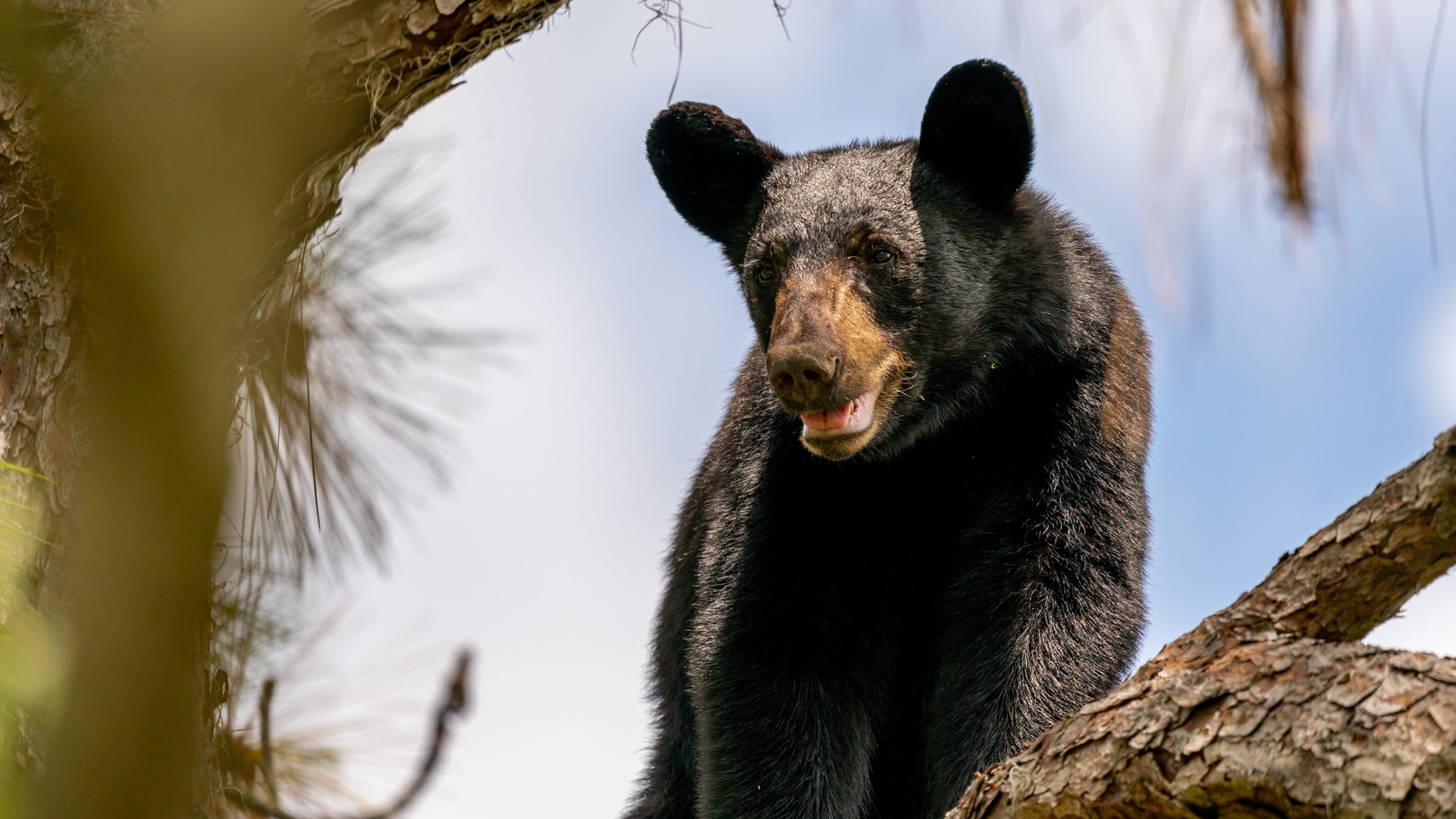
(Photo: Ryan Noeker / 500px/Getty)
High FiveShare

Follow
Owen Clarke is a freelance outdoor sports writer. He often writes about climbing, but his work also covers motorcycles, long-distance trekking, and environmental conservation. He also authors the dark fantasy series Void Injectionand is the founder of the collaborative writing workshop Dead Foot.
New perk: Easily find new routes and hidden gems, upcoming running events, and more near you. Your weekly Local Running Newsletter has everything you need to lace up! Subscribe today.
The Sunshine State is in the process of approving a proposal that would create an annual hunt to cull black bear populations. The three-week hunt, to take place in December, would be the first such event in a decade. A chaotic 2015 hunt was stopped early after over 300 bears were killed in just two days. More than half of the killed bears were females, and a fifth of those were lactating, meaning they likely had cubs depending on them for survival.
The proposal to reintroduce bear hunting this year was given preliminary approval by the Florida Fish and Wildlife Conservation Commission (FWC) in a May hearing, and is set to be voted on during a final hearing in August. The hunt would take place from December 6 to 28, and hunters would participate via a lottery-style permitting process. The permits would allow for a total of 187 bears to be “harvested” in four hunting zones around the state. Under the FWC proposal, up to six dogs could be used in each hunt, and bears could also be hunted at game feeding stations.
According to the FWC’s Black Bear Management Plan, the state’s black bear population currently sits at approximately 4,050, up from near-extinction in the 1970s. Bear hunting was legal in Florida from the 1930s until 1994, but in the past three decades, the only hunt held was the truncated one in 2015. Currently, Florida is one of only six states in the U.S. that has a resident black bear population but does not allow hunting to manage the population. Of those six states—which also include Texas, Mississippi, Alabama, Ohio, and Connecticut—Florida’s bear population is by far the largest.
Scientists Reveal That a Popular Backpacking Lake Is Chock-Full of Poop
Mercury Retrograde Just Began. Here’s Everything You Need to Know, Including Your Horoscope.
Tour de France Stage 18 Preview: Three Massive Climbs Await
Power Analysis: Vingegaard Pushes Pogačar To His Limit, and a New Record, on Mont Ventoux
“When we look at game species across North America, there’s not a single game species that has gone extinct or come close through regulated hunting,” George Warthen, the agency’s chief conservation officer, told local radio station WUSF. “Instead, we see more money, more attention and a lot more benefits for that animal. And this can be a tough conversation to have. And so the why, for Florida, becomes we’re one of the only states that is not participating in regulated bear hunting in states that have abundant bear populations.”
The timing of the hunt, in December, when most females are in their dens, is reportedly intended to reduce the killing of females and prevent orphaned cubs this time around. The funds that are generated from application and permit sales—a permit will cost $100 for Florida residents and $300 for non-residents—are to be sent to the State Game Trust Fund and used for wildlife conservation.
In an exhaustive Q&A series on the FWC website, the agency addresses a number of concerns about the upcoming potential bear hunt, noting that, although there is no cap on the number of female bears that can be hunted under the provision, the total allotment of 187 bears was specifically chosen because that is the maximum number of female bears that could be killed without resulting in a negative population growth rate. Therefore, even if every single bear killed in the proposed hunt was a female, populations would remain stable, according to the FWC site.
The FWC also addressed the controversial results of the hunt ten years ago, noting changes in the structure this time around. In the previous hunt, 3,776 permits were sold, but the “harvest objective” was only 320 bears. The FWC explained that this system, while still allowing them to keep hunting rates within their target range, inadvertently “put pressure on hunters to harvest the first bear they encountered in the field.” Essentially, 3,776 hunters were all competing to kill bears as quickly as possible, because they all knew that there were only 320 bears that could be hunted before the hunt was closed.
Under the new proposal, the FWC would only sell 187 permits in the first place, so everyone who received a permit could be selective over the three-week period.” This is also the train of thought behind allowing the use of hunting dogs and the killing of bears at game feeding stations. Both tactics, although controversial, would “allow hunters time to be more selective about which bear they take” and avoid targeting females who could be raising cubs.
Black bears were protected under Florida state law until 2012, when scientists determined their populations had recovered enough from the 1970s lows to no longer be threatened by extinction. However bear hunting remains a controversial subject in Florida, particularly after the 2015 cull. A survey the following year—the results of which were included in the FWC proposal—found that residents were in close contention about the issue. Roughly 47 percent of those surveyed supported the idea, and 43 percent opposed it. When the same respondents were asked if they would support bear hunting if it were compatible with maintaining healthy bear numbers, however, those in favor increased to 62 percent.
Still, the FWC website received over 13,000 comments about the potential 2025 bear hunt, and around three-quarters of them were opposed to the idea. The agency’s position is that, sooner or later, the growing bear population is going to have to be checked. “While all wildlife species, theoretically, will reach some population level that triggers a decline, black bear populations have not reached levels where self-regulation has been exhibited anywhere in North America,” the FWC says. “Rather, as bear numbers reach high enough levels, human presence can begin to influence [them].”
Florida reports an average of 191 bears are already killed each year as a result of human interaction—such as vehicle strikes, required euthanization due to habituation, and illegal hunting. “Once there are enough bears in suitable habitats, bear presence will increase in marginal habitats (e.g., neighborhoods), which increases the likelihood of human-bear conflicts and the subsequent risk to public safety, as well as safety for the bears.”
The number of bear-human interactions in Florida has increased dramatically since the turn of the century, as both bear and human populations have climbed. The first fatal bear attack in state history occurred last year. (An 89-year-old man and his dog were killed near Naples.)
July 25, 2025

MISSOULA – The University of Montana and the Rocky Mountain Elk Foundation are excited to announce the recently formed Center for Hunting and Conservation to advance science, research, education and outreach to shape the future of land and wildlife management in the United States.
The center builds on existing partnership between UM’s No. 1-ranked wildlife biology program and RMEF, one of the most effective conservation and hunting advocacy organizations in North America.
“UM and RMEF have a shared goal to ensure the long-term sustainability of America’s hunting-conservation culture and the economic opportunities it creates – not only across our state, but across our great nation,” said UM President Seth Bodnar. “The pressure on our wildlife and natural resources has never been greater, and now is the time to rapidly advance the sound science, education and stakeholder engagement that is needed to protect our hunting culture and outdoor way of life.”
The center will be the first of its kind in the region, focused primarily on advancing wildlife research and the vital role hunting plays in wildlife management. The Montana Board of Regents established the center as a result of a significant long-term financial commitment from RMEF to UM’s W.A. Franke College of Forestry and Conservation.
“RMEF coined the phrase hunting is conservation, and we are proud to now join UM in the establishment of the Center for Hunting and Conservation,” said RMEF President and CEO Kyle Weaver. “This center will be the leading authority on hunting, conservation and wildlife management, driven by, and rooted in, sound research and science.”
The center will have three primary goals.
First, advance science and research at the intersection of hunting and conservation. By bringing together world-class researchers, the center will expand opportunities to advance effective wildlife management techniques supported by extensive research and data.
Second, provide an expanded platform for UM’s Wild Sustenance Program, a course available to UM students who are novice hunters. Launched in conjunction with RMEF, the class is open to students of all UM majors who wish to pursue knowledge and experience related to the full cycle of hunting and its role in conservation.
Third, engage in broad outreach promoting the best-available science and data on wildlife management and conservation, including the vital role of hunting. The center will additionally provide decision-makers access to the most recent, accurate and relevant data, resulting in more-informed wildlife management decisions, effective conservation and sustainable hunting opportunities.
Led by a director, the center also aims to expand UM’s research portfolio, with plans to attract additional research support in the years ahead.
###
WUSF | By Jim Turner – News Service of Florida
Published July 24, 2025 at 3:37 PM EDT

State wildlife officials next month could approve rules for a three-week bear hunt in December that would have “a more structured format” than a hunt halted a decade ago after a limit was quickly reached on bears that could be killed.
The proposed rules, which will be considered by the Florida Fish and Wildlife Conservation Commission during a meeting Aug. 13 and Aug. 14 in Havana, would include a lottery-style permitting process and up to 187 bears being killed in four areas of the state. The rules also would include guidelines to encourage hunters to kill male bears.
George Warthen, the commission’s chief conservation officer, said the proposed hunt — the state’s first since 2015 — is an additional method to manage bears as they coexist with humans.
ALSO READ: Florida gives preliminary approval to controversial black bear hunt amid strong opposition
“When we look at game species across North America, there’s not a single game species that has gone extinct or come close through regulated hunting,” Warthen said. “Instead, we see more money, more attention and a lot more benefits for that animal. And this can be a tough conversation to have. And so the why, for Florida, becomes we’re one of the only states that is not participating in regulated bear hunting in states that have abundant bear populations.”
Bear hunting has long been a controversial issue in Florida, with opponents saying that killing bears for sport won’t reduce human-bear interactions. They also say the commission should expand the use of non-lethal options, such as bear-proof trash containers, to help keep bears from being drawn to residences and businesses and should increase land-conservation efforts.
But calls to hold a hunt have been growing. The 2015 hunt ended after two days, when 305 bears were killed in what was expected to be a weeklong endeavor.
The state had an estimated 4,050 bears in 2015, considered the most recent figures by the commission.
Bears were on a state list of threatened species from 1974 to 2012, until a state biological status review determined they were no longer at high risk of extinction.
During the past 50 years, the state has recorded 42 incidents in which wild bears have made physical contact with people, with the first recorded fatal bear attack occurring in May, when an 89-year-old Collier County man and his dog were killed.
The commission on May 21 voted 4-1 to support a draft proposal for the December hunt. Commission Vice Chairman Steven Hudson voted against the proposal, suggesting that non-Floridians should be prohibited from getting permits and raising concerns about allowing people to hunt bears at feeding stations.
A notable change in this year’s proposals involves permits. In 2015, permits were open to anyone willing to pay and participate until a quota for bills killed was reached.
“This new proposal only gives out a specific number of tags that meet that (187-bear) quota, to a finite number of hunters, who can then take one bear,” Warthen said. “That’s a big change, so that people feel that we see … a more structured format that allocates a permit per hunter, so people can see that and it gives hunters more time.”
The proposed permit-drawing process would be open to anyone who pays a $5 entry fee. It would not limit the number of times a person could enter, but people whose names are drawn would only be able to purchase a single permit.
ALSO READ: A Florida bear hunt lottery and limited permits are part of a proposed plan
Also, non-Floridians would be limited to 10 percent of the permits, which would cost them $300. Permits would be priced at $100 for Floridians.
Chuck O’Neal of the environmental group Speak Up Wekiva has suggested opponents of the hunt enter the drawing to reduce the number of bears killed.
“If every Floridian entered the lottery, only 1.87 bears — rounded to 2 — would be killed because only 1 percent of Florida citizens actually hunt,” O’Neal posted on Facebook.
Warthen said not reaching the December quota could lead to a boost in permits for future hunts. The 187-bear quota is based on a formula that takes into account female bears being killed.
“It’s highly unlikely and probable that the harvest will be all female or that all hunters will harvest a bear,” Warthen said. “What we’ll see is a very conservative approach that allows for continued growth within bear populations in Florida, but at a more managed rate.”
The hunt is projected to be limited to 68 bears in the Apalachicola region west of Tallahassee; 46 in areas west of Jacksonville; 18 in an area north of Orlando; and 55 in the Big Cypress region southwest of Lake Okeechobee.
Warthen said hunting around feeding stations is expected to allow hunters to be more selective.
“We’re skewing this harvest, or having the rules set so it encourages more male bears harvested,” Warthen said. “This would allow that hunter there time, to make sure that it’s not a female with cubs, which would also be prohibited.”
Hunters would not be allowed to use dogs to pursue bears in December, but that would change in subsequent seasons.
“It’s very important that those dogs are properly trained and there’s time to do that,” Warthen said.

July 24, 2025 Country Life, Top Headlines
Landowners may now enroll their property in the Ohio Landowner-Hunter Access Partnership, according to the Ohio Department of Natural Resources (ODNR) Division of Wildlife. Enrollment in the program is open until Thursday, July 31 and incentivizes property owners to provide land access to hunters. Since the program’s launch in 2021, nearly 31,000 acres have been enrolled.
Those interested in enrolling their property can visit the Ohio Landowner-Hunter Access Partnership page at wildohio.gov to receive more information. Landowners can receive annual payments ranging from $2 per acre for crop land to $30 per acre for perennial wildlife habitats such as grasslands, wetlands, and forests. Additionally, landowners may receive a bonus payment if they allow white-tailed deer gun hunting. Enrollment contracts are two years, with the possibility of re-enrollment.
Enrolled lands can be accessed between September and June by hunters with a free daily access permit. Permits are distributed on a first come, first served basis, and reduce overcrowding on huntable lands. Participating hunters receive a list of rules for the property prior to accessing the land, and landowners receive a notification when hunters will access their property. All hunting activities except white-tailed deer gun hunting and trapping are permitted by Ohio Landowner-Hunter Access Partnership users. Permits can be obtained at wildohio.gov or on the free HuntFish OH mobile app.
The Ohio Landowner-Hunter Access Partnership program is funded, in part, by the federal Farm Bill under the Voluntary Public Access and Habitat Incentive Program. This bill provides funding to state and tribal agencies through a competitive grant process to implement programs encouraging hunting access on private properties.
A recent survey showed that landowners enrolled in Ohio Landowner-Hunter Access Partnership are overwhelmingly satisfied with the program. Overall, 90% of survey respondents indicated they were satisfied or somewhat satisfied with the program.
 Exposing the Big Game