Plane in crash that killed Peltola husband was overloaded with moose meat
Reply

by Paula PetersonTuesday, July 22, 2025 – 10:42pm

SOUTH LAKE TAHOE, Calif. – A bear trap that was placed in the Tahoe Keys neighborhood by the California Department of Fish & Wildlife (CDFW) several days ago has been removed. The trap was placed there to try and catch sow #753, whose DNA has been linked to at least 12 home break-ins in the Tahoe Keys, and had been hazed from five homes this spring.
She is now teaching her cubs the same behaviors she and her siblings learned, and as did her mother and grandmother, who was famously known as “Hank the Tank” (aka Henrietta).
According to CDFW, #753 recently broke into a locked home and spent two days inside creating a large mess. The homeowner asked for a depredation permit. They were not issued one, but CDFW put out the trap to try and catch her. Most likely, she would have been euthanized and her cub taken to a rehabilitation center in California

The Tahoe Keys are a central location for bears, but it is not necessarily due to anything the homeowners there have done; it’s more because the area is surrounded by their natural homes in marshes, meadows, and near trees. Bears have broken through padlocked doors and are not normally entering through anything left open.
No. 753. her mother #182, and siblings #180 and #215 are no strangers to the Keys area from SR89 to Highland Woods. Currently, DNA places all of the conflict bears in that area from one family, and they are all females. The moms teach bad behaviors and pass on how they learned to forage in neighborhoods and not in the wild, and the next generation will do the same. If a cub can be removed from a sow, they can go into a rehabilitation facility and learn non-conflict activities instead of perpetuating the problem. While this isn’t ideal, it could be the only way to break the cycle.
CDFW will continue to monitor the bears. They said they were asked by the Tahoe Keys community to help them with #753.
Every Lake Tahoe neighborhood with apartment houses and businesses with dumpsters is a bigger offender than the Keys in making food and trash available for bears in unlocked containers.
Bears go through deadbolted front doors, as well as the easier entry points like open windows and unlocked doors.
The Tahoe Interagency Bear Team (TIBT) is comprised of several agencies around Lake Tahoe who work together and use science to focus on bear education, outreach, and implementing bear management practices to ensure the well-being of both bears and humans. The TIBT emphasizes the importance of respecting bears and their natural behaviors, encouraging the public to secure attractants like garbage and pet food to prevent bears from becoming habituated to human presence.
The only thing that will keep bears from needing to be trapped, and killed is to break the cycle – stop giving them food, as it will never be achieved until this happens.
“The safety of the community is our priority,” said CDFW PIO Peter Tira.
For more information on keeping Tahoe bears wild and being “bear-wise,” visit https://www.tahoebears.org/.

Jul 23, 2025
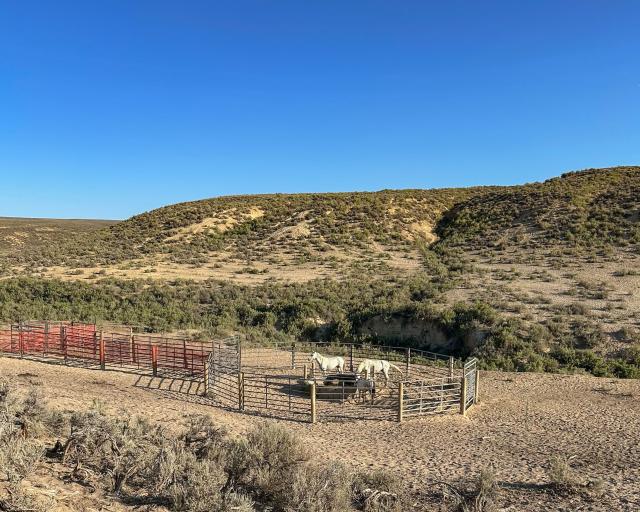
CRAIG, Colo. — After a successful bait trap wild horse gather in Sand Wash Basin Herd Management Area, the Bureau of Land Management Colorado Little Snake Field Office wants to thank our partners and BLM staff who made the safe gather of 42 wild horses a success.
“By using fertility control and bait traps, we can reduce the frequency and scope of helicopter gathers in Sand Wash Basin,” said Northwest District Wild Horse and Burro Specialist Tyrell Turner. “The communications and relationships with our partners during trapping have allowed us to be successful managing wild horses in Sand Wash at sustainable levels”
The appropriate management level of the HMA is 162-362 wild horses, with a current population estimate (after the 2025 gather) of 402 wild horses. BLM Colorado is near or at AML in three out of four designated wild horse management areas in Colorado thanks to the support of local communities and engagement of partner groups who augment the BLM’s knowledge of the wild horses and the land.
Last year, BLM Colorado embarked on a unique approach in partnership with local friend groups and the State of Colorado to manage wild horse population in balance with other public land uses while reducing the frequency and scope of wild horse gathers.
The 2025 bait trap gathered 18 stallions, 19 mares and five foals in 10 days.
“The team safely gathered 42 horses this year due to favorable environmental conditions and a safe and effective operation for horses and personnel at the permanent trap constructed in 2024,” said Northwest District Manager Robert Swithers.
Partners spent many hours with BLM staff at the trap site to support identification and release of horses for a diversity of features deemed desirable in the herd, including age structure, color and body type, gender, etc. Learn more about the gather here: https://www.blm.gov/programs/wild-horse-and-burro/herd-management/gathers-and-removals/colorado-northwest-do-little
In Sand Wash Basin, fertility control is primarily administered by volunteers from the Sand Wash Advocacy Team and by professional darters, whose positions are funded by the State of Colorado.
For more information about the BLM’s Wild Horse and Burro Program and to learn about opportunities to adopt, visit: https://wildhorsesonline.blm.gov
The Sand Wash Basin HMA is located about 45 miles west of Craig, Colorado, in Moffat County on approximately 158,000 acres of public land. This area is one of Colorado’s most well-known areas to view wild horses due to the unique appearance of several bands and relatively easy accessibility.
Story by:
Kymm Gresset, Little Snake Field Office manager
Blog Topic:
Tell your lawmakers to oppose a reckless plan to kill 450,000 barred owls
The U.S. Fish and Wildlife Service cooked up an ugly, costly, and unworkable scheme to spend an estimated $1.35 billion over the next three decades to kill half a million barred owls in the Pacific Northwest. Why? Because barred owls share the same forests as spotted owls, and the agency doesn’t want barred owls to compete with the threatened spotted owls for nesting sites and other resources. It’s an unprecedented slaughter of birds of prey long protected by the Migratory Bird Treaty Act.
Please contact your U.S. Representative and two U.S. Senators today using the form below to ask them to support the Congressional Review Act resolution to nullify the “Barred Owl Management Strategy.”
When you’re finished, follow up with a phone call to the Capitol switchboard at (202) 224-3121, give them your ZIP Code and ask to be transferred to your representative’s office. When a staffer answers, tell them you’re a constituent and that you’d like them to vote “yes” on the Congressional Review Act resolution to stop the barred owl kill plan.
?Take future action with a single click.
Log in or Sign up for FastAction
Date: July 22, 2025
Author(s): Kitty Block
In the early 20th century, the American mink was introduced to Europe for fur farming, and, in some cases, deliberately released into the wild for hunters. Eventually, millions of American mink established populations in the wild and thrived across Europe.
Last week, the European Union officially added the non-native American mink to its list of Invasive Alien Species of Union Concern. This means that keeping and breeding American mink is banned starting July 2027. This is major news, as this designation should effectively ban mink fur farming across the EU. But will it?
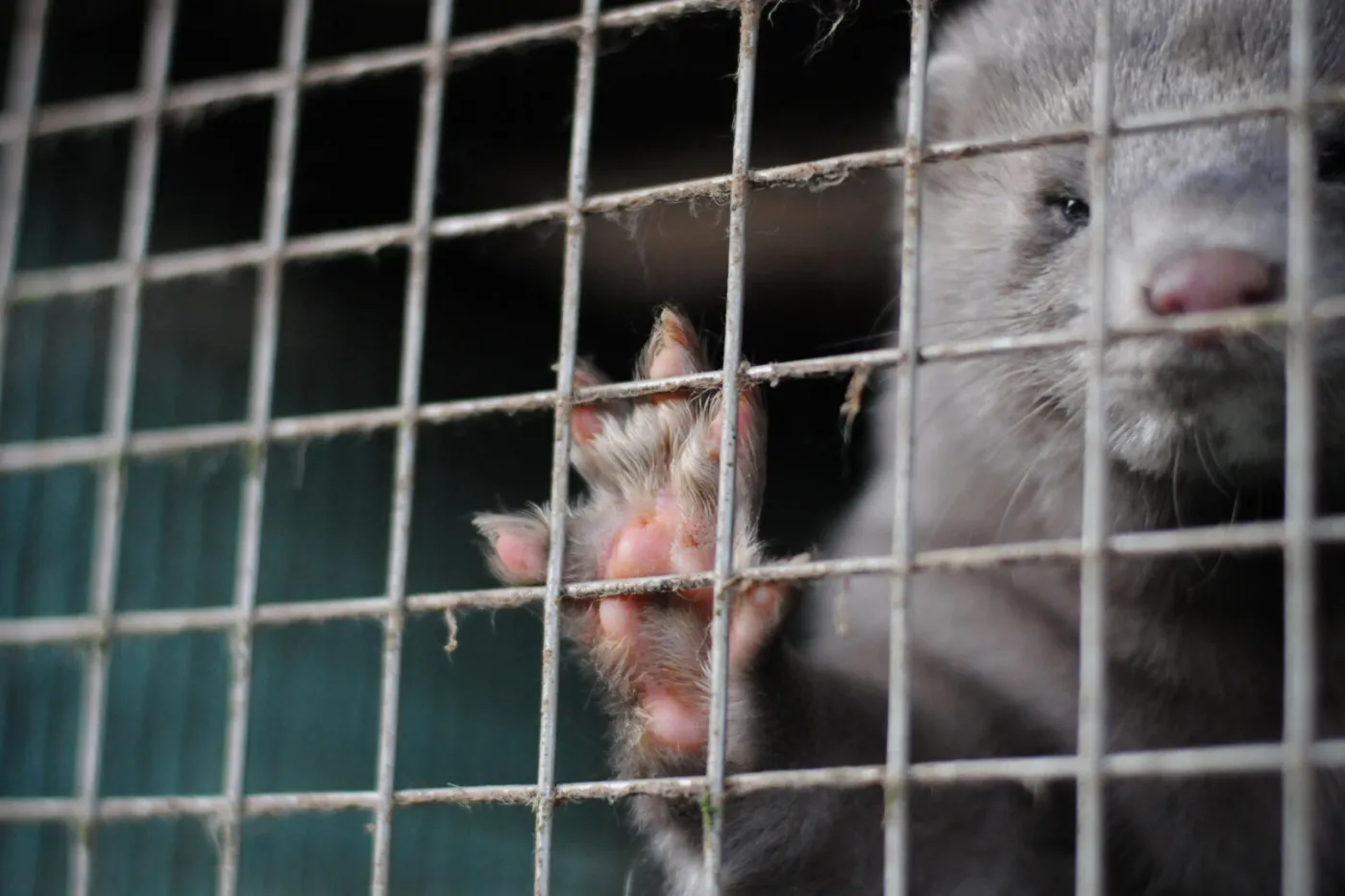
The end of this cruel industry could not come fast enough. Fur factory farms confine millions of wild animals in small, wire-bottomed cages. They live their whole lives unable to engage in natural behaviors—such as running, digging and, in the case of mink, swimming—and they are killed by gassing, electrocution or bludgeoning.
Under the new regulation, EU Member States will be required to prohibit the breeding, sale, keeping, transport and release of American mink. They will also be required to support fur farmers in transition away from the industry through compensation, training and reemployment programs.
But there’s a catch: Mink fur farming could continue if the European Commission allows Member States to issue permits to fur farmers under a derogation in the EU’s Invasive Alien Species Regulation—that is, a loophole that would sidestep the ban on keeping American mink as an invasive species.
Unfortunately, we have seen this happen before. The raccoon dog was added to the IAS list in 2019; Finland and Poland were granted an authorization for 30 years to allow raccoon dog fur farming to continue, despite overwhelming evidence of the ecological threat posed. So, while the regulation could help accelerate the closure of fur farms in some countries, others—such as Denmark, Greece and Finland—could seek to undermine the ban by requesting to continue mink farming under exemptions.
That’s why we are urging the Commission to reject industry attempts to sidestep a mink ban and instead to introduce an EU-wide fur farming ban for all species in the fur trade. This would be in line with the 1.5 million signatures on the European Citizens Initiative petition calling for a complete ban.
Twenty-two European countries, including 16 Member States, have already banned fur farming, including most recently Estonia, Latvia, Lithuania and Romania; and though there is no official ban in Sweden or Bulgaria, there are no more active fur farms there. But in the European countries where fur farming is not banned, nearly 6 million American mink are still being kept on fur farms, in countries such as Poland, Spain, Finland, Greece and Denmark.
Fur farming is an ethical and environmental disgrace. There is no place for it in the humane world that millions of us are striving to create.
 Exposing the Big Game