Olaf MeyneckeResearch Fellow in Marine Science and Manager Whales & Climate Program, Griffith University
Disclosure statement
Olaf Meynecke receives funding from the Whales and Climate Research Program through a private, charitable trust and is a board member of the not for profit organisation Humpbacks and Highrises Inc.
Republish our articles for free, online or in print, under a Creative Commons license.Republish this article
Share article
Print article
As the annual humpback whale migration is underway with thousands of whales passing by the Australian coast, there are reports of dolphins joining the mass movement.
But this isn’t a one off. In fact, our new study, published today in Discover Animals, shows interspecies interactions between dolphins and whales are widespread and frequent around the world.
An astonishing interaction
There have been several reports of whale and dolphin interaction in the past.
But other forms of interactions resembling joint feeding, play and harassment are now being frequently documented thanks to drone technology. Many are also featured on social media.
One great link every day or two
Get our texts
A ‘whale’s-eye view’ of the world
For our new study, we undertook an analysis of 199 independent whale-dolphin interaction events involving 19 different species. These interactions spanned two decades and occurred across 17 countries.
We drew from social media platforms – such as Facebook, YouTube and Instagram – and footage contributed by citizens to get a variety of observations.
Each entry was carefully reviewed to identify the species involved, validate the interaction and categorise behaviours. Two additional cases came from camera tags attached to humpback whales. These offered an underwater “whale’s-eye view” of their encounters with dolphins.
We categorised behaviours such as rolling, tail slaps, bow riding, and rubbing, and classified dolphin positions relative to whale body parts such as head, flank and tail fluke.
Having fun or fighting?
The study contradicted earlier assumptions that interspecies interactions between dolphins and whales are very rare.
The most common interaction was dolphins swimming near the whale’s head (akin to bow riding). This accounted for 80% of observed dolphin positions. Humpback whales were the most involved whale species, while bottlenose dolphins led the dolphin side.
Based on videos we analysed, dolphins initiated most interactions through bow riding, swimming in formation, or even touching whales.
In more than one-quarter of the events, the whales responded in seemingly similar ways. For example, humpback whales often rolled, exposed their bellies, or gently turned toward dolphins.
Tail slaps and other signs of distress or aggression were rare (roughly 5% of cases).
As a result of this, we classified more than one-third of all interactions between humpback whales and dolphins as positive or possible social play.
The two camera-tag videos revealed previously undocumented interaction. Dolphins were observed following humpback whales not only at the surface but down to the ocean floor. They maintained eye contact or even touched the whales’ head – suggesting intentional, possibly social, engagement.
Reflecting advanced emotional capabilities
The findings reshape our understanding of how social marine mammals interact across species. They suggest interspecies interaction among marine mammals may be far more prevalent and complex than previously believed.
Dolphins may seek out whales as companions for stimulation, play or even courtship-like behaviour. Meanwhile, certain whale species, particularly humpback whales, may not only tolerate but also engage with dolphins in a social capacity.
This interspecies dynamic adds a new dimension to marine mammal social ecology and could point to cultural elements in whale and dolphin societies. The playfulness, cooperation and apparent enjoyment observed in many interactions reflect advanced cognitive and emotional capabilities.
The study also demonstrates the power of new technologies and community science. Social media and drones proved invaluable for collecting a range of diverse behavioural data that traditional surveys might miss.
Social media data has limitations, such as geographic and observer bias caused by different angles, heights, equipment and frequency of use of social media. But it does complement other data and helps uncover previously unknown behaviours.
Whales and dolphins don’t just coexist but also seek each other out. Future studies incorporating acoustic recordings and longer observation periods could further unravel the motivations and meanings behind these fascinating encounters.
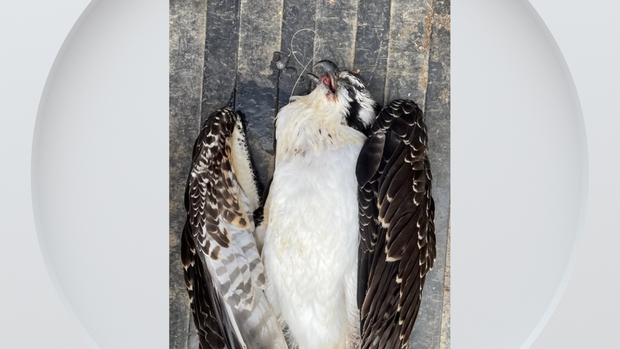
Staff at Colorado’s St. Vrain State Park made a distressing discovery Friday morning when one of their fledgling osprey was found hanging from the nest platform.
The park’s raptor monitor was able to get it down, but the bird had already passed away. Park staff said the osprey had swallowed several feet of fishing line and hooks. When the lead weight became caught in the nest, the bird was unable to make it to the ground or back into the nest.
St. Vrain State Park
Park officials believe there was an unattended line with a fish, either caught or used as bait, that the osprey swallowed. This isn’t the first time an instance like this has occurred this summer. Several geese, herons, pelicans and turtles have been severely injured or killed by fishing hooks in the last few months, said St. Vrain.
The problem is one seen across the state. Recently, a beloved local pelican in the Golden Ponds died after it became tangled in some fishing line and was unable to fly.
“Somebody’s actions killed this bird, and other folks leaving their lines, litter, and illegal chum are causing more animals to get injured or die,” St. Vrain staff said on the park’s Facebook page. “You don’t have to take part in the killing if you simply Leave No Trace.”
There is undoubtedly a scientific relationship between violence against animals and violence against humans.
From an ethical point of view, there is now a social duty to take preventive action in cases of sadism.
The aggression toward animals by hobby hunters is an expression of a behavioral disorder. Violence against animals – violence against humans – this theory is supported by an increasing number of scientific studies .
Differences between hobby hunters and serial killers?
Both have a hunting instinct and a strong desire for power and control. Hunting can be an early symptom of a dangerous psychopathy, which isn’t limited to animals. Many studies show that acts of violence against animals demand our full attention!
Both serial killers and hobby hunters feel they’re participating in something important. Brain abnormalities are strikingly common in violent offenders. Violence leaves traces in the brain after a short time. Neuropsychologists confirm: The amygdala, a core brain area, is noticeably atrophied or dysfunctional in violent offenders. If this central part of the brain is defective, the sense of disgust, among other things, is deactivated.
When killing, both experience similar sensations, as when consuming illegal drugs. A temporary sense of relief and calm pervades their bodies and minds – until they have to search for another victim. It cannot be denied that recreational hunting also encourages other illegal activities , such as poaching, arms smuggling, criminality, alcohol abuse, etc., and promotes sociopathy.
Hunting weapons lead to abuse in all of our social lives. Gun suicides, threats, and fatal tragedies occur time and again. Year after year, countless people are killed and injured by recreational hunters and their weapons, sometimes so severely that they are confined to wheelchairs or have to have limbs amputated.
Animals, like humans, play an important role in our existence. They also show us how important it is to share, since we humans are not the only living beings on the planet.
Hunting is the dark shadow that torments wild animals. Hunting is like prostitution. Gamekeepers and licensed hunters pay a sum of money to indulge their passion, to indulge their urge to kill. The authorities in Switzerland even organize specially attractive hunts for their own glory.
According to experts, pornography is a key factor in stimulating the fantasies of serial killers, especially bondage and sadomasochism, where victims can be dominated and controlled.
Relevant militant hunting magazines are full of images of hobby hunters holding weapons and posing in a dominating position over their prey. Such magazines stimulate hunters’ desire to hunt even more, even in other countries. Hunters need such photographs and films to feel important.
Hobby hunters have a strong desire to do something heroic, to satisfy their sense of self-worth through the act of killing. Hunters don’t shy away from abusing children . They use their sectarian hunting jargon to advertise their passion for violence. Children and young people have a great love for animals, and hobby hunters place weapons and atrocities in their hands, which contradicts the UN Committee on the Rights of the Child.
What hunters and serial killers also have in common is the desire to collect trophies from their victims. Both love to stalk, searching for victims for their next act of violence.
“I don’t mean to imply that most hunters are weak people, but in my experience, weak people often use the opportunity to compensate for their flaw by hunting or playing around with guns and knives.”Quote from the non-fiction book “The Soul of the Assassin” by FBI profiler John Douglas.
Hobby hunters have been subjected to psychological and sociological studies in both Europe and the USA and compared with non-hunters on various aspects. The results clearly show that hobby hunters do not have a greater connection to nature than non-hunters, have a more negative attitude towards issues of animal welfare, the environment, and nature conservation, and generally display a greater tendency towards aggressive behavior – a typical characteristic of meat eaters. The hunter’s love of animals and nature does not delight in the existence of the beloved object; rather, it aims to possess the beloved creature, body and soul, and culminates in turning it into prey through the act of killing . Nowhere is this more evident than in hunting narratives – in practically every issue of popular hunting magazines.
Even though hunters have different personality traits, hobby hunters are ultimately all united by the same behavior: violent treatment of peaceful animals and nature, often purely for fun, recreation, or even sport, as well as the poisoning of nature with lead-containing ammunition. Psychologists, psychiatrists, and psychoanalysts speak of psychological defects in hunters in connection with hunting. Hobby hunters want to kill!
“,you acquire a license to kill. The popular belief that someone with a hunting license is not entirely sane probably has a kernel of truth – like most popular wisdom. And in fact, we don’t know how many psychopaths, gun nuts, or addicts there are among those who are legally allowed to handle firearms. Nor do we know who among those applying for a hunting license only wants to take the hunter’s exam so they can legally acquire firearms. We don’t know, the authorities don’t know, the hunting associations don’t know – and they’d rather not know,” explains KH.
Christian Lüdke is a psychotherapist, trains special police units and focuses primarily on the psychology of perpetrators.
Lüdke: ” Such people lead a double life. Deep down, they feel like absolute failures – family-wise, professionally, and sexually – and are driven by an extreme desire for power. Because they can’t put this into practice in everyday life, they have to do it through such acts of violence and seek out the weakest victims .”
How can you recognize such a person?
Lüdke: “Outwardly, they are usually very inconspicuous. But in the life histories of these perpetrators, three symptoms often appear around the age of eleven: that they wet the bed again, that they play with fire, and, above all, that they torture animals.”
Are these isolated cases?
Lüdke: ” Unfortunately not. There are many people among us who have such high levels of sexual, criminal energy that they’re practically ticking time bombs.”
Hobby hunter Frank Gust
Frank Gust is a German serial killer sentenced to life imprisonment followed by preventive detention. As we learn from an interview , his career began with animal cruelty and animal killing. It’s worth noting that Frank Gust was trained as a hobby hunter by his mother, a former hobby hunter, and thus legally acquired firearms. Just as he had learned how to disembowel animal carcasses from his mother, he later also used the same approach to killing people. In retrospect, his mother regretted this hunting training and spoke of it as a mistake:
“…They should have arrested me for failing so badly. I used to be a hunter, and I also trained Frank to be one. That includes butchering game. And since he dismembered the bodies, let’s say, professionally, I thought I’d taught him.“
In an interview with Petra Klages, hunting license holder Frank Gust reported on his personal experiences with hunting and openly criticized the claim that hobby hunters are always also nature conservationists:
“Some certainly are. But the majority of the people I met there were a mixture of class prejudice and hypocrisy.“.Frank Gust
When asked whether the aim was not to protect nature and animals, Gust continued that in his experience it was more about “building a wonderful camouflage for other desires under the guise of the oh-so-noble act of hunting”.
When asked by the interviewer if he had any examples of this, Frank Gust described two incidents that cannot be recounted in full here. However, to give an idea, let us briefly mention the incident Gust recalled on a rabbit hunt:
“There was a supposedly experienced and highly respected hunter. He shot a rabbit… he could have used a safe shot from a few meters away, but waited until it had moved a bit longer, so he wouldn’t be able to hit it as perfectly with the shotgun because it would then squirm longer. It wasn’t about getting a good kill or protecting the population; it was simply about making it hurt. Of course, they don’t say anything about that officially.”Frank Gust
Clinical picture of sadism in hobby hunters
If we could look into the subconscious mind of hobby hunting, we would find a Pandora’s box of suppressed problems.
Dr. Karl Menninger
The renowned psychiatrist Dr. Karl Menninger (1893-1990), who received the Presidential Medal of Freedom from President Jimmy Carter in 1981 and who named the Menninger School of Psychiatry, wrote extensively about the erotic sadistic motivation theory in hunting. “Sadism can take a socially acceptable form (such as deer hunting and deer watching) and other varieties of so-called ‘hunting practices,'” he writes. “These all represent the destructive and cruel energies of men directed toward more helpless creatures.”
The symptoms of hobby hunters only allow for a limited degree of pleasurable experience and emotional stability. To achieve the desired stimulation, these fantasies are expanded, for example, through trophy hunts abroad. Sometimes they get so out of hand that hobby hunters even kill people. The media on homicides or other criminal activities by the problem group “hobby hunters,” such as the recent attack (carried out by a hobby hunter) in front of the UBS branch in Zurich in February 2018.
“Animal protection always means protecting people, too. Those who don’t understand this are, with their lack of understanding, causing us to ‘shoot ourselves in the foot.'”Volker Mariak
German studies and specialist publications on the topic of “Violence against humans – Violence against animals”:
Year
Authors
Study / Technical Paper
1988
Wochner, M. and Klosinski G.
“Child and adolescent animal abusers with psychiatric problems”
1998
Berg, C.
“Horse slitting – A form of brutal animal cruelty”
1998
Füllgrabe, U.
“On the motivation of the horse rippers”
2003
Kaplan, Astrid
“On the psychological connection between violence against animals and violence against humans with particular emphasis on the related intra- and interpersonal psychodynamics.”
2003
Vitt-Mugg. V.
“Sexual sadistic serial offenders”
2004
Harbort, Stephan
“The morbid imagination and experience of sadistic serial killers”
2005
Stupperich, A.
“From Fantasy to Action – Animal Cruelty”
2006
Harbort, Stephan
“The Serial Killer Principle: What Compels People to Evil”
2007
Heubrock Dietmar, Parildayan-Metz, Dorothee
“Who would do something like that?”
2009
Sevecke, Kathrin, Krischer, Maya
“Animal cruelty and personality pathology in delinquent boys and girls. Results from the Cologne study.”
n.d.
Faust, Volker
“Animal cruelty – what kind of people are these young perpetrators?”
2010
Kaplan, Astrid
“As long as there are slaughterhouses, there will be battlefields. On the need for a quantum leap in compassion.”
2017
Klages, Petra
“The Rhine-Ruhr Ripper Frank Gust Interviews”
Interest group Wild at Wild
The IG Wild beim Wild is a non-profit interest group dedicated to the sustainable and non-violent improvement of human-animal relations. The IG also specializes in the legal aspects of wildlife conservation. One of our primary concerns is to introduce modern and reputable wildlife management in the cultural landscape, following the model of the Canton of Geneva – without hobby hunters, but with gamekeepers of integrity who truly deserve the name and act according to a code of honor. The monopoly on the use of force belongs in the hands of the state. The IG supports scientific methods of immunocontraception for wild animals.
At the very least, she asks that the proposal remove inhumane hunting methods.
Rep. Lindsay Cross, a St. Petersburg Democrat and an environmental scientist, is calling on the Florida Fish and Wildlife Conservation Commission (FWC) to vote down a proposal to open a 23-day bear hunt period in four regions across the state.
Announced in May, the proposal would allow hunting in a region of Southwest Florida, East-Central Florida south of Jacksonville and in the Gainesville area, a north region west of Jacksonville, and the eastern Panhandle west of Big Bend.
The vote is expected this week.
In a letter to FWC Commissioners, Cross took particular issue with the proposal’s inclusion of three hunting methods she described as “wildlife cruelty”: hounding, baiting and archery.
Hounding involves the use of hunting dogs that chase prey, often until they are exhausted or cornered. Critics oppose it because it can inflict extreme stress on the animal being hunted.
As the name suggests, baiting is done by placing types of feed to attract animals being hunted. Opponents say it is a risk to the environment by increasing concentrations of animals, raising the risk of spreading diseases and disrupting wildlife behavior, among other concerns.
Archery, meanwhile, is criticized as a cruel hunting method because of its risk of prolonged suffering by the hunted animal.
Cross further pointed to the last FWC-authorized bear hunt 10 years ago.
“The last bear hunt, held in October of 2015, continues to be a black stain on the Florida Fish and Wildlife Conservation Commission. Scheduled to last a week, the 2015 hunt ended in only two days, as hunters nearly exceeded the quota and killed 36 lactating females, which undoubtedly resulted in the death of motherless cubs,” she wrote.
“Floridians are still outraged at the mismanagement and unneeded killing of one of Florida’s most iconic and beloved native mammals.”
The 2015 hunt resulted in 295 bears being taken out of the 320 that had been authorized. The total number of bears taken during the hunt was later revised upward to 304, including 38 lactating mother bears. Of the bears hunted that year, 60% were females.
FWC says the hunt is needed to manage a growing black bear population that has rebounded over the years. The agency estimates there are more than 4,000 black bears in Florida today.
“While we have enough suitable bear habitat to support our current bear population levels, if the four largest subpopulations continue to grow at current rates, we will not have enough habitat at some point in the future,” FWC wrote in an FAQ section along with its proposal.
Another section explains why some residents near bear habitats sometimes see bears in their neighborhoods, writing that despite access to habitat, “bears will take advantage of easily accessible foods that can be found in neighborhoods like unsecured garbage, pet food and bird seed.”
Cross took issue with the implication that a bear hunt is needed to avoid bear/human interactions.
“The majority of the negative interactions between the Florida black bear and humans are due to habitat encroachment and failure of humans to properly contain garbage and waste,” she wrote. She added that the Commission should instead “redirect its attention to supporting programs to reduce attractants to bears rather than green-light a trophy hunt.”
“Hundreds of millions of dollars have been dedicated to conserving and restoring habitat for native Florida wildlife, including the Florida black bear. Floridians value our native wildlife, and have spoken out loudly against this wildly unpopular hunt,” Cross continued.
“I urge you to uphold the integrity of this organization’s vision of a ‘Florida where fish and wildlife are abundant and thriving in healthy and connected natural landscapes’ and in a manner that honors the public trust by voting ‘No’ against this trophy hunt.






 Exposing the Big Game