More Headlines on: Millionaire Trophy Hunter Gored to Death by Buffalo on Safari –
Reply

In a move aimed at reducing wildlife-vehicle collisions, the Wyoming Conservation Services (WCS) has announced that starting this fall, all antlered animals – including deer, elk, and moose—will have their racks painted with high-gloss, industrial-grade reflective paint.
Officials say the program, dubbed “Operation Glow Rack”, will make it easier for drivers to spot animals on or near roadways at night.
“We’ve tried warning signs, fences, and even those little deer whistles people slap on their bumpers,” said WCS Spokesman Randy Flinterhorn. “But nothing gets a driver’s attention like a glowing eight-point buck reflecting their high beams like a disco ball at Studio 54.”
The reflective paint, imported from a Scandinavian mining safety supplier, is said to be visible from up to 500 yards away when hit with headlights. Application is expected to begin this September, with game wardens armed with tranquilizers, ladders, and paint sprayers forming specialized “Glow Teams.”
“We’ll have mobile units stationed at major migration corridors,” said team leader Becky Luman. “Once an animal is sedated, it only takes about 10 minutes to give the antlers two coats and a sealant. We’re also tossing in glitter for style.”
Drivers React:
While some motorists are praising the program, others claim it’s causing new problems.
“I thought I was being abducted by aliens when I saw that moose,” said Cheyenne resident Terry Dukes. “Its rack lit up like a Vegas sign, and I drove straight into a ditch trying to get away.”
A pilot program last winter near Lander led to 47 fewer animal strikes, but also caused 16 cases of temporary snow blindness, 12 minor accidents due to “light shock,” and one man who tried to lasso a glowing elk thinking it was the Ghost of Christmas Past.
Backlash From Hunters and Wildlife Advocates
Hunters across the state are furious.
“It’s cheating,” said local hunter Dale “Rackmaster” Jenkins. “These antlers are supposed to blend in. Now they look like runway lights at Denver International. Hell, I bagged a buck last week just by following the glimmer.”
Animal rights groups have also expressed concern, with the Wyoming Wildlife Friends issuing a statement:
“While we support reducing roadkill, turning every elk into a walking emergency flare may disrupt mating rituals and cause existential crises in more sensitive moose.”
In response, WCS is also considering seasonal color options. Early fall may feature camo-colored reflective paint, while winter months could bring festive patterns like “Candy Cane” and “Frozen Tinsel Blaze.”
In Related News:
The Wyoming Department of Transportation has issued a warning to drivers: “Please refrain from chasing, photographing, or attempting to ride any wildlife exhibiting a glow. Especially moose. Seriously. Moose are mean
Asher Watkins died after he was attacked by a buffalo while on a hunting safari in South Africa, Coenraad Vermaak Safaris said in a statement.

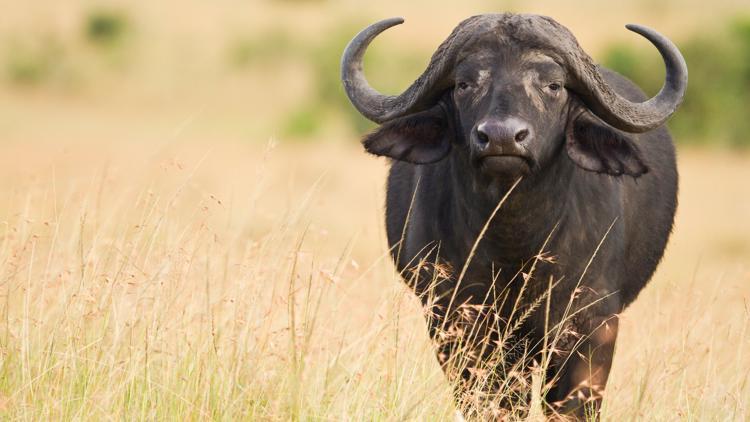
Credit: Ozkan Ozmen – stock.adobe.com
Author: Rachel Behrndt
Published: 8:48 AM CDT August 7, 2025
Updated: 8:53 AM CDT August 7, 2025

DALLAS — A Dallas real estate executive died on a South African hunting safari after a buffalo he was tracking attacked him, safari company officials said.
Asher Watkins, 52, was on a guided safari led by Coenraad Vermaak Safaris in South Africa’s Limpopo Province when the attack occurred, according to a statement from the safari company.
On Aug. 3, Watkins was fatally injured while tracking an unwounded buffalo with a professional hunter and tracker, the statement reads. The safari company described the attack as “sudden and unprovoked.”
“This is a devastating incident, and our hearts go out to his family and loved ones during this incredibly difficult time,” Coenraad Vermaak Safaris said. “We are doing everything we can to support the family members who are here with us and those back in the United States as they navigate this tragic loss.”
On the safari company’s website, they describe the cape buffalo as “the most dangerous animal to pursue in Africa, let alone the world,” adding that the animal is responsible for “several deaths and many injuries to hunters each year.”
“Buffalo are known to charge unprovoked but when they are wounded it is advisable to be prepared for the worst,” the website reads. “Buffalo hunting is thrilling and exhilarating, placing this formidable species at the top of every hunter’s wish list!”
Watkins was the managing partner of Watkins Ranch Group, a real estate company specializing in “elite ranch and land properties,” the company’s website states. The firm is an affiliate of Briggs Freeman Sotheby’s International Realty and LIV Sotheby’s International Realty.
He previously sold multi-million-dollar ranch properties in Arkansas, Colorado and Texas.
Watkins was raised in Dallas and worked on his family’s hunting and cattle ranch, according to his biography posted to the Watkins Ranch Group website. He enjoyed hunting and fishing, according to his online biography and social media posts. He was a life member of the Dallas Safari Club and the American Association of Professional Landmen.
“(Coenraad Vermaak Safaris) will continue to support the family in the days and weeks ahead and we are cooperating fully with all the relevant authorities to ensure all procedures are followed,” the safari company said.
The gentle, beautiful curiosity of humans led to the discovery that these birds are able to differentiate between paintings by Monet and PicassoMon 4 Aug 2025 11.00 EDTShare86
Amonth or so ago, my partner and I went on a painfully short trip to northern Tasmania. Tucked away in a tiny cabin in the middle of nowhere, we lit fires, watched sunlight dip over the mountains; and, as avid birdwatchers, saw an abundance of avian life, nestled in the trees, awash with golden light.
So at first, returning to our home in Sydney, where we live in a flat on a major street, triangulated between three different vape shops, my overwhelming feeling was one of despair. Gone were the rolling hills, replaced by convenience stores selling AI-generated posters of monkeys smoking cigars. Suddenly, everything I observed about city life became evidence for a growing theory that the human race had gone terribly, unavoidably wrong.
Around this time, I stepped out on to the street and noticed a pigeon, nestled in the roof above my door. The green of the plumage around her neck glinted, a mossy river struck by a plume of light. She cooed, gently, and her partner fluttered up beside her, his beak filled with twigs, come to help build their nest, together.
My pet rat is dying. I can’t stop thinking about all the things he taught me
If there is anything that defines modern life, it is how determinedly and constantly we are trained to not really see. We wake up and get to work ignoring things, like we’re being paid to do so. Human brains are naturally predisposed to ignoring the familiar, and focusing on the new, the different, the outrageous. Anything we’re surrounded by for too long grows invisible.
The humble pigeon is that ethos poured into a feathery, fragile little body. Pigeons are noticed only when they seem particularly foul, paid mind only when they annoy us. They are also victim of rampant animal welfare crimes: pelted with rocks, chased from dwellings, killed and maimed en mass.

00:01
03:12
Read More
Which is ironic, because, as it goes with so many problems we face, pigeons are a “problem” that we have caused. Feral pigeons are descendants of homing pigeons that we kept and domesticated. We loved them, once. We might not remember that, but pigeons do. They are naturally predisposed to want to be close to us. They gather where we gather. They thrive as a result of the particular way we have decided to live, rooting through our trash, taking shelter in our nests.
And if pigeons are dirty or disgusting, they are that way because we are dirty and disgusting. Forgive me for excessive anthropomorphism, but we live in a natural world that, rightfully, flinches from human touch. Pigeons are one of the few creatures that don’t. And for that, we punish them.
But if this makes it sound as though my burgeoning fascination with pigeons is guided by self-hatred, more despair, excessive fury at the way humans have decided to live, then I have miscommunicated. After noticing the nesting pigeons above my door, I began to actively look for them, everywhere. A few days later, walking home from work, I saw a flock of them huddled together, eating a discarded loaf of bread. Their overlapping cooing sounded like the movement of water. It was no northern Tasmania, but it was something.
Everyone asks me about my plans for having children. A nest of noisy miner birds has taught me how to respond
A pigeon deep-dive on Wikipedia that day brought me to an article, published in 1995, which informed me that pigeons are able to differentiate between paintings by Monet and Picasso. And I was moved not only by the image of a little bird, wandering between impressionist and cubist masterpieces, but the gentle, beautiful curiosity of humans too: that we can be interested enough in pigeons to want to know what they think about the art that we make.
Another thing about human brains: we adore a binary. Human versus non-human. Nature versus the city. Regular versus exceptional. Just because we see something every day – just because it surrounds us – it doesn’t mean it’s any less remarkable for that. So often, we picture metropolises as places devoid of wildlife; even in our despair, we end up drawing arbitrary lines between us and the natural world. Humans are not alone. Somehow, even after all that we have done, we still have pigeons by our side, building their nests, quietly, heads down, as we build ours.
 Exposing the Big Game