

1.2M Followers
Story by Ben Noll
• 10h •
3 min read
What a 5,000-mile long marine heat wave means for summer in the U.S.
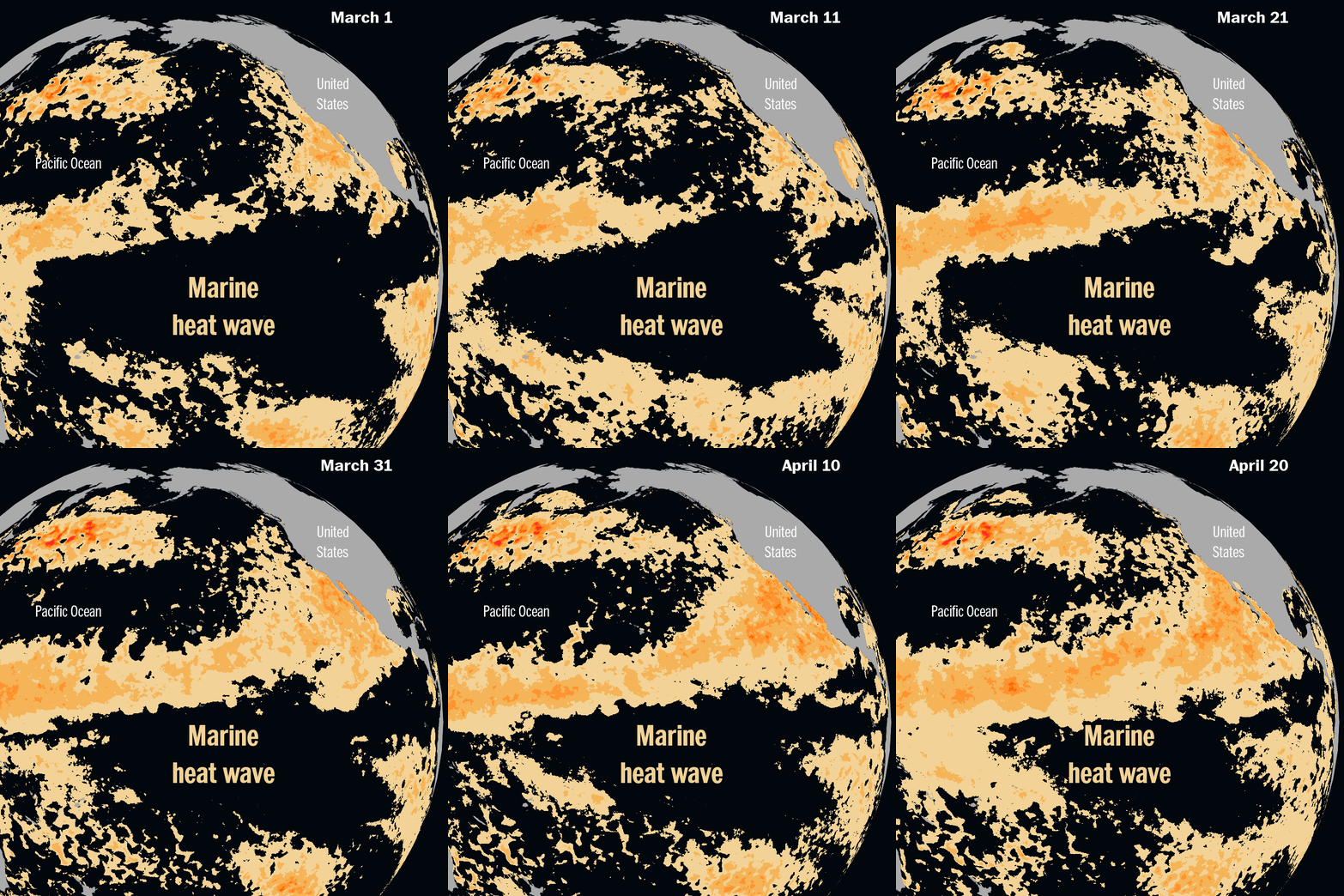
A massive ocean hot spot is stretching across a 5,000-mile swath of the Pacific — from Micronesia to the coastal waters of California. Across this zone, waters are as much as 6 to 8 degrees above average.
And it has the attention of climate scientists, who say it could boost temperatures, humidity and the threat for tropical storms in the West during the months ahead. Climate scientist Daniel Swain described this increasingly extreme marine heat wave as an “exceptional event” that’s breaking records.
The unusual ocean anomaly — the largest on the planet — could expand and intensify to cover the entire Pacific coast of North America by late summer, he wrote.
The development of this ocean hot spot, which is linked to a forming El Niño, also follows record warmth and a historic lack of snow in parts of the West earlier this year. Such conditions could worsen as the warm waters influence weather patterns in the coming months.
This marine heat wave is expected to be a key driver of conditions this spring and summer and it “could yield a summer quite different in California and the Southwest than we’ve seen in quite some time,” Swain said.
Its influence will vary — and it won’t immediately bring wall-to-wall heat and humidity to the region.
Over the coming weeks, the West will experience unsettled conditions and variable temperatures. That’s due to an enhancement in the subtropical jet stream — partly because of the marine heat wave. This will bring some beneficial moisture to the parched Intermountain West.Related video: Scientists warn a dangerous heat dome is building over the Southwest — 120°F possible (WooGlobe)
about:blank

Scientists warn a dangerous heat dome is building over the Southwest — 120°F possible
A dangerous heat Dome is forming over the American Southwest.
Current Time 0:01
/
Duration 1:07
0
But these milder effects won’t last.
As summer approaches, the marine heat wave will probably contribute to elevated overnight temperatures, leading to reduced relief from hot daytime conditions.
There’s also increased potential for uncomfortable humidity levels — something that is unusual in the West. Warmer ocean waters increase evaporation, which can raise atmospheric moisture levels, especially along the coast.
Then, later in summer, the marine heat wave and a forming El Niño could join forces to boost monsoonal thunderstorm activity across the West. This could enhance fire risks in the region — as dry lightning strikes can spark wildfires.
According to the National Interagency Fire Center, there’s above-average wildfire risk across several Western states during June and July.
The marine heat wave could also seriously boost the odds of an active eastern Pacific hurricane season — extending westward toward Hawaii. It will also raise the chances for the remnants of a tropical storm reaching California, which could spread moisture far and wide across the West — like Hurricane Hilary did in 2023.
Dillon Amaya, a climate scientist researching marine heat waves with NOAA, said that oceanic impacts may occur in places such as Hawaii as well as Southern and Baja California.
“In Southern California, we are concerned about fish migration, kelp forest degradation, whale entanglements, harmful algal blooms and sea bird mortality,” Amaya said.
However, Amaya said that in the open ocean, migrating fish can “get out of the way” of the marine heat wave.
This year’s marine heat wave — a persistent and extensive area of well above-average sea temperatures — is being driven by the Pacific Meridional Mode (PMM).
In its positive phase, the PMM is marked by warmer than average seas that stretch southwest-to-northeast across the Pacific for thousands of miles.
It typically develops from winter into spring through a series of atmospheric patterns that cause winds to weaken, which reduce evaporation and cause ocean warming. Once warm water from the PMM nears the equator, it can help feed a growing El Niño, with Amaya describing it as a precursor to that climate pattern, which can have much wider, global impacts.
This marine heat wave is the second big one in as many years to span the Pacific. Last fall, a record-breaking marine heat wave extended from eastern Asia into the North Pacific — and it still hasn’t fully faded. Its intensity was amplified by the planet’s long-term warming trend.
This year’s record-breaking marine heat wave is feeling that same tailwind of rising global temperatures.
What a 5,000-mile long marine heat wave means for summer in the US

