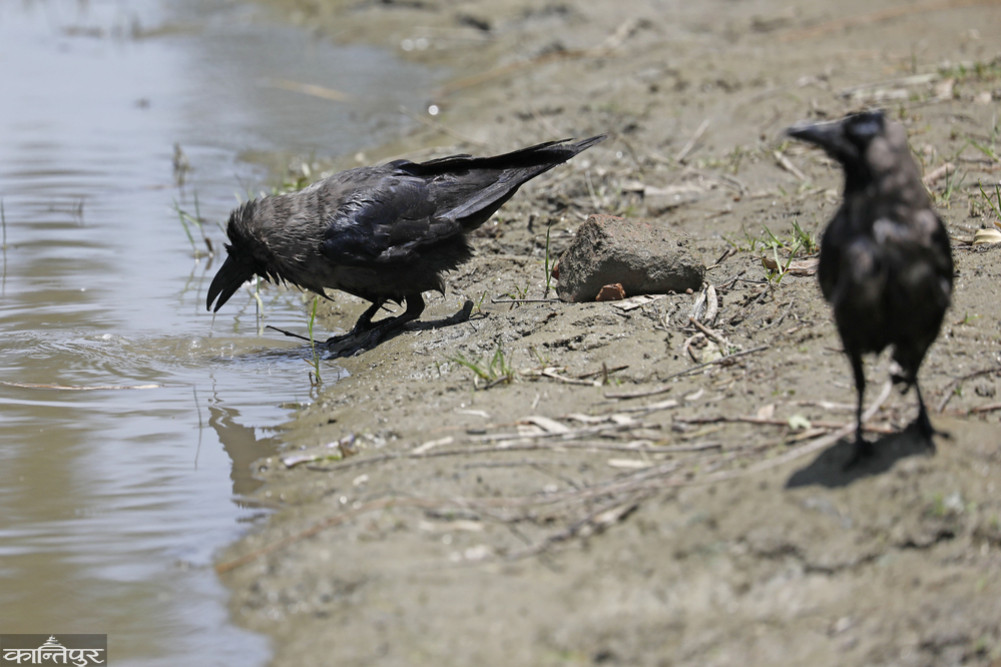
Bird flu has also been confirmed in zoo birds and mammals, and the increasing number of infections in crows has raised concerns about its spread and public health risk.
Brown Skua, a large seabird that breeds in Antarctica, migrates north after the breeding season. In the first week of Ashad, the bird, which had reached the coast of Cape Le Grand National Park near the city of Esperance in Western Australia in search of food and a warm environment, was confirmed to have bird flu (H-5N-1). According to scientists, due to the seasonal migration of birds, there is a risk of this virus spreading to domestic birds and birds. There have also been cases of infection in people who have come into direct contact with infected birds or animals.
Although bird flu seen in chickens is easy to control, it is difficult to control bird flu seen in birds that fly from one place to another, says Dr. Sher Bahadur Pun, Clinical Research Unit Coordinator and Infectious Diseases Specialist at Shukraraj Tropical and Infectious Diseases Hospital. “Migratory birds are considered the main source of bird flu transmission worldwide,” he says, “but not all of them transmit the disease. Cases of infection from migratory birds have been confirmed in other countries.” According to Pun, migratory birds do not show obvious symptoms of bird flu. Even if infected, they continue their normal activities. But when they reach domestic birds, it becomes fatal.
A study conducted in Nepal, which is part of the Central Asian Flyway, found the H-9N-2 subtype of influenza A virus in a sample of a ruddy shelduck. This has been mentioned in a journal article titled ‘
Surveillance of Influenza A Virus and Its Subtypes in Migratory Wild Birds of Nepal ’. ‘Out of a total of 1,811 samples collected during the study, only one (0.055 percent) sample was confirmed to be influenza A virus,’ the article by Divesh Karmacharya states, ‘Genetic analysis of the HA gene of the H-9N-2 virus showed that it is closely related to the H-9 virus group found in wild and domestic birds from different geographical regions of the world.’
The Chakhewa sample was collected from the Koshi Tappu Wildlife Sanctuary in Sunsari, which is one of the important wetland habitats for migratory birds from different countries. The bird regularly visits Nepal during the winter.
According to the article, the H-5N-1 virus was found in this species in Qinghai Lake, China, in 2005. These findings add to the growing evidence that long-distance migratory birds such as gannets can carry and spread avian influenza viruses.