
The 2026 hunting regulations allowing dogs to help with the hunt of black bears state the changes aim to support predator management in areas where caribou recovery is a concern.
Cathy Ellis
Aug 10, 2026 12:17 PM
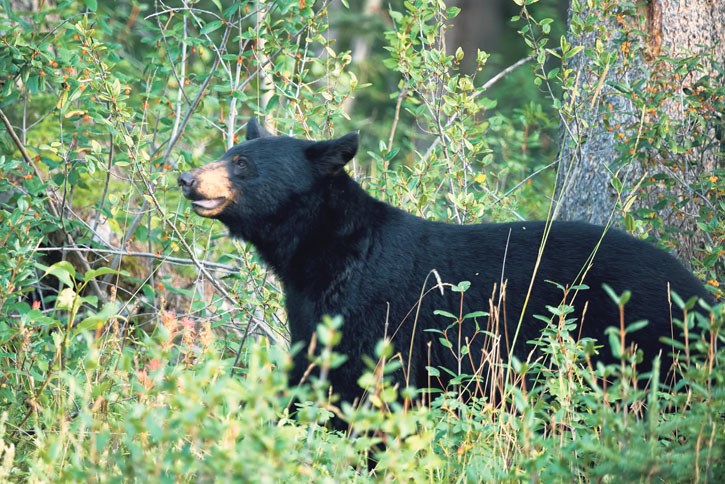
BOW VALLEY – A retired provincial caribou expert and the Banff-Kananaskis MLA are both dismissing the Alberta government’s claim that allowing the use of dogs to hunt black bears will help protect threatened caribou, calling it “not credible” and a “total farce.”
Dave Hervieux, who retired from Alberta Fish and Wildlife after 41 years in 2024, and MLA Sarah Elmeligi say there is no scientific evidence to support the province’s claim that this change to the hunting regulations will help with the recovery of at-risk caribou.
They say the change is more focused on supporting the commercial hound outfitters, who have previously been limited to chasing cougars.
“It’s not credible,” said Hervieux, a former provincial woodland caribou manager and northwest regional director for Alberta’s Fish and Wildlife stewardship branch.
“Black bear and woodland caribou research does not support assertions that hunting bears with dogs will conserve woodland caribou in Alberta.”
The Alberta Guide to Hunting Regulations is published every July and this year states black bear hunting with dogs is now permitted in 23 wildlife management units. Of the units in this area where it will be permitted, the closest touches the boundary of Jasper National Park.
A spokesperson for Alberta Forestry and Parks did not get back to the Outlook by deadline, but the 2026 regulations state these changes aim to support predator management in areas where caribou recovery is a concern.
“What really upsets me about this decision is that the government is pretending that it is for the benefit of woodland caribou recovery and that is a total farce and it’s an outright lie… I wish the government would start using actual biological science to manage wildlife,” said Elmeligi, also a wildlife biologist.
“What’s really bugging me about this is just the lack of honesty and the lack of transparency. Don’t tell me that this is about caribou recovery. It is not about caribou recovery. It is about hunting black bears with dogs.”
Last year, hunters killed 2,431 black bears in Alberta.
Hervieux said many of the areas where dogs will be allowed to help chase and hunt black bears are not in caribou ranges.
Of the 23 wildlife management units where it will be permitted, he said 10 do not have caribou range and likely never had the landscape and habitat conditions to have caribou historically.
Of the units in this area where it will be permitted, the closest touches the northern boundary of Banff National Park, as well as east of Jasper National Park.
In addition, two of the 23 wildlife management units have almost no caribou range.
“The hunting of black bears with dogs is considerably focused on areas which are not caribou range, do not have resident caribou, and historically were unlikely to have had caribou,” he said.
From local headlines to the bigger stories shaping the world.
Sign up for our free Daily Headlines newsletter and get the news you need to know – every day. Sign Up
As well, Hervieux said black bears tend to not be in caribou calving areas, reducing the potential for bears to prey on caribou calves. Though, a small number of black bears select similar habitats to caribou during the calving season.
“Removing the bears that occasionally occupy caribou calving habitats would require a massive bear cull,” he said.
“Studies of black bears in Ontario and Quebec found no evidence of bears consuming caribou adults or calves.”
Hervieux said killing black bears is not relevant to woodland caribou conservation in Alberta.
Instead, woodland caribou are challenged by habitat loss and change, which results in excessive wolf predation.
“Those changes remove caribou habitats but also increase habitat for other prey species – moose, deer, elk – which results in increased wolf populations and thereby excessive predation on caribou,” he said.
Alberta’s wolf culling program, said Hervieux, leads to reduced adult caribou mortality and increased calf survival.
Wolf management as a sole wildlife management action has in all cases considerably increased calf survival and led to stable increasing caribou population growth, he said.
“Black bear culling is not required to sustain caribou populations in Alberta. Caribou habitat conservation and recovery is required to avoid the need to cull wolves forever,” he said
“Caribou habitat conditions continue to decline in Alberta with landscapes being altered so that caribou can no longer exist.”
Elmeligi, who currently serves as the NDP opposition critic for environment and protected areas, said there is also plenty of evidence showing off-leash dogs come with risks.
One such peer-reviewed study, The Canine Conundrum: Is a dog a help or hindrance in bear country?, published in April, found dangerous incidents involving off-leash dogs outnumbered those involving leashed dogs by nearly six to one.
“Whether you’re using them to hunt black bears or not, we know that dogs off-leash and wilderness is not good,” Elmeligi said.
Provincial statistics show that between 2013 and 2022, there were at least six cases of grizzly bears being killed when they were mistaken for black bears.
“I’m worried that somebody will misidentify a grizzly bear and kill a grizzly bear by accident,” said Elmeligi.
“We know that there are multiple accidental hunts on grizzly bears and this just kind of increases that risk.”


“… I wish the government would start using actual biological science to manage wildlife.” Amen.