
The Cage-Free Scam & Rethinking What Progress Means for Animals
- Latest News
- Issues
- Humanewashing
- “Cage-Free”
- Farms
- Speciesism
- Vegan Wake Up
- Plant Food
- Vegan Month
- Women’s Month
- Fish
- Wool
- Rodeo
- Take Action
Most people don’t want to see animals confined in tiny cages. “Cage-free” eggs suggest happy hens laying eggs freely as a humane alternative to horrific battery cages. The transition to cage-free eggs began with good intentions among animal advocates to reduce the obvious suffering associated with battery-cage systems.
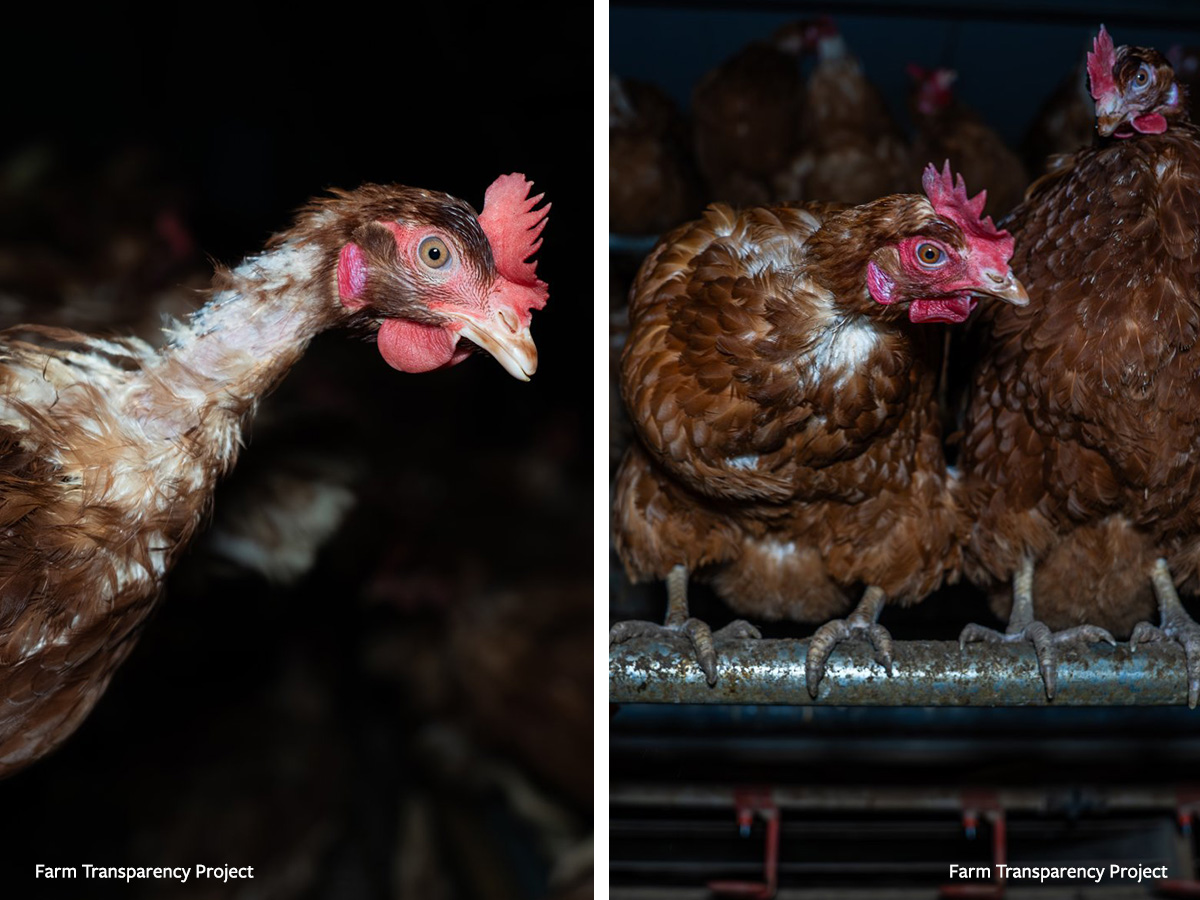
Tragically, there is nothing free or humane about “cage-free” eggs. It is yet another form of deceptive marketing, humanewashing, making people feel better about buying eggs.
“Cage-Free” Is Cruelty Repackaged
Drawing on more than two decades of research from universities, animal-welfare scientists, veterinarians, government agencies, and industry, the evidence shows that the transition to cage-free eggs has produced minimal improvements in overall hen welfare and, in some cases, can result in as much or more overall suffering than caged systems. Cage-free systems can increase risks of injury, disease, and death. PETA’s 2026 White Paper on the Failure of Cage-Free Housing Systems to Reduce Overall Hen Suffering synthesizes this research and is supported by other experts, including veterinarian Dr. Crystal Heath, co-founder of Our Honor, a veterinary advocacy organization.
One Big Cage
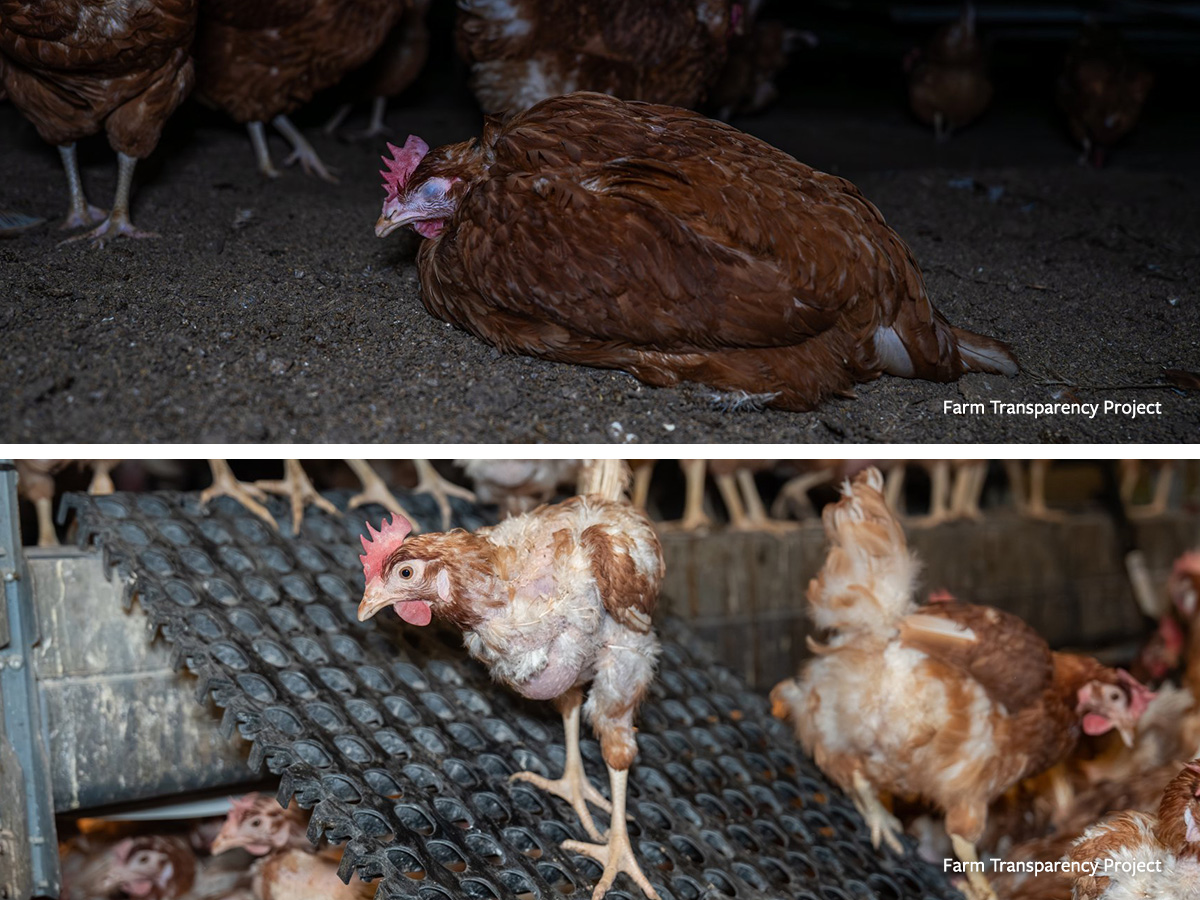
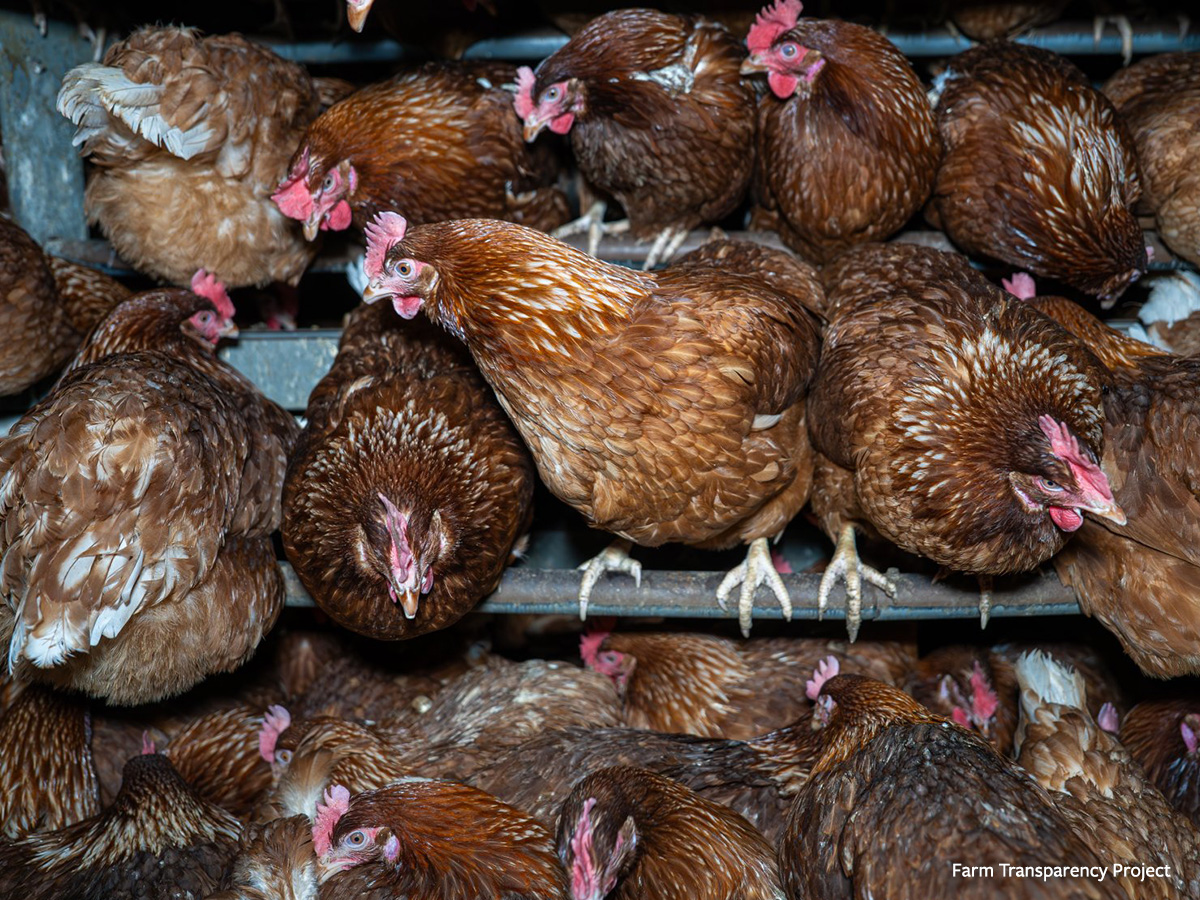
While cage-free facilities allow hens more space to move, roost, and nest than battery cages, removing wire cages inside massive warehouses creates one big cage. In facilities with up to 100,000 birds crammed together, each hen has an average of just 1 to 1.5 square feet, restricting natural behaviors such as foraging, dust bathing, exploring, and wing-flapping, while forcing constant contact.
In windowless facilities where they never go outside or see the sun, competition for food, water, and perches can cause stress, aggression, piling, and suffocation. Feather pecking occurs in 80–94% of U.S. commercial cage-free flocks, causing open wounds, infections, and even cannibalism.
Injuries, Toxic Air, Continued Cruelties
Up to 97% of cage-free hens suffer painful keel-bone fractures from falls and collisions, causing chronic pain, impaired mobility, and potentially fatal injuries. In cage-free systems, thousands of moving birds disturb litter containing urine and fecal matter, filling the air with ammonia, dust, and airborne pathogens that irritate and burn their eyes and lungs. Dust and feathers also increase fire risk, with “poultry” birds accounting for most animals killed in barn fires.
As chicks, their sensitive beaks are still sliced or burned off, causing agonizing and chronic pain. Hens are still forcibly bred and genetically manipulated to produce around 300 eggs per year, pushing their fragile bodies beyond their limits and also causing pain, fractures, and severe health problems. Many are also subjected to forced molting, or intermittent starvation, to produce more eggs, causing stress, weight loss, and immune suppression.
Killing Babies and Their Mothers
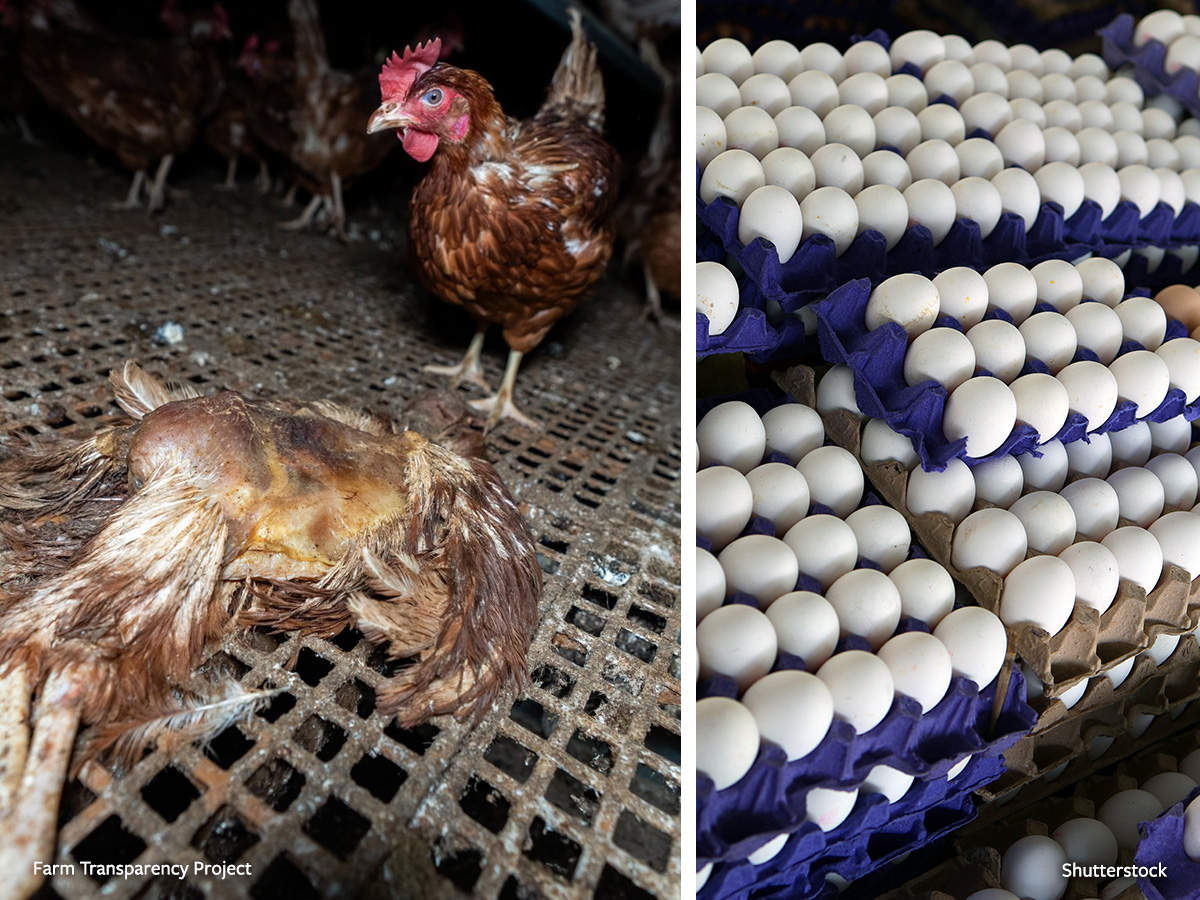
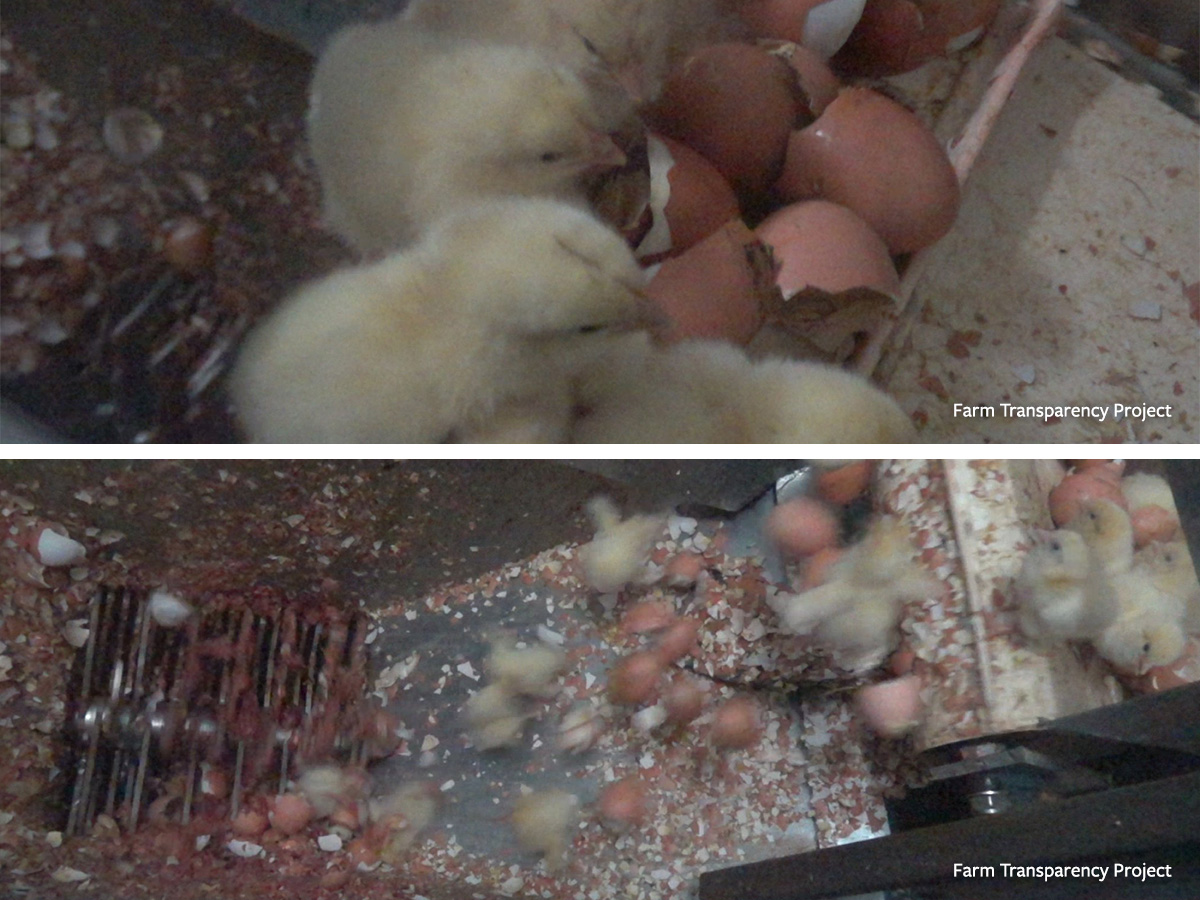
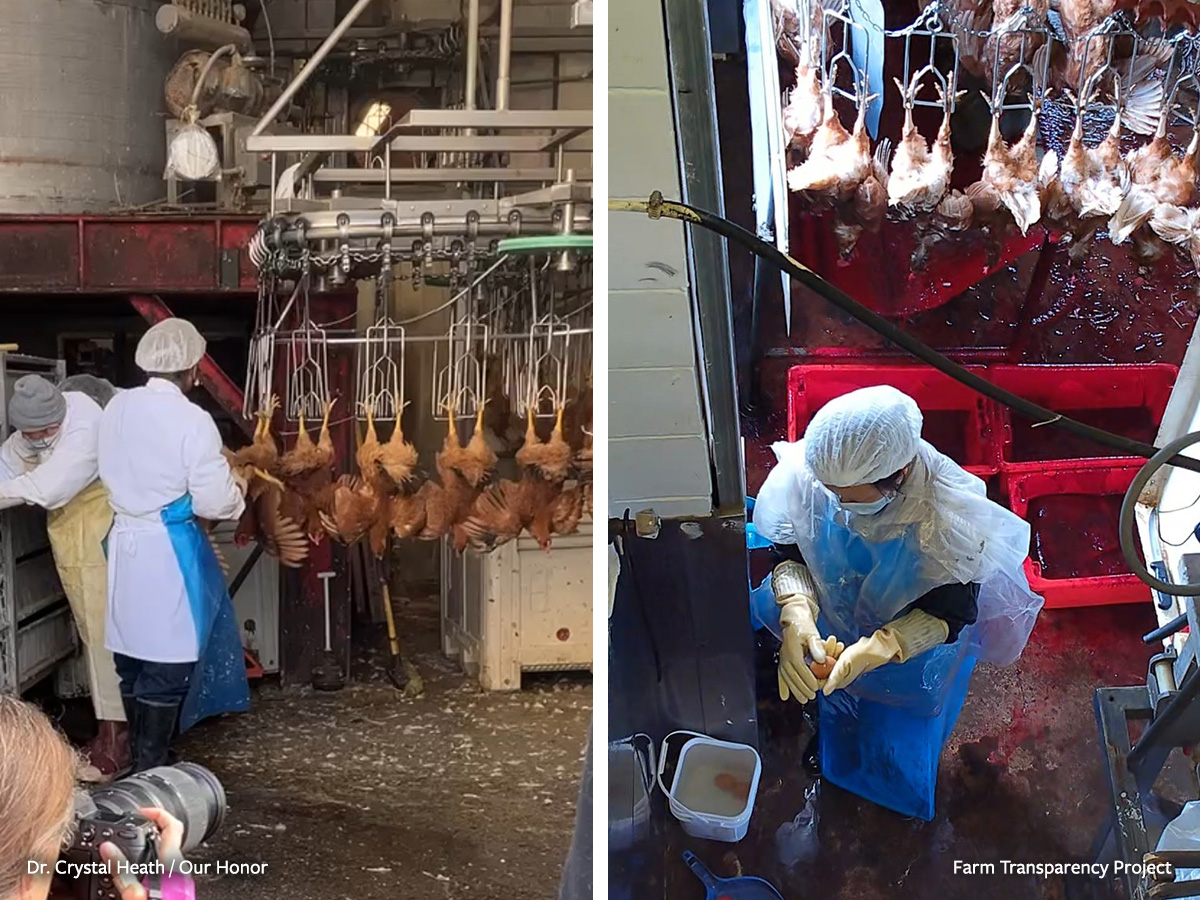
What “cage-free” leaves out is the biggest horror of all: across the egg industry, all male chicks are killed because they cannot lay eggs, often by maceration, suffocation, or gassing. Their mothers are slaughtered too, after lives of torment and misery.
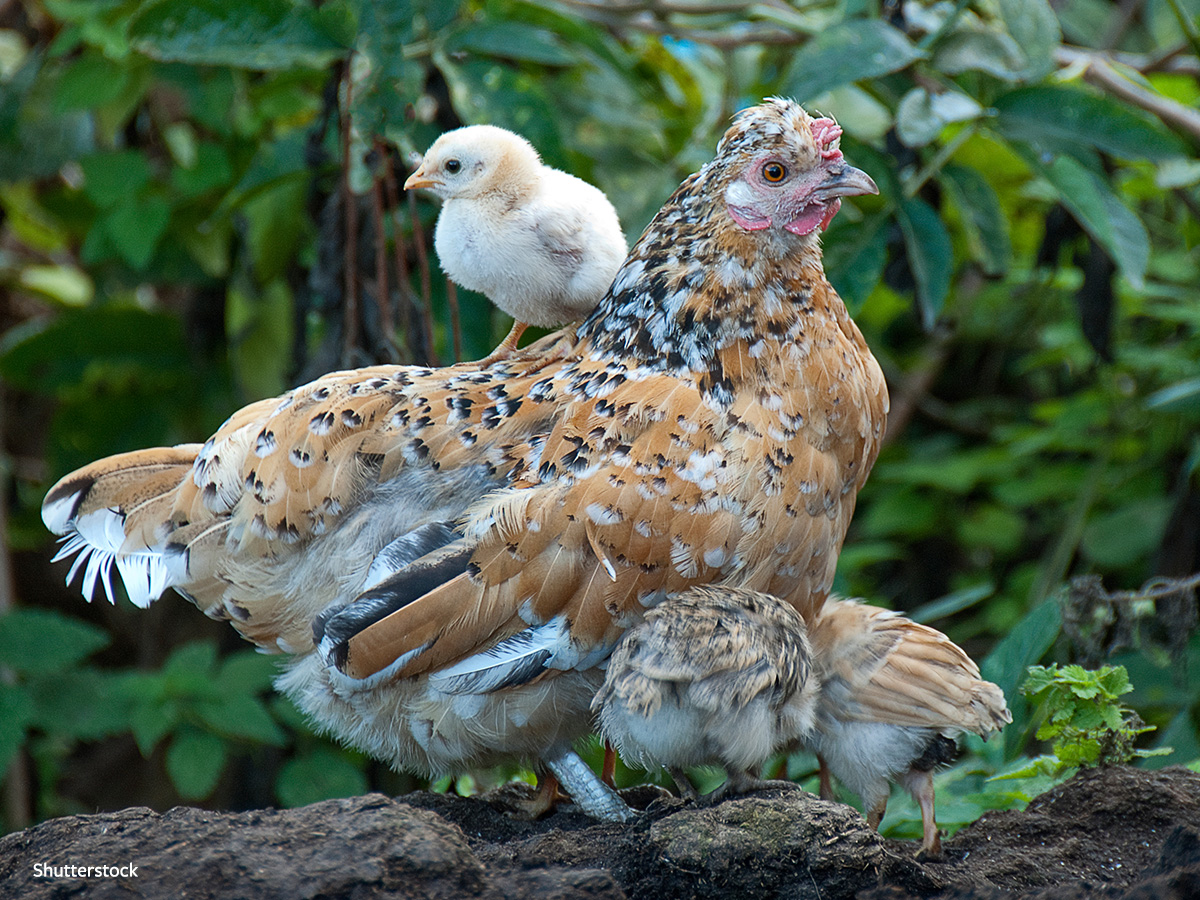
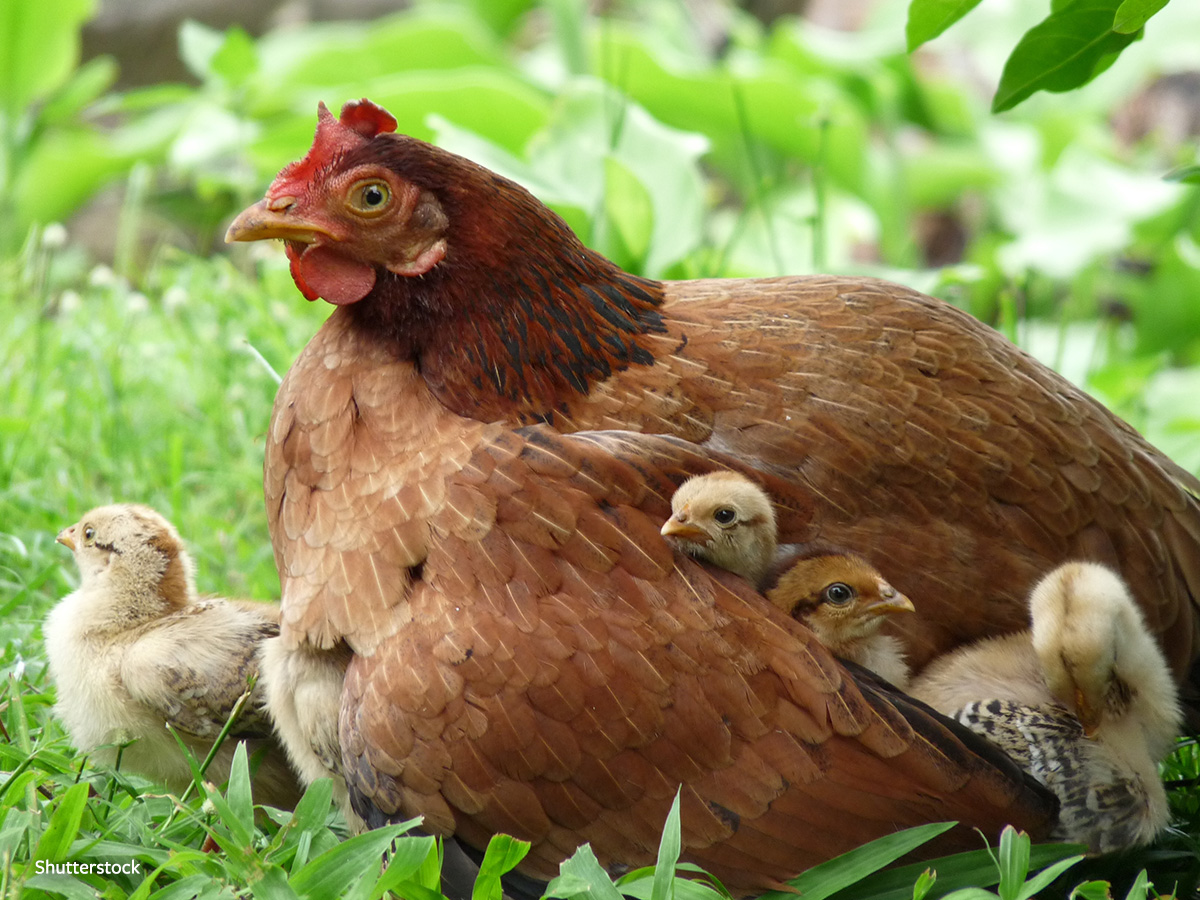
Chickens are emotionally sensitive, intelligent, and social animals who can form strong bonds, solve problems, and even dream. Mother hens communicate with their chicks through their shells before they hatch, using distinct vocalizations to teach them behaviors that help them better cope with fear and stress. In the egg industry, chicks are denied the chance to grow up with their mothers, deprived of maternal care and guidance.
Disease Spread and Mass Killing
Cage-free systems do nothing to eliminate infectious disease risks. Large flocks, litter floors, and constant movement can increase zoonotic disease spread, including bird flu (HPAI). When outbreaks occur, entire flocks can be killed using ventilation shutdown methods (VSD/VSD+), leaving birds to die prolonged, excruciating deaths from heatstroke and suffocation.
Since 2021, bird flu outbreaks have killed or led to the mass killing of over 200 million birds in the U.S. Of that, 72% were killed using VSD+, a prolonged death from heatstroke that can take hours. The USDA paid “poultry” producers approximately $1.25 billion in taxpayer-funded indemnity payments, compensation for bird-flu losses.
More Animals, More Suffering
Because cage-free systems can have lower productivity and more dirty, broken, or otherwise unsellable eggs, more hens may be needed to produce the same amount of marketable eggs, potentially requiring more animals to be bred, exploited, and killed. Even if welfare improves modestly per bird, needing more hens means more animals are bred and killed by this violent system, likely increasing total suffering.
Each hen is a sentient individual denied freedom and the opportunity to experience the life she naturally would, enduring deprivation, fear, and pain before facing the terror of the slaughterhouse.
Environmental Destruction and Killing of Wild Animals
If cage-free systems shift toward free-range or pasture-raised, more wild animals may also be killed to protect chickens and producer profits. So-called “higher-welfare” systems can intensify the climate crisis and ecological harm. A July 2026 study found that shifting Britain entirely to organic free-range egg production would nearly double greenhouse-gas emissions, increase land use and acidification, and require more hens to produce the same amount of eggs.
Rebranding, Not Reform
Cage-free campaigns aimed to reduce suffering and improve conditions for hens. Cage-free marketing has instead helped sustain egg consumption by allowing companies to charge higher prices for eggs marketed as more ethical and sustainable, while increasing consumer trust and demand. More hens are confined in battery cages today than when the modern cage-free movement began.
Over 40% of U.S. laying hens are now in cage-free systems, but cage-free is still a life sentence of misery and death for them. Egg demand has stayed strong despite higher prices, with consumers largely shifting between conventional and cage-free eggs as overall consumption rises. A 2023 United Egg Producers report quotes an egg producer describing the cage-free transition as an opportunity to “reset” how consumers and the animal-welfare community perceive the industry, acknowledging its potential to improve its public image.
The same pattern can be seen with the deceptively named Better Chicken Commitment (BCC), a voluntary welfare pledge for chickens bred and killed for their flesh. These supposed pledges by producers can risk legitimizing and expanding the system by reassuring consumers that animals are treated better.
Recent reports show the BCC has been used as a license for new large-scale chicken farms. A 2026 study suggests that positive welfare framing can reduce ethical discomfort and make continued consumption easier to justify.
The Path to Animal Liberation
By contrast, exposure to animal sentience and suffering can increase opposition to animal farming and willingness to reduce consumption. A 2021 U.S. survey found that half of respondents were trying to reduce their animal-product consumption, while 34.5% were open to trying a vegetarian or vegan diet.
With a clear egg-free message about the cruelty of the egg industry and available plant-based alternatives, more consumers might have chosen egg-free instead. Companies must be challenged to meet this demand by investing in plant-based alternatives, not given better ways to market animal products.
An open letter, ‘Reconsidering Cage-Free Eggs: An Open Letter from Concerned Scholars,’ authored by Vasile Stănescu, PhD, and others and signed by more than 50 international scholars, calls for a critical reassessment of cage-free egg campaigns within animal advocacy and food-system reform.
The Freedom of Vegan Advocacy
Our precious time and resources must advance the case for “egg-free, animal-free.” We do not fight for nicer-sounding enslavement and killing; we fight for the end of it. We must not water down the truth.
Beyond just reducing suffering while animals are exploited and killed, we must address the source of their suffering: the human supremacy mindset that sees animals as resources for us. They are not ours to use. They deserve to be free from exploitation, simply because they were born.
“Cage-free” eggs rearrange suffering, reinforce humanewashing, and potentially expand the industry. They are not the meaningful animal-welfare solution they are often portrayed as.
May animal advocates unite to advance a plant-based, slaughter-free food system and veganism as the most direct path to reducing animal suffering and healing our planet for all Earthlings.

