
A petition and letter have alleged that a board under the state wildlife agency violated the Fair Campaign Practices Act. The Secretary of State has been asked to weigh in.
NewsNews | Oct 18, 2026
Ali Longwell Follow
Share this storyAA
Kari Cieszkiewicz/U.S. Fish and Wildlife Service
One of the opponents of Amendment 83 — a ballot measure asking voters in November to establish a constitutional right to hunt and fish — has leveled allegations that the Colorado Wildlife Council, a marketing and education body under Colorado Parks and Wildlife, misused funds to influence wildlife- and hunting-related ballot measures.
Eric Washburn — president of Colorado Hunters and Anglers for Sensible Wildlife Conservation, an issue committee raising money to fight against Amendment 83 — filed a petition with the Colorado Parks and Wildlife Commission on Sept. 10, requesting an independent investigation into alleged violations of the Fair Campaign Practices Act by the Colorado Wildlife Council in the 2024 election.
The Fair Campaign Practices Act bars state agencies, including councils, from spending money to “urge electors to vote in favor or against” statewide ballot issues.
The petition — co-signed by conservation and wildlife advocates Charles Seymour and Brett Ochs — also asks the commission to prevent the council from using its funds on “electioneering” during the upcoming November midterm and adopt a permanent rule on the matter.
It’s one of three active petitions Washburn has submitted to the commission this year, in addition to one on chronic wasting disease and another on science-based wildlife management.
On Sept. 16, Parks and Wildlife Director Laura Clellan sent a letter to the Colorado Wildlife Council reporting that the agency was evaluating the petition but pausing the council’s release of advertising and promotional materials until after the election, calling it a “conservative determination” to protect the council members from potential liability.
When asked questions about the allegations, Travis Duncan, a public information officer for Parks and Wildlife, said the agency “needs more time to evaluate the petition and to develop a response.”
On Thursday, Oct. 15, Clellan submitted a request for an advisory opinion from the Secretary of State on the matter, seeking input on whether the Colorado Wildlife Council’s previous videos or advertisements violated the Fair Campaign Practices Act, and seeking guidance for future election cycles.
These allegations also appeared in an Oct. 2 letter from the Center for Biological Diversity, a non-profit dedicated primarily to protecting endangered species that has been actively engaged in Colorado wildlife policy advocacy. The letter was sent to Gov. Jared Polis and Colorado Department of Natural Resources Executive Director Dan Gibbs, seeking an investigation not only into the potential misuse of state funds by the council but into additional claims of bias and misconduct by Parks and Wildlife.
The letter asks for the governor and director to look into what it says are “reports of a ‘cowboy culture’ at CPW that may have created an unhealthy workplace for women, as well as reports of retaliation and bias against those who have advocated for changes to CPW’s wildlife policy” and more.
“An investigation is needed to assess whether CPW used viewpoint-neutral standards or whether, as evidence cited in this letter suggests, CPW allowed hunters and trappers to have greater access, protection or other consideration during Commission meetings and other public events,” wrote Sam Miller, the non-profit’s senior carnivore campaigner, in the letter.
Miller was the campaign manager for Cats Aren’t Trophies, which supported the failed 2024 ballot measure seeking to ban hunting of mountain lions, bobcats and lynx. She also submitted a petition to the Parks and Wildlife Commission last year seeking to ban the commercial sale of fur in the state. The petition was rejected by the board in July.
A statement from the Department of Natural Resources on Thursday shared that the department and governor’s office are reviewing the letter, and pointed to the actions already taken by Clellan with regard to the campaign finance allegations, which it added are being taken “out of an abundance of caution.” The statement did not address any of the letter’s other claims.
It comes at a time that the agency’s commission is also facing pushback from hunting and fishing advocates and organizations. Sportsmen and women supporting Amendment 83 have reported that the recreational opportunities to hunt and fish are under attack, citing recent commission meetings as one of the places these “attacks” are taking place.
Two prominent national hunting organizations, Safari Club International and Sportsmen’s Alliance Foundation, recently filed a lawsuit against the Parks and Wildlife commission alleging that it failed to follow proper notice protocol when it passed daily limits on hunting wildlife species classified as furbearers. The commission voted to impose a daily limit of two — down from previously unlimited hunting allowances — a much lower limit than the two options the agency had proposed. The lawsuit alleges that the public was not properly notified that a limit of two would be considered.
What is the Colorado Wildlife Council, and what are the allegations around electioneering?
The state legislature created the Colorado Wildlife Council in 1998 to oversee and design public education programming about Colorado’s wildlife, wildlife management and wildlife-related recreational opportunities, including hunting. The nine-person council includes four hunting and fishing representatives — from both east and west of the Continental Divide — one agricultural industry rep, two municipal members, one media and marketing expert and one Parks and Wildlife employee.
Its funding comes from a $1.50 fee on every Colorado hunting and fishing license that goes to Parks and Wildlife’s Wildlife Management Public Education Fund. Parks and Wildlife’s director appoints the members and has final approval authority on its campaign plans, budgets and expenses.
The Colorado Wildlife Council’s 2022-2026 strategic plan, published in 2021, states that its marketing objective through 2026 was to “build support for hunting and fishing in Colorado by increasing the number of those who would be against ballot initiatives and laws restricting hunting annually.”
The strategy says that the council was created following the passage of two ballot measures in the early 1990s — including the 1992 ban on baiting and using hounds to hunt bears and on spring bear hunting seasons as well as a 1996 ban on leghold traps, snares and poisons — which were voted through by “the misinformed Colorado public.”
It adds that with CPW “powerless to act” in these instances, the Colorado Wildlife Council was formed to educate the public “regarding the importance of wildlife and wildlife management, and why hunting and fishing are critical to Colorado’s legacy.”
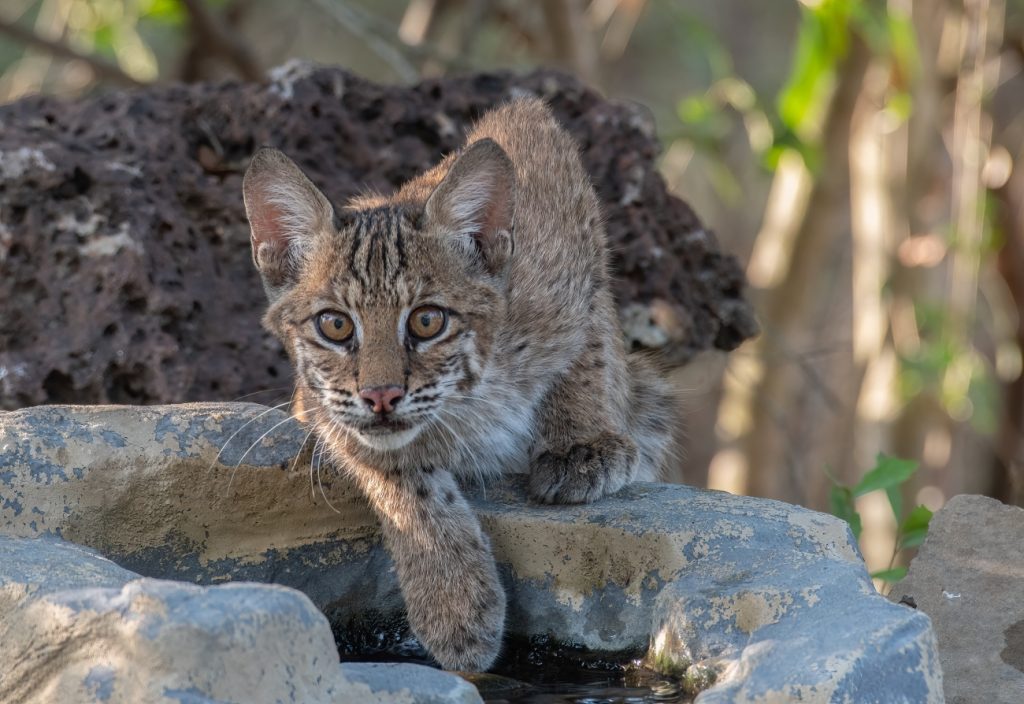
The recent petition to the Parks and Wildlife Commission and the letter from the Center for Biological Diversity claim that the council spent money to commission voter research and campaign against Proposition 127 in 2024. This measure — which did not pass — was supported by the Center for Biological Diversity and aimed to ban the hunting of mountain lions, bobcats and lynx in Colorado.
“They did it not only with public money, but by featuring CPW biologists in their advertisements. And then when that was all done, they bragged about how successful they were in defeating Proposition 127,” Washburn said. “It’s one thing to be using private money … but it’s quite another to do it with public money.”
The campaign in question was titled “Supporting Science in the Wild,” which Colorado Wildlife Council started running paid ads and materials for in 2023. It featured CPW biologists and officers to highlight “how Colorado’s wildlife and landscapes are held in balance by conservation work, which is funded primarily with hunting and fishing license fees,” according to an August 2024 presentation from agency R&R Partners to the council.
The petition and letter cite presentations made by the ad agency to the Colorado Wildlife Council in October and December 2024, which shared insights from social listening and surveys of voters directly related to Proposition 127. The council’s operational plan and budget for 2025-26 reports that voter motivations and the outcome of Proposition 127 “provides compelling evidence of (the Colorado Wildlife Council’s) influence and success.”
Meeting minutes published for the council’s March 2026 planning retreat state that “The ‘Supporting Science in the Wild’ campaign was cited as a key factor in the defeat of Proposition 127, with ‘trust in experts’ being the top reason voters rejected the initiative.”
Both Miller’s letter and the petition cite concerns that similar campaigning has occurred around Amendment 83 — and in its petition form, Initiative 302 — ahead of this year’s midterm election. Miller writes that the council approved a $2.5 million marketing contract for the 2026-27 fiscal year, including “advertising scheduled to begin on July 1, 2026, and continuing during the final weeks of the election,” with the objective of improving public perceptions of hunting and fishing among key audiences.
Miller requests that an investigation “determine whether public funds were used directly or indirectly to develop or distribute election-related messaging; whether publicly funded research or strategic information was provided to private campaigns; whether council expenditures constituted an unreported contribution or other public subsidy; whether the CPW director properly reviewed and approved the activities; and whether comparable public resources were available to advocates holding opposing wildlife policy views.”
The petition requests an investigation as well, but also asks the Parks and Wildlife commission to halt the council’s spending on advertising before the Nov. 3 election and adopt a formal rule that creates boundaries around what it can spend public funds on.
Clellan’s letter to the wildlife council reports that while the citizen petition is being reviewed, “I have determined that the Colorado Wildlife Council may approve the media campaign as presented, provided any paid media will not be published or aired until no sooner than Nov. 4, 2026.”
She adds the action is meant “to protect Council members from potential liability for authorizing an expenditure in violation of the Fair Campaign Practices Act …”
What other allegations is CPW facing?
Miller’s letter to Polis and Gibbs raises several other allegations against Colorado Parks and Wildlife, including that the agency has a bias toward hunting and fishing advocates and against wildlife advocates or scientists and academics that disagree with their policy positions. The letter claims the agency has also been retaliatory toward these latter groups. It seeks a public and transparent investigation into its many claims.
The letter alleges that hunters and trappers have had an “outsized influence over CPW wildlife policy,” and that the agency has failed to foster safe, inclusive and equitable environments at public meetings for advocates.
These claims rely on social media posts, observations at commission and stakeholder meetings, first-hand reports from unnamed individuals, previous workplace and misconduct investigations that have been resolved, and more.
“Colorado’s wildlife belongs to all Coloradans. We support respectful engagement with hunters, trappers, outfitters, agricultural producers, scientists, academics, wildlife advocates and all Coloradans,” Miller writes. “While vigorous disagreement is part of democratic wildlife governance, we can all agree that preferential access, retaliation, distorted public participation and tolerated intimidation are not.”

