
Learn how the spread of H5N1 avian influenza among dairy farms in Washington State led to the first human bird flu death in the U.S. in 2026.
Written byJack Knudson
Nov 3, 2026, 2:07 PM| 3 min read


Newsletter
Sign up for our email newsletter for the latest science news
The first U.S. bird flu death of 2026 has recently been reported in Washington state, where the contagious viral infection has been circulating among dairy cattle. The state announced on Nov. 1, 2026, that the deceased individual had caught bird flu — otherwise known as avian influenza — after coming into contact with infected cattle at a dairy.
The death comes as Washington’s public health officials are working to monitor the spread of Highly Pathogenic Avian Influenza H5N1 in Yakima County, where 40 herds have been infected with H5N1 as of Oct. 30, 2026, according to the Washington State Department of Agriculture.
The recent surge of H5N1 cases among cattle in Yakima County appears to be the result of a cow-adapted strain known as B3.13, which has been circulating in dairy cattle since 2024. The Yakima Health District has reassured the public that the risk of avian influenza infection is low, but those who work on farms in the county are now being advised to follow safety guidelines while health officials look for answers to the virus’ spread.
A Rare Bird Flu Death
In early October 2026, Highly Pathogenic Avian Influenza was confirmed to have infected cattle in two Yakima County dairy farms, marking the first ever known case of HPAI in cattle in Washington.

You have 1 more free article (1 of 2)
Have an account? log in
Subscribe today for full access and support our journalism.
 Explore All Options
On October 15, the Yakima Health District announced that a resident had tested positive for avian influenza, becoming the first human case in the nation in 2026. A second case was confirmed on October 31, and a third case was confirmed on November 1.
The individual who died from the virus was initially hospitalized, eventually succumbing to severe illness, according to a statement from the Yakima Health District. This person had underlying health conditions, which may have exacerbated the impact of the virus.
The death of this individual is the first U.S. death attributed to bird flu in 2026, and the third since 2024, when H5N1 first jumped from birds to cows, significantly expanding the current outbreak.
Read More: 3 Ways to Prepare Your Body for the Flu Shot, From Exercise to Hydration
How to Prevent Bird Flu Infection
H5N1 avian influenza doesn’t commonly infect humans, with just over 70 cases reported since February 2024. The virus also doesn’t easily transmit from person to person; the World Health Organization states that sustained human-to-human transmission has not been reported.
Regardless, people who come into contact with potentially infected animals are at the highest risk of catching the virus: This includes animal agricultural workers, backyard flock owners, hunters, and wildlife biologists.
To prevent infection, the general public is advised to avoid touching sick or dead wild birds or poultry; in addition, poultry should be cooked to 165 degrees Fahrenheit, and unpasteurized milk or fresh cheese made from raw milk should be avoided, according to the Outdoor Illinois Journal.
Watching for Mutations
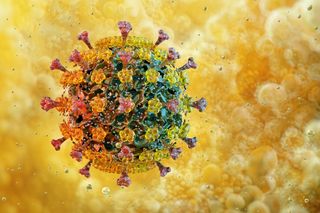
Avian influenza is caused by influenza A virus, and there are many different kinds of this virus, all categorized based on the two proteins on the surface of the virus: hemagglutinin (H) and neuraminidase (N). For example, H5N1 has the hemagglutinin subtype H5 and the neuraminidase subtype N1.
The H5N1 strain primarily circulates in migratory birds, but it doesn’t often cause severe illness in these birds, according to the University of Florida Emerging Pathogens Institute. However, the virus is much more deadly for poultry and is capable of wiping out a flock within 48 hours.
The reason H5N1 has caused such a stir in the U.S. in recent years is that it has repeatedly acquired genetic mutations that have allowed it to infect a greater number of species, including dozens of mammal species.
While H5N1 is not an urgent public health risk right now due to its low transmission among humans, its genetic mutations have made it crucial for scientists to keep an eye on its evolution in the coming years.
Read More: Mutated Influenza Strain May Explain the Early Start to Fall 2026 Flu Season
The content of this article is not intended to be a substitute for professional medical advice, diagnosis, or treatment. Always seek the advice of qualified health providers with questions you may have regarding medical conditions.
Article Sources
Our writers at Discovermagazine.com use peer-reviewed studies and high-quality sources for our articles, and our editors review for scientific accuracy and editorial standards. Review the sources used below for this article:
- This article references information from the Washington State Department of Agriculture: HPAI (H5N1) in Cattle – Producer Resources
- This article references information from the World Health Organization: Avian influenza A(H5N1) virus
- This article references information from the Outdoor Illinois Journal: The Highly Pathogenic Avian Influenza A (H5N1): How to reduce the risk of infection to you and your pets
- This article references information from the University of Florida Emerging Pathogens Institute: H5N1 strain of bird flu could be dangerous. UF EPI expert explains why

