For the past three years,a novel form ofbird flu has wiped out millions of animals in the United States, from snow geese to backyard chickens.
But conversations around the outbreak have grown more urgent in recent months, as Louisiana recorded the country’s first human death from bird flu in January and the death toll for animals continues to rise.
In Washington, about 2.2 million commercial, backyard and wild birds have tested positive for Type A H5N1 influenza, including 52 backyard flocks and three commercial ones. About 14 Washingtonians — all commercial farmworkers — have tested presumptively positive since 2022.
While the risk to the general public remains low, state epidemiologist Dr. Scott Lindquist urges people to take the virus seriously. There’s still a chance it could mutate and become more infectious to humans, he said.
“We are not seeing that yet — but that’s the concern,” Lindquist said.
Here are some basics about the outbreak and potential risks:
When did bird flu begin?
The first case of bird flu was documented in 1878 in northern Italy and was called the “fowl plague,” according to the U.S. Centers for Disease Control and Prevention. In 1955, scientists discovered the illness is caused by a Type A influenza virus. Most cases were mild or “low pathogenic,” and birds showed few to no symptoms.
In 1996, “highly pathogenic” avian influenza emerged on a goose farm in Guangdong province, China, killing 40% of the flock. Between 1996 and 2005, migrating birds carried the virus across Asia, Africa and Europe. HPAI is now circulating freely (endemically) between farms and wild populations.
What do symptoms look like?
Sick birds can experience mild signs of respiratory disease, including sneezing, discharge from the eyes, ruffled feathers, lethargy, and a decrease in appetite and egg production, among other symptoms. Mammals often develop neurological symptoms, while people can experience pink eye (or conjunctivitis), fevers, coughing, headaches, muscle pain or sore throat.
How are different animals infected?
The virus spreads through contact with contaminated surfaces or infected animals’ saliva, mucus or feces. The virus can also be transmitted through consumption of infected animal meat or raw milk. It works its way up the food chain, infecting small mammals when they prey on sick birds, then top predators that eat smaller mammals.
Is it safe to eat animal products?
Chicken, eggs and other poultry products are safe to eat when properly handled and cooked. Milk is safe to drink when pasteurized, but consuming raw, unpasteurized milk and raw animals can be a risk to humans and pets.
Eating raw pet food can also be dangerous for animals. Last week, a domestic cat in Washington was euthanized after eating potentially contaminated pet food and getting sick, similar to other indoor cat infections nationwide.
How can I prevent infection among my birds?
If you have a backyard or commercial flock, try to limit contact between your birds and outside visitors or animals. Keep poultry separate from wild waterfowl. Keep shoes, clothes and other equipment clean.
How can I best avoid getting infected?
Wash your hands and wear personal protective equipment when around wild or domestic birds, Lindquist said. Avoid direct contact with sick or dead animals. And although getting vaccinated against seasonal influenza doesn’t prevent bird flu infections, it can reduce the chances of becoming simultaneously infected and giving the virus an opportunity to mutate, Lindquist said.
Where can I get tested for bird flu?
The CDC recommends that people with recent exposure to bird flu reach out to their health care provider or local public health department to get tested.
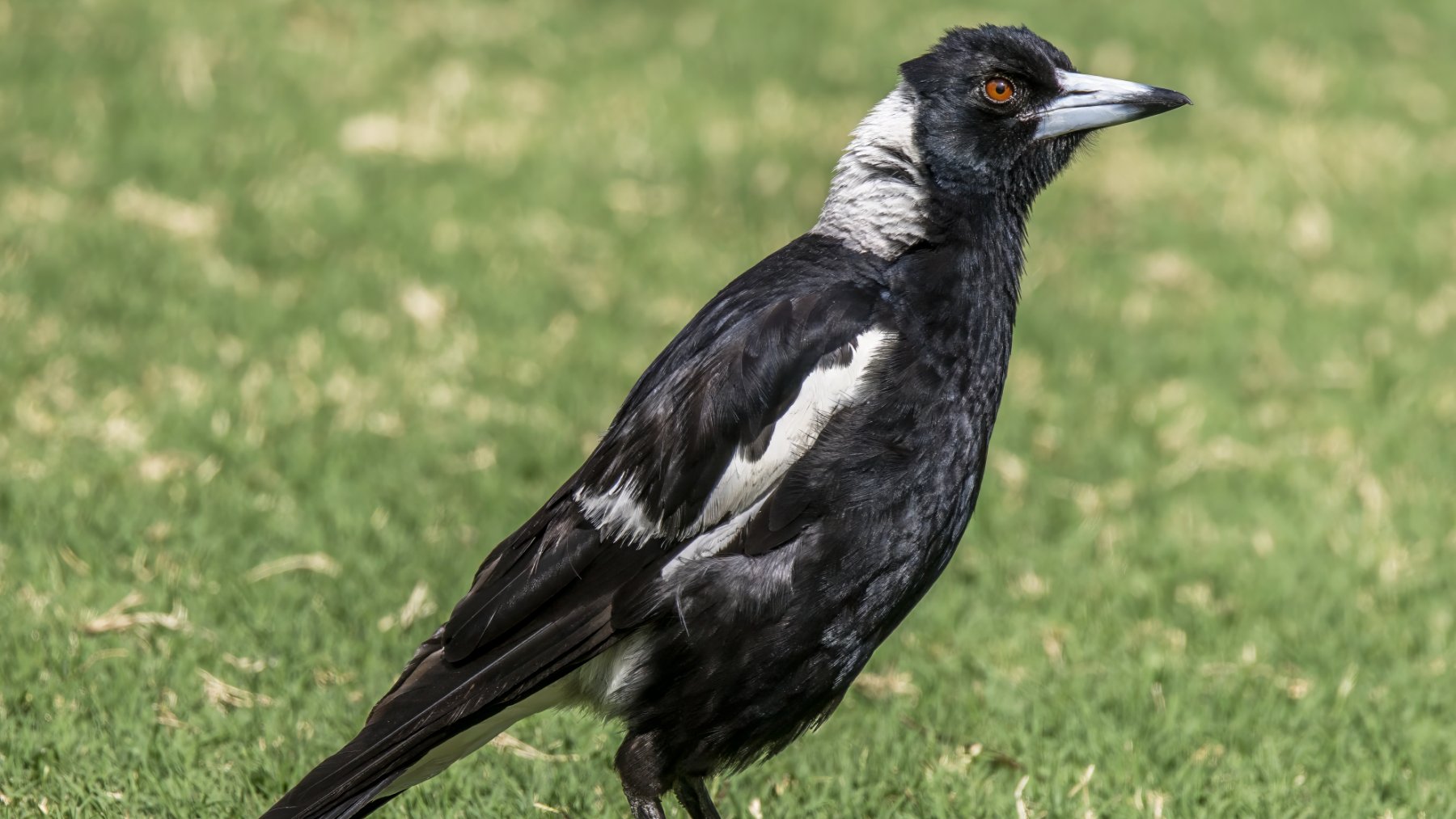
Researchers hoping to map the movements of five Australian magpies watched their experiment unravel when the birds began helping one another remove their tracking harnesses. The equipment came off, but an unexpected observation of cooperation took its place.
The pilot study, published in 2022, involved birds at Pacific Paradise on Queensland’s Sunshine Coast. Its surprising lesson went beyond clever beaks and missing GPS data, showing why wildlife researchers must consider how an animal’s companions might respond to the equipment it wears.
Joel Crampton, Celine Frère, and Dominique Potvin described a project that began with weeks of getting the birds accustomed to a feeding station. The team then captured one adult male, two adult females, and two juveniles in a single morning. They also wanted to explore whether wireless charging could make longer tracking studies possible.
Each bird received identification bands and a GPS tracker with a harness weighing about 2.7 grams combined. The harness had one deliberately weak point, designed to release when the bird approached a magnet at the feeding station, allowing researchers to retrieve the device without another capture.
The design had passed strength tests, but those tests could not anticipate everything a flock might do. “We didn’t count on them asking for help from each other,” Potvin said in a University of the Sunshine Coast announcement.
The first tracker came off within an hour
One juvenile initially tried to reach its own harness, before another young bird approached and pecked at it without success. An untagged adult female then worked at several points until the device detached, about 10 minutes after she began and within an hour of the youngster being fitted.
Nearby, another adult was helping a tagged bird on a power line. The pair fell from the wire during the attempt, then moved into a nearby tree and continued working on the harness.
The following day, researchers saw only two birds still wearing trackers, and later visits found identifiable banded birds without them. Four magpies were directly observed participating in removal attempts, but the team did not witness every release or establish whether one especially capable helper did most of the work. With just five tagged birds, this was a descriptive pilot, not a controlled test of how commonly magpies help one another.
Cooperation does not reveal every motive
Why does the helping matter? Think of a fastening at the back of a jacket, awkward to reach alone but accessible to someone else. A flockmate could similarly reach difficult parts of the harness, while the wearer tolerated the contact and the helper received no obvious immediate reward.
The researchers interpreted the behavior as cooperation and a moderate level of problem-solving. They also discussed possible “rescue” behavior, with one bird helping another escape its harness without an obvious immediate benefit.
But the study did not establish what the helpers understood or whether the harnesses caused distress. The authors also acknowledged that they could not tell whether the birds deliberately identified the weak point or simply kept pecking until something broke. Removing an unfamiliar object during social grooming remained another possible explanation.
Bigger groups offer useful context
Separate research led by Benjamin Ashton and published in Nature in 2018 examined cognitive performance in wild Australian magpies in Western Australia. The researchers tested 56 birds from 14 groups on self-control, learning associations, adjusting to changed rules, and remembering locations. Birds from larger groups performed better across all four tasks.
Repeated testing of young birds found that the relationship between group size and performance emerged as they developed. That does not explain the Queensland harness removals, but it offers context for studying problem-solving in a species whose daily life involves other birds.
Why the failed trial still mattered
A GPS tracker is meant to reveal an animal’s movements, not change them. Yet a device adds weight and a new object to the animal’s body, and its presence can affect both the wearer and nearby companions. A sturdy attachment is not automatically an unobtrusive one.
For a highly social species, that makes equipment testing a group-level challenge rather than simply a question of whether one bird can carry the load. The magpies’ response exposed a limitation before the same design could be used in a larger project. The challenge is to collect reliable data without disrupting the behavior researchers hope to understand.
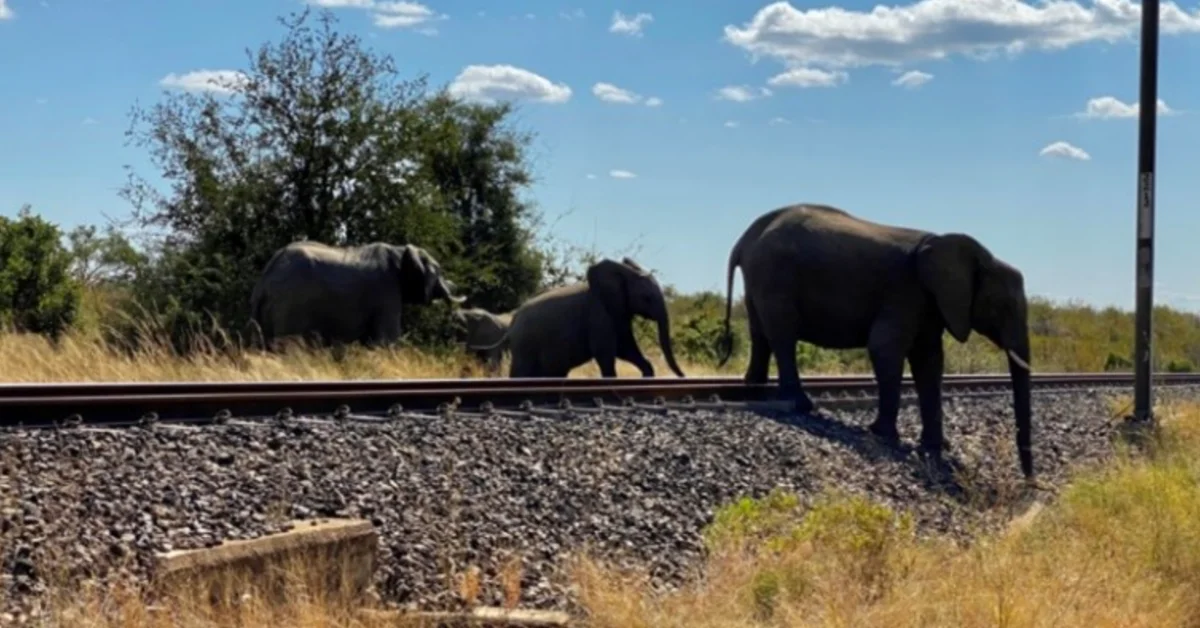
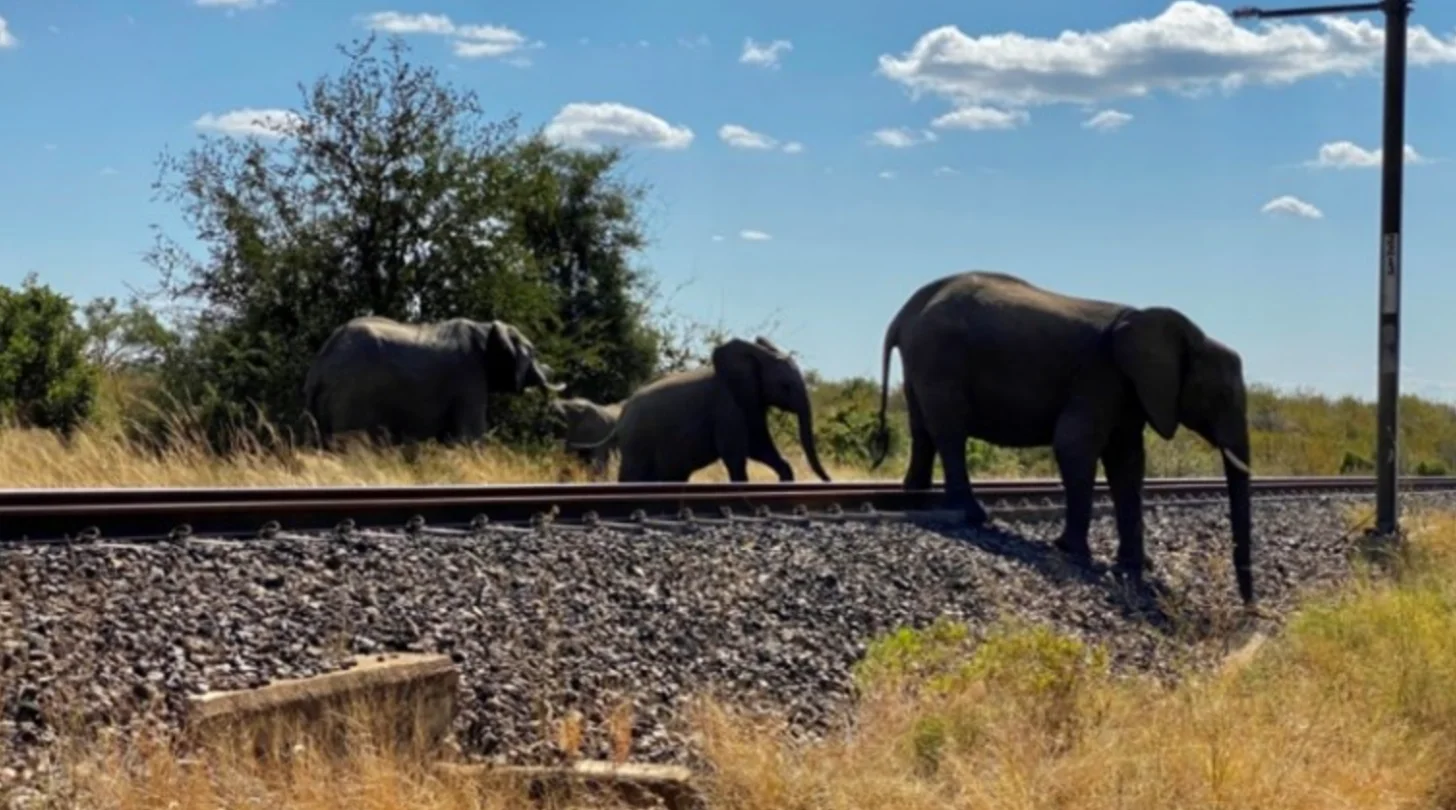
A deer can appear in the road before a driver has time to brake. For a high-speed train, the stakes are even higher: imagine an elephant stepping onto the tracks with only seconds to spare.
According to Sri Lanka’s Department of Wildlife Conservation, two wild elephants have been killed in train collisions so far this year, while 21 deaths were recorded across 2025.
That is why rail engineers are turning to new safety technology aimed at detecting wildlife before it becomes an obstacle — and giving trains the warning they need to avoid a strike.
According to Ranjan Marasinghe, the general director at the Department of Wildlife Conservation, officials have been trying to perfect the technology for years.
“We tried various methods previously,” Marasinghe told The Sunday Morning. “We tested sensors on trains, but mounting cameras on trains presented issues. When a train rounds a bend, the camera cannot see around the curve, so an elephant near the turn goes undetected. Most accidents happen at such bends.”
☀️ The best email in your inbox
Join 51,000+ readers who wake up to our free good news emails every daySend me good news!
We use your personal data for interest-based advertising, as outlined in our Privacy Notice.
With the new system, sensors will be installed along the railway line rather than mounted to the top of trains. It collects data in numerous ways, by detecting ground vibrations and capturing the sound of approaching animals.
“A set of sensors is now stationed along the tracks. These sensors detect seismic waves — the ground vibrations produced when an elephant walks,” he explained. “Beyond that, it uses multiple sensors to capture sound and other inputs. We then use AI to accurately identify the animal and issue alerts to the train driver and personnel along the station line. The system includes SMS alerts and light warnings.”
Endangered Wildlife Trust
According to Clean Sri Lanka engineer S.P.C. Sugeeshwara, the technology has been installed at 13 locations along Sri Lanka Railways routes known for frequent elephant crossings.
“Sensors are installed at intervals. If an elephant is present, those sensors detect it,” he said.
According to Sugeeshwara, the system is designed to signal train conductors with enough warning for them to slow down and prevent an unnecessary collision.
“It detects large animals and senses significant mass,” he explained. “Our plan is to take that signal from the sensor and pass it to the train driver. In short, the driver gets advance notice that an elephant is in the vicinity. Then they can slow down, reduce their speed accordingly, and take appropriate action.”
With the pilot project underway, wildlife officials are trying other tactics to promote elephant safety.
For example, the Department of Forest Conservation is currently working to clear vegetation in areas known for high rates of elephant migration.
“To ensure elephants are not hidden from view when approaching the train tracks, we clear a certain extent on both sides of the track in the areas where elephants cross — their usual routes or crossing points,” said P.S.C. Palamakumbura, the conservator general of forests.
In areas known for high elephant crossings, the Department of Forest Conservation will clear roughly 100 feet of vegetation on both sides of the train tracks in two-mile stretches.
Palamakumbura also said that they were doing their part to ensure that elephants had better access to water sources — as lack of water causes elephants to migrate farther than they typically would.
“Another way in which we contribute is by rehabilitating water sources and water bodies in areas inhabited by elephants. If there are abandoned tanks, we rehabilitate them so that elephants will remain in such spots for longer periods,” he explained.
Their multi-pronged plan also involves restoring natural forests. The average adult Asian elephant can eat up to 330 to 660 pounds of vegetation a day, using its trunk to gather grasses, tree bark, leaves, and soft shoots.
“We carry out forest restoration activities, such as making grass more available, in order to ensure abundant food for the animals,” Palamakumbura added. “Once this has been done, we believe elephant movements will decrease to some extent, as they mostly roam in search of food and water.”
A conservation project connecting wild habitats from Wyoming to Canada’s Yukon has been named a finalist for Prince William’s Earthshot Prize. The Yellowstone to Yukon Conservation Initiative has spent 33 years protecting 59 million acres of land and supporting 204 wildlife crossings across North America. The non-profit project is one of 15 global finalists for the 2026 environmental award, according to The Associated Press. The project brings together scientists, private landowners, local governments, and Indigenous communities across the Rocky Mountains. By building wildlife overpasses, underpasses, and safety fences along major highways, the initiative helps large animals move safely through their natural habitats without being hit by vehicles.
Tracking wildlife across borders
The idea for the cross-border wildlife corridor began in the early 1990s after researchers tracked a radio-collared wolf named Pluie. Satellite data showed that the wolf travelled across three US states and two Canadian provinces. Her movements showed scientists that individual parks and nature reserves were not large enough to support animals such as wolves, grizzly bears, and caribou over the long term. These findings led to the official creation of the Yellowstone to Yukon initiative in 1993.
Its goal was to connect broken-up habitats across a 2,100-mile mountain range.
Highway crossings reduce animal deaths
Busy highways are one of the biggest dangers for wildlife moving through the Rocky Mountains. To reduce deadly crashes, the organization has worked with transport authorities to build special wildlife crossings. In places such as Banff National Park in Alberta, overpasses and underpasses covered with native plants have reduced collisions between vehicles and hoofed animals by 96 per cent. The organization has also worked to reconnect isolated grizzly bear populations. According to project records, the distance between separated bear groups in the United States has been reduced from 240 kilometres to 75 kilometres.
Indigenous leadership strengthens conservation
Indigenous communities manage or share management of about one-quarter of the protected land within the corridor. These partnerships have helped several threatened species recover from very low numbers. In northern British Columbia, an Indigenous-led project to protect the Klinse-Za caribou herd helped its population increase from 38 animals in 2013 to 187. Dr Jodi Hilty, President and Chief Scientist of the initiative, said successful conservation requires long-term cooperation between communities. “Being selected as an Earthshot Prize Finalist gives this extraordinary region a chance to be recognised around the world,” Hilty said in a press release. “Yellowstone to Yukon is not only a story about wilderness; it is a story about the people who live here and the choices they are making to protect a shared home.”
Global recognition for conservation
Founded by Prince William in 2020, the Earthshot Prize gives five annual £1 million awards to projects working to repair environmental damage. The Yellowstone to Yukon initiative is a finalist in the Protect and Restore Nature category. Prince William praised the 2026 finalists before the official awards ceremony, which is scheduled to take place in Mumbai in November. “Every year, our finalists give me renewed optimism,” Prince William said in an official statement. “They show us that, even as the environmental challenges remain urgent, extraordinary people around the world are already proving that progress is possible. Seeing solutions work gives us all confidence to act.” The initiative plans to protect another 50 million acres and help create at least 50 more wildlife crossings by 2030.