Hunting loophole cause of concern for Pitkin, Eagle counties
Reply


By Andrew Weeks
January 10, 2026 at 2:01 PM
News Reporting
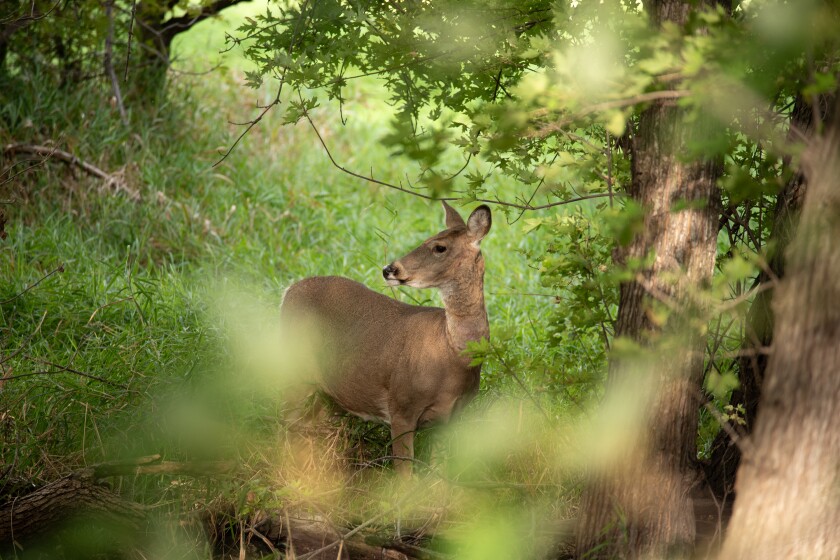
It was a wintry weekend when Erik Hildebrand scouted for deer in one of Minnesota’s hunting zones. He was there for a late-season deer hunt, scheduled for Dec. 19-21, which was to help control the spread of chronic wasting disease.
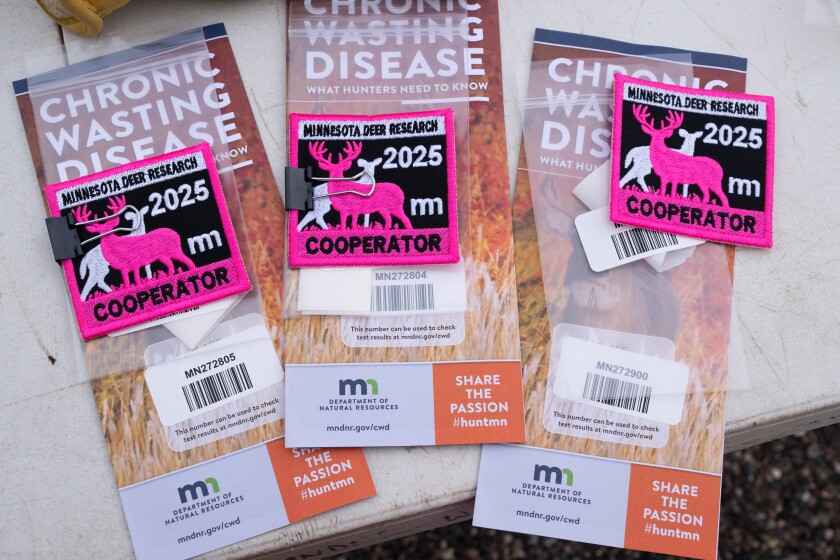
It was not mandatory that hunters have their deer tested, but it was appreciated if they did.
Keep Watching
1
North Dakota’s New Boat Registration – 12-24-2025 HD (1).mp4North Dakota’s New Boat Registration – 12-24-2025 HD (1).mp4
Read More
Hildebrand, wildlife health supervisor with the Minnesota Department of Natural Resources, wanted to participate for his own sporting interests but also to observe. At the time, he didn’t know how the yearly late-season hunt would shape up.
“Weather seems to be the biggest driver of participation by hunters,” he said. “I was down in the southeast during the hunt and, boy, did we have some really cold and windy temperatures. … It was challenging.”
Despite the inclement weather, however, preliminary numbers show that hunter success rates were up from what they were in recent years.
In 2023 and 2024, for instance, harvested deer numbers were 507 and 869, respectively. This past December saw 1,074 deer in the late-season hunt.
The special hunt was only for specific zones — all of them in the southeast portion of the state, but the disease testing and management practices that take place in these zones can impact other areas of the state because CWD spreads from deer to deer, traveling to other parts of Minnesota and beyond.
On site, Hildebrand said he saw about 40 deer heads submitted for testing where he was, but hunters could use mail-in kits or partner programs, “so samples could still be trickling in over the next couple of weeks or so,” he said in late December.
Chronic wasting disease in Minnesota was first documented in the southeast zones in 2016, Hildebrand said. Three deer tested positive for the disease that year, prompting the late-season hunts.
The prevalence rate there has increased to more than 5%, according to Paul Burr, acting big game program coordinator with Minnesota’s DNR. “So it’s quite high. But the rest of the state is very, very low,” he said, noting a prevalence rate in the north of less than 1%. “We do have areas where the disease has popped up, unfortunately, such as the western part of the state where it borders North Dakota and South Dakota.”
In total, 492 deer have tested positive for chronic wasting disease statewide since 2010, when one deer tested positive. With one exception (2020), each year the number has increased. According to DNR numbers, the state recorded 67 deer that tested positive for CWD in 2023. The following year, it had jumped up to 108. Preliminary numbers for 2025 show the disease was detected in samples from 117 deer statewide, most of them from southeast Minnesota. Only one sample tested positive outside an existing CWD management zone.
“We’ve never experienced this many in our state,” Hildebrand said. “Hopefully it doesn’t go higher next year, but time will tell. And really, we need help from hunters. We need samples to get a good finger on the pulse of the apparent prevalence.”
Despite international sanctions and economic hurdles, Canada’s fur trade is finding resilience through diversification and a growing base of younger consumers who value natural products
Jeff Turl
a day ago

.JPG;w=960;h=640;bgcolor=000000)
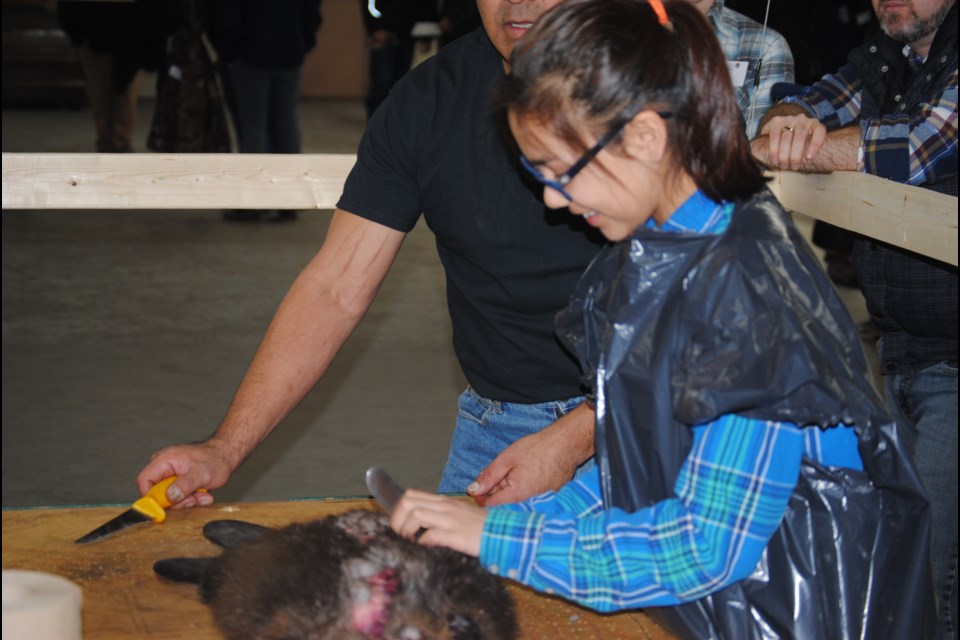
1 / 3 The convention runs Friday and Saturday and admission is $10 per person, with kids under 12 free. It’s located at 1867 Bond Street (Off Gormanville Rd.).Supplied
NORTH BAY – As the Fur Harvesters Auction Annual Trappers Convention kicks off in North Bay today, organizers say, despite some headwinds, they are seeing a renewed interest in the evolving landscape of Canada’s fur industry.
Doug Chiasson is the executive director of the Fur Institute of Canada, and is currently in North Bay for the convention.
He tells BayToday that right now, there’s certainly strong interest.
“We’re especially seeing it on things like bobcats and prices on marten. These things vary with time as trends come and go in different places around the world, with different tastes. But certainly, we’re seeing things like cats, things like wild mink and marten have a lot of very strong interest right now.”
That change is being driven by the global fur market as tastes in the fashion world shift.
“There are folks who are coming back to fur after the big anti-fur pushes from anti-fur organizations in the past,” explains Chiasson. “There’s a whole new generation of fur consumers that sees fur as a natural, sustainable, and biodegradable product. And they’re not as interested in listening to the misinformation and disinformation from the PETAs of the world.”
Chiasson says trappers have been fighting a war against 40 years of misinformation.
“I was talking to folks this week, talking about how they’re uneasy about wearing their fur coats out and about because they’re worried someone’s going to throw rotten eggs on them or throw a can of paint on them. A long time ago, that was happening, and we’re seeing a whole new generation of consumers, millennials and Gen. Z. That propaganda from the anti-fur groups just hasn’t affected them the same way. For them, they like fur because it’s sustainable. After all, it’s something that’ll last for 50, 60, 70 years, instead of a synthetic or a fake fur that is going to end up in a landfill, breaking down into microplastics and ending up in people’s drinking water.”
But there are still issues affecting the fur market. One of those is tariffs.
“Yes, we’re certainly seeing some impacts from tariffs. For the most part, we are avoiding the worst of the impacts of tariffs by having a globally diversified trade and strong demand from around the world. But we are still feeling the impact of sanctions. The sanctions that have been applied as a result of the war in Ukraine have cut us off basically completely from the Russian market. And certainly, the ongoing hostilities in Ukraine have significantly decreased the market available to us in Ukraine as well.”
Another issue for the industry is the rising cost of fuel and equipment eating into trappers’ profits. Chiasson says trappers are feeling the squeeze.
“The reality of trapping is that it requires a pickup truck and a snow machine or a pickup truck and a quad, and all those are running on gas or diesel. So, when fuel prices are high, that takes a bite out of the trapper. And, especially for trappers here in northern Ontario, most of whom are trapping on large, remote trap lines. They’re not just trapping in their own backyard. They could be miles and miles and miles in the backcountry, so every cent rise in gas price is another cent out of their pocket.”
And like us all, climate change is having an impact on the industry, but not necessarily on a broad animal level, like population or species-level impacts. Instead it is making getting to the remote traplines more difficult.
“Certainly, with later freeze-ups or thinner ice on lakes, that can make life more difficult and more dangerous for trappers. If they’re not able to get into their lines on solid ice, or it’s in the backcountry and they need snow to be able to get a snow machine in, and there’s not enough snow. All of that affects trappers. And then at the other end of the equation are consumers. The reality is, the reason fur is so sought after is that fur is warm. But if everywhere is warm, it’s a bit of a less of a value proposition for the consumer to buy fur of animals from northern climates that have thick fur and create a very warm fur garment.”
Looking forward, Chiasson feels another challenge will be father time, as with many resource production industries, like forestry, fisheries, and others, are seeing a gradual increase in the average age of their workers.
“But, you know, I’ve also met some very passionate, very interested young trappers that I’m sure will be trapping for another 40 years. And if we can make sure that fur prices keep rising, people will invest in buying equipment to get involved in trapping, I’m confident that we’ll have more young trappers joining our ranks.”
See: Fur Harvesters Annual Convention continues Saturday
And: Trappers play an important role in wildlife conservation
The convention runs Friday and Saturday, and admission is $10 per person, with kids under 12 free. It’s located at 1867 Bond Street (Off Gormanville Rd.).
“Bring the whole family, and find out what Canada’s oldest land-based industry is all about,” says Chiasson. “There are displays here from trappers, trapping supply manufacturers and providers, and lots of demonstrations going on inside the auction house here. Anybody is more than welcome to come down.
“We’d encourage folks to come on down and come see what’s going on here at the auction house, and encourage folks, if they want to be able to show their support for trappers and support for traditional ways of life here in northern Ontario, the best way is to buy fur.”
 Exposing the Big Game