Hunter in Vaud accidentally shoots colleague
Reply


By
Published Nov. 27, 2024, 10:26 p.m. ET
0 seconds of 0 secondsVolume 0%
That’s just clawful!
Crabs can feel pain when they are boiled alive during conventional food preparation —- as do other shellfish like lobsters, according to a new study.
Zoologists from Sweden’s University of Gothenburg performed brain scans on crabs to see how their nervous system would react to painful stimuli, according to a summary of the study.

Testing on paralyzed crabs found that the crustaceans’ nociceptors detect damaging stimuli and send signals to the central nervous system — which is definitively the feeling of pain, the study found.
The study used electrophysiological equipment to detect the innate bodily response of shore crabs while prodding them with two types of noxious stimuli, namely, mechanical/chemical and acetic.


Researchers found that the shore crabs exhibited responses in their central nervous system that indicated a standard pain response.
Every part of the shore crabs’ bodies responded to each painful stimuli, except its antennae, which only exhibited responses to chemical stimuli.
These pain principles apply not only to shore crabs but also to shellfish such as crawfish, shrimp and lobsters.
In the light of these revelations, scientists are calling for more humane culinary ways to prepare shellfish, which are conventionally boiled alive.
“We believe that the boiling of crustaceans alive should be banned and cooking techniques such as electro stunning should be applied the moment that the crustaceans are caught,” Eleftherios Kasiouras, a Ph.D. candidate at the University of Gothenberg, told the Daily Mail.
What do you think? Post a comment.
“There is more and more evidence emerging, including our research, that decapods experience pain so we should treat them as we would treat other animals,” Kasiouras explained.

Crabs are one of the only consumable creatures not protected by animal welfare laws, meaning it is legal to butcher and kill crabs.
Animal welfare organization Crustacean Compassion said that there are several unethical ways of killing decapods, including boiling, dismemberment, electrical killing, splitting, CO2 gassing, freshwater drowning and both dry and wet chilling.
Filed under
By Sam Brasch
·Nov. 27, 2024, 4:00 am
Share:
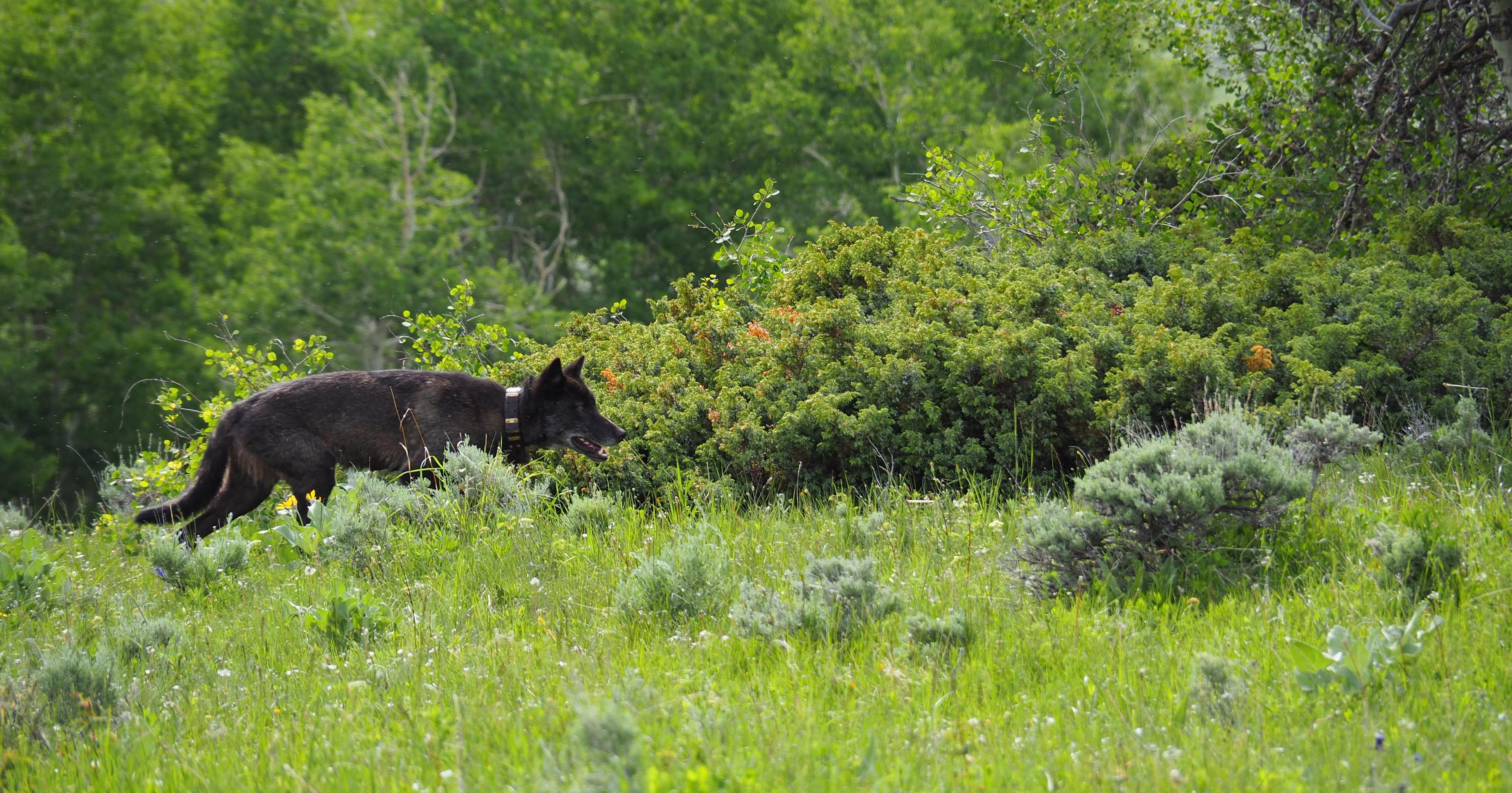
A wildlife advocacy group launched a $50,000 reward last week for information leading to the conviction of anyone who illegally kills a wolf in Colorado.
The Rocky Mountain Wolf Project — a group established by supporters of Colorado’s 2020 wolf reintroduction ballot measure — announced the program after federal investigators revealed someone likely shot a wolf reintroduced to Colorado. While it appears the animal died following a battle with another wolf, it carried a healed bullet wound on its back leg undetected by state wildlife officials who captured and released the predator last winter.
“The preponderance of evidence suggests [the wound] probably happened in Colorado because it wasn’t detected when they caught that wolf in Oregon,” said Rob Edward, president of the Rocky Mountain Wolf Project. “We just decided that was the time to launch it — because it appears somebody is out there shooting at wolves.”
Colorado is set to release a second batch of 10 to 15 wolves this winter as a part of a controversial restoration project narrowly approved by voters in 2020.
The state released an initial group of 10 wolves in Grand County and Summit County last December. Since then, three of the animals have died, but it doesn’t appear that any were killed by people.
State and federal law prohibits anyone from killing or harassing gray wolves. Ahead of the reintroduction effort, Colorado Parks and Wildlife received a special permit under the U.S. Endangered Species Act, which allows the agency to remove wolves as a management tool to protect people and livestock. Anyone else who harms a wolf could face jail time, a loss of hunting privileges and up to $100,000 in fines.
Colorado also already operates an anti-poaching reward program. Operation Game Thiefeif offers up to $500 to anyone with information about someone who poaches big game or members of an endangered species, and up to $1,000 for especially flagrant cases.
Edward, however, said his organization wasn’t convinced the state’s reward was enough to protect wolves during the first stages of the reintroduction process. To offer a greater financial incentive, the organization collected donations from private individuals and other wildlife advocacy groups, including the Wolf and Wildlife Project, the Colorado Wolf and Wildlife Center, the Sacred Wolf Foundation and the Lockwood Animal Rescue Center.
To collect the reward, Edward said people with information about wolf poaching must call the tip line for Operation Game Thief, and then tell the Rocky Mountain Wolf Project if the information leads to any formal charges filed by the state or federal government.
Edward said his organization explored offering the reward through a formal partnership with Colorado Parks and Wildlife. He said the state determined it could not directly cooperate with the wildlife advocacy group, but it hasn’t pushed back against the project.
Travis Duncan, a spokesperson for Colorado Parks and Wildlife, declined to comment on the new reward program but reiterated it’s illegal to kill a wolf in Colorado for any reason other than self-defense.

