Oregon initiative shows the threat to hunting, fishing, trapping is real
Reply


August 25, 2024 / 7:00 AM EDT / CBS News
When Francine Madden heard about a Wyoming man who killed a gray wolf after injuring it with his snowmobile and showing it off at his local bar, she was disturbed, but not very surprised.
She’s seen a lot during her almost three decades working as a mediator for wildlife conflict. She’s resolved disputes over gorillas in Uganda and tigers in Bhutan, but for 50-odd years, the management of gray wolves has been an intractable American problem.
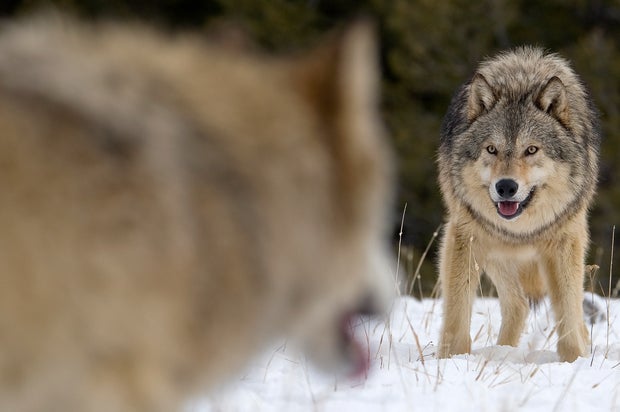
Since 1973, the gray wolf has been on and off the federal government’s endangered species list. When the wolves are on the list, advocates say the protections help wolves’ place in the natural environment and allow them to roam the great American West as they did for hundreds of years — not be treated, as some say, “like vermin.” On the other side, some ranchers then say there are too many wolves and they have to bear the economic — and emotional — costs of lost livestock.
“I watch my animals die and get murdered,” Kathy McKay, owner of the 1,600-acre K-Diamond-K ranch in Washington state, told CBS News. She says she can’t sleep at night in fear for the lives of her animals, and she’s lost about 40 to wolves.
When the wolves are off the endangered species list, as they are now in certain states in the lower 48, advocates say wolves are killed indiscriminately. Attorney and advocate Collette Adkins, carnivore conservation director at the Center for Biological Diversity, says wolf carcasses are “piling up” and there is a “cowboy mentality” around a species often not seen as worthy.
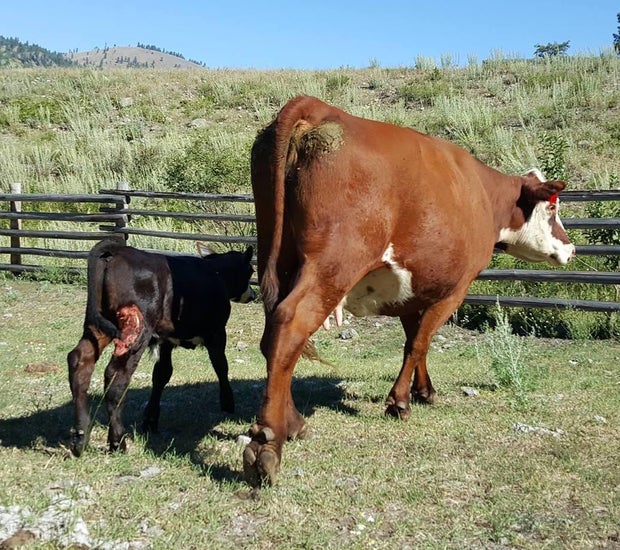
Enter Madden. Hired as a mediator by the federal government in December, this is her second time wading into the morass, albeit on a much larger scale. She facilitated Washington state’s 18-person working group on the gray wolves in 2015, helping to come to some policy decisions around population management.
Almost a decade later, she and her firm Constructive Conflict are back, this time at the national level. But in some ways, the sides have become more entrenched. Madden says she’s speaking to Americans who “feel their way of life, or what they care about, is under very real threat.” Yet she remains confident she’ll have all sides at the table starting in 2025.
Thousands of gray wolves roamed America’s wilderness for centuries until hunters, ranchers and others nearly decimated the species. In 1973, the federal government listed them as endangered in the lower 48 states. Fewer than 1,000 wolves roamed in the U.S. at that time, according to the International Wolf Center.
Protected from hunting, gray wolves began to proliferate, and some people grew concerned they were killing livestock and threatening tribal communities and lands. Soon the pushback began.
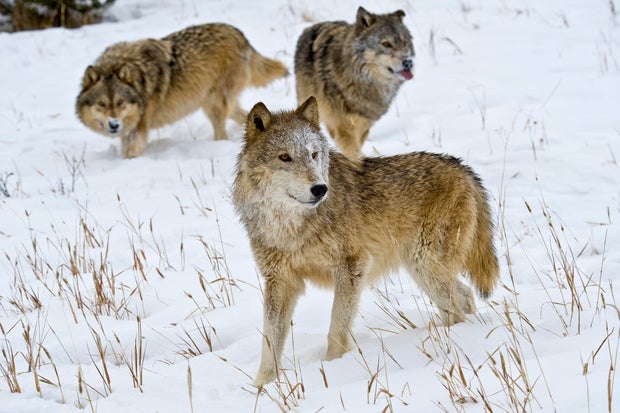
Animals were killed, businesses were shut, and the sides — often drawn along partisan lines — dug in, each convinced they knew the right approach to managing gray wolves. For many, “wolves became a symbol of government overreach,” said Adkins. Recent action sowed even more division; as the population rebounded, the gray wolf was taken off the federal government’s endangered species list in 2020 and the management was shifted to the states.
Wolves began to die. One example: a third of Wisconsin’s gray wolf population was killed by hunters and poachers when protections were removed, researchers at the University of Wisconsin found in 2021.
John Vucetich, a professor at Michigan Technological University, along with more than 100 other scientists, wrote to the Biden administration to reinstate protections. Lawsuits began, and on Feb. 10, 2022, gray wolves in the lower 48 states — with the exception of the Northern Rocky Mountain population — were added back to the list by a court order.
The news devastated McKay, who was born on the ranch her parents bought in 1961.
“I don’t know how people 300 miles away have so much control over our livelihood and the survival of our livestock,” said McKay. “Why do we even have to ask?”
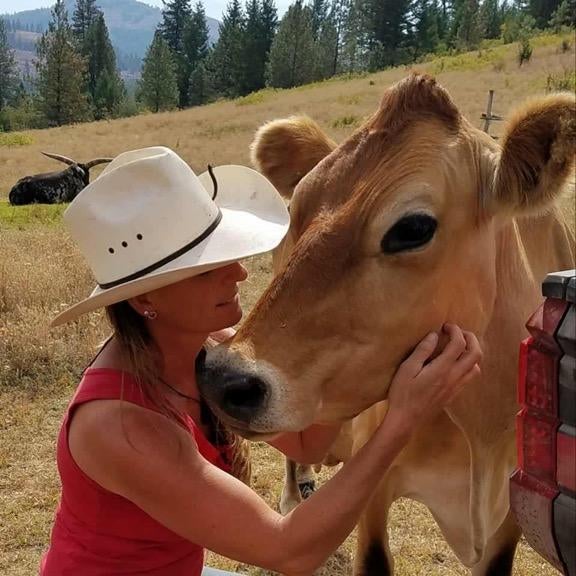
Working group members in Washington state couldn’t move any policy forward in the years before Madden arrived, she said, and they “couldn’t speak civilly or constructively to each other.”
“The costs of the conflict over wolves has been staggering,” she said, adding that no agency has truly been able to count the damage the economic costs — or societal costs — of the conflict.
“We weren’t that comfortable in the same room, with such differing viewpoints. Ranchers were carrying all of the burden, and there were environmentalists we felt didn’t have skin in the game,” said Washington rancher Molly Linville, a working group member whose husband’s family has worked 6,000 acres of land for more than 100 years.
In the year after Madden started mediating the local conflict, “they were able to come up with a decision they all agreed upon,” she said. At the end of a three-year, $1.2 million state contract, she said, the working group hammered out a series of constructive policies to manage wolves in their state.
Madden brings the same optimism to the national dialogue.
She’s close to the end of the first year of a three-year, $3 million contract. Her group contracted three companies to work on this project; one, a film company, will document the conversations around gray wolves and share the film with the public. Her group has already started selecting the roughly 24 participants who will have ongoing conversations on how to come together around gray wolves.
She traveled to Montana in June to meet with livestock producers and reservations and visit tribal nations. For the past year, she met with people from Wisconsin, Montana, California, Idaho, New Hampshire, North Carolina, Colorado, Maryland, Pennsylvania and Indiana. Madden acknowledges that “skepticism” abounds when she tells people her group’s approach to the conflict, but says many are open to talking as they feel that the “current vicious cycle of conflict in this country is harming people and wolves.”
She still believes in the power of Americans to listen to each other.
“There is a genuine hope that at a national scale, in this deeply divided society, we can come together for this conversation to take a step in the right direction for the long-term viability of communities, cultures and wildlife conservation,” said Madden.
08-25-2024
Earth.com staff writer
We’ve always considered ourselves unique, haven’t we? But peel back the layers, and you’ll find that humans, like all species, are bound by the threads of evolution.
One such thread is the instinct to come together when faced with external threats. The “common enemy effect” is a phenomenon in which we bond with others over a shared opponent or issue.

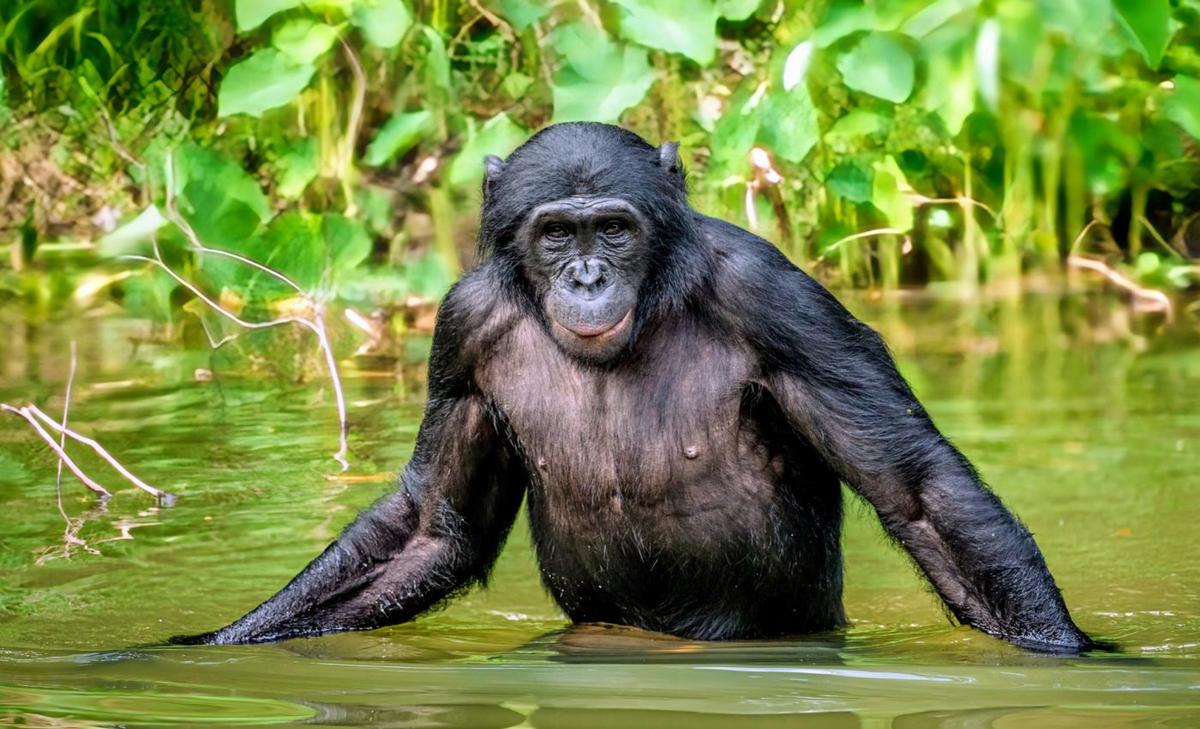
Humans do it, chimpanzees do it, and now we’ve learned that even our peaceful relatives, bonobos, exhibit this behavior in their own subtle way. At some point in their evolution, bonobos chose to make social bonding a priority.
The discovery suggests that the link between outgroup threats and ingroup cohesion may have evolved several million years ago, before our evolutionary paths diverged.
The study was conducted by an international team of researchers led by Kyoto University. They surmised that outgroup threats and ingroup cohesion may be an adaptation for group-based competition, a notion that has floated around since Darwin’s days.
But they had a burning question – what about species that aren’t known for their fierce inter-group rivalries? What about bonobos?
Picture this – eight groups of bonobos spread across five sites in four countries, all part of an experiment designed to echo previous studies conducted with chimpanzees. The process was simple – expose the bonobos to vocalizations from other groups and observe their reactions.
James Brooks, the study’s lead author, was as curious as any of us. “We had no idea how this would turn out. If the bond between group cohesion and outgroup competition wasn’t adaptive due to the lack of lethal competition between groups, there would be no point. But, if the effect had evolved before the human-chimpanzee-bonobo split, we might find some vestiges in modern bonobos,” he shared.

The findings were startling yet insightful. The bonobos were clearly alert to the calls from outside groups, but their affiliation with their own group showed only a minor increase compared to chimpanzees.
Bonobos were seen sitting upright more and resting less, hinting at a slight increase in social grooming, a crucial behavior for reinforcing social bonds.
The reactions of the bonobos during the study spark a fascinating discourse on social dynamics within their groups.
Unlike chimpanzees, who often exhibit heightened aggression in response to outgroup threats, bonobos are recognized for their relatively peaceful interactions.
This raises an intriguing question: how do these contrasting responses inform our understanding of social behavior in primates?
The study suggests that while awareness of external vocalizations exists, the bonobos maintain a subtle approach to group cohesion, prioritizing social bonding over defensive aggression.
This behavior may reflect an evolutionary strategy that emphasizes alliance-building in the face of potential threats, thereby fostering collaboration within rather than competition between groups.

The insights gained from this research extend well beyond the realm of academia; they carry significant implications for conservation efforts and our understanding of human behaviour.
Recognizing that evolutionary traits from our primate relatives can inform why and how we interact socially underscores the importance of preserving species like the bonobo.
Their unique perspective on social interaction offers a valuable lens through which we can examine human responses to conflict and cooperation today.
As we navigate global challenges that require cross-cultural collaboration, appreciating the nuances of social behavior across species can illuminate pathways to strengthen our own communal ties and foster understanding in an increasingly interconnected world.
The authors suggest that our shared ancestor, who roamed the earth 5–6 million years ago, might have experienced some group-based conflict. But as the intensity decreased in the bonobos’ evolutionary journey, so too did the strength of the effect.
“Although our research unearths deep roots of group conflict among our species, the real takeaway is that it can be overcome. And not just in isolated incidents, but on a species level,” said Brooks.

Contrast this with other ape species – gorillas, orangutans, chimpanzees, gibbons, and humans – all of whom have been observed killing each other.
Bonobos seem to have found a way to break this vicious pattern. It’s not just because they don’t commit lethal aggression today, but more importantly, they somehow stopped doing it millions of years ago.
“Humans are capable of both: we can commit horrific acts to those we see as outside our group, but we’re also capable of collaborating and working together across borders,” said study senior author Shinya Yamamoto.
“Bonobos teach us that the ways our ancestors treated other groups does not seal our fate. Our own species has elements of both chimpanzee and bonobo group relations, so it is crucial that we understand how both can, and have, evolved.”
So next time you find yourself in a heated debate, think about our peaceful cousins, the bonobos. After all, they’ve proven that it’s possible to adapt, evolve, and most importantly, choose peace over conflict.
The study is published in the journal PLOS ONE.

