Senate GOP blocks bill to protect birth control access
Reply


Lubbock Avalanche-Journal
AD
0:13
SKIP
https://imasdk.googleapis.com/js/core/bridge3.644.0_en.html#goog_1476984207
It’s been more than three years since the first case of chronic wasting disease popped up on Robert Williams’ ranch in Hunt County.
The veteran rancher of more than 35 years breeds white-tailed deer on the 1,500-acre RW Trophy Ranch in Terrell — which recently saw an end to what state officials described as the largest known CWD outbreak the state of Texas “has ever seen.”
The Texas Parks and Wildlife Department culled the remainder of his white-tailed deer herd last week over a duration of eight hours. But for the 85-year-old, that wasn’t his ideal solution.
For almost the same amount of time that Williams has battled the disease’s presence on his ranch, he’s also battled TPWD.
After more deer tested positive for CWD, also called “zombie deer disease,” the state initiated a kill-order which Williams rejected, court papers show.
In early 2022, he sued the state in an attempt to prevent the eradication of the animals he had a permit to breed, records show. He lost the case in court earlier this year as state’s attorneys argued that, under Texas law, the public owns all white-tailed deer in the state, including those held by private breeders.
The lawsuit made its way to the Texas Supreme Court after the Houston 14th Court of Appeals upheld the state’s decision earlier this year. The high court ruled eradicating the deer did not violate Williams’ property rights — ultimately leading to the mass eradication that occurred last week.
During the May 28 event, Williams had only 249 white-tailed deer left — most of which were killed via gunshot.
Get the Think Texas newsletter in your inbox.
Your weekly fix of Texas history, nostalgia, myths and more.
Delivery: VariesYour Email
When CWD was first detected in March 2021, RW Trophy Ranch reported 637 deer in its herd inventory, according to state officials. Of the 352 deer that died in the facility and have been tested for CWD since the initial detection, 254 tested positive with a prevalence rate of 72%, USA TODAY reported.
Williams told Outdoor Life Magazine that he pleaded with officials to run the deer through chutes, similar to the method used for cattle. Instead, they shot the deer as they ran back and forth in their pens, resulting in an eight-hour operation that included processing and disposing of the deer.
“They could have mercifully killed them, and I wouldn’t have felt quite as bad about it,” Williams told Magazine. “But they were cruelly slaughtered, and those deer went crazy. They bounced off the fence, ran into each other and broke each other’s legs. They were just so shot up. That’s what burns me.”
As described by the Centers for Disease Control, chronic wasting disease is a fatal neurological condition exclusive to cervid populations, including deer, elk, and moose.
First identified in a captive deer at a Colorado research facility in 1967, the first wild deer case emerged in 1981.

As of early May, according to the U.S. Geological Survey, it had been detected in deer in 34 states and five Canadian provinces.
Chronic wasting disease in animals is termed the “zombie deer disease” as it leads to the following symptoms:
However, it could also take years for those visible symptoms to manifest, and the disease can only be confirmed through testing.
There have been no cases of chronic wasting disease in people to date, the CDC says. But it is still investigating the potential risks and advises people not to eat meat from animals that test positive for the disease.
Since Jan. 1 TPWD has confirmed 198 cases, or about 25% of the 795 total cases since 2005, when the disease first arrived to Texas.
There are a number of reasons for increased case numbers, including more awareness, prompting increased sampling rates, as well as deer population growth.
https://www.usatodaynetworkservice.com/tangstatic/html/naas/sf-q1a2z330306dc3.min.html
The disease has now spread to 30 counties in Texas, though Hunt, Uvalde and Medina counties have accumulated for more than 68% of the state’s total confirmed cases. Hunt leads at 255 cases, which does not include the recent mass culling. Counties include:
In Michigan, it is only legal to kill a wolf if they are a threat to human life.
Author: 13 ON YOUR SIDE Staff
Published: 10:48 AM EDT June 5, 2024
Updated: 10:48 AM EDT June 5, 2024

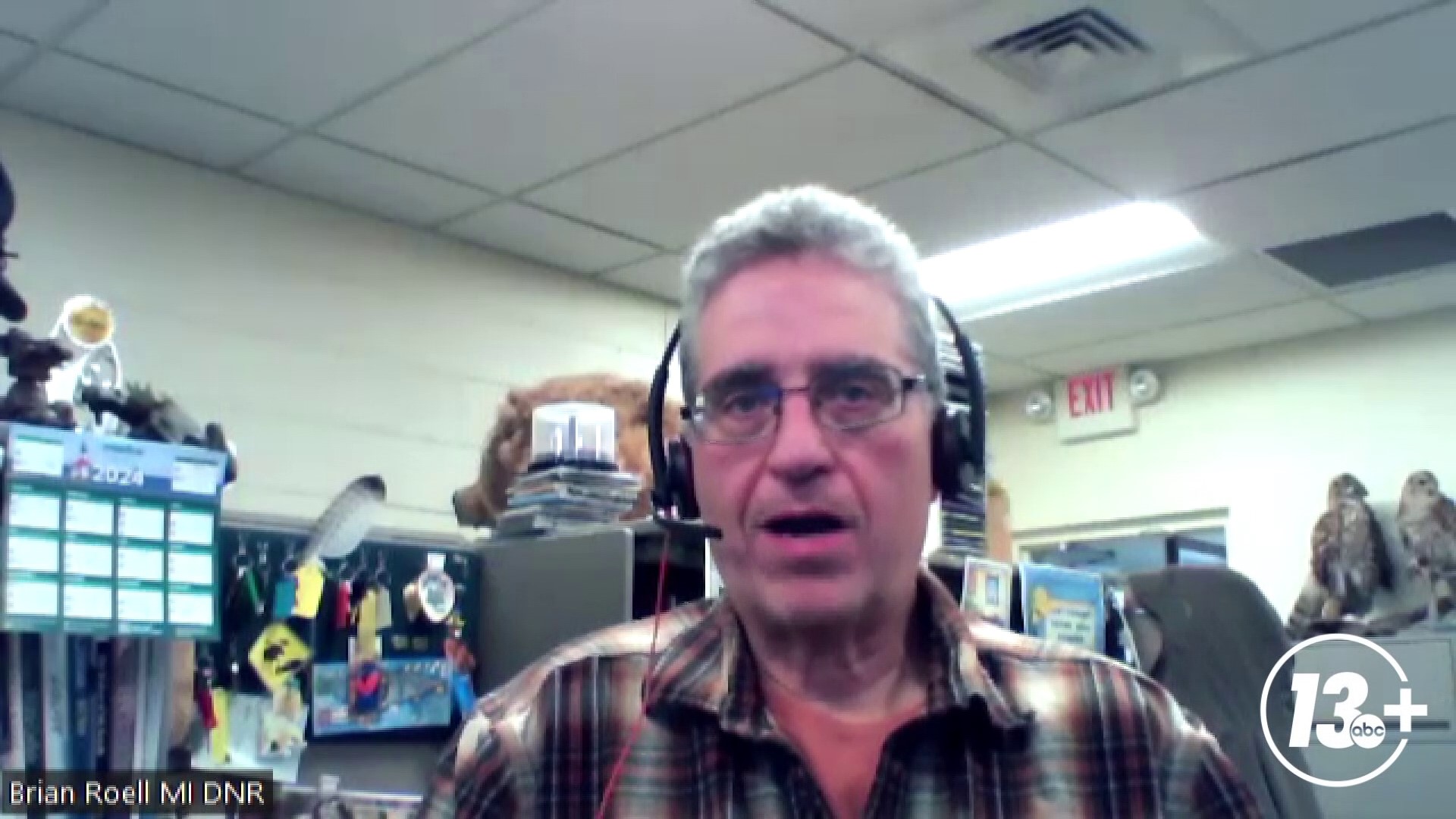
CALHOUN COUNTY, Mich. — Charges could be coming against a hunter who allegedly shot and killed a gray wolf on accident.
Back in January, a hunter killed a gray wolf while legally hunting coyotes in Calhoun County. The hunter claimed that he believed it to be a large coyote at the time, but after the DNR genetically tested the animal, it was found to be a gray wolf.
The Michigan Department of Natural Resources (DNR) said they have completed their investigation into the incident and will be handing it over to the Calhoun County Prosecutor’s Office for review on Friday, June 7.
Hunting wolves is prohibited in Michigan, as wolves fall in the endangered category in the state. It is only legal to kill a wolf if they are a threat to human life.
It is standard practice to investigate possible criminal charges when it comes to the taking of animals listed as federally endangered.
While gray wolf sightings in the Lower Peninsula are rare, they aren’t impossible. The DNR said this is “an unusual case.”
The last time a gray wolf was recorded by the DNR in the Lower Peninsula was back in 2014 when a trail camera set up by the Little Traverse Bay Bands of Odawa Indians captured a wolf.
Date:June 4, 2024Source:University of AdelaideSummary:Researchers have discovered sustained hunting by humans prevented the woolly rhinoceros from accessing favourable habitats as Earth warmed following the Last Ice Age.Share:
https://www.sciencedaily.com/releases/2024/06/240604132202.htm
FULL STORY
Researchers have discovered sustained hunting by humans prevented the woolly rhinoceros from accessing favourable habitats as Earth warmed following the Last Ice Age.
An international team of researchers, led by scientists from the University of Adelaide and University of Copenhagen, used computer modelling to make the discovery, shedding light on an aeons-old mystery.
“Using computer models, fossils and ancient DNA, we traced 52,000 years of population history of the woolly rhinoceros across Eurasia at a resolution not previously considered possible,” said lead author Associate Professor Damien Fordham, from the University of Adelaide’s Environment Institute.
“This showed that from 30,000 years ago, a combination of cooling temperatures and low but sustained hunting by humans caused the woolly rhinoceros to contract its distribution southward, trapping it in a scattering of isolated and rapidly deteriorating habitats at the end of the Last Ice Age.
“As Earth thawed and temperatures rose, populations of woolly rhinoceros were unable to colonise important new habitats opening up in the north of Eurasia, causing them to destabilise and crash, bringing about their extinction.”
An iconic species of megafauna, the woolly rhinoceros had thick skin and long fur, and it once roamed the mammoth step of northern and central Eurasia, before its extinction around 10,000 years ago.
This recent discovery, published in PNAS, contradicts previous research that found humans had no role in the extinction of the woolly rhinoceros — despite the animal co-occurring with humans for tens of thousands of years prior to its extinction.
“The demographic responses revealed by our analysis were at a much higher resolution to those captured in previous genetic studies,” said Professor Eline Lorenzen, from the University of Copenhagen’s Globe Institute.
“This allowed us to pinpoint important interactions that woolly rhinoceroses had with humans and document how these changed through space and time. One of these largely overlooked interactions was persistent low levels of hunting by humans, probably for food.”
Humans pose a similar environmental threat today. Populations of large animals have been pushed into fragmented and suboptimal habitat ranges due to over hunting and human land-use change.
There were 61 species of large terrestrial herbivores — weighing more than one tonne — alive in the late Pleistocene, and only eight of these exist today. Five of those surviving species are rhinoceroses.
“Our findings reveal how climate change and human activities can lead to megafauna extinctions,” said Professor David Nogues-Bravo, from the University of Copenhagen, who was a co-author of this study.
“This understanding is crucial for developing conservation strategies to protect currently threatened species, like vulnerable rhinos in Africa and Asia. By studying past extinctions, we can provide valuable lessons for safeguarding Earth’s remaining large animals.”
Story Source:
Materials provided by University of Adelaide. Original written by Johnny von Einem. Note: Content may be edited for style and length.
Journal Reference:
Cite This Page:
University of Adelaide. “Human activity contributed to woolly rhinoceros’ extinction.” ScienceDaily. ScienceDaily, 4 June 2024. <www.sciencedaily.com/releases/2024/06/240604132202.htm>.
By Jessica Landes | May 29, 2024
Representative Image (The Ocean Agency/Adobe Stock)
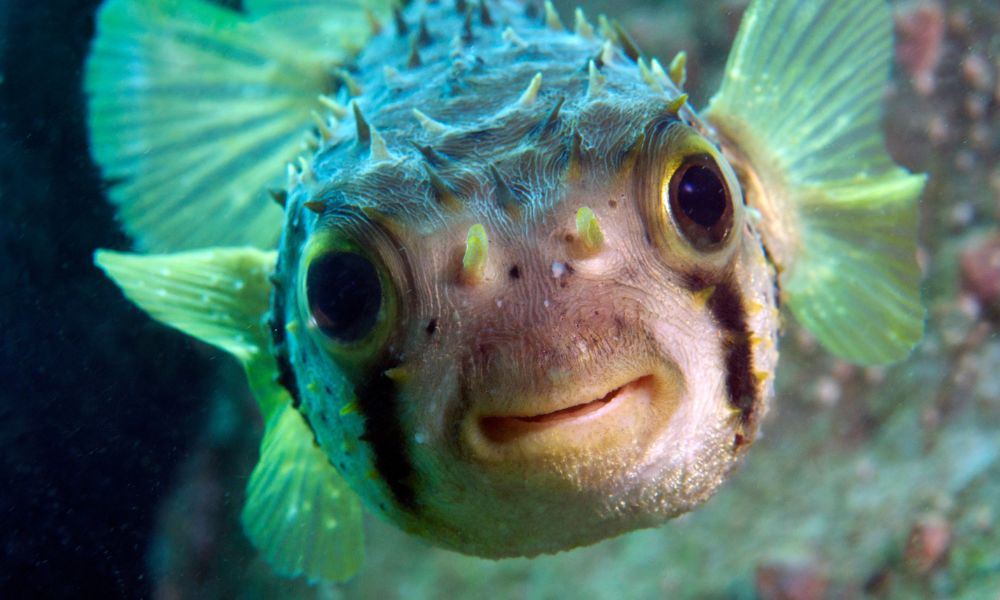
In a historic moment for animal advocacy, nearly 40 researchers publicly asserted that animal sentience deserves to be recognized — by signing “The New York Declaration on Animal Consciousness.”
Sentience is typically understood as the ability to experience a spectrum of emotions including joy, suffering, and fear. Research in the last five years has demonstrated that many species — including fish, insects, and crustaceans — have inner lives or sentience.
The evidence is overwhelming: Fish species form intricate social structures and display social behaviors. Bees are able to work through memories while sleeping. Octopuses have the capacity to figure out how to solve a problem by using memory and prediction skills. All of these species deserve protection.
“When there is a realistic possibility of conscious experience in an animal, it is irresponsible to ignore that possibility in decisions affecting that animal,” the declaration states. “We should consider welfare risks and use the evidence to inform our responses to these risks.”
Jonathan Birch, a professor of philosophy at the London School of Economics and a principal investigator on the Foundations of Animal Sentience project is one of the declaration’s signatories who weighed in on the matter.
“This has been a very exciting 10 years for the study of animal minds,” Jonathan Birch said. “People are daring to go there in a way they didn’t before and to entertain the possibility that animals like bees and octopuses and cuttlefish might have some form of conscious experience.”
Other signees include Peter Singer and Jonathan Balcombe — researchers whose work has contributed to the animal rights movement by arguing that animals feel and should not suffer unnecessarily. Balcombe’s work has demonstrated that fish feel pain — as well as a myriad of other emotions.
The acknowledgment of animal sentience, from mammals to insects, could help transform the way wild, domesticated, and farmed animals are treated worldwide.
Recognition of octopus sentience has helped lead to legislation protecting the clever animals from being farmed in the U.S. — such as a ban on octopus farming in the state of Washington which Lady Freethinker advocated for on the basis of octopus sentience. Lady Freethinker will continue to call on lawmakers to make change for animals around the world.
Lady Freethinker applauds every scientist who signed The Declaration on Animal Consciousness for advocating for compassion for all species.
House Republicans are working to make America’s factory farms even crueler.
by Marina BolotnikovaJun 4, 2024, 3:30 AM PDT

Pigs in a gestation crate facility in Canada. In 2018, California banned the sale of pork raised using these crates, which are not much larger than an adult pig and don’t provide enough space for them to turn around.Jo-Anne McArthur/We Animals Media

Marina Bolotnikova is a deputy editor for Vox’s Future Perfect section. Before joining Vox, she reported on factory farming for national outlets including the Guardian, the Intercept, and elsewhere.
Every five years, farm state politicians in Congress perform their fealty to Big Ag in a peculiar ritual called the Farm Bill: a massive, must-pass package of legislation that dictates food and farming policy in the US.
At the urging of the pork industry, congressional Republicans want to use this year’s bill to undo what little progress the US has made in improving conditions for animals raised on factory farms. The House Agriculture Committee late last month advanced a GOP-led Farm Bill with a rider designed to nullify California’s Proposition 12 — a landmark ballot measure, passed by an overwhelming majority in that state in 2018, banning extreme farm animal confinement — and prevent other states from enacting similar laws.
Inside the Republican effort to force millions of farm animals back into cages
California has the country’s strongest animal welfare law. Now it just needs to be enforced.
The Supreme Court rediscovers humility — in a case about pigs
Prop 12, along with a comparable law in Massachusetts passed by ballot measure in 2016, outlaws the sale of pork produced using gestation crates — devices that represent perhaps the pinnacle of factory farm torture. While many of the tools of factory farming are the product of biotech innovation, gestation crates are deceptively low-tech: They’re simply small cages that immobilize mother pigs, known as sows, who serve as the pork industry’s reproductive machines.
Sows spend their lives enduring multiple cycles of artificial insemination and pregnancy while caged in spaces barely larger than their bodies. It is the equivalent to living your entire, short life pregnant and trapped inside a coffin.

Pigs inside a gestation crate facility.Jo-Anne McArthur/We Animals Media
Ian Duncan, an emeritus chair in animal welfare at the University of Guelph in Canada, has called gestation crates “one of the cruelest forms of confinement devised by humankind.” And yet they’re standard practice in the pork industry.
While Prop 12 has been celebrated as one of the strongest farm animal protection laws in the world, its provisions still fall far short of giving pigs a humane life. It merely requires providing enough space for the sows to be able to turn around and stretch their legs. It still allows the use of farrowing crates, cages similar to gestation crates that confine sows and their nursing piglets for a few weeks after birth. And about 40 percent of pork sold in California is exempt; Prop 12 covers only whole, uncooked cuts, like bacon or ribs, but not ground pork or pre-cooked pork in products like frozen pizzas.

A sow and her piglets in a standard farrowing crate.Jo-Anne McArthur/Essere Animali/We Animals Media
The pork lobby refuses to accept even those modest measures and has sought to link Prop 12 to the agenda of “animal rights extremists.” It has also claimed that the law would put small farms out of business and lead to consolidation, even though it is the extreme confinement model favored by mega factory farms that has driven the skyrocketing level of consolidation seen in the pork industry over the last few decades.
For nearly six years, instead of taking steps to comply with Prop 12, pork lobbyists sued to get the law struck down. They lost at every turn. Last year, the US Supreme Court rejected the industry’s argument that it had a constitutional right to sell meat raised “in ways that are intolerable to the average consumer,” as legal scholars Justin Marceau and Doug Kysar put it.
The Supreme Court loss appeared to be the end of the road. Now, though, pork lobbyists are counting on Congress to pass the “solution” to Prop 12 that it couldn’t win in the courts.
For animal advocates, the protracted battle to defend Prop 12 has consumed years of attention and resources that could otherwise have been spent moving on to new issues. It’s shown how hard it is to make even marginal progress for animals in a system where they are commodities that exist to make money and where policy leaders prioritize the unencumbered flow of meat production over minimal standards of decency.
Several other states have gestation crate bans, but the California and Massachusetts laws are unique because they outlaw not just the use of crates within those states’ borders, but also the sale of pork produced using gestation crates anywhere in the world. Both states import almost all of their pork from bigger pork-producing states (the top three are Iowa, Minnesota, and North Carolina), so the industry has argued that Prop 12 and Massachusetts’ Question 3 unfairly burden producers outside their borders. California in particular makes up about 13 percent of US pork consumption, threatening to upend the industry’s preferred way of doing business for a big chunk of the market.
The California and Massachusetts laws also ban the sale of eggs and veal from animals raised in extreme cage confinement. Both industries opposed Prop 12 before it passed but have largely complied with the law; neither has put up the fierce legal fight that the pork industry has, led by Big Meat lobbying groups like the National Pork Producers Council, the North American Meat Institute, and the American Farm Bureau Federation.
House Agriculture Committee chair Glenn Thompson (R-PA), who introduced this year’s House Farm Bill last month, touts “addressing Proposition 12” as a core priority. The legislation includes a narrowed version of the EATS Act (short for Ending Agricultural Trade Suppression), a bill introduced by Republicans in both chambers last year to ban states from setting their own standards for the production of any agricultural products, animal or vegetable, imported from other states.
The Farm Bill language has been tightened to focus solely on livestock, banning states from setting standards for how animal products imported from other states are raised. It is less extreme only in comparison to the sweeping EATS Act, but also more transparent about its aim to shield the meat industry from accountability. At the Farm Bill markup on May 23, when the legislation passed committee, Thompson urged his colleagues to protect the livestock industry from “inside-the-beltway animal welfare activists.”
The provisions slipped into the Farm Bill may have consequences that reach far beyond the humane treatment of animals. They “could hamstring the ability of states to regulate not just animal welfare but also the sale of meat and dairy products produced from animals exposed to disease, with the use of certain harmful animal drugs, or through novel biotechnologies like cloning, as well as adjacent production standards involving labor, environmental, or cleanliness conditions,” Kelley McGill, a legislative policy fellow at Harvard’s Animal Law & Policy Program who authored an influential report last year on the potential impacts of the EATS Act, told me in an email.
House Republicans have been trying to use the Farm Bill to overturn public preferences on animal welfare for more than a decade, as Vox’s Kenny Torrella reported last year, ever since the far-right former Rep. Steve King of Iowa introduced the precursor to the EATS Act in 2013. What may seem more surprising, at first blush, is that the factory farm industry’s campaign to force animals back into immobilizing cages has drawn support from a broader swath of authorities, including the Biden administration.
In 2022, to the dismay of animal advocates, the Department of Justice filed an amicus brief to the Supreme Court backing the pork industry’s case against Prop 12. Earlier this year, US Agriculture Secretary Tom Vilsack declared that Prop 12 would cause “chaos” in the pork market if Congress doesn’t intervene. Both moves reveal the gulf between ordinary people’s intuitions about how animals ought to be treated and the priorities of policy leaders who defer to the meat industry about how things should be done. It’s a particularly cruel consequence of the agricultural exceptionalism that prevails in the US: the doctrine that places agriculture outside the bounds of democratic deliberation.
The American Veterinary Medical Association (AVMA), meanwhile, the leading organization representing US veterinarians that is highly influential in animal welfare policy, has voiced “strong support” for the portion of the Farm Bill that would invalidate Prop 12, a move that reflects a central contradiction within the veterinary profession. While the public may expect the AVMA to represent the interests of animals, it plays a key role in the factory farm system and, as I’ve reported previously, has faced criticism for what some vets have called its corporate capture by the meat industry. The organization had not previously taken a position on gestation crate bans, but it has a close relationship with the American Association of Swine Veterinarians, a pork industry vet group that has long opposed Prop 12. That the AVMA is weighing in now suggests how urgently the pork industry is working to shore up support for overturning the law.
Despite the monumental effort from the pork lobby and its allies, the odds of this year’s Farm Bill nullifying Prop 12 appear slim. Democrats, who control the Senate, oppose the House bill’s proposed cuts to the Supplemental Nutrition Assistance Program (SNAP), which makes up about 80 percent of the bill’s $1.5 trillion in spending, and its removal of so-called climate-smart conditions from farm subsidies made available by the Inflation Reduction Act. Members of the House Freedom Caucus, on the other hand, are likely to demand steeper cuts to SNAP, formerly known as food stamps.
The broader EATS Act has been opposed by more than 200 members of Congress, including more than 100 Democratic representatives and several members of the Freedom Caucus; Prop 12 nullification language is not included in the rival Senate Farm Bill framework introduced by Sen. Debbie Stabenow (D-MI). Many lawmakers and other observers consider the House bill dead on arrival, which would mean that a Farm Bill may not get passed until 2025.
Prop 12’s pork regulations, meanwhile, took full effect in California at the start of this year after two years of delay due to the industry’s legal challenges. After implementation, prices for pork products covered by the law abruptly increased by about 20 percent on average, a spike that UC Davis agricultural economist Richard Sexton attributes to the pork producers’ reluctance to convert their farms to gestation crate-free before they knew whether Prop 12 would be upheld by the Supreme Court.
But after the Court’s ruling in May of last year, “the industry sprung into action,” Sexton told me in an email. “We believe the volatility in pork prices around the implementation of Prop 12 is due to a short-term disequilibrium as the industry adjusts to the new law.” Sexton and fellow ag economist Daniel Sumner, in research funded by the National Pork Board, have projected that over time Prop 12 would increase prices for covered pork by a more moderate 7.2 percent, while prices outside California would slightly decrease.
“The nation’s largest pork producers are largely adapting to the new rules,” John McCracken and Ben Felder reported in March in Investigate Midwest, even as anti-Prop 12 lobby groups keep up the fight. Some producers welcome the opportunity to charge a price premium for selling compliant pork and oppose overturning Prop 12.
Chris Green, executive director of the Animal Legal Defense Fund, told me he’s optimistic that the struggle over Prop 12 is already won, despite the last-ditch maneuver in the Farm Bill. “This is just the last death throes of trying to maintain this unmaintainable situation, where they have no regulation on the way that they raise their animals,” he said.

