Unknown's avatar

About Exposing the Big Game

Jim Robertson

How “Vegan Mayo” going “Plant-Based” helps Catalina Island mule deer

MAY 31, 2024 BY MERRITT CLIFTON 1 COMMENT

(Beth Clifton collage)

Tossed salad & the future of animal advocacy

LONDON, U.K.;  CATALINA,  California––Two of the biggest names in salad rocked the vegan,  vegetarian,  animal rights,  and conservation worlds on May 29,  2024 with near-simultaneous announcements from 5,552 miles away that superficially had beans to do with each other,  and only a tangential relationship to the price of eggs,  but have everything to do with the future of animal advocacy movements.

“Hellmann’s has rebranded its Vegan Mayo as Plant Based Mayo,  in a bid to boost its appeal to flexitarians,”  reported Niamh Leonard-Bedwell from London,  England,  for The Grocer.

(Beth Clifton collage)

“Still 100% free from animal products”

Hellmann’s Plant Based Mayo “is still 100% free from animal products and suitable for vegans,  certified by the European Vegetarian Union and the Vegan Society,”  Leonard-Bedwell explained.

But an unidentified Hellmann’s spokesperson told Leonard-Bedwell that the company,  a Unilever subsidiary,  perceived “considerable headroom for growth” in vegan mayonnaise, “particularly from consumers who want to cut back on animal-based products without becoming fully vegan.”

Continued Leonard-Bedwell,  “The brand’s consumer research found ‘vegan’ can be a barrier for flexitarians,  who see ‘plant based’ as more inclusive,”  according to the unnamed Unilever spokesperson.

“Hellmann’s is therefore relaunching the entire Hellmann’s Vegan range to Hellmann’s Plant Based.”

(Beth Clifton photo collage)

What it means

Translation:  despite the political correctness factor involved in supporting the wholly vegan makers of Just Mayo,  much of the plant-based consumer base does not mind if they go to Hellmann’s,  if that’s what they find on their supermarket shelves,  and will not let the vegan police stop them.

Unilever,  owner of both the Hellmann’s and Best Foods mayonnaise brands,  is the world’s largest maker of conventional egg-based mayonnaise,  as well as Vegan Mayo now rebranded as Plant Based Mayo.

(Beth Clifton collage)

Committed to end culling newly hatched chicks

But Unilever has also since September 2014 led and funded a global initiative to end the culling of newly hatched male chicks,  practiced by the egg industry worldwide because the males will not grow up to lay eggs.

Historically,  male chicks were either raised as gamecocks or raised for the pot,  but since the advent of bigger,  faster growing “meat” poultry several decades ago,  most male chicks are merely suffocated,  stomped,  or macerated alive soon after hatching.

(Beth Clifton collage)

Catalina Island

Catalina Island,  off southern California,  is globally best known as reputed point of origin of Catalina dressing.

Catalina dressing is a sometimes but not always vegan variant of traditional French dressing,  often polluted by the inclusion of anchovies,  so read the fine print on the bottles.

The earliest documentation of the existence of Catalina dressing actually dates to the 1957 introduction of bottled Catalina dressing by Kraft Foods.

Catalina Island at that time was known as an upscale resort,  movie filming location,  and spring training site for baseball teams owned by chewing gum magnate Philip K. Wrigley.

European starling.  (Beth Clifton photo)

War on “non-native” species

Fifteen years later,  however,  the Catalina Island Conservancy,  formed in 1972,  began an aggressive and well-funded effort to “restore” the 75-square-mile island to pre-European settlement conditions,  whether or not the 4,000 human residents or anyone else favored the bloody effort.

The Catalina Island Conservancy by 1975 gained control of most of Catalina Island and almost immediately began reducing any and all “non-native” species to approximately the condition of anchovies in salad dressing.

Cattle,  horses,  bison brought for film use in 1924,  black buck antelope,  wild turkeys,  pigeons,  European starlings,  house sparrows,  bullfrogs,  feral cats,  rats,  and pigs all have been targeted,  shot from helicopters,  poisoned,  and occasionally rounded up and shipped off the island alive under intensive activist pressure.

(See “Buffalo Bill” Dyer, 83, led animal rescues from Santa Catalina Island.)

(Beth Clifton collage)

Pigs,  goats,  & bison

The most numerous casualties whose remains anyone counted were 12,000 pigs and 3,000 goats.

Some of the bison remain,  but––all having been sterilized––not for long.

About 1,770 mule deer remain,  as well.  The mule deer have long been tolerated,  being native to the California coast,  but Catalina Island,  though administratively a district of Los Angeles,  is 22 miles offshore.  Mule deer supposedly do not swim that far,  meaning that somebody must have brought them,  even if originally by raft or dugout canoe.

(Beth Clifton photo)

“Island ain’t big enough”

The Catalina Island Conservancy in February 2024 decided the island ain’t big enough for both mule deer and mule-headed bio-xenophobes.

(Bio-xenophobes are people obsessed with preserving “native species” at cost of exterminating everything else,  including fully functional,  evolving,  and thriving ecologies that include “introduced” species.]

(See Science guns down excuses for hog-dogging & hits rationale for deer culls.)

That left deer defenders,  including Los Angeles County board of supervisors member Janice Hahn,  fighting an apparently hopeless uphill battle against intransigent “conservationists” despite science increasingly suggesting that the ecological argument for deer extermination stands up no better than carcasses shot from a helicopter.

(Beth Clifton photo)

Beat the odds,  but no free pass

As Ph.D.-holding restoration ecologist Robert Kröger put it,  as executive director of the pro-hunting organization Blood Origins,  “The science does not support that to protect native plants, and meet recovery objectives, the number of deer––a species that have social and recreational values on the island––should be zero.”

Despite the odds,  however,  NBC Los Angeles reporter Missael Soto revealed on May 29,  2024,  “The Catalina Island Conservancy scrapped its plan to eradicate the mule deer population on Catalina Island with a helicopter marksman,”  following a unanimous vote of opposition by the Los Angeles board of supervisors.

This does not mean the deer have a free pass to survival.

“The Catalina Island Conservancy will rework its plan and consider using other methodologies previously dismissed to eradicate the estimated 1,770 deer on the island,”  Soto said.

Farm Animal Rights Movement founder Alex Hershaft welcomed vegan food activist and investor Josh Balk into the Animal Rights Hall of Fame at the AR-2015 conference in Alexandria, Virginia.

Mayonnaise wars & battle for deer will continue

Both the battle for mayonnaise market share and on behalf of the Catalina Island deer will continue for quite some time,  probably decades.

Both struggles meanwhile signify the mainstreaming of what as recently as 30 years ago was just “the animal rights movement,”  a multi-fronted battle waged by a generation of activists carrying on and expanding the earlier efforts of the animal welfare movement of the preceding generation;  the humane movement of the preceding century;  and the anti-cruelty movement preceding that,  when the primary goals were the abolition of human slavery and cruel and unusual punishments,  with opposition to dogfighting,  cockfighting,  horse-flogging,  and vivisection also occasionally mentioned.

The 1995 No Kill Conference in Phoenix, Arizona.

“Animal rights movement” spun off “No-kill” movement

The “animal rights movement,”  now all but moribund in the original multi-fronted,  activism-centered form,  spun off at least three influential descendants,  all of them more focused on lifestyle changes and practical problem-solving than on protest.

First came the “no-kill movement,”   addressing animal sheltering and animal care-and-control issues,  recognized as such by name after the initial No Kill Conference in 1995.

(Beth Clifton collage)

Next came the “vegan movement”

Next came the “vegan movement,”  expanding the earlier vegetarian temperance movement to eschew any consumption of animal products or byproducts,  while dropping the “temperance” aspect.

The “vegan movement,”  increasingly often identified as distinct from the “animal rights movement” since the first mentions of it appeared in mainstream media 1998,  gained momentum after musician and composer Paul McCartney began using the term in public appearances in 2000.

Newest is the “compassionate conservation movement,”  seeking reform of wildlife management away from the hunting-centered,  bio-xenophobic direction of the century-plus since “wildlife conservation” began to separate as a cause from gamekeeping.

(Beth Clifton collage)

“Compassionate conservation”

“Compassionate conservation,”  though advocated by many for decades,  at last gained a name from Australian ecologist,  ethologist,  evolutionary biologist and feminist Arian D. Wallach in 2018.

While widely embraced,  “compassionate conservation” has yet to became incorporated into the name of any major organization or conference.

However,  the outcome of opposition to the Catalina Island deer culling by helicopter shows the growing strength of a cause which for more than 50 years failed to save even one animal who was not forcibly deported from the habitat where that animal and many generations of that animal’s ancestors were born.

(See Aussie prof’s video challenges “invasion biologists” on their own turf.)

(Beth Clifton photo)

Mainstreaming

All of these pro-animal movements,  in original form,  were relatively exclusionist,  whether by intent or simply because people opposed to mainstream beliefs and practices are a minority by definition,  who tend to cling together for support and safety––and tend to be suspicious of others,  less intense in holding similar beliefs,  who are perceived as diluting the purity of whatever the cause.

The “no-kill movement” helped to mainstream “animal rights” by re-centering a part of the “animal rights” struggle from the suffering of non-human primates and rodents in laboratories to the plight of comparably caged cats and dogs,  usually perceived as pets,  even when impounded as “feral” or for wreaking mayhem.

The “rescue movement,”  emerging out of the “no-kill movement,”  introduced a participant focus other than public protest.

(Beth Clifton collage)

Diluted focus,  but won goal

As “rescuers,”  people could “do something for animals” without becoming perceived as “activists,”  and without having to become vegetarian or vegan,  setting themselves apart from family and friends at the dinner table.

Certainly the “rescue movement” diluted the “no-kill movement” to some extent,  and strayed so far from the “animal rights movement” that most people in “rescue” no longer see themselves as “animal rights activists” at all.

At least a plurality and perhaps a majority of the “animal rights” leaders of 30-40 years ago favored an end to manipulating dog and cat genetics to produce the purebred and linebred animals,  including pit bulls,  who are the focus of most “rescue” activity today.

Nonetheless,  the “no-kill movement” and the “rescue movement” can together be credited with accomplishing one of the original “animal rights movement” goals:  ending population control killing in animal shelters,  30 years ago still the third-leading cause of institutional animal killing in the U.S.,  trailing only slaughter for meat and laboratory use.

(Beth Clifton collage)

“Vegan movement” saved the “animal rights movement”

The “vegan movement” saved the “animal rights movement” from allegations of hypocrisy in opposing fur-wearing,  vivisection,  and sport hunting,  among other targets,  while many participants continued to eat meat.

The “vegan movement,”  largely unawares,  also saved what remained of the “vegetarian temperance” cause from self-suffocation through exclusivity.

But exclusivity also rapidly came to characterize the “vegan movement,”   even before it had a name.  The “vegan police” were already widely caricatured by “movement” critics as early as 1990,  twenty years before the 2010 film Scott Pilgrim vs. The World introduced the term “vegan police” to a much younger generation of  activists.

Popeye gains strength from his plant-based diet.  (From “Be Kind to Aminals.”  See Direct action heroes for animals: Popeye, Olive Oyl, Betty Boop & Grampy)

“Plant-based” is antidote to exclusivity

“Plant-based” has emerged as the antidote to “vegan police” exclusivity,  welcoming those whose diet choices,  even if imperfect,  tend toward achieving a more humane society.

Bear in mind that persuading ten people to eat even 10% less meat is the equivalent in impact of converting one person to becoming vegan,  especially if those ten people continue to eat less meat,  whereas the decidedly pro-vegan Humane Research Council discovered in a 2014 survey that approximately 84% of people who once give up meat later return to meat-eating.

Merritt & Beth Clifton with Henry the rooster.

How “compassionate conservation” will go mainstream remains to be seen.  But the Catalina Island outcome for deer suggests that the process is already well underway,  with political impact.

Please donate to help our work: 

www.animals24-7.org/donate/

After the storm, bald eagles ‘Nick’ and ‘Nora’ left desperately searching for their eaglets

ED LAVANDERA, CNN

June 1, 2024 at 7:17 AM

https://www.aol.com/storm-bald-eagles-nick-nora-141732008.html

The squawking cries from a pair of bald eagles pierce the treetops of an urban jungle on the edge of a popular lake in Dallas.

The beloved eagles are perched 75 feet high over their nest, damaged by a violent storm system that ripped through North Texas on Tuesday. Inside the nest were the bald eagle’s two 9-week-old eaglets, thrown from their sanctuary by hurricane-strength winds.

The mother and father have spent the days since the storm circling and searching for their offspring on the ground below. The scene has been heartbreaking to watch for Chris Giblin, an amateur photographer who has spent three years documenting the eagles.

“It hurts,” said Giblin. “It hurts to see them hurting. Nothing is promised when these storms come through.”

This bald eagle family has developed a legion of followers and admirers since they made this spot around White Rock Lake in East Dallas their home nearly three years ago. They came to be known as “Nick” and “Nora” after the husband-and-wife detective characters in the 1930s film “The Thin Man.”

Their every move has been documented in neighborhood Facebook groups and by a devoted and highly protective contingent of photographers. The eagles have so intensely captured the imagination of the neighbors below them that residents speak of these raptors in mystical terms and their presence as “divine intervention.”

The eagle’s nest sits in a sycamore tree at the end of Krista de la Harpe’s street. She describes the relationship between the birds and the neighborhood as a “three-year love story.”

As the storm hit the city, she could only think about the eagles and their babies surviving the fierce winds and falling trees.

“I was in my closet all through the storm, just praying for them,” de la Harpe said as she watched the eagles sitting in the trees this week. “It’s so heartbreaking.”

‘I found one’

After the storm passed, neighbors raced out to check on the nest and the eagles. Water was rushing over the banks of the creek below the nest. The fierce winds toppled a mix of large oak, cedar and American elm trees, and the eaglets were nowhere to be seen.

Brett Johnson, an urban biologist and conservation manager for the City of Dallas, raced to the park after the storm. He saw half the nest was gone and that the two eaglets were missing.

Later that morning, Bryna Thomson searched the creek area with neighbors when she heard her friend shouting, “I found one. I found one. I found one.”

The video she captured shows an eaglet shivering and soaked in rain but seemingly not severely injured, even eating a fish it had caught in the floodwaters.

“They were healthy babies,” Thomson said.

The neighbor called in to report what they had found. Johnson says he collaborated with state game wardens and US Fish and Wildlife Services to get permission to handle the federally protected bird and move it to a rehabilitation facility that specializes in treating bald eagles. The facility did not respond to CNN’s request for an interview.

The eaglet did not suffer any serious injuries, but the rehab specialists say it could take a week for the bird to regain its strength, Johnson said Friday.

“It was definitely stunned,” Johnson said. “I am very hopeful, fairly confident, it’s going to be rehabbed.”

The city’s conservation team and biologists are working to develop a reintroduction plan to bring the young bird back to its nesting area and possibly reunite with its parents, Johnson says. If the eaglet successfully recovers, it’s still not clear how the bird will be returned to its parents and its home environment.

https://9720e741ec95c912c28b9211e0085cdc.safeframe.googlesyndication.com/safeframe/1-0-40/html/container.html

The second eaglet has not been seen since the Tuesday morning storm. Neighbors fear the worst. It might have been swept away in the floodwaters that have surged through the creek for days. Downed trees have also made it impossible for searchers to safely access the spots where the eaglet might have fallen. The area is also home to bald eagle predators like coyotes and bobcats.

Scott Meril, a retired medical doctor, came to the nesting area to capture photographs of the mourning eagle parents. The images show one of the eagles squawking into the sky with its head tilted back in a pose that seemed to capture the bird’s desperation.

Meril said he was struck by the eagle’s majestic and powerful stare as they scanned the urban landscape looking for the eaglets.

“To see them in Texas, it’s wild,” Meril said.

The White Rock Lake bald eagles 'Nick' and 'Nora' care for their two young eaglets in East Dallas. The eaglets were born around March 20 and were just a week or two away from being able to fly on their own. - Courtesy Chris Giblin
The White Rock Lake bald eagles ‘Nick’ and ‘Nora’ care for their two young eaglets in East Dallas. The eaglets were born around March 20 and were just a week or two away from being able to fly on their own. – Courtesy Chris Giblin

‘You can’t fight this stupid Texas weather’

This isn’t the first time tragedy has struck Nick and Nora’s quest to bring a successful clutch of eggs into the world.

In February 2022, the mating bald eagles built a nest in the same area near White Rock Lake. Residents came from across the city to catch a glimpse of the new stars of the neighborhood, waiting for the babies to hatch. But a severe storm with fierce winds ripped the nest and the tree branches apart. The eggs fell to the ground.

“They have been through a lot,” said Johnson.

In 2023, Nick and Nora built a second nest around White Rock Lake but abandoned it and never laid eggs.
Johnson says the nest was built in an area that was probably too close to the crowds of people who use the lake for recreation.

This year, residents thought the eagles had finally succeeded. The eaglets were just a week or two away from being able to fly on their own. At that point, Nick and Nora would teach them how to hunt for their own food.

The day before the storm Giblin captured stunning images of the small birds “branching” out of their nests – the first attempts to jump from their nests onto nearby tree branches.

The cycle of natural life seemed so close to becoming complete, but again nature intervened in a tragic way.

“They just can’t catch a break,” Thomson said. “They were good parents, and it’s just that you can’t fight this stupid Texas weather.”

Yellowstone comes to Dallas

While bald eagles can often be found near large cities, it remains rare for eagles to nest and mate in busy urban areas. This is why Giblin and a group of photographers have spent countless hours documenting the couple.

Giblin, who works for a merchandising company, estimates he has snapped more than 20,000 pictures of the eagles since they started appearing regularly here three years ago. He’s so dedicated, he once spent 7 hours waiting to capture a single shot of the eagles flying from their nest. He equates the bald eagles’ presence in Dallas to having Yellowstone National Park in the city

“In this metropolis, they chose to nest right here. It’s absolutely crazy,” Giblin said.
“That’s why I’m down here every weekend. I don’t take it for granted.”

Thomson, a middle school science teacher, says the bald eagles have brought her neighborhood closer together. She often sets up a spotting scope connected to an iPad, which she calls “Eagle TV,” so children can watch the eagles up-close.

“They’re the coolest birds ever,” Thomson said. “I’m not really a bird person, but apparently I am. Because I sure do like the bald eagle.”

These Dallas eagle lovers worry years of disappointment might convince Nick and Nora to abandon their lives around their neighborhood lake and look to build a nest elsewhere. The majestic birds don’t realize they’re the main characters in a love story their neighbors don’t want to end.

For more CNN news and newsletters create an account at CNN.com

Clues to mysterious disappearance of North America’s large mammals 50,000 years ago found within ancient bone collagen

https://phys.org/news/2024-05-clues-mysterious-north-america-large.html

by Frontiers

Clues to mysterious disappearance of North America's large mammals 50,000 years ago found within ancient bone collagen
USNM 23792, Mammuthus primigenius, or Wooly Mammoth (composite), Department of Paleobiology, Smithsonian Institution. Credit: Gary Mulcahey.

50,000 years ago, North America was ruled by megafauna. Lumbering mammoths roamed the tundra, while forests were home to towering mastodons, fierce saber-toothed tigers and enormous wolves. Bison and extraordinarily tall camels moved in herds across the continent, while giant beavers plied its lakes and ponds. Immense ground sloths weighing over 1,000 kg were found across many regions east of the Rocky Mountains.

https://8c1c578c55fac0c65ed533e2779f81c7.safeframe.googlesyndication.com/safeframe/1-0-40/html/container.html

And then, sometime at the end of the Last Ice Age, most of North America’s megafauna disappeared. How and why remains hotly contested. Some researchers believe the arrival of humans was pivotal. Maybe the animals were hunted and eaten, or maybe humans just altered their habitats or competed for vital food sources.

But other researchers contend that climate change was to blame, as the Earth thawed after several thousand years of glacial temperatures, changing environments faster than megafauna could adapt. Disagreement between these two schools has been fierce and debates contentious.

Despite decades of study, this Ice Age mystery remains unsolved. Researchers simply don’t have sufficient evidence at this point to rule out one scenario or the other—or indeed other explanations that have been proposed (eg disease, an impact event from a comet, a combination of factors). One of the reasons is that many of the bones through which they track the presence of megafauna are fragmented and difficult to identify.

While some sites preserve megafaunal remains really well, conditions at others have been tough on the animal bones, wearing them down into smaller fragments that are too altered to identify. These decay processes include exposure, abrasion, breakage, and biomolecular decay.

Such problems leave us lacking critical information about where particular megafaunal species were distributed, exactly when they disappeared, and how they responded to the arrival of humans or the climatic alteration of environments in the Late Pleistocene.

https://googleads.g.doubleclick.net/pagead/ads?gdpr=0&us_privacy=1—&gpp_sid=-1&client=ca-pub-0536483524803400&output=html&h=135&slotname=8188791252&adk=2329133447&adf=780081655&pi=t.ma~as.8188791252&w=540&abgtt=6&fwrn=4&lmt=1717283853&rafmt=11&format=540×135&url=https%3A%2F%2Fphys.org%2Fnews%2F2024-05-clues-mysterious-north-america-large.html&wgl=1&uach=WyJXaW5kb3dzIiwiMTUuMC4wIiwieDg2IiwiIiwiMTI1LjAuMjUzNS43OSIsbnVsbCwwLG51bGwsIjY0IixbWyJNaWNyb3NvZnQgRWRnZSIsIjEyNS4wLjI1MzUuNzkiXSxbIkNocm9taXVtIiwiMTI1LjAuNjQyMi4xMTIiXSxbIk5vdC5BL0JyYW5kIiwiMjQuMC4wLjAiXV0sMF0.&dt=1717283827352&bpp=1&bdt=3389&idt=2427&shv=r20240529&mjsv=m202405290101&ptt=9&saldr=aa&abxe=1&cookie=ID%3D2f05cd7691850c06%3AT%3D1701886612%3ART%3D1717283831%3AS%3DALNI_MbgFUsr3tBK_ibTf9yHt-YgAcvIfg&gpic=UID%3D00000d15f9be26d0%3AT%3D1701886612%3ART%3D1717283831%3AS%3DALNI_MbNwGW5uLom9OkoyV-GN3KefdzQXQ&eo_id_str=ID%3D7661de5f48853ad2%3AT%3D1707091950%3ART%3D1717283831%3AS%3DAA-AfjYm6rhA_FL7MpXyUDZhCf5p&prev_fmts=0x0%2C1521x714%2C728x90&nras=3&correlator=7136995464663&frm=20&pv=1&ga_vid=777786165.1701886610&ga_sid=1717283830&ga_hid=293999361&ga_fc=1&rplot=4&u_tz=-420&u_his=1&u_h=864&u_w=1536&u_ah=816&u_aw=1536&u_cd=24&u_sd=1.25&dmc=8&adx=395&ady=2206&biw=1521&bih=714&scr_x=0&scr_y=789&eid=44759875%2C44759926%2C44759837%2C31084024%2C95331695%2C95332925%2C95333411%2C31084104%2C95334159%2C95334312%2C31078668&oid=2&pvsid=3407624911370284&tmod=1502130255&wsm=1&uas=0&nvt=1&ref=https%3A%2F%2Fnews.google.com%2F&fc=1920&brdim=0%2C0%2C0%2C0%2C1536%2C0%2C1536%2C816%2C1536%2C714&vis=1&rsz=%7C%7CpeEbr%7C&abl=CS&pfx=0&fu=128&bc=31&bz=1&psd=W251bGwsbnVsbCxudWxsLDNd&nt=1&ifi=2&uci=a!2&btvi=2&fsb=1&dtd=25971

Applying modern technology to old bones

A new work, published in Frontiers in Mammal Science, set out to address this information deficit. To do so, they have turned their attention to the exceptional collections of the Smithsonian National Museum of Natural History in Washington, DC. Housing the findings of numerous archaeological excavations conducted over the past hundred years, the Museum is an extraordinary reservoir of animal bones that are deeply relevant to the question of how North America’s megafauna went extinct.

Clues to mysterious disappearance of North America's large mammals 50,000 years ago found within ancient bone collagen
The preparation of a sample plate for ZooMS analysis. The tiny droplets being deposited using the pipette contain small amounts of ground up collagen that will be analyzed on a mass spectrometer. Credit: Samantha Brown

Yet many of these remains are heavily fragmented and unidentifiable, meaning their ability to shed light on this question has, at least up until now, been limited.

Fortunately, recent years have seen the development of new biomolecular methods of archaeological exploration. Rather than heading out to excavate new sites, archaeologists are increasingly turning their attention to the scientific laboratory, using new techniques to probe existing material.

One such novel technique is called ZooMS—short for Zooarchaeology by Mass Spectrometry. The method relies on the fact that while most of its proteins degrade quickly after an animal dies, some, like bone collagen, can preserve over long time periods. Since collagen proteins frequently differ in small, subtle ways between different taxonomic groups of animals, and even individual species, collagen sequences can provide a kind of molecular barcode to help identify bone fragments that are otherwise unidentifiable.

So, collagen protein segments extracted from minute quantities of bone can be separated and analyzed on a mass spectrometer to perform the identifications of remnant bones that traditional zooarchaeologists cannot.

Selecting archaeological material for study

Researchers decided to use this method to revisit the Smithsonian Museum’s archived material. Their study was a pilot one that asked the key question: would bones housed in the Smithsonian Museum preserve sufficient collagen for us to learn more about fragmented bone material in its storerooms?

The answer was not obvious, because many of the excavations had taken place decades ago. While the material had been stored for the last decade or so in a state-of-the-art, climate-controlled facility, the early date of the excavations meant that modern standards were not necessarily applied to their handling, processing, and storage at all stages.

The team examined bone material from five archaeological sites. The sites all dated to the Late Pleistocene/earliest Holocene (c. 13,000 to 10,000 calendar years before present) or earlier and were located in Colorado, in the western United States. The earliest had been excavated in 1934, the latest in 1981.

Although some of the material from the sites was identifiable, much of it was highly fragmented and did not retain diagnostic features that could enable zooarchaeological identification to species, genus or even family. Some of the bone fragments looked highly unpromising—they were bleached and weathered, or edge-rounded, suggesting they had been transported by water or sediment prior to burial at the site.

Clues to mysterious disappearance of North America's large mammals 50,000 years ago found within ancient bone collagen
1961 excavation at Lamb Spring, showing Ed Lewis (standing on left) and Waldo Wedel, along with two fieldmen. Glenn Scott can be seen in the excavation pit alongside some mammoth bones wrapped in plaster jackets for preservation. Credit: USGS public domain image.

Discovering excellent biomolecular preservation

https://googleads.g.doubleclick.net/pagead/ads?gdpr=0&us_privacy=1—&gpp_sid=-1&client=ca-pub-0536483524803400&output=html&h=135&slotname=8188791252&adk=2329133447&adf=2053027255&pi=t.ma~as.8188791252&w=540&abgtt=6&fwrn=4&lmt=1717283984&rafmt=11&format=540×135&url=https%3A%2F%2Fphys.org%2Fnews%2F2024-05-clues-mysterious-north-america-large.html&wgl=1&uach=WyJXaW5kb3dzIiwiMTUuMC4wIiwieDg2IiwiIiwiMTI1LjAuMjUzNS43OSIsbnVsbCwwLG51bGwsIjY0IixbWyJNaWNyb3NvZnQgRWRnZSIsIjEyNS4wLjI1MzUuNzkiXSxbIkNocm9taXVtIiwiMTI1LjAuNjQyMi4xMTIiXSxbIk5vdC5BL0JyYW5kIiwiMjQuMC4wLjAiXV0sMF0.&dt=1717283827353&bpp=1&bdt=3390&idt=2427&shv=r20240529&mjsv=m202405290101&ptt=9&saldr=aa&abxe=1&cookie=ID%3D2f05cd7691850c06%3AT%3D1701886612%3ART%3D1717283831%3AS%3DALNI_MbgFUsr3tBK_ibTf9yHt-YgAcvIfg&gpic=UID%3D00000d15f9be26d0%3AT%3D1701886612%3ART%3D1717283831%3AS%3DALNI_MbNwGW5uLom9OkoyV-GN3KefdzQXQ&eo_id_str=ID%3D7661de5f48853ad2%3AT%3D1707091950%3ART%3D1717283831%3AS%3DAA-AfjYm6rhA_FL7MpXyUDZhCf5p&prev_fmts=0x0%2C1521x714%2C728x90%2C540x135&nras=3&correlator=7136995464663&frm=20&pv=1&ga_vid=777786165.1701886610&ga_sid=1717283830&ga_hid=293999361&ga_fc=1&rplot=4&u_tz=-420&u_his=1&u_h=864&u_w=1536&u_ah=816&u_aw=1536&u_cd=24&u_sd=1.25&dmc=8&adx=395&ady=5054&biw=1521&bih=714&scr_x=0&scr_y=3637&eid=44759875%2C44759926%2C44759837%2C31084024%2C95331695%2C95332925%2C95333411%2C31084104%2C95334159%2C95334312%2C31078668&oid=2&psts=AOrYGsnI_m-zYoTB0h-ULQDxSEdF1kWcDvB_COu5-DypWf7ZTFl6Cdti6jCynZQcO1wAVGD3OY-VgCZVWB1LufZCHfWA7X39&pvsid=3407624911370284&tmod=1502130255&wsm=1&uas=0&nvt=1&ref=https%3A%2F%2Fnews.google.com%2F&fc=1920&brdim=0%2C0%2C0%2C0%2C1536%2C0%2C1536%2C816%2C1536%2C714&vis=1&rsz=%7C%7CpeEbr%7C&abl=CS&pfx=0&fu=128&bc=31&bz=1&psd=W251bGwsbnVsbCxudWxsLDNd&nt=1&ifi=3&uci=a!3&btvi=3&fsb=1&dtd=M

What they found surprised them. Despite the old age of many of the collections, the unpromising appearance of much of the material, and the ancient origins of the bones themselves, they yielded excellent ZooMS results. In fact, a remarkable 80% of the bones sampled yielded sufficient collagen for ZooMS identifications. 73% could be identified to genus level.

The taxa they identified using ZooMS included Bison, Mammuthus (the genus to which mammoths belong), Camelidae (the camel family), and possibly Mammut (the genus to which mastodons belong). In some cases, they could only assign the specimens to broad taxonomic groups because many North American animals still lack ZooMS reference libraries. These databases, which are comparatively well developed for Eurasia but not for other regions, are essential for identifying the spectra a sample produces when they run it on a mass spectrometer.

Their findings have major implications for museum collections. The material the researchers looked at is in every way the poor cousin of the glamorous material that goes on display in natural history museums.

To look at, these highly fragmentary, small and undiagnostic animal bones are uninspiring and superficially uninformative. But like other biomolecular tools, ZooMS is revealing the rich information retained in neglected specimens that have drawn neither researcher nor visitor attention for decades.

The results also highlight the potential of such collections for addressing ongoing debates about exactly when, where and how megafauna went extinct. By opening up for analysis the fragmented bone material that makes up much of the megafaunal record, ZooMS has the potential to help provide a wealth of new research data to address long-standing questions about megafaunal extinctions. ZooMS offers a relatively easy, rapid, and cheap way to extract new information from long-ago excavated sites.

Their research also highlights the importance of preserving archaeological collections. When researchers and institutions are strapped for funding, archaeological artifacts and bones that are not glamorous or of obvious immediate benefit may be neglected or even discarded. It is critical that museums are provided with adequate funding to care for and house archaeological remains over the long term.

As their analysis shows, such old material can find new life in unexpected ways—in this case, allowing us to use tiny bone fragments to help get a little closer to solving the mystery of why some of Earth’s largest ever animals disappeared from the landscapes of ancient North America.

More information: Mariya Antonosyan et al, A new legacy: potential of zooarchaeology by mass spectrometry in the analysis of North American megafaunal remains, Frontiers in Mammal Science (2024). DOI: 10.3389/fmamm.2024.1399358

Provided by Frontiers 


Explore further

New insights on animals in the African past

Russia not ‘bluffing’ with nuclear threats as Biden greenlights limited military strikes, Medvedev says

FOX NewsFollow

1.6M Followers

Story by Michael Dorgan

 • 7h • 3 min read

bringing Kiev to what could be its biggest test since

Loaded: 22.89%Pause

Current Time 0:10

/

Duration 2:11Quality SettingsCaptionsFullscreen

FOX News

NATO members debate whether to allow Ukraine to use Western weapons on Russian soilUnmute

0

View on Watch

Asenior ally of Russian President Vladimir Putin says Russia is not bluffing about using tactical nuclear weapons against Ukraine and warned that the conflict could spill over into other countries.

Dmitry Medvedev, the deputy chair of the Security Council of Russia, made the comments after President Biden quietly authorized Kyiv to launch U.S.-supplied weapons at military targets just over the border in Russia that are supporting an offensive against the northeastern Ukrainian city of Kharkiv.

“This is, alas, neither intimidation nor bluffing,” Medvedev said Friday, speaking on the potential to use strategic nuclear weapons, per Reuters.

UKRAINE SEEKS TO STRIKE RUSSIAN TARGETS WITH WESTERN WEAPONS, ZELENSKYY SAYS

Dmitry Medvedev, a senior ally of Russian President Vladimir Putin, right, says Russia is not bluffing about using tactical nuclear weapons against Ukraine and warned that the conflict could spill over into other countries. President Biden, left, quietly authorized Kyiv to launch U.S.-supplied weapons at military targets just over the border. Getty Images

Dmitry Medvedev, a senior ally of Russian President Vladimir Putin, right, says Russia is not bluffing about using tactical nuclear weapons against Ukraine and warned that the conflict could spill over into other countries. President Biden, left, quietly authorized Kyiv to launch U.S.-supplied weapons at military targets just over the border. Getty Images© Photo by Alex Wong/Getty Images | Photo by Mikhail Svetlov/Getty Images

Russia has been using staging locations just across the border to enable its attacks against Ukraine and Biden has given Ukraine the go-ahead to use American weaponry to hit back at Russian forces hitting them or preparing to hit them. Germany has also backed the move.

The White House says the policy is limited and prohibits the use of army tactical missile systems (ATACMS) or long-range strikes inside Russia. How To Borrow From Your Home Without Touching Your Mortgage

LendingTreeHow To Borrow From Your Home Without Touching Your Mortgage

Ad

READ ON THE FOX NEWS APP

In March, the U.S. quietly delivered long-range ATACMS to Ukraine for the first time – which the Ukrainians have since deployed against Russian military forces inside Ukraine.

Medvedev said Friday that “Russia regards all long-range weapons used by Ukraine as already being directly controlled by servicemen from NATO countries.”

“This is no military assistance, this is participation in a war against us. And such actions could well become a casus belli (an act that provokes a war),” Medvedev said Friday, per Reuters. 

Medvedev, who served as Russian president from 2008 and 2012, said that the West’s ongoing support of Ukraine could lead to an escalation of the 27-month-old full-scale invasion.

“The current military conflict with the West is developing according to the worst possible scenario. There is a constant escalation when it comes to the firepower of NATO weapons being used. Therefore, nobody today can rule out the conflict’s transition to its final stage,” Medvedev said.

KYIV’S FORCES ARE UP AGAINST A CONCERTED RUSSIAN PUSH IN EASTERN UKRAINE, A MILITARY OFFICIAL SAYS

Dmitry Medvedev, the deputy chair of the Security Council of Russia, speaks during an interview with Russian media at a residence outside Moscow, Russia, on March 23, 2023. Reuters

Dmitry Medvedev, the deputy chair of the Security Council of Russia, speaks during an interview with Russian media at a residence outside Moscow, Russia, on March 23, 2023. Reuters© Reuters

The comments come as depleted Ukrainian troops are losing ground in the war – and just weeks after the U.S. agreed to send an extra $60 billion in aid to the war-torn country. In the border region of Kharkiv, Ukraine has endured a Russian onslaught this month that has stretched Kyiv’s outgunned and outmanned forces.How To Borrow From Your Home Without Touching Your Mortgage

LendingTreeHow To Borrow From Your Home Without Touching Your Mortgage

Ad

The White House says that Russia’s forward progress has stalled and that Russia will not be able to capture Kharkiv. 

Russia has only moved forward by a few kilometers and its forces are under relentless barrage by the Ukrainians and suffering at an extraordinary cost, the White House tells Fox News. 

Ukrainian President Volodymyr Zelenskyy said Friday that it’s only a matter of time before Ukraine utilizes the Western weaponry to strike Russian territory.

The developments and threats of escalation came just weeks after Gen. Charles Brown, the Chairman of the Joint Chiefs of Staff, said NATO military trainers will eventually be sent to Ukraine, according to a report in the New York Times.

Ukrainian officials have asked their U.S. and NATO counterparts to help train 150,000 new recruits closer to the front line for faster deployment, per the report. Instantly Check The Value Of Your Home (It May Be Worth More Than You Think

HOME VALUATIONSInstantly Check The Value Of Your Home (It May Be Worth More Than You Think

Ad

Rep. Eli Crane, R-Ariz., told Fox News Digital at the time that deploying military trainers would lead to a wider war in the region.

Friday’s comments by Medvedev are not the first time he has taken a hardline stance against the West. In January, he warned the U.K. that putting boots on the ground in Ukraine would amount to a declaration of war against Russia.

Ukrainian President Volodymyr Zelenskyy, left, greets Secretary of State Antony Blinken, right, prior to their meeting in Kyiv on May 14, 2024. AP Newsroom

Ukrainian President Volodymyr Zelenskyy, left, greets Secretary of State Antony Blinken, right, prior to their meeting in Kyiv on May 14, 2024. AP Newsroom© AP Newsroom

In January, he also raised the prospect of nuclear war, warning NATO allies that a defeat for Russia in Ukraine could provoke a nuclear war. 

“The loss of a nuclear power in a conventional war can provoke the beginning of a nuclear war,” he said in a Telegram post.

“Nuclear powers have [never] lost major conflicts on which their fate depends,” the Kremlin official added. 

Fox News’ Jennifer Griffin, as well as Reuters and The Associated Press contributed to this report. 

Original article source: Russia not ‘bluffing’ with nuclear threats as Biden greenlights limited military strikes, Medvedev says

Why survivors of a nuclear World War III will envy the dead

MetroFollow

484.5K Followers

Story by Sam Corbishley

 • 8h • 9 min read

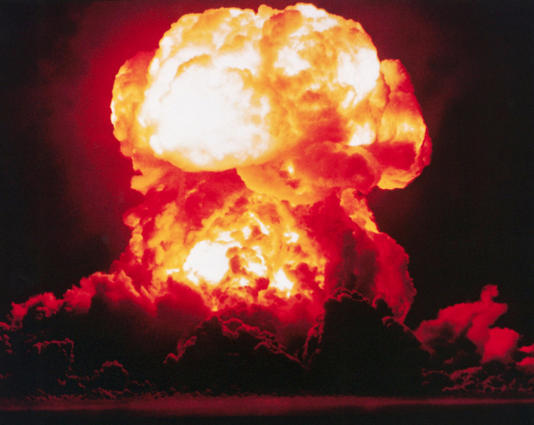
An all-out nuclear war could wipe out hundreds of millions of people around the world within the space of just a few hours.

The huge flash of blinding light when a nuclear bomb detonates is ‘like bringing a piece of the sun down to the ground’. Everything within the miles-wide firestorm is instantly incinerated.Experience Oregon this Spring with Our Local Guides

Travel OregonExperience Oregon this Spring with Our Local Guides

Ad

Those spared annihilation in the initial blast would then face being poisoned to death by the radioactive fallout or noxious smog billowing from burning cities and industrial areas.

The consequences of nuclear war on the world’s climate make for even more terrifying reading. Smoke from the fires would block out the sun, reducing its warming rays by up to 70% and plunging the world into a new horror – nuclear winter.

Brian Toon, professor of atmospheric and oceanic sciences at the University of Colorado Boulder, is one of the pioneers of nuclear winter research.

1 / 8

Putin's mountain palace that houses a 'nuke bunker' ravaged by mystery fire

Putin’s mountain palace that houses a ‘nuke bunker’ ravaged by mystery fire©Provided by Metro

A Siberian palace said to be Putin’s unofficial residence has been partly destroyed by a devastating fire. The blaze levelled an entire building at the lavish compound in Russia’s Altai Republic, a sparsely inhabited mountainous region home to a large minority of indigenous nomadic animal herders. The main structure appeared to escape the worst of the flames, although officials have not confirmed whether it also suffered damage (Picture: East2West News)See more

He spoke to Metro about nuclear winter theory and why his warnings about it stretching back 40 years are still just as valid today.

What is nuclear winter?

Nuclear winter theory first caught the world’s attention in 1983 when one of the its most famous scientists, Carl Sagan, published an article asking ‘Would nuclear war be the end of the world?’.

Related video: How the U.S. maintains absolute nuclear deterrence (Interesting Engineering)

From 1940 to 1966, the US invested at least

Loaded: 5.04%Play

Current Time 0:13

/

Duration 13:52Quality SettingsCaptionsFullscreen

Interesting Engineering

How the U.S. maintains absolute nuclear deterrenceUnmute

0

View on Watch

More videos

In it, he wrote that ‘in a nuclear exchange more than a billion people would instantly be killed, but the long term consequences could be much worse’.

Sagan and some of his students, including Prof Toon, along with meteorologists subsequently set out in horrifying detail what those consequences would be.

They found the thick black smoke billowing from burning cities and industrial areas would rise high up into the stratosphere and block out the sun’s light.

Brian Toon is professor of atmospheric and oceanic sciences at the University of Colorado Boulder (Picture: Edwina Hay)

Brian Toon is professor of atmospheric and oceanic sciences at the University of Colorado Boulder (Picture: Edwina Hay)© Provided by Metro

The ensuing cold, dry and dark would send temperatures plummeting below zero and condemn billions more people to starvation with the collapse of agriculture.

The idea of mutually-assured destruction – if country A attacks country B, the retaliation by country B would render any first strike suicidal – has helped prevent nuclear war in the decades since.Experience Oregon this Spring with Our Local Guides

Travel OregonExperience Oregon this Spring with Our Local Guides

Ad

But subsequent research also suggests it would be suicidal for country A to launch a first strike regardless of whether country B responds due to the climate changes caused by the smoke.

Faced with the poisoned apocalyptic world that would await any survivors of a full-scale nuclear war, former Soviet leader Nikita Khrushchev said: ‘The living will envy the dead.’

Would London be safe if World War III broke out?

‘Like bringing a piece of the sun down to Earth’

If you live in any big city across Europe or North America it’s safe to assume there is at least one nuclear bomb aimed at you right now.

Russia has around 2,000 strategic deployed nuclear weapons. The US has roughly the same.

Between them they have around 500 cities with more than 100,000 people – that’s eight nuclear bombs for each one.

‘It only takes one of those weapons to destroy a city with 100,000 people typically,’ Prof Toon says. ‘It’s overkill.

One nuclear bomb is enough to destroy a city of 100,000 people (Picture: Corbis via Getty Images)

One nuclear bomb is enough to destroy a city of 100,000 people (Picture: Corbis via Getty Images)© Provided by Metro

‘If there’s a war between the US and Russia, Europe is going to be attacked, and it’s going to be attacked by nuclear weapons. It’s going to be attacked by a lot of nuclear weapons.’

He went on: ‘I recently looked at targets in Europe and I found about 650 military targets in Europe. Britain has them all over the place.’Visit Oregon this Spring with Our Local Guides

Travel OregonVisit Oregon this Spring with Our Local Guides

Ad

The explosion from a nuclear bomb ‘is a lot like bringing a piece of the sun down to the ground’, Prof Toon says.

‘The bomb goes off, and there’s this huge energy release that creates an expanding fireball which is very hot. It’s initially in the millions of degrees but then soon reaches the temperature of the sun.

‘A typical nuclear weapon will destroy about a hundred square kilometres where it goes off, and most of that destruction occurs from the fires.

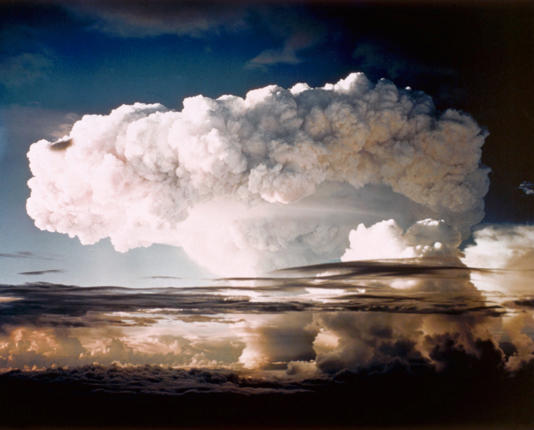
The mushroom cloud from Ivy Mike, one of the largest nuclear blasts ever (Picture: Corbis via Getty Images)

The mushroom cloud from Ivy Mike, one of the largest nuclear blasts ever (Picture: Corbis via Getty Images)© Provided by Metro

‘That’s what did the destruction in Hiroshima, for example, was fire. If you look at pictures of Hiroshima, there’s just rubble on the ground. A few standing concrete buildings still left.

‘And that damage was mostly from the fires. 

‘In fact, for Hiroshima, the fires probably released a thousand times as much energy as the bomb itself, so they were very destructive.’

The blazes ignited by a nuclear bomb blast ‘are not normal fires’, Prof Toon says, adding: ‘It’s not just a little tiny place that is set on fire in an area – it could be 100 square kilometres – and a fire that big is going to have a smoke line that goes into the upper atmosphere.’

Mankind could go the same way as the dinosaurs

Not long before Prof Toon and his colleagues began their research it was discovered that an asteroid collision was responsible for killing the dinosaurs 66 million years ago.

There is a thin line of sediment left from the asteroid collision all over the planet.

‘That layer contains debris and rocks left from the asteroid,’ Prof Toon says. ‘Most of those look like little spheres that are about the size of a grain of sand.

‘They obviously were heated because they’re a spherical piece of rock, so we think the asteroid was vaporised when it hit the ground because of the huge energy release, which is the equivalent of a hundred million nuclear weapons going off.

‘It blew these little rock spheres all over the planet and when they re-entered the atmosphere they got hot because they were moving very fast and the friction with the air heated them up to a thousand or two thousand degrees centigrade.

With the thousands and thousands of molten rocks raining down, the sky would have looked like a sheet of lava, Prof Toon says.

‘If you want to experience what the dinosaurs felt you can go down to the grocery store and buy a turkey, open up your oven and turn it to broil, then throw the turkey in there,’ he goes on.

‘That layer contains not just rock from Mexico and the asteroid, it also contains soot and smoke from the fire.

‘So you can see this 66 million-year-old debris left from the fire. And the amount of material there is so great that you had to burn everything on the surface of the earth.

‘That was all discovered in the early 1980s, and so we thought would this be similar to what would happen after a nuclear war when you get all these fires going in cities?’

Self-assured destruction

Back during the height of the Cold War, it was believed that any nuclear conflict was winnable.

But the modelling data suggested the opposite – for all sides and even some with no involvement in the conflict whatsoever.

Launch on warning

The United States has a launch on warning policy of nuclear weapon retaliation.

That means a retaliatory strike is launched upon warning of an enemy attack – it does not wait to absorb it.

Consequently, the US president is left with a desperately small window of time in which to decide how that retaliation will play out.

In her terrifying yet exhilarating book ‘Nuclear War: A Scenario’, award-winning investigative journalist and author Annie Jacobsen recounts Ronald Regan’s lament in his memoirs.

He wrote: ‘’Six minutes to decide how to respond to a blip on a radar scope and decide whether to release Armageddon! How could anyone apply reason to a time like that?’

Six minutes to weigh up the lives of millions, possibly billions of people.

‘The idea that we’re only a few hours away from the end of the world, that’s quite accurate in certain circumstances,’ Prof Toon says.

‘If you have a war between the United States and Russia and Europe and then possibly China, the amount of smoke there is so great that the sunlight has diminished to about 20% of normal over the planet,’ Prof Toon explains.

‘And these calculations with these climate models, the temperature falls below freezing. 

‘So if you’re in a place like Ukraine, which is the bread basket of Europe, or Iowa, which is the bread basket of the US, the temperatures in those places fall below freezing within a few weeks of the war and stay below freezing continuously every day for a couple of years.

‘The actual minimum temperatures occur in about the third and fourth year, and it takes close to a decade to get back to normal temperatures. 

‘You’re not going to grow anything at the temperatures below freezing every day for a couple of years. So there won’t be any food coming from the Middle Latitudes and that will create mass starvation.’

Ominously, he adds: ‘Starving doesn’t mean hungry – starving means dead.’

Where in the world could survive nuclear winter?

Prof Toon’s research has shown you might survive a nuclear war fought mainly in the northern hemisphere by living in Argentina, Australia or New Zealand.

Each are large food exporting countries, suggesting they would all be able to produce enough food to feed their current populations in the event all international trade in food were to collapse.

Even the worst case scenario in terms of smoke-induced climate change would be lessened there due to their locations in the southern hemisphere and being surrounded by large oceans.

Meanwhile, in the USA, Russia and China more than 90% of the populations there would perish from starvation.

Prof Toon helped coin the term self-assured destruction, arguing that the climate changes triggered by smoke from a nuclear first strike would be so damaging to food and water supplies, along with infrastructure breakdown, that starvation would occur in the attacking country as well as the nation targeted and countless others outside the combat zone.

Findings by he and his colleagues – backed by those of a team of Soviet scientists – helped persuade Mikhail Gorbachev and Ronald Reagan to reduce the number of warheads in 1986.

‘Both Gorbachev and Reagan said that their science communities told them that if they had a nuclear war, that it was going to kill everybody on the planet mostly,’ he says. 

‘So, Reagan and Gorbachev agreed to get rid of nuclear weapons, delivery systems from short – range missile in Europe, and a build-down of nuclear weapons started to occur. 

‘There were 70,000 nuclear weapons, now there’s around 10,000.’

Even a relatively ‘small’ nuclear war would be catastrophic

The US and Russia are not the only countries capable to wreaking climate havoc with nuclear war.

Each of the nuclear states – including the UK – with the exception of North Korea has enough firepower to alter the global climate.

‘I was called by somebody in the early 2000s because India and Pakistan had tested nuclear weapons and threatened each other for years over Kashmir,’ Prof Toon says.

‘The reporter asked what would happen if they had a nuclear war?’

He now regrets answering in haste that he believed it unlikely any consequences would stretch beyond those two countries.

Prof Toon went back and conducted simulations on a potential India-Pakistan conflict involving the use of roughly half their nuclear arsenals – 50 Hiroshima-size weapons.

‘Our best estimate at the moment is that if they used about half their arsenals they would kill something like 50 to 150 million people in India and Pakistan, and between one and two billion people over the rest of the planet,’ he added.

‘And the people over the rest of the planet would die because of nuclear winter.’

The current number of warheads per nuclear armed nation (Picture: Metro.co.uk)

The current number of warheads per nuclear armed nation (Picture: Metro.co.uk)© Provided by Metro

‘We’re in a very dangerous period of time’

In 2018, Prof Toon gave a TED Talk titled ‘I’ve studied nuclear war for 35 years – you should be worried’.

Just before Russia waged war on Ukraine it had got around four million views. It now has nearly nine million.

Prof Toon says the comments have gone from ‘how can you study nuclear war for 35 years when there hasn’t been one?’ to ‘I’ve studied nuclear war for an hour and I’m worried about it’.

‘There is a lot of concern over Donald Trump. When he left office a lot of people worried he might blow something up for the fun of it. It’s an open question as to how rational Donald Trump is.

‘But I don’t see any reason why he would start a nuclear war. Even he would realise that the response would be pretty bad.

‘So I think it’s most likely that it would start because of an accident and a misunderstanding between the two countries involved.

‘We’re in a heightened state of awareness right at this minute and we have been here for the last year or so.

‘There could be some kind of accident that occurs somewhere that could blow up and escalate.’

What can we do to eliminate the threat of nuclear winter?

Prof Toon says protest and letting politicians know how they feel is the way to get them to change.

‘That’s the only way it is going to go anywhere, is if people worldwide demand their politicians do something,’ he adds.

‘In democracies that’s practical. In Russia at the moment that’s probably very difficult to protest against nuclear weapons, so it varies across the world what you can do.

‘But people should attempt to make their politicians aware of this problem and do whatever they can to get them to do something about it.’

It worked with the Nuclear Test Ban Treaty in 1963 and again with Gorbachev and Reagan in 1986.

As they said in their joint statement: ‘Nuclear war cannot be won and must never be fought.’