Bird Flu (H5N1) Explained: U.S. Pledge Nearly $100 Million To Protect Beef, Milk Supplies
Reply


BY PATRICK PENNER, LOCAL JOURNALISM INITIATIVE REPORTER ● COQUITLAM, WILDLIFE ● MAY 9, 2024
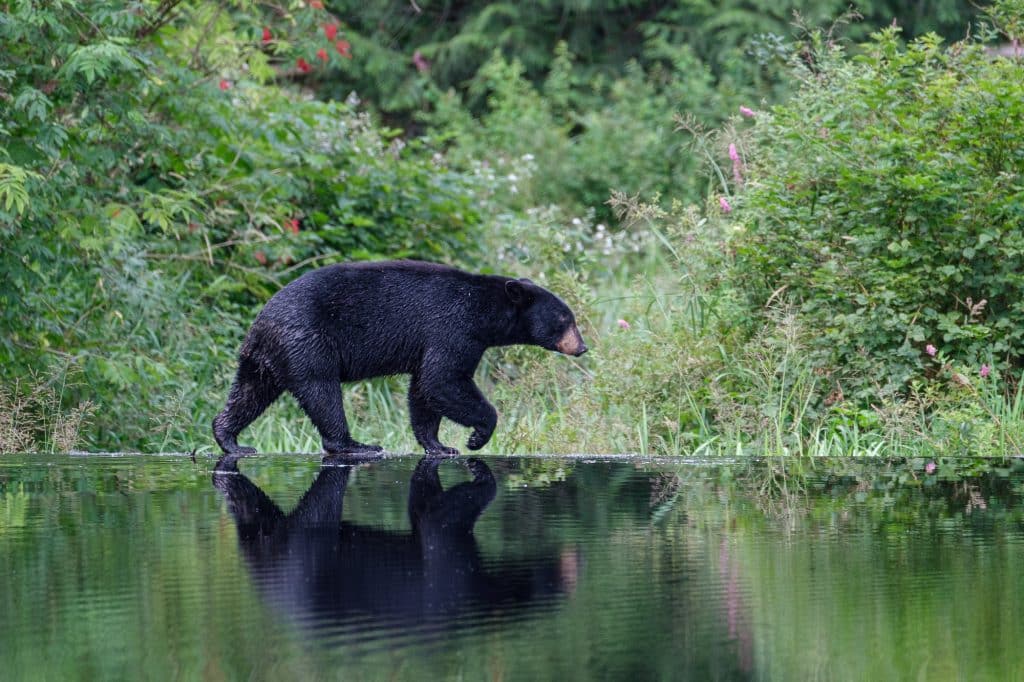
BC Conservation officers freed a black bear from a leg-hold trap in Coquitlam, and now an environmental group is offering a $1,000 reward to help catch whoever set it.
Just before 1 p.m. on April 30, the BC Conservation Officer Service (COS) received a report of a bear with its paw trapped in the pressure-activated snare set near the Pitt River Boat Club.
COS said its officers called in police to close the nearby trail before tranquilizing the bear to remove the trap and examine the animal for injuries.
Local news that matters to you
No one covers the Tri-Cities like we do. But we need your help to keep our community journalism sustainable.SUPPORT TRI-CITIES DISPATCH
The bear was determined to be in good health, and quickly relocated to a wilderness area outside the city, according to COS.
COS launched an investigation into the incident.
North Vancouver charity the Fur-Bearers has offered a $1,000 reward for information leading to the identification and conviction of the person responsible.
“Trapping has serious consequences, including the inarguable harm to non-target species and costs associated as seen last week,” says Lesley Fox, executive director of The Fur-Bearers. “This reward shows that we – and the people of British Columbia – take illegal trapping seriously and will not accept it in 2024.”
Although leg-hold traps are banned in many countries around the world, and several U.S. states, the immobilizing traps are still legal across Canada. Only leg-hold traps with metal teeth have been prohibited.
Municipalities, on the other hand, have an ability to ban their use within their jurisdiction, and Coquitlam did so with a bylaw back in 1979.
The bylaw cited animal cruelty when it banned all people, firms and corporations from setting these types of traps. Convictions result in a $500 fine.
Exemptions are only made for city employees or agents of the British Columbia Fish and Wildlife Branch in the course of their duties.
The Fur Bearers are warning anyone in the area to be on the lookout for traps, specifically warning dog walkers, families, bird watchers, and cyclists.
“This disturbing incident is a sign of the need for reforms to trapping and how traps are purchased in Canada,” the Fur Bearers’ website states.
The Fur Bearers advocate for an outright ban on leg-hold traps. They are joined by the American Veterinary Association, the American Animal Hospital Association, the World Veterinary Association, the National Animal Control Association, and the Sierra Club.
The traps typically target foxes, coyotes, raccoons, wolves, lynx, and bobcats, and are placed in areas where animals frequently pass.
The Fur Bearers say that once an animal is trapped, they often become so desperate they resort to chewing or wringing off the caught limb.
“Animals endure a painful and panic-filled period until they either die from exhaustion, blood loss, predation, dehydration, hypothermia, or are clubbed, choked, or stomped to death by the trapper (so as not to damage the pelt),” the Fur Bearers’ website states.
In response to the torture and killing of a wolf in Daniel, a hunter from Dubois says Wyomingites need to reform hunting and animal cruelty statutes themselves instead of waiting for outside groups and the federal government to force change.
May 10, 20246 min read
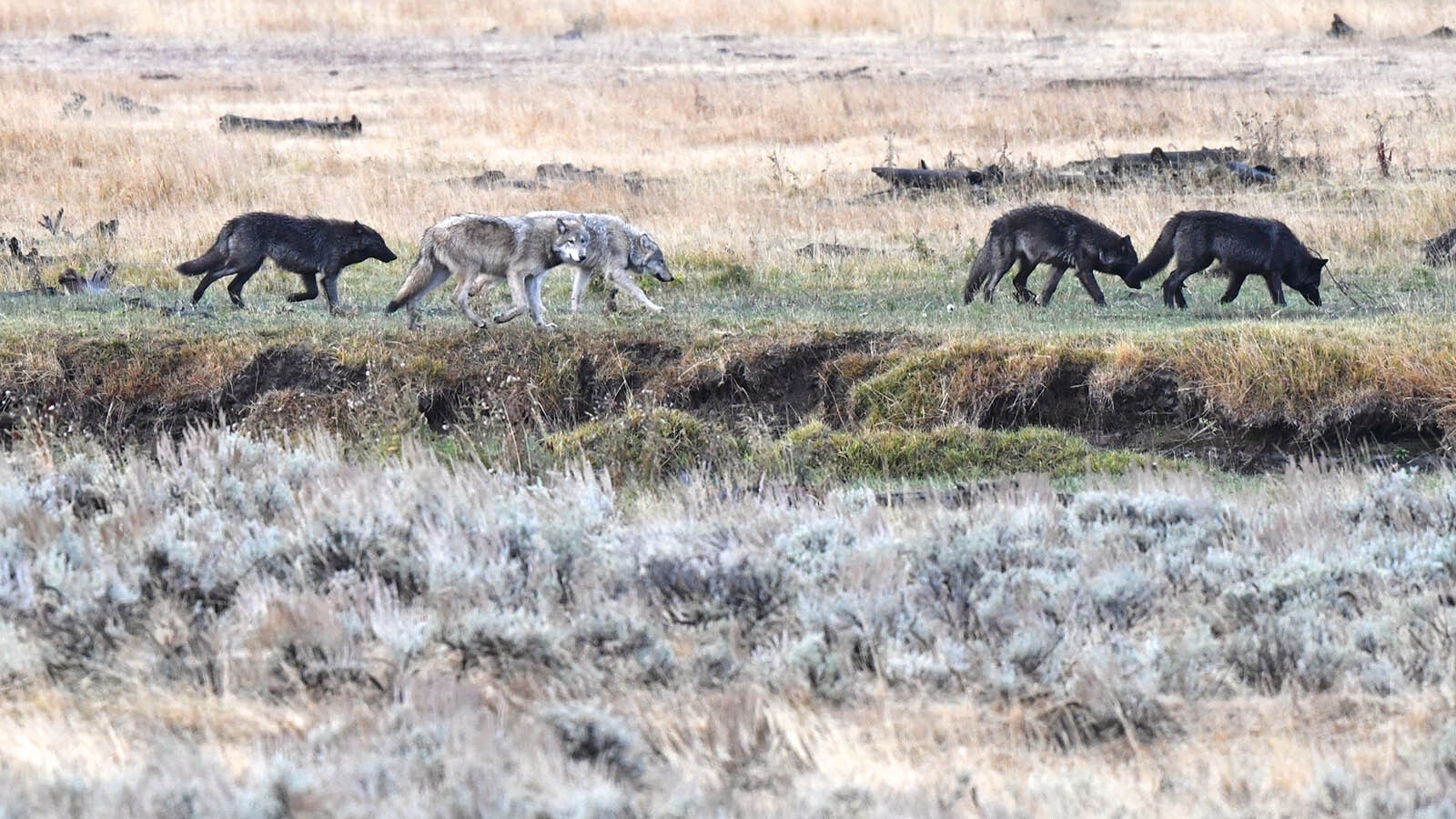
The eyes of the world have been on Wyoming since a wolf was tortured and killed in Daniel, but if reform is to come from the incident, it should be Wyoming’s business, not the world’s, an avid hunter from Dubois said.
“I think that here in Wyoming, we recognize that we have our own solutions to our problems. We don’t need outside organizations pressuring the federal government to come in and change things for us,” Jim Laybourn told Cowboy State Daily.
Along with conservationists, landowners and others, Laybourn is forming the Wyoming Wildlife Coalition and pushing for change in Wyoming’s predator hunting and animal cruelty statutes.

“We just want to give law enforcement the right tools to punish bad actors for extreme acts of torture, like the case in Daniel, Wyoming,” he said.
Laybourn said he and others plan to lobby the Wyoming Legislature for reform on two specific points: outlawing the use of motorized vehicles to chase down and run over predators, and changing animal cruelty statutes to include wildlife.
Another of the coalition’s members, Wyoming Wildlife Advocates Executive Director Kristin Combs, previously told Cowboy State Daily that her group will be among those pushing those same points before the Legislature during its 2025 session.
Whether any such legislative reform can succeed is a tough question, state Sen. Larry Hicks, R-Baggs, told Cowboy State Daily.
He said animal cruelty measures have come up before during his tenure in the Legislature. They’re tough, controversial bills to work.
“You have to figure out, what’s the level of penalty, how narrowly will the bill be crafted and what would the unintended consequences be?” Hicks said.

The coalition’s efforts are in direct response to a Feb. 29 incident involving Cody Roberts, 42, of Daniel.
According to accounts of events, Roberts ran a wolf down with his snowmobile and captured the injured animal, taping its muzzle shut. He later took it to his residence, and then to the Green River Bar to show it off before taking out behind the bar and killing it.
There was national and global outrage when court records indicated that Roberts was cited by the Wyoming Game and Fish Department for illegal possession of a warm-blooded animal, and forfeited a $250 bond.
Many felt that there should have been stiffer penalties in the case.
Laybourn said if Wyoming policy can be reformed from within, it will help prevent such outrageous acts in the future, as well as demonstrating that Wyoming is capable of solving its own shortcomings.
“My goal is to reach out to people in Wyoming who want to see reform,” he said. “We want this to be a Wyoming-based solution.”
May is usually busy for Wyoming hunters – the end of the month is the deadline to apply for hunting tags.
Laybourn is sitting it out this year.
During a recent meeting of Wyoming Game and Fish Commission, he told the commissioners and Cowboy State Daily that he would refuse to buy any more hunting tags until some of Wyoming’s predator hunting and animal cruelty statutes are reformed.
He was one of many who testified before the commissioners that day expressing outrage over the tortured wolf.
On Thursday, he said he’s sticking by his statements and hasn’t applied for any hunting tags.
“It’s hard for me, because I love to hunt,” he said. “It’s some of the strongest, most powerful experiences you can have, being out hunting in the backcountry.”
But by giving up hunting, at least for now, Laybourn said he hopes to inspire others. And he hopes it helps protect hunters’ reputation among the general public.
“I’m trying to make a stand for other hunters. It’s a sacrifice I’m trying to make for other hunters,” he said. “So that the public feels better about hunters. So that they understand that hunters are being ethical.”

Laybourn isn’t a predator hunter, but he doesn’t take issue with predator hunting in general.
“Personally, my own standard is, I only kill what I eat. But I realize a lot of people need to use predator control to protect their livelihood,” he said.
“This isn’t about wolf hunting, or Wyoming wolf management. This is just about the brutal act of running an animal down with a snowmobile and then torturing it,” he added. “I would have been just as upset if somebody would have brought a wounded deer into a bar, or a wounded coyote or any other animal.”
Hicks said he expects a bill of some sort to be brought before the Legislature because of the case in Daniel.
But to gain traction, it will require extensive research.
“Is there something similar out there in another state? Look at the court cases related to it, the disposition of them. Go look at the lawsuits that might have resulted,” he said.
An animal cruelty statute that’s too broadly written could be open to abuses related to trapping, poorly placed hunting shots or even roadkill, he said.
“What if you hit a prairie dog and somebody catches it on their dashcam, and then tries to claim that you deliberately swerved to hit that prairie dog?” he said.
Regarding legislation aimed at forbidding running animals down with vehicles, it would have wording that clearly defined deliberate, malicious intent as opposed to hitting an animal by accident, Hicks added.
He’s also not particularly concerned about federal intervention because it’s outside of the federal government’s authority to dictate a state’s animal cruelty statutes. Any changes on the federal level would have to go through Congress and apply to all 50 states.
“If somebody wants to bring it (legislation), we’ll take a look at it. It will be given a fair hearing,” he said. “I’m not saying it can’t be done. I’m saying it’s going to have to be narrowly crafted.”
| Published: 05-11-2024 7:00 AMLetter to the Editors |
On Feb. 29, Cody Roberts of Daniel, Wyoming intentionally ran over a young wolf with his snowmobile. He then taped its snout, to a bar where he displayed this injured wolf for photos and laughs, all the while ignoring its suffering, pain, and fear. He tortured this wolf for his own pleasure; for social media attention, for some sick, perverse hate-fueled self-serving purpose. He finally ended its misery behind the bar by shooting it. Unfortunately, this is not a one-off incident. His actions exemplify the failure by wildlife agencies, government and the community at large to address the utterly reprehensible act of chasing down predators; primarily wolves and coyotes, by snowmobiles. It also represents the degree to which predators are vilified and disregarded; not as predators with a purpose or as sentient wild animals that are part of a balance of our ecosystems.
Would New Hampshire Fish and Game Department tolerate this behavior and cruelty here? There is no protection for coyotes even under the Cruelty to Animals Act. New Hampshire allows trapping of predators and hounding and killing of coyotes year-round, even during denning time with pups. The New Hampshire Wildlife Coalition (NHWC) condemns running down wildlife with snowmobiles. We urge you to join us and condemn these actions. You can be a voice for the voiceless!
Olia Webb
by UpNorthLive NewsroomFri, May 10th 2024 at 10:13 PM
Updated Fri, May 10th 2024 at 10:16 PM


Nicolas Patnode, 19, of Kalkaska poses with an illegal 9-point deer he killed in 2022. Patnode and Zander Garrett face a combined 14-charges after torturing a porcupine and illegally hunting throughout the county during October-November 2022. Both Kalkaska men are due back in court on May 20. (DNR)

2
KALKASKA COUNTY, Mich. (WPBN/WGTU) — Two men are accused of multiple wildlife violations including torturing animals across Kalkaska County.
Nicholas Patnode, 19, and Zander Garrett, 20, were arraigned Monday in Kalkaska County District Court.
Michigan Department of Natural Resources conservation officers began their investigation in 2022 after receiving a tip through the DNR Report All Poaching hotline.
Investigators said Patnode and Garrett illegally killed at least six deer, including a 9-point buck shot from the window of a truck. They are also accused of inhumanely killing a porcupine.
Scatter Soap in Your Yard, Here’s WhyLifeHackGuru
“When there’s this many violations, including torturing animals, education only goes so far. These crimes need to be addressed,” said Jason Haines, chief of the DNR’s Law Enforcement Division. “Prosecution of these acts will hopefully deter not only these individuals but others from committing similar crimes in the future.”
“Our officers conducted a very thorough investigation to piece together many pieces of evidence from throughout the county,” Haines added.
Patnode’s 11 charges, include:
Garrett’s charges include:
Garrett and Patnode were arrested April 12 on felony charges; their bond was paid, and they were released the next day. They are due back in court on May 20.
A third man, who the DNR is not naming because of his age at the time the crime was committed, processed a plea agreement through the county’s juvenile court.
Anyone who witnesses a natural resource violation should call or text the Report All Poaching Hotline at 800-292-7800.

JOIN THE CONVERSATION (2)
Information can be left anonymously. Monetary rewards may be offered for information that leads to the arrest and conviction of violators.
USA TODAY
0:00
1:14
https://imasdk.googleapis.com/js/core/bridge3.640.0_en.html#goog_1052425074
Researchers have found a new genus of deer in fossils found at Badlands National Park in South Dakota, the National Park Service announced Thursday.
The deer presented by the researchers is markedly different from the animal most know today, as reconstructions suggest that it would have been about the size of a house cat.
The Park Service said in a press release that the tiny, hornless deer lived in South Dakota about 32 million years ago, during the Oligocene Epoch. It belongs to an extinct family of deer that are considered relatives to the modern-day chevrotains, or mouse deer, typically found in the tropical forests of central and western Africa and southeast Asia.
Scientists from the park, the American Museum of Natural History and California State Polytechnic University published their findings in the Proceedings of the South Dakota Academy of Science.
US airman Roger Fortson killed by deputies who may have hit wrong home, Ben Crump saysTrump trial replay: Stormy Daniels finishes combative cross-examination in hush money case‘Shine brighter, love harder’: Tributes pour in for the slain surfers killed in MexicoSevere weather hits Southeast with heavy rain, strong winds; tornado reported in GeorgiaMiss Teen USA UmaSofia Srivastava resigns days after Miss USA Noelia Voigt steps down


Research into the deer was prompted by the discovery of a nearly in-tact skull by a visitor and reached the scientists through a report filed by Geoscientists-in-the-Parks intern Tiffany Leone in 2016.
“It’s a really neat example with this paper to be able to highlight citizen science, because this is the only skull of this animal ever found,” Mattison Shreero, co-lead researcher from the National Park Service said in the press release. “And if somebody had walked away with it, or if they just hadn’t reported it and it had eroded away, we would have never known about it.”
The deer genus, Santuccimeryx, was named to honor the work of Vincent L. Santucci, the Senior Paleontologist and Paleontology Program Coordinator in the Geologic Resources Division of the National Park Service.
“I am both personally and professionally grateful to be associated with this important new fossil discovery from Badlands National Park, where I began my career as a paleontologist,” Santucci said in the press release.
BY KITTY BLOCK & SARA AMUNDSON, OPINION CONTRIBUTORS – 05/09/24 4:00 PM ET
SHAREPOST https://thehill.com/opinion/campaign/4654227-kristi-noems-disturbing-failure-of-compassion-and-of-leadership/
Loaded: 19.95%CaptionsFullscreenSharePause

In her book “No Going Back,” Gov. Kristi Noem (R-S.D.) discloses a shocking incident from two decades ago, when she killed her family’s 14-month-old puppy with a shotgun after the dog exhibited normal but rambunctious behavior on a hunting trip. This troubling revelation is more than just a personal moral failing on Noem’s part. Her decision to recount this story with pride represents a profound abdication of her responsibilities as a leader and elected official.
The public backlash to this troubling revelation has been encouraging. People across the political spectrum have expressed their horror and condemnation of Noem’s actions, underscoring a fundamental truth: Compassion for animals is not a partisan issue, but a core human value that unites us all.
But while it’s heartening to see such widespread empathy for a puppy, we must also recognize that our circle of compassion is often too narrow. Dogs, cats and a select few other species are frequently granted a level of moral consideration that we fail to extend to countless other sentient creatures. Pigs, cows, chickens and fish, for example, are routinely subjected to immense cruelty and suffering in our factory farming system, yet their plight rarely elicits the same public outcry.
If we are to truly live up to our values of compassion and respect for life, we must expand our sphere of concern to encompass all creatures capable of suffering. The fact that an animal is not cute, cuddly or familiar to us does not make its pain any less real or its life any less valuable.
Noem’s pride in her cruel actions towards her puppy is particularly offensive given the multitude of humane options available to her at the time. Professional training, behavior modification and responsible rehoming were all viable alternatives that any conscientious caretaker would have pursued. Her choice to resort to lethal violence instead was a disturbing reflection of a mindset that views animals as disposable and unworthy of moral consideration.
Tragically, this mindset is not limited to Noem. It is pervasive in our society, and it enables the systematic mistreatment of billions of animals each year. When leaders like Noem normalize and even boast about such cruelty, they contribute to a culture that devalues animal life and undermines our collective humanity.
As a society, we must do better. We must recognize that compassion is not a finite resource to be hoarded and selectively applied, but a boundless wellspring that grows the more we exercise it. By extending our empathy to all sentient beings, we not only alleviate an immense amount of suffering, but we also cultivate the best in ourselves.
Noem would do well to take note of the raft of worthy animal protection bills in Congress supported by a bipartisan majorities. Animal welfare is at the very heart of congressional debate over the Farm Bill. There are two measures concerning companion animals, animals in puppy mills and other animals in need, and they deserve to be included in the Farm Bill and passed into law.
The Better Collaboration, Accountability and Regulatory Enforcement (CARE) for Animals Act, which is sponsored by Rep. Guy Reschenthaler (R-Penn.), Rep. Mike Quigley (D-Ill.), Sen. Richard Blumenthal (D-Conn.) and Sen. John Kennedy (R-La.), would give the Department of Justice more tools to strengthen enforcement of the Animal Welfare Act and provide meaningful deterrents to acts of cruelty.
The Puppy Protection Act — sponsored by Rep. Brian Fitzpatrick (R-Penn.), Rep. Reschenthaler, Rep. Jim McGovern (D-Mass.) and Rep. Jimmy Panetta (D-Cali.) — would address serious gaps in welfare standards for tens of thousands of dogs and puppies at large-scale breeding operations licensed by the USDA.
More urgently, a few House Agriculture Committee Republicans are attempting to gut states’ rights and animal welfare by including language to invalidate more than a dozen state laws addressing intensive confinement cruelty to animals raised for food, along with hundreds of laws relating to states’ rights to protect puppies and regulate products within their borders. That’s wrong, not least because nearly 80 percent of American voters, including nearly equal numbers of Republicans and Democrats, support enactment of laws designed to protect farm animals.
It would be a shame if House Agriculture Chair Glenn Thompson (R-Penn.) and his colleagues missed the moral opportunity revealed by Noem’s terrible misjudgment. Americans want their elected representatives to do right by animals and take action to spare them from callous and unnecessary cruelty. They’re making their preferences for humane treatment clear in the marketplace and in the court of public opinion — and Congress should follow their lead.
The public condemnation of Noem’s actions is a heartening sign that our society’s moral compass is pointing in the right direction. But we must not stop at dogs and cats. Expanding our circle of compassion to include all creatures capable of suffering will lead towards a more just and humane world.
The link between animal cruelty and human violence only underscores the urgency of this imperative. By fostering a culture of respect for all life, we not only improve the lives of animals, but we create a society that is safer and more peaceful for humans as well.
Gov. Noem had an opportunity to demonstrate empathy, responsibility and kindness in the face of difficult challenges. By instead boasting about callous violence, she betrayed the public trust and the principles of decency that bind us together. Let us learn from this shameful episode and recommit ourselves to building a better world — for the sake of animals and humans alike.
Kitty Block is the president and CEO of the Humane Society of the United States. Sara Amundson serves as the president of the Humane Society Legislative Fund.
By Reuters
May 9, 20241:40 AM PDTUpdated 2 days ago
Chief Cabinet Secretary Yoshimasa Hayashi on Thursday said the species would be added to its commercial whaling list after the country’s Fisheries Agency this week sought public comment on a draft revision of its policies.
https://imasdk.googleapis.com/js/core/bridge3.640.0_en.html#goog_118944554
0 seconds of 15 secondsVolume 0%
Japan to start hunting fin whales
TOKYO, May 9 (Reuters) – Japan will add large fin whales to its list of commercial whaling species, government spokesperson Yoshimasa Hayashi said on Thursday, five years after leaving an international body that regulates the commercial hunt of the marine mammals.
Japan resumed commercial whaling in its territorial waters and exclusive economic zones in 2019, on withdrawing from the International Whaling Commission (IWC).
This week, its Fisheries Agency sought public comment on a draft revision of its aquatic resource control policies that would allow commercial catching of fin whales.
Advertisement · Scroll to continueReport this ad
The Japanese government will continue to promote whaling and take the necessary diplomatic steps, Hayashi told a regular press conference.
“Whales are important food resources and should be sustainably utilised, based on scientific evidence,” said Hayashi, the chief cabinet secretary, referring to widening the allowable catch to include fin whales.

Item 1 of 2 Japanese Foreign Minister Yoshimasa Hayashi attends a press conference following Japan and the Gulf Cooperation Council Foreign Ministers’ meeting in Riyadh, Saudi Arabia, September 7, 2023. REUTERS/Ahmed Yosri/File Photo
[1/2]Japanese Foreign Minister Yoshimasa Hayashi attends a press conference following Japan and the Gulf Cooperation Council Foreign Ministers’ meeting in Riyadh, Saudi Arabia, September 7, 2023. REUTERS/Ahmed Yosri/File Photo Purchase Licensing Rights, opens new tab
“It’s also important to inherit traditional food cultures in Japan.
Advertisement · Scroll to continueReport this ad
Japan caught a total of 294 minke whales, Bryde’s whales and sei whales last year, said the Fisheries Agency, which currently limits commercial whaling to the three relatively minor species.
Whale consumption in Japan peaked in the early 1960s but did not become widespread as other meat became more easily available.
Japan drew criticism from environmental groups for launching what it called scientific research whaling in 1987, following an IWC regulation that banned commercial whale hunts.
Advertisement · Scroll to continueReport this ad
Australia and New Zealand were among the nations that expressed disappointment when Japan declared it was withdrawing from the IWC in 2018.

