Unknown's avatar

About Exposing the Big Game

Jim Robertson

US Government’s Efforts to Ensure Meat Supply Amid Bird Flu Concerns

May 6, 2024

Sophia Abene

News

https://www.contagionlive.com/view/us-government-s-efforts-to-ensure-meat-supply-amid-bird-flu-concerns

Article

The Department of Agriculture has initiated proactive measures, collaborating with federal agencies, to ensure the safety of the nation’s meat supply.
cows dairy

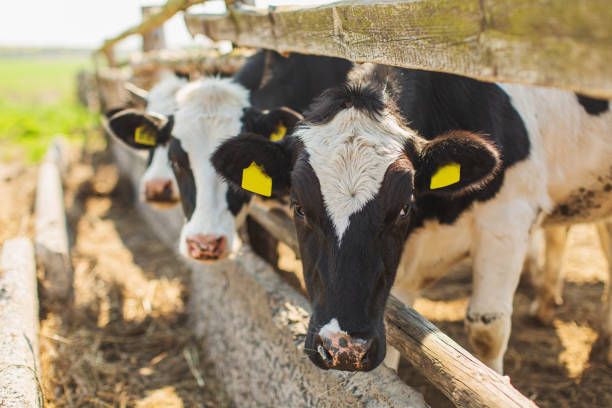
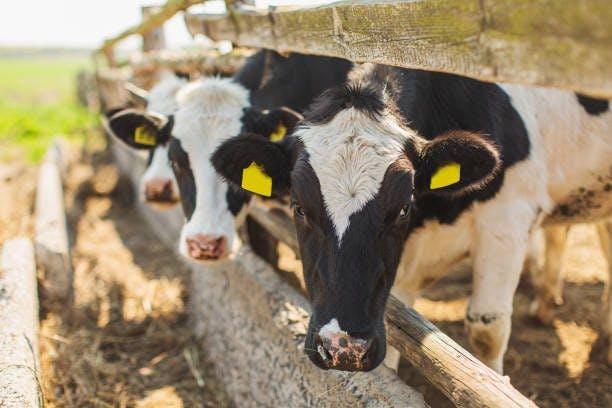
Cattle.

Image credits: Unsplash

Since late March, outbreaks of the H5N1 virus have been confirmed in 34 dairy cattle herds across nine states, with an additional case reported in a person from Texas. In response, federal officials have launched a campaign involving the collection of ground beef samples from retail stores in affected states for rigorous testing. Despite expressing confidence in the safety of the meat supply, authorities are determined to verify the absence of viral contamination.

Andy Pekosz PhD a professor of microbiology at the Johns Hopkins Bloomberg School of Public Health, provided valuable insights into the matter, emphasizing the evolving nature of highly pathogenic avian influenza and its potential implications for human health.

Pekosz stated, “Highly pathogenic avian influenza was something for many years was just a concern of people interested in live in poultry, in wild animals and migratory birds. Since around 2000, there have been a few human infections with these highly pathogenic avian influenza viruses. And so that brought up the concern.”

The US Centers for Disease Control and Prevention (CDC) and the World Health Organization (WHO) have emphasized a low overall public health risk from the outbreak. However, individuals with potential exposure to infected animals face a higher risk. Studies have indicated a wider prevalence of the virus among cows than officially reported, with approximately 20% of milk samples showing traces of H5N1 particles.

Recent announcements by the US Food and Drug Administration (FDA) regarding the efficacy of pasteurization in eliminating the bird flu virus from milk have reassured consumers. Pekosz elaborated, “Pasteurization is an incredibly useful tool that essentially involves heating a sample to a high temperature then cooling it down quickly. It was unfortunate that avian flu got into some of the commercial milk supply, but this process of pasteurization has ensured that any traces of it in the milk are just traces of a dead virus particle.”

The USDA has implemented stringent measures, including analyzing ground beef samples using PCR tests to detect any viral presence. Additionally, 2 other safety studies will be conducted to ensure comprehensive protection of public health.

Furthermore, the USDA has mandated testing for lactating dairy cows before interstate movement as part of containment efforts. However, cows destined for immediate slaughter are exempt from this requirement, needing only documentation of veterinary inspection.

Pekosz highlighted the significance of efforts by regulatory agencies to assess the prevalence of avian influenza on dairy farms and implement control measures,

“Other agencies are looking at the dairy farms, and trying to get a handle on how many dairy farms are infected with this avian influenza virus. How extensive are those infections on a particular farm, really to try to then from the I’ll say the epidemiology approach to try to limit the number of infections identify the infected cows now and remove them from the system so that we can control the source of the infection because while pasteurization is great to provide a safe food supply, it would be great if we also identified the infected cows and took them out of the system in terms of providing milk to provide that that extra layer of protection to the general public.”

Stringent inspection protocols are in place at slaughter facilities, with each animal inspected before slaughter and carcasses subject to post-slaughter inspection to ascertain compliance with food safety standards. Furthermore, the USDA is collecting beef muscle samples from condemned dairy cattle at slaughter facilities to assess the presence of viral particles.

In the event of positive PCR tests from retail or slaughter samples, further evaluation for live virus will be conducted, underscoring the government’s commitment to ensuring the integrity of the meat supply and safeguarding public health.

Reference
Polansek T. US to test ground beef in states with bird-flu outbreaks in dairy cows. Published April 29, 2024. Accessed May 6, 2024. https://www.reuters.com/business/healthcare-pharmaceuticals/usda-test-ground-beef-us-states-with-outbreaks-bird-flu-dairy-cows-2024-04-29/

Opinion: Fur trapping didn’t stop in 1918 — Colorado hunters still pursue valuable bobcat pelts

Colorado voters can protect bobcats and mountain lions this fall

Mont., airport looks out of ...
In this Dec. 7, 2007, file photo, a bobcat trapped in a snare at the Billings, Mont., airport looks out of his crate before being released east of Shepherd, Mont. (Associated Press file)

By TED WILLIAMS | Writers on the Range

PUBLISHED: May 7, 2024 at 5:22 a.m. | UPDATED: May 7, 2024 at 7:17 a.m.

Unlike the rest of modern wildlife management, killing bobcats is unregulated, driven not by science but by fur prices. We’re stuck in the 19th Century when market hunters, for example, shot boatloads of waterfowl with 10-foot-long, 100-pound “punt guns.”

Now, there’s a campaign in Colorado — via a November 2024 ballot initiative — to ban hunting and trapping of bobcats, Canada lynx and mountain lions, though lynx are already listed by the state as endangered and supposedly protected.

As a lifelong hunter and angler, I’m told by a group called the Sportsmen’s Alliance that it’s my duty to defend bobcat trapping and hunting against such “antis” as those pushing the ballot initiative.

But a true sportsmen’s alliance of ethical hunters — Teddy Roosevelt, George Bird Grinnell, William Hornaday, Congressman John Lacey, and other Boone and Crockett Club members — got most market hunting banned in 1918.

It persists today as commercial trapping and hunting of bobcats. Ethical hunters eat what they kill. Bobcat trappers and hunters discard the meat and sell pelts, mostly for export to China and Russia.

Yet the Sportsmen’s Alliance warns me that, after bobcat trapping gets banned, “hunting … and even fishing are the next traditions in the antis’ crosshairs.”

https://imasdk.googleapis.com/js/core/bridge3.640.0_en.html#goog_705555457

https://imasdk.googleapis.com/js/core/bridge3.640.0_en.html#goog_705555458

https://imasdk.googleapis.com/js/core/bridge3.640.0_en.html#goog_705555459

https://imasdk.googleapis.com/js/core/bridge3.640.0_en.html#goog_705555460

Top Stories00:0101:00Chef Bo Porytko, who owns Middleman ...Avalanche star Nathan MacKinnon named Hart Trophy finalist for fourth timeColorado legislature: Senate passes marquee land-use reform bills, property tax reform; lawmakers clear wetlands protectionsSupply of homes for sale in metro Denver saw a big boost in AprilIn-N-Out opening next Colorado location in ArvadaMisfit Snack Bar will close its snack windowat MiddlemanChef Bo Porytko, who owns Middleman ...

I don’t buy it. I’ve heard this mantra since the 1970s, including from my then-colleagues at the Massachusetts Division of Fisheries and Wildlife who, like me, were fed and clothed by fishing, trapping and hunting license dollars.

This from veteran bobcat researcher Dr. Mark Elbroch of the native cat conservation group Panthera: “Colorado treats bobcats pretty much like they’re treated throughout the West” (except for California where killing is banned without a special permit.)

“There are hardly any regulations in any state. No bag limits, no data on how many are out there. The hunting community gets super excited about what it calls the ‘North American Model of Conservation,’ and one of the tenets is you don’t kill for profit or trade,” Elbroch continued. “Trapping violates that model in every way. Bobcat trapping is the extreme — selling fur for luxury items. It’s sickening.”

From December through February, Colorado bobcat hunters and trappers may kill as many bobcats as they please. And hunters are permitted to pursue bobcats with hounds, an inhumane practice for both cats and hounds.

Bobcat traps are also unselective, catching other species such as Canada lynx, raptors, otters, foxes, martens, badgers, opossums and skunks. “Lynx, a close relative to bobcats, are naturally attracted to bait set for bobcats and are harmed, injured or killed when caught in traps,” said Colorado veterinarian Christine Capaldo.

Colorado Parks and Wildlife attempts to rebut such reports with: “No lynx in Colorado has ever been reported as accidentally trapped by bobcat fur harvesters.” Of course not. What bobcat trapper would jeopardize permissive regulations by filing such a report?

So, in addition to an estimated 2,000 bobcats, how many non-target animals are killed by the roughly 4,000 bobcat traps annually set in Colorado? No one has a clue.

Colorado requires “humane” live traps. But they’re scarcely more humane than legholds and less humane than quick-kill conibear traps.

During winter, bobcats keep warm by finding shelter. In live traps they’re immobilized and exposed to cold, rain, snow and wind. Traps must be checked every 24 hours, but there’s virtually no enforcement, so live-trapped bobcats sometimes suffer for days. When traps do get checked bobcats get bludgeoned or strangled.

Before European contact, bobcats prospered throughout what are now the contiguous states. Caucasian immigrants quickly set about rectifying this with an all-out war on the species, behavior that flabbergasted the Indigenous and for which their only explanation was that the pale faces were insane. By the early 20th century, bounties and government control had extirpated bobcats from much of the U.S.

Now bobcats are slowly recovering in every contiguous state save Delaware. That’s an excellent reason not to kill them.

Bobcats belong to all Americans, the vast majority of whom prefer them alive. But they’re managed for the very few people who kill them for profit. And from a strictly financial perspective, live bobcats are more valuable than dead ones.

A study published in 2017 in the journal Biodiversity and Conservation, based on money spent by wildlife photographers, set the value of a single live bobcat at $308,000. Today the average bobcat pelt fetches $100.

Ted Williams is a contributor to Writers on the Range, writersontherange.org, an independent nonprofit dedicated to spurring conversation about the West. He writes about fish and wildlife for national publications.