Animal Cruelty and Human Violence

http://www.huffingtonpost.com/cathy-kangas/animal-cruelty-and-human-_b_2507551.html

by Cathy Kangas, 01/18/2013

Recently in Tampa, a pit bull was found dead, chained to a post in a foreclosed home. In Sacramento, a puppy was burned alive. At the same time across America dozens of men, women and children are victims of violent crimes. It is time to take a serious look at the connection between those who torture and kill animals, and perpetrators of violent crimes against people.

The examples are appalling. Mass murderer Jeffrey Dahmer cut off the heads of cats and dogs impaling them on sticks; Albert DeSalvo, the “Boston Strangler, trapped dogs and cats in orange rates and shot arrows through the box, and David “Son of Sam” Berkowitz poisoned his mother’s parakeet. While these are anecdotal stories about well-known serial killers, there are scientific studies that draw a direct correlation between animal torture and human cruelty.

With their limited resources local law enforcement can’t always make animal cruelty incidents a top priority. But perhaps when we look at the connection between animal cruelty and human violence, we would focus more attention on those who abuse animals to prevent them from escalating to crimes against people.

According to the Humane Society of the United States, researchers determined that between 71 percent and 83 percent of women entering domestic violence shelters reported that their partners also abused or killed the family pet. 1 Another study found that in families under supervision for the physical abuse of their children, pet abuse was concurrent in 88 percent of the families. 2 In seven school shootings that took place across the country between 1997 and 2001, all boys involved had previously committed acts of animal cruelty. 3

Because of this growing evidence of a link between animal cruelty and violent crimes, those who abuse animals are now on the radar of law enforcement agencies, social workers, and veterinarians in states that have cross-reporting laws requiring these professionals to report cases of animal abuse.

In the case of animal abuse by young children, intervention at an early age can stop these tendencies before they escalate to include violence against people. The National School Safety Council, the U.S. Department of Education, the American Psychological Association, and the National Crime Prevention Council all now agree that animal cruelty is a warning sign for at-risk youth.

Dr. Randall Lockwood, a psychologist who has written extensively on the link between animal abuse and human violence, wrote “Those who abuse animals for no obvious reason are budding psychopaths. They have no empathy and only see the world as what it’s going to do for them.”

What can the public do to stop animal abuse? First and most importantly, all animal abuse should be reported to local law enforcement, who should make arrests in these cases a priority. Only 28 states currently have counseling provisions in their animal cruelty laws. Psychological counseling should be mandated for anyone convicted of animal cruelty with particular emphasis placed on helping children who have abused animals. This is necessary for their own welfare as well as that of their community.

Animal welfare organizations should come together to offer substantial rewards for information leading to the arrest and conviction of anyone who abuses an animal and efforts should be undertaken to push this story in the local media. The Humane Society of the United States offers rewards in cases across the country, oftentimes in partnership with other organizations. Prosecutors should not only demand jail time, but also insist on psychological counseling for those convicted of animal cruelty. In questioning suspects in violent crimes, law enforcement should question them about any abuse of animals in their past.

This is a serious problem. It is also one that will only get worse if left unchecked. The public should demand that anyone who abuses an animal be prosecuted to the fullest extent of the law. This is not an animal rights issue. It is a way to identify and help those who may one day become a danger to the community at large.
__________
Cathy Kangas, a member of the Board of Directors of The Humane Society of the United States, supports animal welfare causes through Beauty with a Cause.


1237908_417630058349401_880655430_n

Call OFF the “Wild”man

Drugs, Death, Neglect: Behind the Scenes at Animal Planet

Mother Jones’ exclusive investigation reveals how animals suffer on the network’s top reality show.

By the time three orphaned raccoons arrived for emergency care at the Kentucky Wildlife Center in April 2012, “they were emaciated,” says Karen Bailey, who runs the nonprofit rehab clinic set in the sunny thoroughbred country just outside of Georgetown, in central Kentucky. “They were almost dead.”

Read more: http://www.motherjones.com/environment/2014/01/animal-abuse-drugs-call-of-the-wildman-animal-planet

1488271_587846841303023_63989389_n

Careful, Hunters: PETA’s Drones May Be Watching You

http://mashable.com/2013/10/23/peta-drones/?utm_medium=feed&utm_source=rss

Ar-drone-2.0

By Fran Berkman16 hours ago
Animal rights activists are promoting a new way to make sure game hunters don’t break the rules — but the tool itself may not be legal.

People for the Ethical Treatment of Animals (PETA) has introduced a surveillance drone called the “Air Angel,” which the organization is selling to anyone who wants to keep tabs on hunters. PETA debuted the Air Angel on Monday, the first day of bow hunting season in Massachusetts.

If watchers witness any illegal or cruel hunting practices, they can call the authorities and contact PETA to get the footage shared online, PETA spokeswoman Lindsay Rajt told Mashable. This can also help raise awareness about the cruelty of hunting, she said.

Rajt added that by using the hobby drone, activists could find out which Massachusetts hunters jumped the gun on their Monday morning expedition, which could not start until “one-half hour before sunrise,” according to state regulations. The drone users reported this alleged offense to the local authorities.

“[Authorities] were very receptive, and they said they were going to look into it,” Rajt said. “I think people should call in violations as they see them.”

Dennis Boomer Hayden, president of the Massachusetts Bowhunters Association, said he doesn’t see the point of these drones and called PETA’s efforts “redundant.”

“Hunters already have a police force that watch us, they’re called game wardens,” Hayden told Mashable. “Obviously, they more than protect the wildlife in Massachusetts. They would arrest a hunter if they were doing something wrong.”

Hayden also warned potential drone users that there is a law against harassing hunters in Massachusetts

Hayden also warned potential drone users that there is a law against harassing hunters in Massachusetts, under which it is illegal to both “drive or disturb wildlife or fish for the purpose of interrupting a lawful taking” and to “block, follow, impede or otherwise harass another who is engaged in the lawful taking of fish or wildlife.”

“Anybody that’s going to go out there and buy one of these things to go watch hunters, it’s a form of harassment, and they’re breaking the law,” Hayden said.

The Massachusetts Office of Energy and Environmental Affairs declined to comment on the matter.

Most other hunters don’t seem too excited about this new option for surveillance, either.

“This is just another of the ridiculous antics developed by PETA and other anti-hunting organizations,” reads a post about the drones on the U.S. Sportsmen’s Alliance’s website.

Kali Parmley, a communications specialist at the U.S. Sportsmen’s Alliance who wrote the blog post, did not reply to our inquiry.

Drones, or unmanned aerial vehicles, have sparked a great deal of controversy lately. The Obama administration has used them as its signature weapon in the war against terrorism. Other groups have found more peaceful uses for drones, such as monitoring warlords in Africa, delivering textbooks to Australian students, rescuing victims of heart attacks and even delivering pizza.

PETA is selling the Air Angel for $325 on its website. Rajt insists the organization isn’t earning a profit from the sales.

The aircraft is actually a Parrot AR Drone 2.0 with custom decals that read, “Air Angels: Protecting Wildlife With Drones.” The description of the device on PETA’s website describes its possible uses:

Using your hobby drone, you can collect instant to-your-phone video footage of hunters engaging in illegal activity, such as drinking while in possession of a firearm, injuring animals and failing to pursue them, and illegally using spotlights, feed lures, and other nasty but common hunting tricks. Your amateur footage can be used to alert game wardens and other authorities to who is doing what to animals.

“As a hunter with a high-powered rifle, I can see this getting very very expensive … for PETA, that is,” wrote a commenter with the username “Buck” on the U.S. Sportsmen’s Alliance blog post. This sentiment was a common thread.

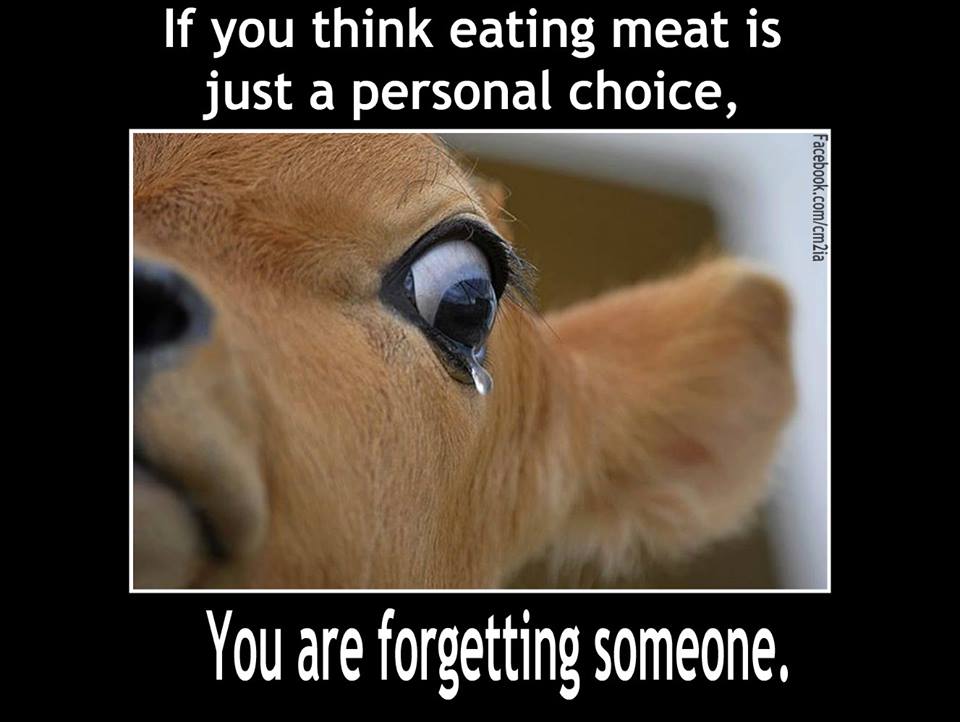
Animal Industry = Animal Abuse

The cows at the ranch across the road were lowing mournfully again last night. Possibly because their calves were taken from them and shipped off to slaughter. Or maybe because they are stuck out in a half-flooded field while the tail-end of a typhoon dumps on them for the fourth straight day.

As is typical in this modern era, although his is a very small operation, the rancher has a building for his machinery, but the animals have to endure hypothermic weather conditions. Meanwhile, their “owner” sits inside an electrically-heated house, thinking only about what the blue, glowing boob tube tells him to.

And they call cows “dumb animals.”

I’ve always felt sorry for cows. Dehorned, defenseless and fenced into squared off, undersized pastures by barbed wire; they’re lucky if they can find a scraggly lone tree to take shelter under during winter storms or hot summer days. Domestic cattle in North America are not adapted to the interminably wet or subzero conditions they are expected to endure here.

And don’t even get me started on sheep. Talk about defenseless. Sheep ranchers have seen to it over the centuries that sheep are at their mercy, or the mercy of any other predatory species that comes along for that matter. And if said predator is non-human, the ranchers bring out their guns, traps and poisons to put the hurt on them as well.

Animal industry is animal abuse, no matter how you slice it.

1175354_593063067417723_1797546469_n

Start of hunting season reignites animal abuse concerns

[Hunters guilty of animal abuse? Imagine that.]

Start of hunting season reignites animal abuse concerns

by Carrie-Marie Bratley, in General News ·        12-09-2013 10:18:00        · 0 Comments

With the start of September comes the start of hunting season, an anticipated moment for hunters across Portugal. But with it come fresh concerns for the dogs used in the activity, particularly after the discovery of a ‘hunting kennel’ in Rogil, Aljezur (Algarve) in May this year, where more than 30 dogs were being kept in shocking conditions.

Start of hunting season reignites animal abuse concerns

Emaciated, wounded, and terrified; one by one six dogs were collected from the Rogil kennel by animal rescue association SOS Algarve Animals after weeks of pleading. The owner finally relented, but gave up just half a dozen of his thirty-something dogs. The dogs’ pathetic states were witnessed by The Portugal News as they were loaded into volunteers’ vehicles; their discovery opening a can of worms for local, regional and national authorities. Fortunately for the rescued animals they went on to make full recoveries at SOS’s farm in Almancil and have since been re-homed abroad. But, according to animal welfare associations, the case is far from being a one-off in Portugal and calls for tighter control over hunting kennels in Portugal are growing. According to the European Society for Dog and Animal Welfare (ESDAW), “In Portugal, Spain, France and many other southern countries, dogs are used specifically as a hunting tool. In many of these countries, it is a cruel and deep-rooted tradition that the dogs are believed to hunt better if they are kept starved or even emaciated.” Portugal’s Party for Animals and Nature also believes that the situation in Rogil is “paradigmatic” of what happens in the north and south of this country, and says it is “urgent” that Portugal creates a legal status for its animals so punishment for neglectful owners is on a par with the rest of Europe. National animal rights association Animal has launched a petition ‘For a New Animal Protection Law in Portugal’, which at the time of going to press has amassed close to 72,000 signatures. Yet despite the furore surrounding the Rogil case, so far no action has been taken against the kennel’s proprietor. The kennel in question was first visited by SEPNA nature and environment protection officers, which are part of the GNR police force, on 9 December 2012 after they were contacted by worried locals. At the time the officers counted 31 dogs and listed 29 offences committed: 28 for lack of proper licensing and one for keeping too many dogs in a rustic building. The kennel did have a valid licence issued by the ICNF Nature Conservation Institute for keeping up to 25 hunting dogs for the 2012/2013 season. A letter from SEPNA’s head offices states that at the time of the visit in December no injuries requiring medical assistance were seen on the dogs. But a few months later, in May, The Portugal News received photographic evidence clearly showing otherwise. In one horrific photo a dog has a massive open wound towards the end of its leg with a broken bone visibly jutting out. Other photos show evidently undernourished dogs chained up in pens with floors covered inches-deep in faeces, many dotted with sores and wounds. Authorities eventually returned to the kennel on 23 May this year, but on arrival all but three of the dogs had disappeared. Confronted by SEPNA, the owner claimed he had given his animals to acquaintances and friends. He told the authorities that twelve dogs had been sent to Spain, from where they had originally been purchased; ten had been given to a kennel in northern Portugal, which he refused to identify, and two were given to local friends, who he also refused to identify. He further said he would be taking the three remaining dogs – which a local municipal vet who was accompanying the authorities deemed to be in good health – to a nearby relative’s house. A petition launched by SOS to bring the owner of the Rogil kennel to justice has so far gathered 1,212 signatures, though any action against him has yet to be taken. “I think it is appalling and clearly evident that [he] is allowed to have however many dogs he wants and to treat them however he wants”, said SOS founder Laura McGeoch. Speaking to The Portugal News this week a GNR spokesperson insisted an investigation to verify the location of the missing Rogil dogs is still ongoing. “We are on a good path in terms of material to confirm their whereabouts”, the spokesperson said, adding “all efforts are being made” to locate them. The GNR source further revealed that since the Rogil kennel was brought to their attention the Algarve regional SEPNA is paying closer attention to such set-ups. He elaborated: “The Algarve isn’t really a place where there are many registered kennels; they tend to be found more in the Alentejo. But we are taking great care in inspecting this matter and not just because of the incident in Rogil.”