To think I almost watched an episode of the “Tiger King” at one time. I had added it to my Netflix list back when I’d heard only that it was a true crime documentay and guessed that it would reveal much about the way animals are abused when forced to perform. But I have long- since removed it from the list, after I started to get an idea that the rampant tiger abuse was not even the focus of the stupid show…
I was reminded of a time years ago when I took the chance to get near tigers by visiting a hollywood animal “trainer” or “wrangler” or whatever the heck they call them now at her property in rural Washington. She “owned” tigers, lions and I don’t remember what else–all kept in small, muddy outdoor enclosures, totally devoid of trees, bushes or any living vegetation. I’m guessing now, that she didn’t want to give the animals anything to hide behind.
When we went out to meet the tigers, one had knocked over its water bowl or for some reason she had to go into the pen with the tigers. One of them (playfully?) took a swipe at her and she responded by picking up a section of 2×4 and hitting the cat as hard as she could over the head, before hastily scrambling out of the fenced enclosure!
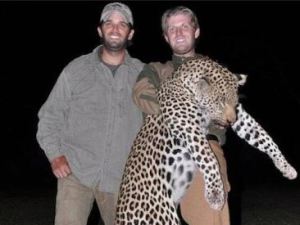
At that point it was clear that the animals weren’t at all happy there and wouldn’t hesitate to escape their confines if they had half a chance and freedom would not just end in them being shot like so many “big game” animals humans so proudly display on the walls of their dens or in their “trophy” rooms …
This article contains spoilers through all seven episodes of Tiger King.
At this particular moment, the most-watched show in America is a seven-part documentary series about a gay, polygamous zoo owner in Oklahoma who breeds tigers, commissions and stars in his own country-music videos, presides over what he describes as “my little cult” of drifters and much younger men, and ran for governor of Oklahoma in 2018 on a libertarian platform. He’s also currently serving a 22-year prison sentence for, among other charges, trying to arrange the assassination of his nemesis, an animal-sanctuary owner in Florida. And his business allies include another big-cat breeder—a yoga-loving guru in Myrtle Beach who runs what appears to be a tiger-themed sex sect.
A podcast about living through a pandemic
Listen to Social Distance, a series of conversations between Dr. James Hamblin, fellow journalists, and medical professionals about navigating life during the coronavirus crisis.
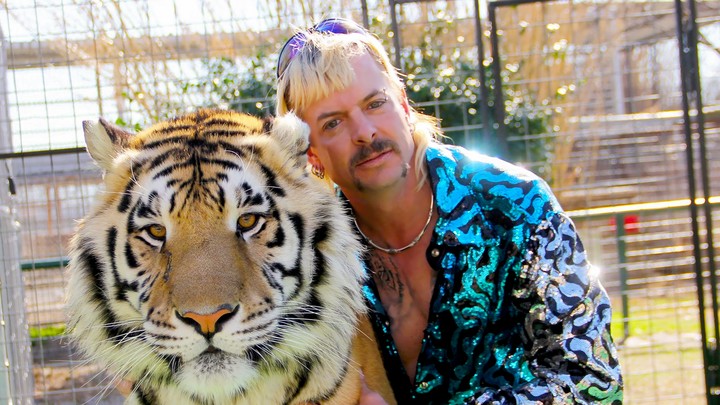
There are no heroes in Tiger King. Not Joseph “Joe Exotic” Maldonado-Passage, whose stripy mullet you’ve surely seen on social media, accompanied by a teal sequined jacket so ostentatious that the adult tiger he’s posing with looks like an afterthought. Not Bhagavan “Doc” Antle, who, one former employee alleges, coerces teenage girls working 100-hour weeks at his ranch to reach “his level of enlightenment” by sleeping with him. Not Carole Baskin, the owner of a Florida sanctuary for big cats, who Tiger King insinuates—in a strikingly unjournalistic way—might have killed her husband. And definitely not Eric Goode, the New York hotelier and animal-rights activist who co-directed the series, whose elevator pitch for it seems to have been “What if Christopher Guest, but real?” and whose disdain for the dentally challenged and leopard-print-festooned characters he captures is Tiger King’s most discernible emotion.
And yet, for the past two-plus weeks, Tiger King has consumed the pop-cultural imagination. It’s the stuff memes are made of, heavy on visual absurdity and light on meaning. The series is a carnival sideshow not unlike Joe Exotic’s central-Oklahoma park: You see the sign on the side of the road and you stop, not because you want to, necessarily, but because it’s there.
In that sense, Tiger King is also the latest and most acute iteration of a Netflix trend toward extreme storytelling; the more unfathomable and ethically dubious, the better. The point is virality—content so outlandish that people can’t help but talk about it. In 2018, the docuseries Wild Wild Country set the model, with its jaw-dropping chronicles of an alternative Oregon faith community whose antics allegedly included spiritual orgies, gun hoarding, electoral fraud, and mass poisonings. Last year’s Abducted in Plain Sight captured the appalling story of a teenage girl who was abused and kidnapped by a family friend, seemingly in full view of her parents. With its reality programming, too, Netflix has been courting eyeballs with simple insanity, via the hit dating series Love Is Blindand the upcoming Too Hot to Handle, a show in which ridiculously good-looking people are sequestered on an island to compete for a cash prize that diminishes every time they hook up, or even masturbate. The more scurrilous or degrading the concept, the more we watch.
This truism wasn’t news for P. T. Barnum, and it isn’t news now. But there’s still something wretched to me about the way Tiger King has managed to define a cultural moment in which empathy and communitarianism are so crucial. America right now, in the midst of a pandemic, is reliant on collective behavior, adhering to rules, and taking sensible precautions to avoid danger. Tiger King is the TV equivalent of licking the subway pole. Its characters have managed to construct whole worlds around themselves rather than curtail their worst impulses in any way. These characters are so colorful that they obliterate everything else around them. They’re any documentarian’s dream, and yet you can’t help but wonder what the directors hope to get out of giving showmen the mass exposure that they want. Who, in the end, benefits?
On its face, Tiger King is about a remarkable subculture in the U.S.: people who collect and (illegally) breed big cats. There are, the show reveals early on, more privately owned tigers living in America than there are existing in the wild, kept in independent “zoos” and parks across the country. (In 2003, authorities discovered that a man in Harlem was cohabiting with a 400-pound tiger named Ming, in the same apartment that his mother was using to babysit children.) If the people drawn to tigers have a shared quality, Tiger King emphasizes, it’s extroversion, which it illustrates in one scene with footage of Doc Antle riding an elephant into town while opining in voice-over about the “primordial calligraphy” of exotic animals.
Joe Exotic, for better or worse, is the show’s central character, and Tiger King sketches out a sparse biography that hints at, rather than elucidates, the forces that shaped him. The challenge seems to be that anything he says is stated in the service of inflating his own mystique, and the directors decline to press him or any of the other characters on the worst charges against them. There are some undeniable facts, such as how hard it must have been for Exotic to be a gay man in rural Oklahoma during the ’80s and ’90s. There’s also his history of releasing country songs he only lip-synchs to; his run for president in 2016 and for governor two years later; and his habit of filming virtually everything he does. There are a few private moments, too, including how he reacts after one of his employees is mauled by a tiger while at work. “I’m never gonna financially recover from this,” Maldonado-Passage sighs, while the rest of his employees try to tend to the victim’s severed arm. Hardest to endure is how he behaves at the funeral for his youngest husband, Travis, who accidentally shoots himself in the head. Dressed up in a dog collar, Exotic seizes the spotlight, singing, cracking jokes, and reminiscing fondly about his late partner’s testicles while Travis’s mother sobs.
Mostly, though, Exotic communes with tigers. He cuddles them while they’re riding shotgun in the front seat of his truck; he wrestles with them; he uses a steel hook to wrest newborn cubs from their mothers and then complains that the screaming babies are making too much noise. The visual impact of seeing humans and tigers so intimately connected is one of the defining qualities of Tiger King, and is also, the series suggests, why some people find tigers so appealing. There’s a taboo quality to the breach of natural laws separating humans and big cats that implies strength, virility, and power. No wonder, the show notes, so many male Tinder users have tiger selfies as avatars.
NETFLIX
Tiger King’s unified theory of tiger obsession falls short, however, when it reaches Carole Baskin, the owner of a Florida animal sanctuary devoted to big cats. This shortcoming might explain why the show takes such pains to portray her as a kook, and possibly even a murderer. Baskin is Exotic’s bête noire, a woman who has dedicated her career to trying to outlaw the breeding and personal ownership of exotic cats in the U.S. The show’s treatment of Baskin is where it indulges in its most egregious displays of false equivalence, as it tries to elevate her eccentricities to stand alongside those of Exotic and Antle. Baskin, Tiger King painstakingly lays out, is obsessed with animal print. The horror! Sometimes she wears flower crowns! She has an uncanny gift for search-engine optimization! She rides a bicycle! Her sanctuary relies heavily on unpaid volunteers! The show underscores all these facts, while making the most of the mysterious disappearance of Carole’s husband in 1997 and interviewing family members who seem convinced that she killed him. “There is absolutely no physical evidence at this time” implicating any one individual as a suspect, a police detective firmly and rather crushingly points out. Tiger King doesn’t care. It would much rather imply several times that she could have fed her husband’s corpse to tigers, had she been so inclined.
Baskin is interesting, too, because she’s a woman operating in a world characterized by gleeful misogyny. Exotic makes effigies of Baskin; he fills her mailbox with snakes (a strangely phallic gesture); he makes memes about her crotch, and videos in which he fantasizes about torturing her with a horse penis. He calls her a bitch so many times that the word loses all meaning. Jeff Lowe, one of Exotic’s business associates, who enters the series midway through, is a more limited character, but his treatment of women is still horrible enough to be noteworthy. (As his wife tells the camera about how she’s preparing for the upcoming birth of their child, Lowe remarks that she’ll immediately have to go back to the gym, and shows the directors glamour shots of the women he’s considering as nannies. Lowe, according to the show, also has a felony criminal record and a history of charges that include throttling his first wife.)
NETFLIX
The degradation in Tiger King starts to feel contagious after a while. Goode and his co-director, Rebecca Chaiklin, filmed the series over five years, and the longer they spend with their subjects, the more obviously things fall apart. One of Exotic’s ex-husbands, John Finlay, gives shirtless interviews that show off his abundant tribal tattoos—including a crotch adornment that reads privately owned joe exotic—and his undeniable lack of teeth. (Only in Episode 5 does Tiger King stop to note that meth has been a prevalent factor in Exotic’s world the whole time.) The interviews become more and more invasive. Travis’s mother is asked about her son’s death while she’s seemingly intoxicated. In Episode 7, one of Exotic’s zoo employees is so incapacitated that he passes out mid-interview. Exotic’s campaign manager is interviewed early on as a fresh-faced former Walmart manager enthusiastically crafting Exotic’s libertarian platform; a year or so later, he too has lost teeth, and appears considerably more disheveled than during his clean-cut canvassing days.
Exotic is the only one who appears unchanged, even as the plot makes its way toward his 22-year jail sentence for conspiring to have Baskin assassinated. The persona he’s crafted, you sense, is strong enough to survive anything, even prison. In that sense, there’s something undeniably Trumpian about him. No misfortune can shake his sense of self. No humiliation can shame a man who refuses to be shamed. The chaotic reactions that Exotic has sparked are irrevocable, and even now, he’s fast approaching cultural-legend status, as Hollywood stars spar on Twitter over who gets to play him in the already-approved miniseries. “Fuck yeah, roll the cameras,” is how the reality-TV producer Rick Kirkham described watching Exotic at his most idiosyncratic and badly behaved. Netflix obviously agreed. Why can’t the rest of us look away?
The actress steps up her activism as board member of animal-rights group Social Compassion in Legislation to push for the passing of The Big Cat Public Safety Act, a law that would prohibit the ownership of big cats.
After watching popular Netflix series Tiger King: Murder, Mahem, and Madness, actress Diane Keaton was inspired to take action to stop the animal cruelty depicted in the series. The docu-series follows the feud between Oklahoma roadside zookeeper Joe Maldonado-Passage (known as “Joe Exotic”) and Carole Baskin—owner of Florida sanctuary Big Cat Rescue who worked to shut down Exotic’s zoo—along with other eccentric characters classified loosely as “big cat people.” While Exotic and fellow Tiger King zookeepers claim that their work aids the conservation efforts of big cats, undercover investigations have proven otherwise.
This week, The Humane Society of the United States (HSUS) released never-before-seen footage of Exotic and his cohorts at his G.W. Zoo punching cubs in the face, dragging them by the tails, and engaging in other forms of abuse in the name of making profit from breeding and keeping the wild animals in captivity. Exploiting big cats for entertainment also poses dangers to humans, as seen by the brutal mauling of a zoo employee featured in Tiger King. “Now is the time to end animal cruelty,” Keaton said. “Exotic animals that are kept for private use are not only a public health issue but also endanger the lives of first responders.”
Keaton has long been a board member of animal-rights organization Social Compassion in Legislation (SCIL) and is stepping up her efforts to bring awareness to The Big Cat Public Safety Act, HR 1380 (BCPSA), legislation that would effectively end the ownership of big cats nationwide and prohibit the use of cubs for photo opportunities. “Too many animals suffer in roadside zoos in America. Tiger King did not show the abuses suffered off-camera,” Louise Linton, another prominent SCIL board member, said. “Bears, Big Cats, and many other exotic animals languish in ill-health, starvation, and abuse in tiny cages. There are ample transport vehicles and many sanctuaries awaiting these animals’ release.”
This week, Keaton and other SCIL board members (which include vegan actress Maggie Q) spoke with BCSA author Congressman Mike Quigley (D-IL) to establish a path toward effectively pushing the bill through Congress once the COVID-19 pandemic is under control.
“We are so fortunate to have our board members standing up and shining a light on the problem of personal ownership of these magnificent animals,” SCIL Founder and President Judie Mancuso said. “It is important for the public to understand that exploiters like Joe Exotic put profit over the welfare of the animals. They will breed and breed to keep the baby tiger photo ops rolling, but do not care what happens to those animals once they are sold to whoever is willing to pay for them or dispose of them before they get too big. Sanctuaries like the one run by Carole Baskin do not breed and do not allow the animals to interact with humans, which the show did not highlight enough.”
SCIL, Baskin, the HSUS, and others are urging citizens to voice their concerns about the suffering of big cats to their legislators by asking them to support The Big Cat Public Safety Act.
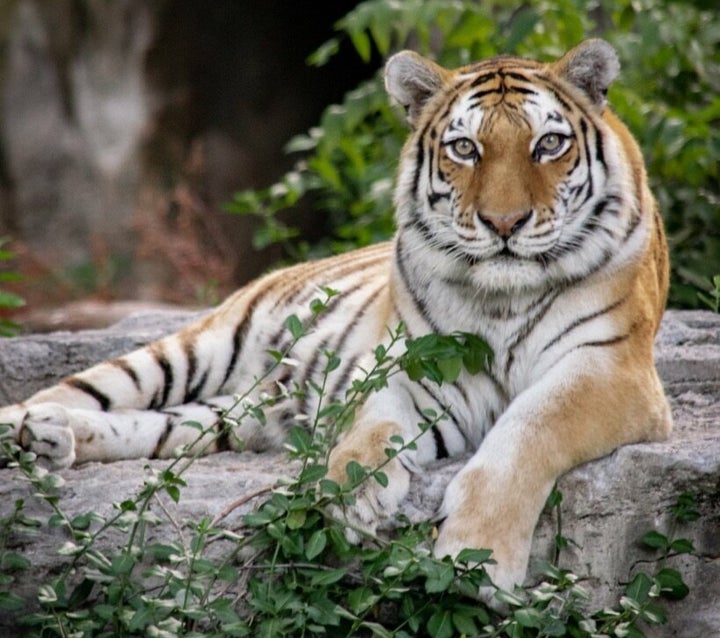
I’ve worked as an animal caretaker at a renowned, AZA-accredited organization for over a decade now. It’s a unique job, and every day is different, but even in my world, it’s a weird time to be a tiger keeper.
I guess you might say that it’s never not a weird time to be a tiger keeper, but here in the age of COVID-19 and “Tiger King,” I find it especially odd.
The pandemic started to spread before I saw the Netflix documentary. When the mayor of our city issued a “shelter in place” order, the zoo that I work at closed to the public. For years, I’ve explained that I work in a 365-day a year occupation to kids by saying, “You don’t skip feeding your dog on Christmas, right?” Meaning just because the zoo is closed, keepers still need to come in.
The first morning of working in the closed zoo felt peaceful. I’m used to quieter days in the winter, but even then, the zoo functions like a small city, with various employees cleaning grounds, fixing infrastructure, hustling this way and that. The lockdown feels different.
Only “essential” staff are present, and carnivore keepers like myself typically work solo as a safety precaution. Sometimes I spend my entire shift without seeing another person. There’s a calmness in the solitude. It’s just me and the cats.
Outside, the world brimmed with a sense of impending doom, with rising coronavirus case counts and what seemed negative news 24 hours a day. Within the zoo’s walls, I pushed the anxiety out and focused on the gentle chuffs of our tigers.
The zoo is not immune to the workings of the outside world, and as COVID-19 escalated, things changed within it. Our department split into two teams, and our weekends rotated, with each team now working half of the week.
In theory, if one team becomes exposed to the virus, the other team could still function and step in. After all, you don’t skip feeding your tiger just because there’s a terrifying global pandemic, right?
It was painful to watch Joe’s rowdy staff call themselves ‘keepers,’ diminishing the occupation at a time when caretakers of all kinds are called upon to demonstrate extreme dedication to their particular cause.
Shortly after we split our routine, the texts started.
“Have you seen ‘Tiger King’?” friends asked as seemingly all of America binged the new docuseries.
The show tells the story of Joe Exotic and his uncouth roadside attraction contemporaries who own large exotic animals, like tigers.
I hadn’t seen it.
As many of my friends joked about working from home in their sweatpants and as comedians hosted late-night shows from their bathtubs, my job seemed to become even more intense. Despite what Joe preaches, wild animals are not pets, so I can’t exactly take my work home with me.
While on the job, I’ve been busy, to say the least, averaging 15,000 to 20,000 steps a shift lately. My co-workers and I maintain the animals’habitats and make sure everyone has healthy diets, fresh water and plenty of enriching objects, foods and activities. Though the zoo’s pathways are vacant, our standards of care remain the same.
What we do at the zoo does not compare to the front-line work of health care, housekeeping, first responder and sanitation workers during the age of COVID-19. These individuals truly are heroes. Nonetheless, I am leaving my home every morning ― the only place I deem genuinely safe ― and going out into an increasingly perilous world.
At work, I inevitably cross paths with maintenance workers or horticulture staff from time to time, and it isn’t always possible to maintain a six-foot distance. Then, of course, there is the shift change between teams. Before I leave my building on my “Friday,” I wipe down everything I can with diluted bleach. I wipe door handles, locks, broom handles, countertops, the desk and keyboard, hose bibs and sink nozzles. But it still seems impossible to sanitize everything. It never really feels like enough.
When I get home from work each day, I go straight into my basement, where I am lucky enough to have a shower. I leave my zoo clothes downstairs, wipe my phone down with alcohol, shower and wash my hair before relieving my now teach-at-home husband from caring for our young son.
This is all to say, I’m not exactly in the position for a quarantine-TV binge.
Still, the texts kept coming.
“What do you think of ‘Tiger King’?”
In an effort to have an opinion to offer, I finally squeezed the show into my nightly meal-prep/dishwashing routine.
So, here’s what I think.
The animal abuse was appalling. Seeing Joe Exotic tear tiger cubs, only minutes old, away from their mother so that they could become props in his “cub petting” scheme is not a scene I will quickly forget.
But there was something else about “Tiger King” that bothered me. Something more subtle than the overt abuse and general craziness.
There’s a scene when Big Cat Rescue owner Carole Baskin offhandedly remarks, “Oh, I don’t pay animal caretakers, people will do that stuff for free.”
I took a pause, hearing this, as I peanut-buttered my sandwich to prepare for work the next day. I was prepping to leave my safe space, potentially risking the safety of my family, to care for the zoo’s animals. And, honestly, I wouldn’t have it any other way. My co-workersand I are determined to guide the animals in our care through this uncertain era, no matter what comes of it.
Whether it’s a wet market in China or people like Joe Exotic and his friends illegally trading and breeding wildlife in our own backyard, the way we treat wildlife matters. We’re seeing the dire consequences of this right now.
Most animal caretakershave four-year degrees, or even graduate degrees, and years of experience. We are working in two teams precisely because of the skill and expertise our job requires. If we all become sick with the novel coronavirus, the average (pardon the pun) Joe will not be able to step in and safely fill our shoes, despite Baskin’s claim that anyone could and would “just do that stuff for free.”
It was painful to watch Joe’s rowdy staff call themselves “keepers,” diminishing the occupation at a time when caretakers of all kinds are called upon to demonstrate extreme dedication to their particular cause.
As these weeks of sheltering in place have gone by, the weather has warmed up. More trees have budded out. The forsythia bloomed. There’s a muted murmur in the air — the spring chorus of American toads — adding an otherworldliness to the zoo’s vacant pathways. But the quiet no longer seems peaceful to me. It seems eerie.
I miss the energy ― the laughter and joy bubbling from families visiting the zoo, now unnervingly gone. I miss the chance to connect with guests and talk to them about what our zoo is all about ― the conservation and welfare of the diverse species, including tigers, in our care. I may not have always recognized it, but now it’s obvious: The visitors are an essential component of the zoo, too.
As we continue to be locked in our homes and to distance ourselves from friends and family and co-workers, many people have looked for the source of this pandemic. I have seen bats blamed for the coronavirus. Or pangolins. I’ve even heard snakes are at fault. But really, we humans are the ones to blame.
The intersection of humans, animals and the environment creates the One Health approach to disease control, and, let’s be honest, as a society, we’re kind of failing at it. Whether it’s a wet market in China or people like Joe Exotic and his friends illegally trading and breeding wildlife in our own backyard, the way we treat wildlife matters. We’re seeing the dire consequences of this right now.
It’s hard not to watch “Tiger King.” Everyone is talking about it and, while we patiently quarantine, no one really has any other plans. So, why not indulge in staring at the train wreck? But remember that for every Joe Exotic, there are hundreds of dedicated keepers leaving the safety of their homes and heading out into the pandemic to care for these remarkable animals in real and positive ways.
And when all of this is over, this tiger keeper, for one, can’t wait to welcome guestsback to the zoo. None of us knows what a post-pandemic world will look like. But I sure hope that there will be a bright future for both humans andtigers.
Carolyn Mueller Kelly is a keeper at an AZA-accredited U.S. zoo with more than a decade of experience in animal care. Aside from her work with lions, tigers and bears, she loves to spend her time writing.
Wuhan, China reports no new local cases of COVID-19 in a 24-hour period as Italy sees its deadliest day of the outbreak; Benjamin Hall reports from London.
Get all the latest news on coronavirus and more delivered daily to your inbox. Sign up here.
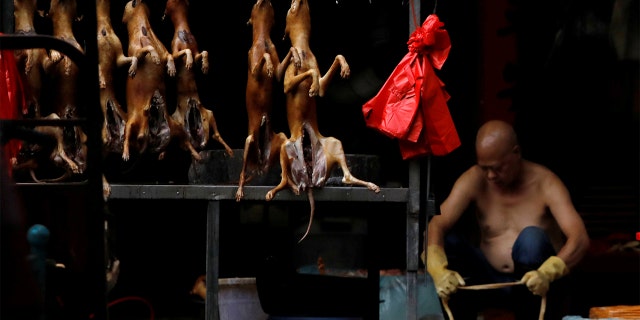
While rumors have swirled that the coronavirus pandemic originated in bats and then infected another animal that passed it onto people at a market in the southeastern Chinese city of Wuhan, scientists have not yet determined exactly how the new coronavirus infected people.
Butchered dogs displayed for sale at a stall inside a meat market during the local dog meat festival, in Yulin, Guangxi Zhuang Autonomous Region, China. (REUTERS/Tyrone Siu/File Photo)
“You’ve got live animals, so there’s feces everywhere. There’s blood because of people chopping them up,” Peter Daszak, president of EcoHealth Alliance, which works to protect wildlife and public health from emerging diseases, told the Associated Press last month.
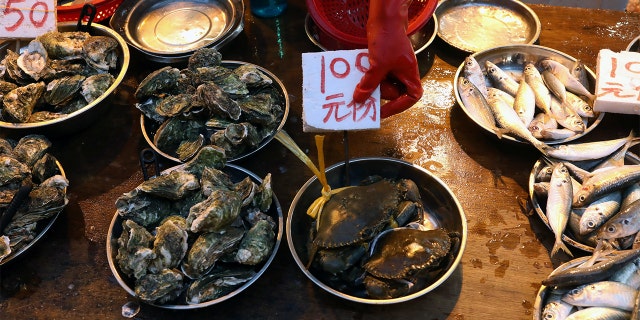
Fresh seafood on sale at a wet market in Hong Kong, China. (REUTERS/Ann Wang)
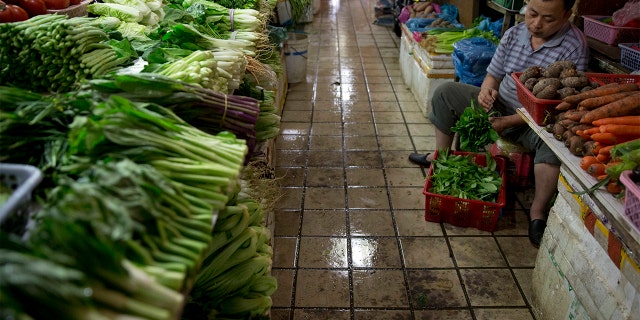
“Wet markets,” as defined by the Oxford English Dictionary, are places “for the sale of fresh meat, fish, and produce.” They also sell an array of exotic animals.
A vendor prepares vegetables for sale at a wet market in Shenzhen, China. (AP Photo/Ng Han Guan)
The Huanan Seafood Wholesale Market in Wuhan, before its closure, advertised dozens of species such as giant salamanders, baby crocodiles and raccoon dogs that were often referred to as wildlife, even when they were farmed, according to the AP.
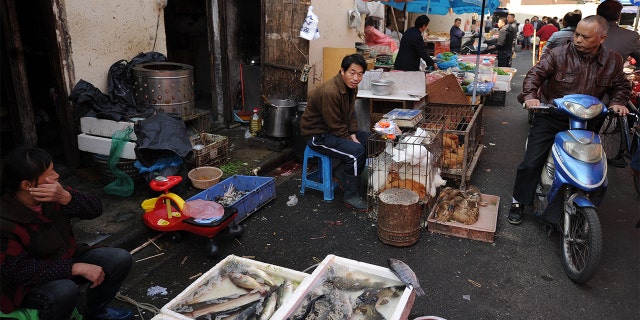
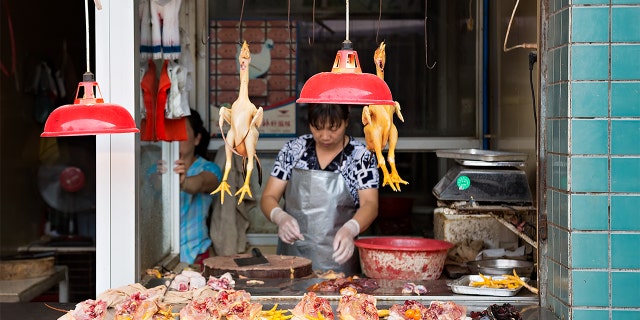
Vendors sell fish and poultry at an outdoor wet market in Shanghai’s northern district of Zhabei. (PETER PARKS/AFP via Getty Images)
And like many other “wet markets” in Asia and elsewhere, the animals at the Wuhan market lived in close proximity as they were tied up or stacked in cages.
Poultry (FILE)
Animals in “wet markets” are often killed on-site to ensure freshness — yet the messy mix raises the odds that a new virus will jump to people handling the animals and start to spread, experts say.
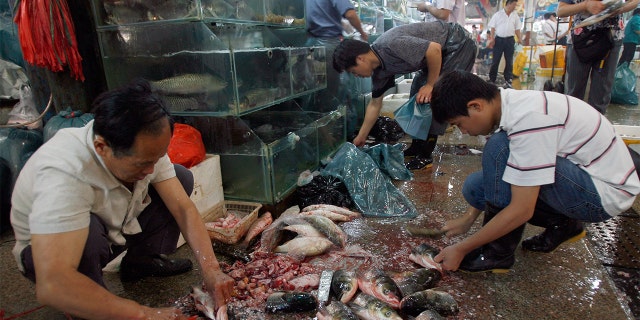
Chinese seafood vendors prepare fresh fish at a wet market in Beijing. (TEH ENG KOON/AFP via Getty Images)
“I visited the Tai Po wet market in Hong Kong, and it’s quite obvious why the term ‘wet’ is used,” an NPR reporter wrote about them earlier this year.
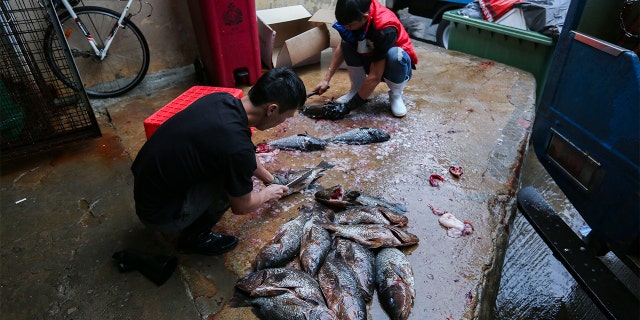
Seafood at Aberdeen Wet Market. (Chen Xiaomei/South China Morning Post via Getty Images)
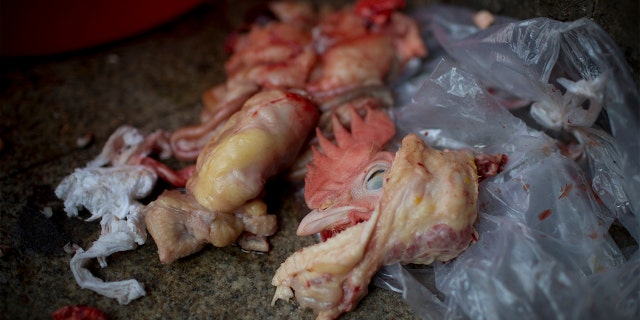
“Live fish in open tubs splash water all over the floor. The countertops of the stalls are red with blood as fish are gutted and filleted right in front of the customers’ eyes. Live turtles and crustaceans climb over each other in boxes,” he described. “Melting ice adds to the slush on the floor. There’s lots of water, blood, fish scales and chicken guts. Things are wet.”
Wildlife markets and related trade are a dangerous vector for transmission of zoonotic diseases. We applaud this bipartisan congressional letter calling for aggressive action toward a global shut down of live wildlife markets and a ban on the international trade of live wildlife that is not intended for conservation purposes. Photo by pasindu/pixabay
Consistent with the recommendations in Wildlife Markets and COVID-19, the Humane Society International report released earlier this week, and our own messaging on the pandemic, Senators Cory Booker (D-N.J.) and Lindsay Graham (R-S.C.), Representatives Mike Quigley (D-Ill.) and Michael McCaul (R-Texas) and more than sixty of their colleagues have sent an urgent letter seeking action from three major global health entities. In their communication to the Directors-General of the World Health Organization, the World Organization for Animal Health and the Food and Agriculture Organization of the United Nations, they asked the three groups “to take aggressive action toward a global shut down of live wildlife markets and a ban on the international trade of live wildlife that is not intended for conservation purposes.” This is one of several calls by elected officials for worldwide action to reduce future pandemic risks.
Humane Society Legislative Fund staff members worked closely with Democratic and Republican congressional offices to develop the case laid out in the joint letter. Together with leadership on both sides of the aisle, we’re going to work to step up the pressure to shut these markets down.
In Wildlife Markets and COVID-19, our colleagues urged governments around the world at all levels to ban or severely limit all trade, transport and consumption of wildlife, immediately. The Humane Society of the United States, the Humane Society Legislative Fund and Humane Society International have long pointed to wildlife markets and related trade as a dangerous vector for transmission of zoonotic diseases. We’ve stated the case plainly ourselves. We must close wildlife markets selling wild animals, particularly mammals and birds, in every nation, and we must halt the import, export and internal transport of live wildlife or wildlife meat intended for sale in such markets or in other contexts, whether the animals were captured in the wild or farmed. It’s not just for the animals’ sake; it’s for our own.
Sara Amundson is president of the Humane Society Legislative Fund.
Jason Baker-https://www.thejakartapost.com/academia/2020/04/09/will-whats-on-our-plates-cause-the-next-pandemic.html
Jakarta / Thu, April 9, 2020 / 01:44 pm
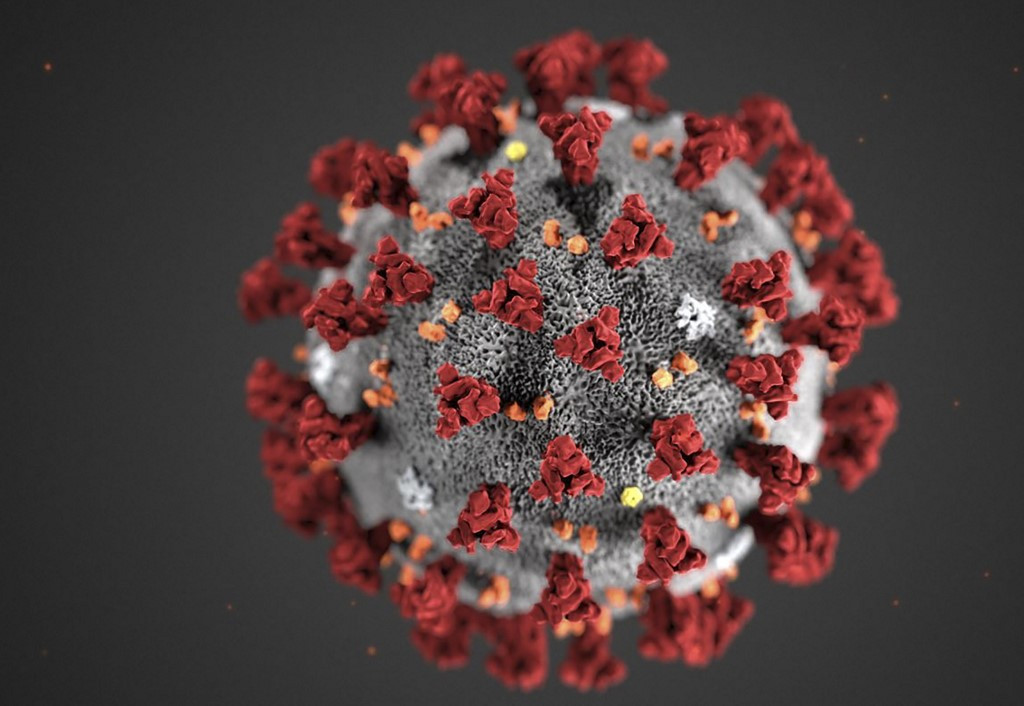
This illustration image obtained on Feb. 3 courtesy of the Centers for Disease Control and Prevention, and created at the Centers for Disease Control and Prevention (CDC), reveals ultrastructural morphology exhibited by coronaviruses. (AFP/Lizabeth Menzies / Centers for Disease Control and Prevention )
The current situation in Indonesia brought about by the novel coronavirus (SARS-CoV-2) makes me want to pull my hair out. Not just because it’s disruptive, but because the signs that an outbreak like COVID-19 would happen were so clear.
Seventeen years ago, when SARS first made headlines, I locked myself in a cage in Hong Kong to illustrate the way our taste for animal flesh contributes to animal-borne diseases. That same year, I wore a hazmat suit to the ASEAN+3 Summit in Bali, where officials were discussing ways to prevent killer diseases. I also dressed as a chicken and demonstrated at a KFC in Bangkok during a deadly bird flu outbreak. All in all, I’ve spent more than two decades warning people that it’s unhealthy – and downright dangerous – to raise animals for food.
Seeing people get sick and die from COVID-19 has only strengthened my resolve to persuade everyone to stop eating animals. We have to learn from past pandemics and go vegan before wearing face masks becomes as commonplace as wearing clothes.
Meat markets, factory farms and slaughterhouses provide the perfect breeding ground for coronaviruses and other potentially devastating pathogens. The high demand for animal-based food means that animals must be mass-produced in crowded, feces-ridden farms and slaughtered on killing floors that are contaminated with blood, vomit and other bodily fluids. Pathogens flourish in such conditions. And when an outbreak does occur, the animals, who have already suffered so much, are slaughtered en masse in horrific ways. I know. I was in Manilla when countless pigs were killed because of a swine flu outbreak.
Some scientists say SARS-CoV-2 started in a Chinese “wet market” that sold seafood, live poultry and exotic animals for human consumption. Others suspect the virus may have been spread by pangolins, scaly anteaters that are often poached and used in traditional Chinese medicine or eaten in China and Vietnam. Whatever its exact origin, SARS-CoV-2 most likely started in animals.
According to the United Nations, 70 percent of new human diseases originate in animals, and most of those are directly linked to animals used for food. Most scientists believe that every flu virus originated in birds, as birds are known to carry every single one of the 144 varieties of influenza.
It’s not unusual for animal-borne pathogens to mutate and sicken humans. While precautions such as suspending travel, quarantining at-risk individuals and practicing good hygiene may help stop the spread of COVID-19 and other deadly diseases, we need to take one more significant step to prevent future epidemics of animal-borne diseases in the first place: Stop raising animals for food.
It’s bad enough that the consumption of meat and other animal-based food contributes to heart disease, diabetes and cancer and that harmful bacteria, including salmonella and E. coli, found in the intestines and feces of warm-blooded animals, often lead to food-poisoning outbreaks. Do we really want to add potentially deadly animal-borne viruses to the mix?
—
PETA’s senior vice president for international campaigns
Disclaimer: The opinions expressed in this article are those of the author and do not reflect the official stance of The Jakarta Post.
Customers select seafood at a wet market in Dandong, Liaoning Province, China, in 2017. (Philip Wen/Reuters)
They’re more alike than not in their violations of moral common sense.
NRPLUS MEMBER ARTICLE
Although no government is better than China’s at making troublesome people disappear, a strange leniency has been accorded vendors at the country’s live-animal meat markets, who by most accounts gave us the pandemic and yet, reports the Daily Mail, have lately been allowed to set up shop again. China’s coronavirus lockdown is over, authorities have encouraged celebrations of “victory,” and citizens may once again go about their food shopping amid the cries and mayhem of animal slaughter. Ahh, back to normal life!In these parts, we’re told, you’re not really celebrating unless there’s bat, pangolin, cat, or dog meat on the table — the latter, notes the Daily Mail, “a traditional ‘warming’ winter dish.” Reporter George Knowles, writing late last month, provides one of the milder accounts of scenes that will quickly exhaust anyone’s supply of culturally sensitive euphemisms, describing one of the markets — also known as “wet markets,” where both live and dead animals are on offer — in China’s southwestern city of Guilin: “Terrified dogs and cats crammed into rusty cages. Bats and scorpions offered for sale as traditional medicine. Rabbits and ducks slaughtered and skinned side by side on a stone floor covered with blood, filth, and animal remains.”
If you’re up for a few further details, we have travel writer Paula Froelich, in a recent New York Post column, recalling how in the Asian live-animal markets she has visited the doomed creatures “stare back at you.” When their turn comes, she writes,
the animals that have not yet been dispatched by the butcher’s knife make desperate bids to escape by climbing on top of each other and flopping or jumping out of their containers (to no avail). At least in the wet areas [where marine creatures are sold], the animals don’t make a sound. The screams from mammals and fowl are unbearable and heartbreaking.
The People’s Republic has supposedly banned the exotic-meat trade, and one major city, Shenzhen, has proscribed dog and cat meat as well. In reality, observes a second Daily Mail correspondent, anonymously reporting from the city of Dongguan, “the markets have gone back to operating in exactly the same way as they did before coronavirus.” Nothing has changed, except in one feature: “The only difference is that security guards try to stop anyone taking pictures, which would never have happened before.”
Lest we hope too much for some post-pandemic stirring of conscience, consider the Chinese government’s idea of a palliative for those suffering from the coronavirus. As the crisis spread, apparently some fast-thinking experts in “traditional medicine” at China’s National Health Commission turned to an ancient remedy known as Tan Re Qing, adding it to their official list of recommended treatments. The potion consists chiefly of bile extracted from bears. The more fortunate of these bears are shot in the wild for use of their gallbladders. The others, across China and Southeast Asia, are captured and “farmed” by the thousands, in a process that involves their interminable, year-after-year confinement in fit-to-size cages, interrupted only by the agonies of having the bile drained. Do an image search on “bear bile farming” sometime when you’re ready to be reminded of what hellish animal torments only human stupidity, arrogance, and selfishness could devise.
If one abomination could yield an antidote for the consequences of another, Tan Re Qing would surely be just the thing to treat a virus loosed in the pathogenic filth and blood-spilling of Wuhan’s live market. There’s actually a synthetic alternative to the bile acids, but Tradition can be everything in these matters, and devotees insist that the substance must come from a bear, even as real medical science rates the whole concoction at somewhere between needless and worthless. President Xi Jinping has promoted such traditional medicines as a “treasure of Chinese civilization.” In this case, the keys to the treasure open small, squalid cages in dark rooms, where the suffering of innocent creatures goes completely disregarded. And perhaps right there, in the willfulness and hardness of heart of all such practices, is the source of the trouble that started in China.
Already, in the Western media, chronologies of the pandemic have taken to passing over details of the live-animal markets, which have caused viral outbreaks before and would all warrant proper judgment in any case. News coverage picks up the story with the Chinese government’s cover-up of early coronavirus cases and its silencing of the heroic Wuhan doctors and nurses who tried to warn us. To brush past the live markets in fear of seeming “xenophobic,” “racist,” or unduly judgmental of other people and other ways is, however, to lose sight of perhaps the most crucial fact of all. We don’t know the endpoint of this catastrophe, but we are pretty certain that its precise point of origin was what Dr. Anthony Fauci politely calls “that unusual human–animal interface” of the live markets, which he says should all be shut down immediately — presumably including the markets quietly tolerated in our own country. In other words, the plague began with savage cruelty to animals.
Discussion of the live-animal markets is another of those points where moral common sense encounters the slavishly politically correct, though it’s not as if we’re dealing here with Asia’s most sensitive types anyway. No Western critic need worry about hurting the feelings or reputations of people who maximize the pain and stress of dogs in the belief that this freshens the flavor of the meat, and who then kill them at the market as the other dogs watch. Customers of such people aren’t likely to feel the sting of our disapproval either.
About the many customers and suppliers in Asia, and especially in China, of exotic fare, endless ancient remedies, and carvings and trinkets made of ivory, the best that can be said is that these men and women are no more representative of their nations than are the riffraff running the meat markets. Their demands and appetites have caused a merciless pillaging of wildlife across the earth — everything that moves a “living resource,” no creature rare or stealthy enough to escape their gluttony or vanity. Of late even donkeys, such peaceable and unoffending creatures, have been rounded up by the millions in Asia, Africa, the Middle East, and South America for shipment and slaughter, all to satisfy demand for yet another of China’s traditional-medicine manias.
Easy to blame for all of this is the government of China. Authorities took forever, for example, to enforce prohibitions on ivory carving, despite an unquestioned competence in carrying out swift crackdowns. And in general, at every level, the government tends to tolerate a culture of cruelty, or else to actively promote it at the prodding of lucrative industries, both legal and illicit. But the problem runs deeper than that, even as many younger Chinese, to their enormous credit, have tried to organize against the ivory trade, the wet markets, and other depravities in their midst.
In the treatment of animals and in safeguarding human health, there are elementary standards to which all must answer. The challenge to clear thinking, as Melissa Chen writes in SpectatorUSA,
is to avoid falling into the trap of cultural relativism. It’s perfectly appropriate to criticize China’s rampant consumption of exotic animals, lack of hygiene standards and otherwise risky behavior that puts people at risk for zoonotic infections. Until these entrenched behaviors based on cultural or magical beliefs are divorced from Chinese culture, wet wildlife markets will linger as time-bombs ready to set off the next pandemic.
Acknowledging that Western societies have every moral reason to condemn the barbarism and recklessness of the live-animal markets only invites, however, a tougher question: Do we have the moral standing? And if any of us are guilty of blind cultural prejudice or of a smug sense of superiority toward Chinese practices, a moment’s serious thought will quickly set us straight.
When the Daily Mail describes how Chinese guards at the live-animal market now “try to stop anyone from taking pictures,” who does that remind us of? How about our own livestock companies, whose entire mode of operation these days is systematic concealment by efforts to criminalize the taking of pictures in or around their factory farms and slaughterhouses? The foulest live-animal-market slayer in China, Vietnam, Laos, or elsewhere would be entitled to ask what our big corporations are afraid the public might see in photographic evidence, or what’s really the difference between his trade and theirs except walls, machinery, and public-relations departments.
If you watch online videos of the wet markets, likewise, it’s striking how the meat shoppers just go on browsing, haggling, chatting, and even laughing, some with their children along. Were it not for the horrors and whimpers in the background, the scene could be a pleasant morning at anyone’s local farmer’s market. As the camera follows them from counter to counter, you keep thinking What’s wrong with these people? — except that it’s not so easy, rationally, to find comparisons that work in our favor.
No, we in the Western world don’t get involved while grim-faced primitives execute and skin animals for meat. We have companies with people of similar temperament to handle everything for us. And there’s none of that “staring back” that the Post’s Paula Froelich describes, because, in general, we keep the sadness and desperation of those creatures as deeply suppressed from conscious thought as possible. An etiquette of denial pushes the subject away, leaving it all for others to bear. Addressing a shareholders’ meeting of Tyson Foods in 2006, one worker from a slaughterhouse in Sioux City, Iowa, unburdened himself: “The worst thing, worse than the physical danger, is the emotional toll. Pigs down on the kill floor have come up and nuzzled me like a puppy. Two minutes later I had to kill them — beat them to death with a pipe. I can’t care.”
Following the only consistent rule in both live-animal markets and industrial livestock agriculture — that the most basic animal needs are always to be subordinated to the most trivial human desires — this process yields the meats that people crave so much, old favorites like bacon, veal, steak, and lamb that customers must have, no matter how these are obtained. When the pleasures of food become an inordinate desire, forcing demands without need or limit and regardless of the moral consequences, there’s a word for that, and the fault is always easier to see in foreigners with more free-roaming tastes in flesh. But listen carefully to how these foods or other accustomed fare are spoken of in our culture, and the mindset of certain Asians — those ravenous, inflexible folks who will let nothing hinder their next serving of pangolin scales or winter dish of dog — no longer seems a world away.
We in the West don’t eat pangolins, turtles, civets, peacocks, monkeys, horses, foxes, and wolf cubs — that’s all a plus. But for the animals we do eat, we have sprawling, toxic, industrial “mass-confinement” farms that look like concentration camps. National “herds” and “flocks” that all would expire in their misery but for a massive use of antibiotics, among other techniques, to maintain their existence amid squalor and disease — an infectious “time bomb” closer to home as bacterial and viral pathogens gain in resistance. And a whole array of other standard practices like the “intensive confinement” of pigs, in gestation cages that look borrowed from Asia’s bear-bile farms; the bulldozing of lame “downer cows”; and “maceration” of unwanted chicks, billions routinely tossed into grinders. All of which leave us very badly compromised as any model in the decent treatment of animals.
Such influence as we have, in fact, is usually nothing to be proud of. It made for a perfect partnership when, for instance, one of the most disreputable of all our factory-farming companies, Smithfield Foods, was acquired in 2013 by a Chinese firm, in keeping with some state-run, five-year plan of the People’s Republic to refine agricultural techniques and drive up meat production. Now, thanks to American innovation, Smithfield-style, the Chinese can be just as rotten to farm animals as we are — and just as sickly from buying into the worst elements of the Western diet.
In China and Southeast Asia, they have still not received our divine revelation in the West that human beings shall not eat or inflict extreme abuse on dogs but that all atrocities to pigs are as nothing. They’re moving in our culinary direction, however, and more than half the world’s factory-farmed pigs are now in China and neighboring countries. In the swine-fever contagion spreading across that region right now — addressed as usual by mass cullings: gassing tens of millions of pigs or burying them alive — our industrial animal-agriculture system is leaving its mark, while providing yet further evidence that factory farms are all pandemic risks themselves.
How many diseases, cullings, burial pits, and bans on photographing these places even at their wretched best will we need before realizing that the entire system is profoundly in error, at times even wicked, and that nothing good can ever come of it? Perhaps the live-animal markets of China, with all the danger and ruin they have spread, will help us to see those awful scenes as what they are, just variants of unnatural, unnecessary, and unworthy practices that every society and culture would be better off without.
Plagues, as we’re all discovering, have a way of prompting us to take stock of our lives and to remember what really matters. If, while we’re at, we begin to feel in this time of confinement and fear a little more regard for the lives of animals, a little more compassion, that would be at least one good sign for a post-pandemic world.
By signing, you accept Lady Freethinker’s Terms of Service and Privacy Policy, and agree to receive email updates on this and other issues. You can unsubscribe at any time.
Share this petition
PETITION TARGET: Detroit Police Chief James Craig
A young female pit bull found cruelly dumped in a trash can showed scars on her neck from chains and signs of breeding abuse, as she had clearly recently given birth to puppies.
The emaciated and terrified dog was likely used as a breeding machine and thrown away when she was no longer useful to her supposed caretakers. The new mother’s puppies were nowhere to be found, and their fate is still unknown.
Disposing of a living creature with no regard for her wellbeing is an unthinkable act of cruelty and must not be tolerated in our society. Anyone capable of such a barbaric deed should not be caring for any animal, especially newborn puppies. Police must find the perpetrator(s) soon.
Sign this petition urging the Detroit Police Chief James Craig to use all available resources to find the culprit(s) responsible for this heinous act of animal abuse and ensure he or she never harms another dog again.
This is an ongoing investigation. If anyone has any information, please contact the Michigan Humane Society at 313-872-3401.
The people who did this do not deserve to live, find them, find the babies and bring them to mom NOW!
REPORT COMMENT
Kate P 2020-03-29 12:18:44
please find and prosecute to the fullest extent of the law the person responsible for cruelly throwing the poor pit bull mother out in the garbage. So sad!
As meatpackers rush to meet demand, their employees are starting to get COVID-19. But some workers say they’re going to work ill because they don’t have paid sick days and can be penalized for staying home.
A Koch Foods plant in Morton, Mississippi. (Rory Doyle for ProPublica)
ProPublica is a nonprofit newsroom that investigates abuses of power. Sign up to receive our biggest stories as soon as they’re published.
Here’s what has happened in the meatpacking industry in the last week alone:
A federal food safety inspector in New York City, who oversaw meat processing plants, died from the illness caused by the novel coronavirus.
A poultry worker in Mississippi, employed by America’s third largest chicken company, tested positive for the virus, causing a half-dozen workers to self-quarantine. Another worker in South Dakota, employed by the world’s largest pork producer, also tested positive.
In Georgia, dozens of workers walked out of a Perdue Farms chicken plant, demanding that the company do more to protect them.
And Tyson Foods told ProPublica on Friday that “a limited number of team members” had tested positive for the disease.
As COVID-19 makes its way across the country, leading to panic grocery buying in state after state, the stresses on the nation’s food supply chain have ratcheted ever higher. But in industries like meatpacking, which rely on often grueling shoulder-to-shoulder work, so have the risks to workers’ health.
In interviews this week, meat and poultry workers, some in the country without authorization, noted with irony that they have recently been labeled “essential” by an administration now facing down a pandemic. Yet the rules of their workplaces — and the need to keep food moving — pressure them to work in close quarters, even when sick.
And it’s unclear how federal regulations that traditionally protect workers from harm in their workplaces will address a potentially deadly coronavirus.
“They are listening about social distancing on the TV and some of them try to practice it in their home, but when they go to work, they can’t do it,” said Father Roberto Mena, who ministers to many poultry workers at St. Michael Catholic Church in Forest, Mississippi.
Many of the nation’s meatpackers declined to respond to specific questions about how they’ve dealt with infected workers or what they’ve done to try to mitigate the spread of COVID-19 in their plants. Or they offered vague assurances that workers are being protected.
So far, only two meatpacking companies — Tyson Foods and Cargill — have announced companywide temperature checks to screen employees for signs of the virus. Two more say they have begun rolling them out.
But except for unionized plants, meat and poultry workers rarely get paid when they’re sick. At many companies, including Tyson, workers receive disciplinary points for calling in sick. Because points lead to termination, workers told ProPublica, they and some of their colleagues have continued to work even when sick, despite the coronavirus.
“We are all afraid,” said Maria, who works on the evisceration line at a Tyson plant in Arkansas and asked to be identified by her first name. “The problem is if people feel sick, they’re not going to say anything because they need the money. They don’t want the points.”
An employee returning to his vehicle in the Koch Foods parking lot. (Rory Doyle for ProPublica)
In an email, Tyson said it had recently altered its policies to allow workers who contract the coronavirus or exhibit symptoms to apply for short-term disability without a waiting period. “This is an evolving situation and we’re continuing to consider additional measures to support our team,” spokesman Worth Sparkman said. “We don’t want team members who feel sick to come to work.”
Tyson announced this month it was “eliminating any punitive effect for missing work due to illness.” But Maria said that at her plant, nothing had changed.
Despite the “essential” role meat and poultry workers play in the food chain, the sick-time bill signed by President Donald Trump last week doesn’t cover most meat and poultry workers because it exempts companies with more than 500 employees.
The uncertain economy, with millions of people filing jobless claims last week, is adding to the tension.
At Koch Foods in Mississippi, Ramirez, an undocumented Guatemalan immigrant who asked to go by his last name, said a woman who worked near him showed up for her shift last week with a heavy cough. But after she told her supervisor, he said, she was told she couldn’t come back. The message was clear, he said. So, when he started feeling sick a few days later, he simply kept quiet and continued working.
“People are worried,” Ramirez said, that if they say they are sick, “they’ll fire us.”
Going to the doctor is not an option, he said, because he doesn’t have health insurance and fears it could expose his immigration status.
Koch Foods didn’t respond to calls and emails asking about its policies for sick workers.
Even before the coronavirus, the meat industry had complained of a labor shortage as low pay and harsh conditions collided with a tight labor market, tighter borders and dramatic reductions by the Trump administration in the number of refugees, who make up the backbone of many plants’ workforce.
While there’s no evidence that the coronavirus can be transmitted through food, workers say they fear it could spread among them, even though they wear butcher coats and latex gloves, and the plants are sanitized every night.
If it does, it could take out a critical cog in the nation’s food supply chain just as it struggles to keep up with increased demand, workers and their advocates said. Grocery meat sales, excluding deli meat, surged a staggering 77% for the week ending March 15, according to one industry analysis.
To meet the demand, companies have been scrambling, adding additional weekend shifts and changing lines to produce whole birds and bigger cuts of beef. Under pressure from unions and wage increases at supermarkets and warehouses, some companies like Cargill and National Beef have announced temporary $2 per hour bonuses for the next several weeks to retain their workers and reward them for sticking through difficult times.
Company executives havesaid that the empty shelves aren’t a sign of a food shortage and that they’re capable of meeting the surge, aided in part by lower demand from restaurants that have been ordered to close.
“Our primary focus is to keep our plants running so that we can feed America,” Tyson’s president, Dean Banks, said on CNN. “We’re running the plants as hard as we can.”
And some analysts note that even if an outbreak of the virus forced a plant to close, the industry — with more than 500,000 employees at 4,000 slaughterhouses and processing plants across the country — is big enough to absorb the loss.
Tim Ramey, a retired food industry analyst, said “there could be significant disruptions” in a company’s output if an outbreak occurred. But supermarkets and restaurants buy meat from many suppliers, he said, and another plant could pick up the slack.
“There are plenty of ways you could have risk to the worker supply,” Ramey said. “I doubt that would be enough to disrupt the food supply.”
But no one knows what would happen if multiple plants suffered outbreaks.
The closest precedent may be immigration raids, which have temporarily shuttered meat and poultry plants periodically overthelast25years. For months after, those plants struggled to find new workers and ramp up to speed. But the supply lines continued to feed America.
Some immigrant workers caught up in those raids now marvel that the country is leaning on them. Last summer, after finishing his shift pulling the guts out of thousands of chickens, Ramirez flipped on his TV and watched in shock as immigration agents descended on central Mississippi, rounding up hundreds of his coworkers in the Trump administration’s biggest immigration sting.
In the weeks that followed, Ramirez watched the three children of a friend who’d been detained and hunkered down at home, fearing he could be next. It was easy to feel disposable, he said, especially when Trump praised the raids as “a very good deterrent.”
Now, when Ramirez watches the news, Trump is calling workers like him “critical,” telling them, “you have a special responsibility to maintain your normal work schedule.”
“I don’t understand, if they have a big need for all of the workers,” Ramirez asked, “why aren’t they worried about us?”
The slaughtering of chickens, hogs and cattle has become increasingly automated in the last few decades. But several tasks on the disassembly line still have to be done by hand. In poultry plants, in an area known as “live hang,” workers in a small, black-lit room crowd around a trough grabbing live chickens by their feet and hanging them on shackles.
In another area known as “debone,” workers stand side by side cutting raw chicken into breasts and tenders, so close that they occasionally cut coworkers with their knives.
In pork plants, workers are so packed together that a little over a decade ago, two dozen workers at a Minnesota factory developed a neurological illness from inhaling aerosolized pig brains that drifted from a nearby station that was making an ingredient used in stir-fry thickeners.
So even as everyone from the president to SnoopDogg are urging people to stay home and avoid groups of more than 10 people, meat and poultry workers are required to do the opposite.
ProPublica asked the nation’s largest meat companies what they were doing to try to achieve social distancing. Cargill, which produces billions of pounds of beef and turkey for supermarkets and restaurants each year, was the only company that said it was doing anything other than staggering start and break times. Daniel Sullivan, a spokesman for the Minnesota-based meatpacker, said it had increased spacing in its factory work areas and put up partitions in its cafeteria.
How the Meat Industry is Responding to the Coronavirus
Temperature Checks
Extra Pay
Paid Sick Time
Disciplinary Points
Social Distancing
Other Measures
JBS/Pilgrim’s Pride
Set up “triage stations” to screen workers for temperature and symptoms. But unclear if all workers are tested.
$600 bonus for UFCW members
No answer
No answer
Staggered start and break times
Tyson
Yes
No
No, but can receive short-term disability if sick from COVID-19 or exhibiting symptoms
Eliminating penalties for missing work due to illness
Separating, sending home workers with respiratory symptoms
Waived copays for doctor visits and 5-day waiting period for short-term disability
Cargill
Yes
$2 per hour increase + $500 bonus
14 days if sick from COVID-19 or can’t find child care. Others receive paid sick time based on seniority and union contracts.
No penalties for missing work due to illness
Increased spacing in factory, staggered break schedule, partitions in cafeteria
Smithfield
No answer
No answer
During quarantine if test positive for COVID-19, unclear for others
No answer
No answer
Hormel
No answer
$300 bonus, $150 for part-time workers
“Extended” but didn’t explain what that means
No answer
No answer
Waived waiting periods for certain benefits
National Beef
No answer
$2 per hour increase
2 weeks if required to quarantine, unclear for others
No answer
No answer
Waived copays for medical care related to the coronavirus
Perdue Farms
Starting to roll out
$1 per hour increase
2 weeks if required to quarantine, unclear for others
No penalties for missing work due to quarantine
No answer
Providing employees with chicken products
Sanderson Farms
No answer
No answer
2 weeks if showing symptoms of COVID-19 or required to quarantine, unclear for others
No answer
No answer
Koch Foods
No answer
No answer
No answer
No answer
No answer
Sources: ProPublica research, company websites and the United Food and Commercial Workers.
The evisceration line where Maria, the Tyson employee, works doesn’t have as many people as other parts of the factory because it is heavily automated. But she said that because workers can’t leave the line unless it’s an emergency, she regularly encounters large crowds as everyone rushes to the bathroom during breaks. The company has placed hand sanitizers at the entrance, she said, but inside the plant, the bathrooms don’t always have paper towels.
As COVID-19 cases at the plants become public, workers fear it’s only the beginning.
On Monday, Sanderson Farms, the nation’s third largest chicken company, said an employee at its McComb, Mississippi, plant had tested positive for the virus. Sanderson said the employee’s work area was contained to one small processing table. In response, the company notified its workers and sent six other employees in the work area home to self-quarantine with pay.
The company did not respond to calls or emails seeking additional information.
On Thursday, a worker at pork producer Smithfield Foods’ plant in Sioux Falls, South Dakota, tested positive. The company told the Argus Leader that the employee’s work area and all common areas were “thoroughly sanitized.” But it did not say anything about workers who might have come in contact with the employee.
There have been even fewer details about the federal food safety inspector who died. U.S. Agriculture Secretary Sonny Perdue said in a statement that he was “terribly saddened to hear” that one of the department’s employees had passed away due to the coronavirus and thanked “those working on the front lines of our food supply chain.” But the department did not specify which plants the inspector had worked in or what had been done to alert or quarantine others the inspector may have been in contact with.
Paula Schelling, a union representative for the nation’s food inspectors at the American Federation of Government Employees, said the USDA’s Food Safety and Inspection Service needs to do more to protect its front-line workers.
“FSIS is doing nothing to provide any protection for any employee who is out in the field,” she said. “They are just saying, ‘We are following the CDC guidelines.’ What does that mean to us?”
“People are worried,” a Koch Foods worker said. (Rory Doyle for ProPublica)
Concerns that meat companies aren’t being forthcoming have already led to increased anxiety at several plants. Workers who walked out of the Perdue plant in Georgia said the unrest started because supervisors dismissed concerns that some employees were continuing to work despite being in contact with people who had the coronavirus.
“We’re not getting nothing,” Kendilyn Granville told a TV news reporter outside the plant Monday night. “No type of compensation, no nothing, not even no cleanliness, no extra pay — no nothing. We’re up here risking our life for chicken.”
Perdue spokeswoman Diana Souder said that after speaking with managers, the majority of those who walked out returned to work.
“We know that many are feeling anxious during these uncertain times and we’re doing everything we can to take good care of our associates while continuing to produce safe and reliable food,” she said.
Typically, when workers feel unsafe, they can complain to the Occupational Safety and Health Administration. But it’s unclear how OSHA will respond to complaints related to the coronavirus. The agency, which has seen its ranks depleted under the Trump administration, has issued guidance for employers. But there is no specific standard related to the virus, and the agency has not said how it might interpret its general duty clause, which requires employers to keep their worksites free from recognized hazards that might cause death or “serious physical harm.”
Employers are only required to notify OSHA when an employee is hospitalized, suffers an amputation or is killed at work. But under a patchwork of rules, some employers might have to notify their state and local health departments.
As cases started to pop up this week, some employers began offering additional pay. Perdue said it would provide all hourly workers a $1-per-hour raise for the next several weeks. Hormel, the maker of Spam, said it would offer a $300 bonus for full-time workers and $150 for part-time associates.
On Thursday, the United Food and Commercial Workers, which represents 250,000 food processing workers, said it had negotiated additional pay and benefits increases, including a $600 bonus in May for its members at the nation’s second-largest meatpacker, JBS, which includes Pilgrim’s chicken. JBS spokesman Cameron Bruett did not answer whether the company would match that for nonunion employees.
Several large meat and poultry companies, including Tyson, Smithfield, Sanderson and Koch, have not announced raises or bonuses.
On Friday, Perdue told ProPublica it was starting to roll out temperature checks at its plants. And Bruett said JBS had set up “triage stations” outside plants to screen employees for temperature and symptoms. But it’s unclear if all employees will be tested or only those exhibiting symptoms.
Meanwhile, Venceremos, a group advocating for poultry workers in northwest Arkansas, has started a petition asking that Tyson and other processors provide paid sick leave for workers as the coronavirus begins to spread to rural America.
“Everyone is realizing that they are essential and have been essential to the country,” said Magaly Licolli, one of the group’s leaders. “And now it’s time that everybody should demand fair rights for them. That’s what we’ve been arguing all this time. They are the ones that provide for the country.”
Do you have access to information about how businesses are protecting — or not protecting — workers from the coronavirus that should be public? Email michael.grabell@propublica.org. Here’s how to send tips and documents to ProPublica securely.





 Exposing the Big Game