Exposing the Big Game

Forget Hunters' Feeble Rationalizations and Trust Your Gut Feelings: Making Sport of Killing Is Not Healthy Human Behavior

Exposing the Big Game

Coronavirus should be a wake-up call to our treatment of the animal world

From ferrets to mice and marmosets, labs scramble to find right animals for coronavirus studies

One lab is digging into its freezer to thaw out the archived sperm of SARS-susceptible mice. Another is anesthetizing ferrets so they don’t sneeze when the new coronavirus is squirted into their nostrils. Yet others are racing to infect macaques, marmosets, and African green monkeys.

Those animals could prove critical for understanding how Covid-19 works — and for concocting vaccines and treatments to stop its sweep. Every day, it seems another company announces an attempt to make its own virus-fighting vials. But to test an experimental formulation, scientists can’t just jump from Petri dishes into people. They need to try it in critters first, to check that the stuff is safe and effective.

Now, researchers are rushing to figure out which creatures work best, a task that could take months. “We’re at the ‘Uh oh, it’s complicated’ stage,” said Lisa Gralinski, a microbiologist and assistant professor of epidemiology who studies coronaviruses at the University of North Carolina at Chapel Hill.

ADVERTISEMENT

The trouble is, labs can’t just use whatever animal they have lying around to start testing their shiniest Covid-19 vaccine. Not every animal is susceptible to the virus, and those that are may not show signs of disease. Even if they do get sick, that doesn’t mean their symptoms match the ones doctors hope to prevent and treat in humans, which can run the gamut from almost unnoticeable cough to life-threatening lung injury.

An infected but asymptomatic animal can tell scientists whether drugs or vaccines effectively fight the pathogen. Yet because severe disease might be partially driven by the human immune system itself — a violent inflammatory response to a viral intruder — those creatures that can slough off this coronavirus without looking any worse for wear can’t tell us everything.

“If you don’t have animals getting sick, it’s hard to know what you’re doing,” said Stanley Perlman, a University of Iowa pediatrician and microbiologist who specializes in coronaviruses. “We know that if you clear the virus and don’t deal with the clinical disease and host immune response, you may still have a sick animal or a sick person.”

Past outbreaks can provide some guidance, but what worked then won’t necessarily fit the bill now. With SARS — another coronavirus that passed from animals into humans and caused a serious outbreak, starting in 2002 — the pathogen could infect run-of-the-mill mice, but only to a limited extent, and didn’t cause the same sort of respiratory disease it did in people. A similar pattern was seen in macaques, marmosets, and African green monkeys, as well as ferrets. From a virus-replication standpoint, at least, researchers at the National Institutes of Health found the golden Syrian hamster “an excellent model.”

But then, when MERS emerged, likely from camels, about a decade later, the coronavirus responsible seemed especially comfortable infecting primates and hoofed relations of its animal reservoir — with lung infections less severe in marmosets than macaques, nasal drip observed in camels but not alpacas. Mice, ferrets, and hamsters, meanwhile, simply weren’t susceptible.

So the first question to sort out is what kinds of cells the Covid-19 virus can infect — an issue that has its roots in the pathogen’s architecture.

As specks of genetic material inside a protein envelope, viruses wobble on the edge of being alive. Their metabolic machinery only truly fires into action when they get inside a cellular host. To do that, they use a molecule on the outside of a cell as a kind of portal, like burglars slipping in through a skylight or fire escape.

“Viruses tend to coopt these molecules and use them as their receptors,” explained Kanta Subbarao, director of the World Health Organization Collaborating Centre for Reference and Research on Influenza, in Melbourne, Australia, who spent years doing coronavirus animal research.

Because those receptors evolved differently from one species to another, depending on the purpose they’re supposed to serve within the body, the viral proteins that can unlock a human cell can’t necessarily do the same in a macaque or mouse.

Virologists hoped the new virus would multiply in mice. They’re cheap and plentiful and easy to work with, meaning that important experiments could get started quicker. No such luck, it seems. When a group in Wuhan led by virologist Shi Zheng-Li adorned cells with receptors from a variety of mammals, the team found the virus could latch onto those of horseshoe bats, civets, and pigs — but not mice.

There are ways around that: One is to repeatedly pass the virus through mice, until it evolves to infect them. The other is to give the rodents human receptors, either inserting the molecules locally in the respiratory tract or breeding mice that have virus-susceptibility wired into the entire body’s DNA.

While scientists were disappointed to see that everyday mice may be resistant to the virus that causes Covid-19, it has given them a lucky break: There’s evidence that it uses the same receptor as the SARS pathogen. In other words, the animals they made during that outbreak may be relevant. But they aren’t necessarily ready to use.

About 15 years ago, Perlman’s lab engineered some mice to have the receptors SARS coopts to gain entry into our cells. But maintaining that colony was work in and of itself. Lab members had to keep propagating them, swiping skin and tail samples to check that they still had the desired genetic makeup.

By 2009 or so, long after the SARS outbreak had died down, that seemed like a waste of resources. “We kept them for an extra five years and decided, ‘We are not using these mice, no reason to keep them,’” Perlman said. So his team collected some sperm, froze it down, and sent it off to Jackson Labs for safekeeping. Then they got rid of the colony.

Early this year, Gralinksi’s lab was preparing to do the same with mice left over from SARS work. “We were about a week away from killing all of them and cryopreserving the line,” she said. Her team had started the necessary paperwork when they heard news of a strange sort of pneumonia popping up in Wuhan, China — a coronavirus, people said. “It was like, ‘All of those mice, we need to set them up as breeders immediately,” she recalled. “So our colony is in the growing phase right now; we’re not ready to do experiments.”

At Jackson Labs, in Maine, Perlman’s mouse sperm has given rise to a new generation — but it’s not ready to be infected with the virus yet, either. As Cathleen Lutz, senior director of the mouse repository at the non-profit’s rare and orphan disease center, wrote in an email to STAT, “Our first litters have been born just days ago.”

Gralinksi’s mice should be ready for studies by April, Lutz’s by May. “I must get two emails a day asking for the mice,” Perlman said.

Some researchers in Beijing have posted promising but preliminary and unreviewed results online after showing that the virus infects these modified mice and injures their lungs, while at the NIH, researchers are testing a Covid-19 vaccine from Moderna Therapeutics on normal mice to check whether it generates an immune response — yet it will take longer before animals are ready for evaluating the safety and efficacy of drugs and vaccines.

In the meantime, Perlman is also working on delivering human receptors into the lungs of rodents, using a different, harmless virus as a Trojan horse. He knows those quick-fix animals may allow for some studies on fighting virus replication, but probably won’t be much help in understanding the progression of disease.

Just as virus susceptibility can change from animal to animal, so can the accompanying symptoms. That’s why researchers are beginning to test a whole menagerie’s worth of species.

“To understand what goes on following infection in humans, we need a model that reflects that severe pneumonia and acute lung injury,” explained Rudragouda Channappanavar, a veterinarian who studies coronaviruses at the University of Tennessee Health Sciences Center, “especially for severe patients that are in the ICU.”

In Saskatoon, Canada, tests to see the effects of the coronavirus in ferrets began last week. “If you infect ferrets with some influenza viruses, they get very similar symptoms to what humans get,” said Darryl Falzarano, a research scientist focusing on coronaviruses at the Vaccine and Infectious Disease Organization’s International Vaccine Centre, at the University of Saskatchewan. “They actually cough and sneeze. They have similar lung pathology. But that’s flu.” He isn’t yet sure that that’ll be true of the new virus.

With many of these animals, the plan is to sample different tissues and fluids at different time points, to check that the animal was indeed infected, and if so, where the virus is hanging out in which species, and for how long.

“This initial study is just to find out whether these species of animals can be infected, whether they demonstrate the clinical signs, whether they have an immune response … where the virus is shed, whether it’s in urine, tears, feces, blood,” said Skip Bohm, chief veterinary medical officer at Tulane University’s National Primate Research Center, in Covington, Louisiana.

Last week, scientists there received a sample of the virus that causes Covid-19, swabbed from a patient in Seattle and shipped in a vial within a leak-proof, Tyvek-sleeved bag, within a rigid outer box, as per Department of Transportation requirements. They’re now waiting for regulatory approval to start experiments.

In the meantime, they’re working to reassure the lab’s neighbors that their research will help combat the outbreak rather than worsen it. “What typically has been expressed is just the idea of bringing coronavirus into the area, the idea that it’s not here yet, there have been no cases, and we’re bringing it into the area — that has been the concern,” said Bohm.

They’ve been reaching out to nearby schools and local officials to explain what goes on behind the locked doors of the center. “What we’ve seen is a lot of positive response … to our part in developing vaccines,” Bohm said. “Because everybody wants that.”

As with many labs around the world, though, it’s still up in the air exactly when that work will begin.

Charges laid in controversial B.C. ‘seal bomb’ incident caught on camera

 WATCH: This video may be disturbing to some viewers. A B.C. fisherman launches a ‘bear banger’ into the water near a pack of sea lions.
A B.C. man filmed throwing a so-called “bear banger” into a raft of sea lions near Hornby Island last spring is facing charges under the Fisheries Act and Explosives Act.

The video, which came to light last March, shows Allen Marsden lighting the fuse on one of the explosive noise-makers and throwing it into the water where a large number of the animals had congregated.

READ MORE: ‘Disturbing’ video of ‘seal bomb’ sparks debate about conflict between fishers, B.C. sea lions

Court records show Marsden facing three charges, related to the disturbance of marine mammals and the use of explosives.

Fisherman criticized for using ‘bear banger’ on sea lions

Fisherman criticized for using ‘bear banger’ on sea lions

The records also indicate an intent to plead guilty.

The video was initially posted to the Facebook group of the Pacific Balance Pinniped Society, a group of First Nations and commercial fishers advocating for a West Coast seal hunt, and drew support from other fishers and condemnation from people who describe the action as cruel.

Many fishers on B.C.’s south coast argue that the sea lion population has exploded in recent years and is devastating the fishery.

READ MORE: Seal meat supper? B.C. group calls for West Coast seal hunt

In a phone interview at the time the video emerged, Marsden told Global News the video was shot while he and his crew were taking samples of herring roe for the fishing industry.

Marsden said there were as many as 500 sea lions in the area, and that the bear banger was not actually effective on the animals, who he described as a danger to his crew.

However the Vancouver Aquarium says the device could cause injury to the sea lions’ face, eyes or jaw along with their hearing.

The aquarium says the area’s sea lion population has not exploded, but rather, has returned to historical levels after decades of aggressive hunting.

Calves and ‘cries of anguish’: why Joaquin Phoenix decried the dairy industry


The best actor Oscar winner gave a speech about humanity’s treatment of cows, shining a light on the harsher realities of milk production.

https://www.theguardian.com/food/shortcuts/2020/feb/10/calves-and-cries-of-anguish-why-joaquin-phoenix-decried-the-dairy-industry

Not milk? Joaquin Phoenix at the Oscars.
 Not milk? Joaquin Phoenix at the Oscars. Photograph: Étienne Laurent/EPA

The dairy industry used to get a free pass, even from many animal rights campaigners. But with the mainstream emergence of veganism, more people are becoming aware of practices that are normal in milk production. Now, they are even talking about it at the Oscars.

In his acceptance speech for the best actor award, Joaquin Phoenix spoke of our “egocentric world view” and how we “plunder” the natural world for its resources. Turning to dairy, he said: “We feel entitled to artificially inseminate a cow and steal her baby, even though her cries of anguish are unmistakeable. Then we take her milk that’s intended for her calf and we put it in our coffee and our cereal.”

The reality of dairy farming can be shocking for people who have always assumed milking a cow is harmless. From the age of 15 months, female cows are artificially inseminated with semen drawn mechanically from a bull. Once born, the calf will usually be taken away within 36 hours. This is so farmers can take the milk the mothers are making. Experts say that a strong bond is formed quickly after birth and the separation is traumatising for both cow and calf.

If the calf is male, he will be considered a byproduct and either killed immediately or sold on to be raised as veal, which postpones his death for a few months. If it’s female, she will follow her mother in the cycle of forced pregnancies until she is too old to carry on, after which she will be killed.

The rise of veganism is hitting dairy bosses hard. Sales of plant-based milks are soaring. Last year it was revealed that almost a quarter of Britons are consuming non-dairy milk alternatives. Meanwhile, the average person’s milk consumption in the UK has fallen by 50% since the 50s.

Phoenix linked the oppression of animals with the oppression of humans. The “cries of anguish” from mother cows are finally being heard.

Belugas Are Dying off in Alaska and Oil and Gas Operations Are to Blame, Says Lawsuit

ANIMALS

Two environmental groups made a formal announcement that they will file a lawsuit to protect endangered beluga whales whose numbers have plummeted recently, as the AP reported.

The suit aims to void permits allowed by the National Oceanic and Atmospheric Administration (NOAA) that opened up oil and gas exploration in Cook Inlet in southern Alaska. The suit alleges that NOAA violated the Endangered Species Act by issuing the permits without protecting Cook Island belugas. The law requires the formal 60-day notice before the agency can be sued, according to The Associated Press.

The Center for Biological Diversity and Cook Inletkeeper teamed up to send notice that they will sue NOAA.

NOAA’s National Marine Fisheries Service (NMFS) released a disturbing new population estimate last week that showed whale numbers are far lower than previous estimates and their numbers are dropping rapidly, as Reuters reported.

The NMFS report estimated that only 279 beluga whales remain in Cook Inlet, a steep decline from the nearly 1,300 that lived there in 1979. The population decline has accelerated to an annual rate of 2.3 percent over the last decade, which is four times faster than previous estimates, according to NMFS, as Reuters reported.

Cook Inlet runs almost 200 miles from Anchorage to the Gulf of Alaska. It supplies energy for the south-central part of the state. The industrial activities there threaten beluga whales, which swim there and feast on salmon and other fish, according to The Independent.

The plaintiffs are demanding a new assessment of oil and gas exploration since the Trump administration used higher, inaccurate beluga whale numbers when it gave a permit to Hillcorp Alaska. The permit allows the petroleum company to “take” beluga whales as part of its operations. “Take” is a nebulous term that allows the company to harass and harm whales. The environmental groups want a guarantee that Cook Inlet belugas can recover from any of Hillcorp Alaska’s operations, according to The Associated Press.

“Since we pressed for listing the Cook Inlet Beluga whale as endangered in 2008, the drive for corporate profits and complacent government bureaucrats have conspired to stifle progress for this dwindling stock,” said Bob Shavelson, advocacy director for Cook Inletkeeper, in a statement. “Hilcorp should do the right thing and abandon its plans for new drilling in Cook Inlet.”

Last summer, the Trump administration loosened environmental regulations that allowed for new mining, oil and gas drilling where protected species live, according to The Independent.

“The tragic decline of these lovely little whales spotlights the risk of allowing oil exploration in their habitat,” said Julie Teel Simmonds, an attorney at the Center for Biological Diversity, in a statement. “If we’re going to save these belugas, the Trump administration must cancel permission for the oil industry to use seismic blasting and pile driving in Cook Inlet. These animals are hanging on by a thread, and we can’t let them be hurt even more.”

The groups said that seismic blasting used in exploration and deep-sea mining causes blasts heard miles away. The blasts can register up to 250 decibels. For reference, standing next to a jackhammer is 100 decibels. Those underwater blasts can cause hearing loss in marine mammals, severely disrupt communication between pods, disturb feeding and breeding grounds, and reduce their ability to catch fish, according to the environmental groups, as The Associated Press reported.

Appetite for ‘warm meat’ drives risk of disease in Hong Kong and China

A wet market, where animals are freshly slaughtered rather than chilled was identified as the source of the coronavirus outbreak. But experts have long warned of dangers

People buy meat at a butchers’ shop at the Bowrington Road food market in Hong Kong.
 People buy meat at a butchers’ shop at the Bowrington Road food market in Hong Kong. Photograph: Grant Rooney/Alamy

Each evening, under cover of darkness, hundreds of live pigs from farms across China are trucked through the rusting gates of a cluster of mildew-stained quarantine and inspection buildings in the Qingshuihe logistics zone in Shenzhen.

Overnight they are checked for illness, primarily the African swine fever (ASF) that is expected to kill off a quarter of the world’s pigs, and reloaded on to ventilated trucks with dual mainland China and Hong Kong licence plates.

Q&A

Why are we reporting on live exports?

Before sunrise the caravan makes its way five-and-a-half miles south to the border at Man Kam To, a small customs and immigration checkpoint, where the pigs go through further visual health checks before crossing into Hong Kong.

They are bound for Sheung Shui slaughterhouse, the largest of three abattoirs in the territory. Once there they will be checked again before being dispatched in less than 24 hours under new rules meant to prevent the spread of ASF.

It’s a lot of effort to get fresh meat from the 1,400 pigs that cross the border each day.

Workers close a gate outside Sheung Shui Slaughterhouse in Hong Kong.
Pinterest
 Sheung Shui slaughterhouse in Hong Kong is the largest of three abattoirs in the territory. Photograph: Getty

The appetite for freshly slaughtered ‘warm meat’

For various reasons, the Chinese prefer freshly slaughtered pig, chicken and beef over chilled or frozen meat that has been slaughtered before being shipped.

That desire is at the heart of why diseases such as avian flu in poultry and ASF have been so difficult to eradicate, with huge movements of live animals from all over the country – from farm to slaughterhouse to market – on a daily basis making controlling the spread of disease incredibly difficult.

A recent coronavirus outbreak in China has been linked to a wet market in Wuhan, eastern China. Like other respiratory illnesses, the disease was initially transmitted from animal to human, but is now being passed human to human.

But despite awareness of the issues, the markets are a huge part of Chinese life. On a busy morning at a so-called “wet market” in the Shajing area, the oldest inhabited and very Cantonese part of Shenzhen, hundreds of shoppers arrive soon after daybreak. Slabs of pork hang from the stalls and various cuts are piled on the counters amid lights with a reddish glare and the occasional buzzing of flies.

Just a few minutes away at the nearby Walmart, where there are also options for fresh, chilled and frozen meat, the customer flow at this time of day is only a trickle compared to the wet market. It has your average western supermarket vibe – white daylight lighting, sterile and clean.

Staff at the meat counter in Walmart and at the stalls in the wet market both say the meat comes in from the same slaughterhouse around 2am. So why the huge difference in foot traffic?

Molly Maj, a corporate communications representative for Walmart, says “the average customer in China still prefers fresh meat” over other options.

One reason for the demand for wet markets is that widespread refrigeration only came to China in recent years. While most urban homes now have refrigerators, many in rural areas and low income urban renters still do not own one, or only a mini-fridge if they do.

Food for sale at a food market in Sichuan.
Pinterest
 ‘Wet’ markets are a huge part of life in China but have been linked to disease outbreaks. Photograph: Alamy

The habit of buying perishable food for daily use is still prevalent in many consumers, particularly older shoppers who grew up without refrigerators. They say they can tell the quality of fresh meat by its smell, colour and how it feels to the touch.

“When I’m talking with my students I say: ‘The term warm meat, fresh meat, sounds disgusting to me, I grew up [in Germany] with chilled meat, that’s all I know,” Dirk Pfeiffer, a professor of veterinary medicine at City University in Hong Kong and an expert on diseases related to animal husbandry, says.

Share your experiences

If you or someone you know has expertise in this field, we would like to hear from you. You can get in touch by filling in the form below, anonymously if you wish.  Only the Guardian can see your contributions and one of our journalists may contact you to discuss further.

“So I ask them why and they come up with all sorts of vague things like the soup tastes better or that it is a trust issue, knowing it is a live animal at the other end and not some diseased animal,” he says. “It’s all very subjective.”

An ‘utter disaster’ for disease

Wet markets are central to the perception that fresh meat is better, says Pfeiffer. They evoke nostalgia among shoppers, many of whom come from rural areas where all they knew were wet markets and no refrigeration.

Where a wet market feels familiar a supermarket can seem alien and out of place.

“I actually believe that it is an important thing for the older generation to go to the wet market and chat,” says Pfeiffer. However, the way the animal trade operates in China is “an utter disaster”, for animal disease and welfare, he adds.

A poulterer carries chicken at the market, in Xizhou, Yunnan, China.
Pinterest
 ‘It is an important thing for the older generation to go to the wet market and chat’ – Prof Dirk Pfeiffer. Photograph: Alamy

A year ago, before rising concerns about the spread of ASF, nearly 4,000 pigs crossed daily with less scrutiny. Pigs were held in dismal conditions for as long as five days before being slaughtered on the Hong Kong side, greatly enhancing the possibility of disease transmission, says Pfeiffer.

The recent shortages due to the ASF outbreak have doubled and tripled prices for fresh pork at wet markets across Hong Kong. Farms in Hong Kong itself can usually supply about 300 pigs a day. Land use and environmental restrictions prevent any increase in production. The result is further worries about Hong Kong’s reliance on mainland China beyond its water and energy dependence.

“Many years ago, we had imports from all over Asia of live animals, but eventually the entire supply was monopolised by mainland China,” said Helena Wong, a member of Hong Kong’s legislative council panel on food safety and environmental hygiene. “They killed all their competitors and monopolised the supply of live pig and chicken.”

More than 6,000 pigs at the Sheung Shui slaughterhouse were culled in May 2019 after ASF was found among animals brought in from China. Hong Kong’s legislative council is now trying to figure out how much it owes traders and farmers in compensation.

Massive culls of poultry due to avian flu in imported mainland chickens in the last decade also led to large compensation bills and, eventually, to ending live chicken imports in early 2016.

Pigs about to be buried alive in a pit after an outbreak of African swine fever in Guangxi, in February 2019.
Pinterest
 Pigs about to be buried alive in a pit after an outbreak of African swine fever in Guangxi in February 2019. Photograph: Reuters

“We as taxpayers have to give that money,” said Wong. “So now we are in a big crisis because in the past few years we have experienced avian flu and now African swine fever.”

A future beyond ‘warm meat’ for Hong Kong

Disease outbreaks have raised wider questions about the sustainability of Chinese consumers’ appetite – both on the mainland and in Hong Kong – for what is often called “warm” meat.

For Deborah Cao, a professor at Griffith University in Australia and an expert on animal protection in China, a deeper issue driving the live animal trade is a cultural disconnect about animal welfare.

“The main problem is the indifference or perception of people who simply regard animals as food, tools, or as things that people can do anything they want to,” she said.

“In particular, there is no perception of farm animals as having feelings, or being capable of feeling pain or suffering.”

Hong Kong may find it difficult to switch to a different model. There is almost no chance of farm expansion to support larger scale production within Hong Kong and, although the government is looking at possibilities of live imports from other Asian countries, the ports do not have adequate facilities to cope with large numbers.

“To a large extent, if we insist on fresh food, we have to rely on China,” said Wong. “If we can change and make certain concessions, Hong Kong has always been an open market for importing food items from many parts of the world. It is only for the provision of live animals that we are monopolised by the mainland farms.”

Reporting assistance from Zhong Yunfan.

Live Animal Markets Worldwide Can Spawn Diseases, Experts Say

FILE - A man looks at caged civet cats in a wildlife market in Guangzhou, capital of south China's Guangdong Province, China, Jan. 5, 2204.
FILE – A man looks at caged civet cats in a wildlife market in Guangzhou, capital of south China’s Guangdong Province, China, Jan. 5, 2004.

WASHINGTON – The virus that has caused dozens of deaths and hundreds of illnesses worldwide emerged from a market in Wuhan, China, that sold live food animals, including some animals caught in the wild, according to Chinese authorities.

One study suggested a snake may have brought the virus to the market,  but other experts were skeptical. The search for a definitive source continued.

A price list circulated on Chinese social media showed snakes, hedgehogs, peacocks, civet cats, scorpions, centipedes and more for sale at the market.

It’s not the first time these markets have bred a new disease, and experts said it probably won’t be the last. Severe acute respiratory syndrome, better known as SARS, originated at a similar market in China in 2002. It ultimately claimed nearly 800 lives.

A Chinese man looks over cages of dogs and rabbits at a live-animal market in Guangzhou, Southern China, Tuesday, Jan 6, 2004…
FILE – A Chinese man looks over cages of dogs and rabbits at a live-animal market in Guangzhou, Southern China, Jan 6, 2004.

Bird flu spread in these markets in the late 1990s and early 2000s. The H5N1 strain of influenza has killed 455 people since 2003.

Without proper sanitation and animal handling, health officials said, these markets can be spawning grounds for diseases.

Live animal markets are found across the developing world, especially in Asia and Africa.

Most animals sold there are healthy. But in the crowded conditions at these markets, one sick animal can infect many more, experts said.

Wild cards

Wild animals introduce a dangerous wild card.

For example, civet cats carried the virus that caused SARS. But scientists think the virus originated in bats.

“In the normal world, these species would never meet,” said veterinarian Tony Goldberg, associate director for research at the University of Wisconsin Global Health Institute.

“But in these live animal markets, they brought those two species together,” he said. “And when you do that in these tight, crowded, stressful conditions, you create every opportunity for these viruses to jump host species.”

The virus could spread when a vendor butchers an animal. Or a sick animal could spread it through its saliva, urine, feces or other secretions.

Humans and domesticated animals have been exposed to each other’s diseases for millennia. We’ve developed some defenses. That’s not the case with a new virus coming from a wild animal, Goldberg said.

A Chinese man carries sacks containing geese at a live-animal market in Guangzhou, Southern China, in this photo taken Jan 6,…
FILE – A Chinese man carries sacks containing geese at a live-animal market in Guangzhou, Southern China, Jan. 6, 2004.

The virus lottery

Given how common these markets are around the world, it’s almost surprising that new outbreaks don’t happen more often, veterinarian William Karesh, executive vice president for health and policy at EcoHealth Alliance, said.

“I’ve gone to a market in Southeast Asia and they’re selling maybe 5,000 or 6,000 bats every week,” he said. “And that’s just one market. As you drive around, there’s 20 or 30 of those markets within a few hours’ drive. So now we’re talking about tens of thousands of bats for sale, and tens of thousands of rats (and other species). And that’s going on throughout much of the world.

“So we’re talking, really, about millions of animals for sale on a daily basis and tens of millions of people shopping there,” Karesh said.

For a virus looking for a different species to infect, he said, it’s like playing the lottery.

“Your chances of winning are pretty high when you’ve got exposure to 10 or 15 or 20 million people every day,” Karesh said.

Traditions

People often don’t shop at these markets by choice, he said. When refrigeration is not available, the best way to get fresh meat is to buy it when it’s still alive. And customers can see if the animal is healthy before they buy it.

Also, many wild-caught foods are “deeply cherished in many cultures around the world,” not just in Africa and Asia, Goldberg said, even if they may carry diseases.

In the United States, rabbits carry tularemia, a bacterial disease that can be fatal. It’s on the list of potential bioterror weapons.

“You’ll see human cases pop up every now and then when rabbit hunters cut themselves when butchering a rabbit,” Goldberg said, adding he knows a rabbit hunter who got tularemia twice.

Packs of Canadian pork are displayed for sale at a supermarket in Beijing, June 18, 2019.
FILE – Packs of Canadian pork are displayed for sale at a supermarket in Beijing, June 18, 2019.

Market shift

The Chinese government closed live animal markets after SARS. But the markets have slowly reopened in the years since.

The government could close them again. But what may ultimately solve the problem is not a government mandate but a cultural shift.

Around the world, Karesh said, more young people are shopping at supermarkets.

“The grocery store is selling chilled refrigerated chicken, and it’s cheaper,” he said. “And people are busy. They’re going to work. They don’t really have time to go to that live animal market anymore.”

Plus, he added, attitudes are changing. Older people may see wild animals as a delicacy. The younger generation? Not so much.

“I don’t think they’re so interested in going to the live animal markets anymore to watch a bat be slaughtered or have a chicken have its throat cut,” he said.

“Twenty years ago, there weren’t many people in China who had pet dogs,” he said. Now, “there’s a new generation of people that when they see a dog, they’re not thinking about food. They’re thinking about, ‘Oh, wow, what a wonderful opportunity to have a pet.’”

Lakewood renter shocked complex using traps to control squirrel population

Posted: 5:52 PM, Jan 22, 2020
Updated: 5:49 PM, Jan 22, 2020

squirrel traps1.jpg

Editor’s note: Contact7 seeks out audience tips and feedback to help people in need, resolve problems and hold the powerful accountable. If you know of a community need our call center could address, or have a story idea for our investigative team to pursue, please email us at contact7@thedenverchannel.com or call (720) 462-7777. Find more Contact7 stories here .

LAKEWOOD, Colo. — A Lakewood woman said the laws need to be changed after her condominium has been trapping and killing squirrels.

“I don’t think this is a humane way to deal with this at all,” Klaudia Sekulska said.

The traps are placed on the roof outside her window.

She said someone in the building complained the squirrels were getting into the attic, and a local pest control company was called.

“There are different ways to go about it. You don’t have to let an animal freeze to death overnight and then put it in a black garbage bag. That’s not dignified for anyone,” she said.

Colorado law allows pest control companies to operate under the same rules as homeowners. It’s legal to trap and, in some cases, poison squirrels that are damaging property.

Sekulska said the laws should change.

“It’s a permit to kill, and that’s what’s happening here. We’re proud of our animals and our wildlife, and it was National Squirrel Day yesterday,” Sekulska said.

Sekulska brought her concerns to animal control, property managers and her HOA.

She said they haven’t done enough to patch the holes in the roof or bring in proper trash bins before resorting to killing the animals.

Denver7 reached out to the HOA for comment but did not hear back.

Colorado Parks and Wildlife recommends removing pet food and trash that may be attracting squirrels, create barriers, and use ammonia as a deterrent.

If you believe any animal is being abused or is being treated inhumanely, you can file a complaint with Colorado Parks and Wildlife or your local animal control.

Germany, France push to end male chick ‘shredding’ in European Union

France and Germany are calling for an end to male chick culling.
 France and Germany are calling for an end to male chick culling. Canadian Press
Descrease article font size

A

Increase article font size

A+

Germany and France are teaming up to push for the end of male chick shredding in the European Union by the end of 2021.

Agriculture ministers Julia Klöckner of Germany and Didier Guillaume of France announced their plans to help press this issue further during a Monday meeting in Germany.

“It’s time to end the shredding of chicks. France and Germany should be the European motor to advance on this issue,” Guillaume said, according to France24.

Shredding refers to the act of killing male chicks shortly after they hatch. This practice occurs in many poultry businesses because male chicks don’t produce eggs and generate less meat than their female counterparts.

READ MORE: New York City passes bill banning sale of foie gras [2019]

The two European countries hope to bring together industry groups, companies, researchers and campaign groups to “share scientific knowledge” and “implement alternative methods,” France24 reports.

STORY CONTINUES BELOW ADVERTISEMENT

“We welcome this scheme and the fact that non-governmental organizations are involved, but we expect clear regulatory commitments,” Agathe Gignoux of CIWF, a French NGO, said.

In 2009, the Associated Press reported U.S. egg producers euthanize 200 million male chicks per year. According to AP, Chicago-based animal rights organization Mercy for Animals videotaped male chicks being ground up alive while undercover in Iowa hatchery Hy-Line North America that same year.

The same practice appears to occur in Canada, too, though the Canadian government has announced recent changes in an effort to minimize this waste.

Jean-Michel Laurin, president and CEO of the Canadian Poultry and Egg Processors Council, told Global News that the industry has been working towards eliminating the euthanizing of male chicks.

READ MORE: ‘It’s a cold scary trip’: Tabby cat travels more than 80 km hiding in truck engine

“This requires a great deal of research, which has been occurring worldwide and includes Canadian-based research which has been active for about 10 years,” he said. “Currently, stakeholders in Canadian industry have made significant investments to bring us beyond the research trial phase.”

“Our industry is committed to continually improving practices. Farmers, hatcheries and others in the supply chain have demonstrated, over generations, their desire to improve and to respond to change.”

STORY CONTINUES BELOW ADVERTISEMENT

He added that the National Farm Animal Care Council’s (NFACC) Code of Practice for the Care and Handling of Chickens, Turkeys and Breeders lists several methods to euthanize day-old chicks and emphasizes that in all circumstances, the termination of life must be instantaneous.

2:36
Toronto Chick-fil-A launch draws customers and demonstrators

Toronto Chick-fil-A launch draws customers and demonstrators

In 2018, then-Agriculture and Agri-Food Minister Lawrence MacAulay announced an $844,000 investment would go towards developing an electronic scan to determine a bird’s sex and fertility of eggs prior to hatching, Poultry World reported.

This would mean male eggs could be sold before hatching, which would increase capacity and efficiency of Canadian hatcheries and ultimately end male chick culling.

“The Canadian egg industry is driving our economy and creating good jobs,” he said in a statement. “The government of Canada is produce [sic] to support the Egg Farmers of Ontario for this first-of-its-kind study that will make Canada a world leader in animal welfare.

“This investment will help pilot a solution that will be welcomed in Canada and around the world and will keep the egg industry strong and growing.”

READ MORE: London animal rights activist ‘targeted’ by aggressive driver due to bumper stickers

The Canadian egg industry contributes over $1 billion a year to the national economy and employs more than 17,000 people.

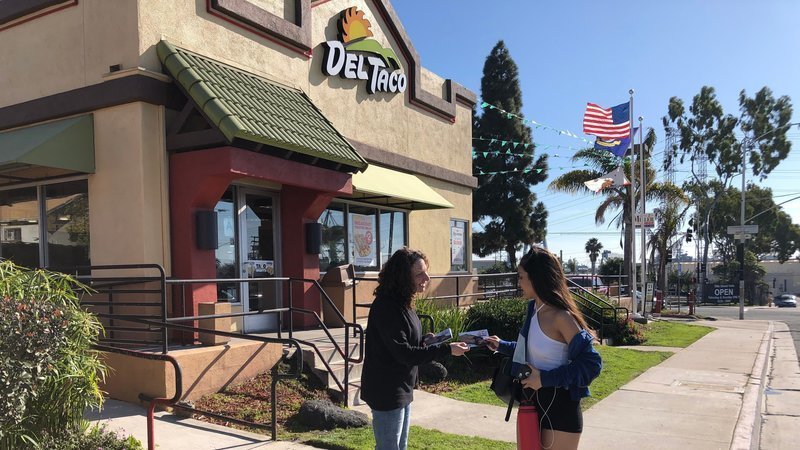
Del Taco: Stop Supporting Animal Abuse

JAN 15, 2020 — 

… get Del Taco to improve the lives of the chickens suffering in its supply chain. Together we WILL create change #ForTheAnimals!

Let’s keep the momentum going by reaching out to Del Taco’s leadership team with the following 2 actions.

  1. Send an email.
    Click here to email The Humane League’s recent LinkedIn article to Muna Afghani, Del Taco’s Sr. Manager of Quality Assurance.

    *When possible, please draft your own unique email subject and body. The more authentic your message, the more effective and meaningful it will be to Del Taco.

    To: mafghani@deltaco.com
    Subject: 2020 Business plans
    Body Sample:

    Dear Ms. Afghani,
    While I applaud Del Taco’s steps towards offering plant-based options at its restaurants, I am very disappointed that you have failed to address the fundamental problems in Del Taco’s chicken supply chain. Thus far, Del Taco has turned its back on the animal cruelty allowed in its supply chain. As a member of the leadership team, I hope you will step up your game in 2020 and adopt the Better Chicken Commitment. https://www.linkedin.com/pulse/del-taco-rise-occasion-2020-taylor-ford/
    Sincerely, [NAME]

  2. Call a Del Taco employee, inquiring when the company will address the cruel and outdated practices allowed in its chicken supply chain.

    Call: (949) 462-7322, to be connected with a Del Taco employee. The program will tell you the name and title of the person before connecting you. *Please leave a voicemail if the staff member is not available.

    Sample Script: “Hi, my name is [NAME] and I am calling to express my concerns about the way chickens in Del Taco’s supply chain are treated. I recently saw this website – DelTorture.com – and was upset to learn that you support such outdated and cruel practices. Several of your competitors have already committed to the Better Chicken Commitment. When can we expect Del Taco to follow suit?”

Thank you all so much for supporting this important campaign.