Exposing the Big Game

Forget Hunters' Feeble Rationalizations and Trust Your Gut Feelings: Making Sport of Killing Is Not Healthy Human Behavior

Exposing the Big Game

82-year-old narrowly avoided an $8,000 fine this week for destroying a gull’s nest

https://www.cbc.ca/news/canada/british-columbia/seagulls-protected-fine-octogenarian-1.5183174

‘I didn’t know that seagulls were protected’: B.C. man escapes fine for destroying gull’s nest

A seagull eats a starfish on Granville Island in Vancouver with the impunity that comes with the knowledge that all gulls are protected under the Migratory Birds Convention Act. (Jonathan Hayward/The Canadian Press)
282
comments

Angelo Mion learned the hard way that a seagull is more than just a flying rat. At least as far as the law is concerned.

The 82-year-old East Vancouver man found himself before a judge for the first time in his life this week after having pleaded guilty to an offence: destroying the nest of a migratory bird.

And so here he was shuffling at the glacial pace that was as fast as his feet could carry him down the aisle of a fifth floor B.C. provincial courtroom to face judgment.

“I didn’t know that seagulls were protected either. I don’t think most people do,” his lawyer told Judge Patrick Doherty.

“He didn’t know he was doing anything wrong.”

Mion’s tangle with the law grew out of the ornithological obsession of a couple whose high-rise condo allowed them a clear view of the rooftop of a low-rise East Vancouver apartment building Mion built in the early 1980s.

The octogenarian doesn’t live in the building, but he still serves as caretaker. And in the summer of 2016, his neighbours took an interest in the birth and hatching of two fledgling gulls.

These fledgling gulls were hatched in a nest on the roof of the CBC’s downtown Vancouver building. It is an offence to destroy a gull’s nest. (CBC)

Crown prosecutor James Billingsley said gull chicks are flightless for five to six weeks. But once they do take to the skies, their nests still serve as a kind of homing beacon.

“It’s how they orient themselves in cases of extreme weather,” the prosecutor said.

One of the neighbours claimed he saw Mion walk onto the roof one July morning and “chase and kick” at the two baby gulls. The birds’ parents screeched and circled in the skies overhead as the neighbour yelled at Mion to stop.

That night, the other half of the couple saw Mion “sweeping the nest into a bucket.”

They called wildlife officials, who showed up at the door of Mion’s home, “but he refused to open it.”

‘These are these common seagulls, right?’

Fast forward to the summer of 2017 and the high-rise neighbours had their eyes on a new nest of gulls. There were three this time.

Then, in mid-August, one of the neighbours came home to find there were none.

“He saw shovel marks,” Billingsley told the judge.

A B.C. provincial court judge gave 82-year-old Angelo Mion an absolute discharge for destroying a seagull’s nest. (David Horemans/CBC)

A wildlife inspector called on Mion again, this time wanting access to the roof for an inspection. Mion told him there was no need, because he had already removed the nest.

“Mr. Mion stated that he was the only one with access to the roof,” Billingsley told the judge.

“And (the officer) should go and get a helicopter because that was the only way (he) would get access to the roof.”

In a distinguished career behind the bench, Doherty has presided over complex cases involving alleged sexual assault in the RCMP, trespassing on Indigenous land and fraud.

This appeared to be the first time he had been asked to consider the rights of a Glaucous-winged gull.

“These are these common seagulls, right?” he asked Billingsley.

“That’s correct,” Billingsley answered. “All gulls are protected under the Migratory Birds Convention Act.”

The rise and fall of the Glaucous-winged gull

According to a 2015 University of British Columbia study, the number of seagulls in the Strait of Georgia, which separates Vancouver Island from the B.C. mainland, has dropped by 50 per cent in the past three decades. Diet is considered a factor in their decline.

They’re known for eating almost anything — hence the “flying rat” reputation — but they historically relied on a marine diet. Apparently french fries, cookies and other scraps picked off the plates of tourists are not an improvement.

Seagulls are as much a part of the B.C. landscape as the Coastal Mountains. And they’re protected – despite fowl bathroom habits. (Jonathan Hayward/The Canadian Press)

Destroying a gull’s nest carries a penalty ranging from $5,000 to $300,000. Billingsley was looking for a fine of $8,000.

But Mion’s lawyer, Ken Westlake, said an absolute discharge would be more appropriate.

Born in Italy in 1937, Mion came to Canada in 1956 with a Grade 5 education. A mason by trade, he worked until the point his body failed him, raising children and grandchildren.

He has prostate cancer and other health issues. Westlake said the gull’s nest was blocking the drain in the apartment building.

‘Absolutely inconceivable’

Mion wore a crisp light check shirt and brown dress pants as he sank into a chair beside his lawyer.

Westlake said the old man was “adamant” that he didn’t touch the nest until the chicks were gone.

And he disputed any suggestion that the neighbours could have seen his infirm client “kick” at anything.

“He walks with some difficulty,” Westlake told the judge. “What (the neighbour) observed and what he believes have nothing to do with what happened.”

After a break to consider the facts, Doherty decided to give Mion an absolute discharge — meaning he won’t have to pay a fine and hopefully will never have to set foot in a court again.

The judge pointed out that ignorance of the law is no defence. But in some circumstances, it can be a mitigating factor.

“It is absolutely inconceivable that he will be caught doing anything wrong again,” the judge said.

Fake meat: Don’t go bacon my heart, say butchers

Sausage dummies are pictured at the international meat industry fair IFFA in Frankfurt am Main, western Germany, on May 6, 2019. — AFP pic

FRANKFURT, May 12 — Slicing through juicy cuts of pork belly alongside rarer delicacies of ox brain and sheep intestine, young butchers at a Frankfurt trade hall cast a suspicious eye towards the so-called fake meat products on display.

Puzzlingly, for the butchers, the fake meat seems to be popular.

“As a butcher, it just can’t be that we have to get into plastic!” said Paolo Desbois, an 18-year-old French butcher, referring disparagingly to the synthetic burgers, sausages and nuggets at the IFFA meat industry convention.

The concept that animals are meat—and plants are not—never used to challenged.

But increasingly plant-based protein products are trying to muscle in on the meat market.

Derived from sources like soy, peas or beans, the synthetic products are being manufactured without using animals.

And Desbois, who placed second in a young butchers competition at the convention, feels they undermine “the essence of the profession”.

“It’s just not possible to work with synthetic meat,” he said.

Another budding elite butcher from Switzerland, 20-year-old Selina Niederberger, agreed.

“As a butcher, I’m for real meat. I think a lot of people would see it the same way,” she declared.

Non “real” meat products have been making headlines lately, backed by investors with an appetite for supplying plant-based burgers and sausages to the trendy diet-conscious masses.

The celebrity-backed vegan burger start-up Beyond Meat, for example, made a sizzling Wall Street debut on May 3 when it more than doubled its share price.

Backed by Hollywood star Leonardo DiCaprio and Microsoft founder Bill Gates, the firm and its competitors aim to turn plant-based foods mainstream and capture a huge potential market.

Ethical concerns

Whether meat substitutes will ever be able to 100 percent replicate the taste, colour, smell and texture of a freshly chopped up slaughtered animal is debatable.

But some young butchers suspect their growing popularity will inevitably have a transformative effect on their trade.

“It’s just shifting with the world and working with it rather than against it,” said 19-year-old British butcher Lennon Callister.

Trade skills are “what sets butchers apart from supermarkets,” he argued, but accepted consumers are starting to look at food differently.

Josja Haagsma from the Netherlands, who won the young butchers competition, agreed that synthetic meats were changing opinions.

“It makes you think about how you can use meat and how you can change it, how you can use more vegetables,” she said.

“Maybe the next generation” will be the ones pressed to apply their knives and creativity to the task, Haagsma said.

Vegetables used to be considered a side dish, at best, for carnivore connoisseurs.

But in increasingly health conscious societies, where governments warn about the dangers of consuming too much red meat, plant-based products are widening in appeal.

Alongside ethical concerns over animals bred for the dinner table and green advocates urging the public to eat less meat to save the environment, the scope for more no-meat products is growing.

‘They aren’t sausages!’

“It’s very important that we think about it, that we consume less” but “good quality meat,” said Haagsma.

“You can use organic meat and homegrown cows, and not the cows from the big companies,” she said.

The growing numbers of people turning to plant-based meat alternatives include vegans, who shun all animal products, and flexitarians, who advocate moderate consumption of meat.

One sign of their expanding popularity? Silicon-valley company Impossible has linked up with Burger King to offer a plant-based version of its signature Whopper.

Nestle and Unilever are also aiming to cement their presence in the sector.

The move by big conglomerates into the sector has made young butchers note that changes are on the way.

“There’ll be less of this mass-produced stuff, which is also really, really bad for the climate,” said 23-year-old German Raphael Buschmann.

However, while recognising environment-conscious citizens are rethinking their diets, Buschmann predicted a limit to the industry changes.

Vegetarian sausages would not be added to his displays any time soon.

“They aren’t sausages,” he said. “That’s just the way it is.” — AFP

Pets presumed dead from Boeing 737 plane that crash landed in Jacksonville, Florida

A charter plane carrying 143 people and traveling from Cuba to north Florida ended up in a river at the end of a runway Friday night, though no critical injuries or deaths were reported, officials said. (May 4) AP

LINKEDINCOMMENTMORE

All 143 people aboard a military-chartered plane survived after the aircraft skidded off a runway into a river in Jacksonville, Florida, on Friday night, but their pets weren’t as fortunate.

At least four pets were checked in the luggage department located in the bottom of the plane that left Guantanamo Bay, Cuba, to northern Florida.

Each is still on the aircraft and presumed dead, Kaylee LaRocque, a spokeswoman for the U.S. Navy in Jacksonville, confirmed to USA TODAY on Saturday.

Although the Boeing 737 plane is not completely submerged in the St. Johns River, the bottom portion, where the pets were positioned, is under water.

“There’s water in the cargo hold,” LaRocque said. “We are so sad about this situation, that there are animals that unfortunately passed away.”

Authorities have left the plane untouched as the National Transportation Safety Board conducts an investigation of the crash landing, meaning passengers’ possessions, including pets, are still on the plane.

LaRocque said the pets include dogs and cats. The flight’s manifest recorded a total of four pets on board, but she said it’s possible more could have been boarded.

“Unfortunately, they have not been retrieved yet due to safety issues with the aircraft, the Naval Air Station Jacksonville, where the crash landing occurred, tweeted early Saturday morning. “Our hearts and prayers go out to those pet owners during this terrible incident.”

NAS Jacksonville@NASJax_

Many people are asking about the pets aboard the aircraft that skidded off the runway into the St. Johns River last night at NAS Jacksonvilee. Unfortunately, they have not been retrieved yet due to safety… https://www.facebook.com/1394179337465396/posts/2217089441841044/ 

65 people are talking about this

The plane skidded off the runway at around 9:40 a.m. Cheryl Bormann, prominent defense attorney who was aboard the plane, described a chaotic landing in which the pilot appeared to lose control of the aircraft before it smashed into the water and screeched to a halt.

Animal Rights Activists Occupy Brooklyn Slaughterhouse on Good Friday

APRIL 22, 2019 BY 


The News

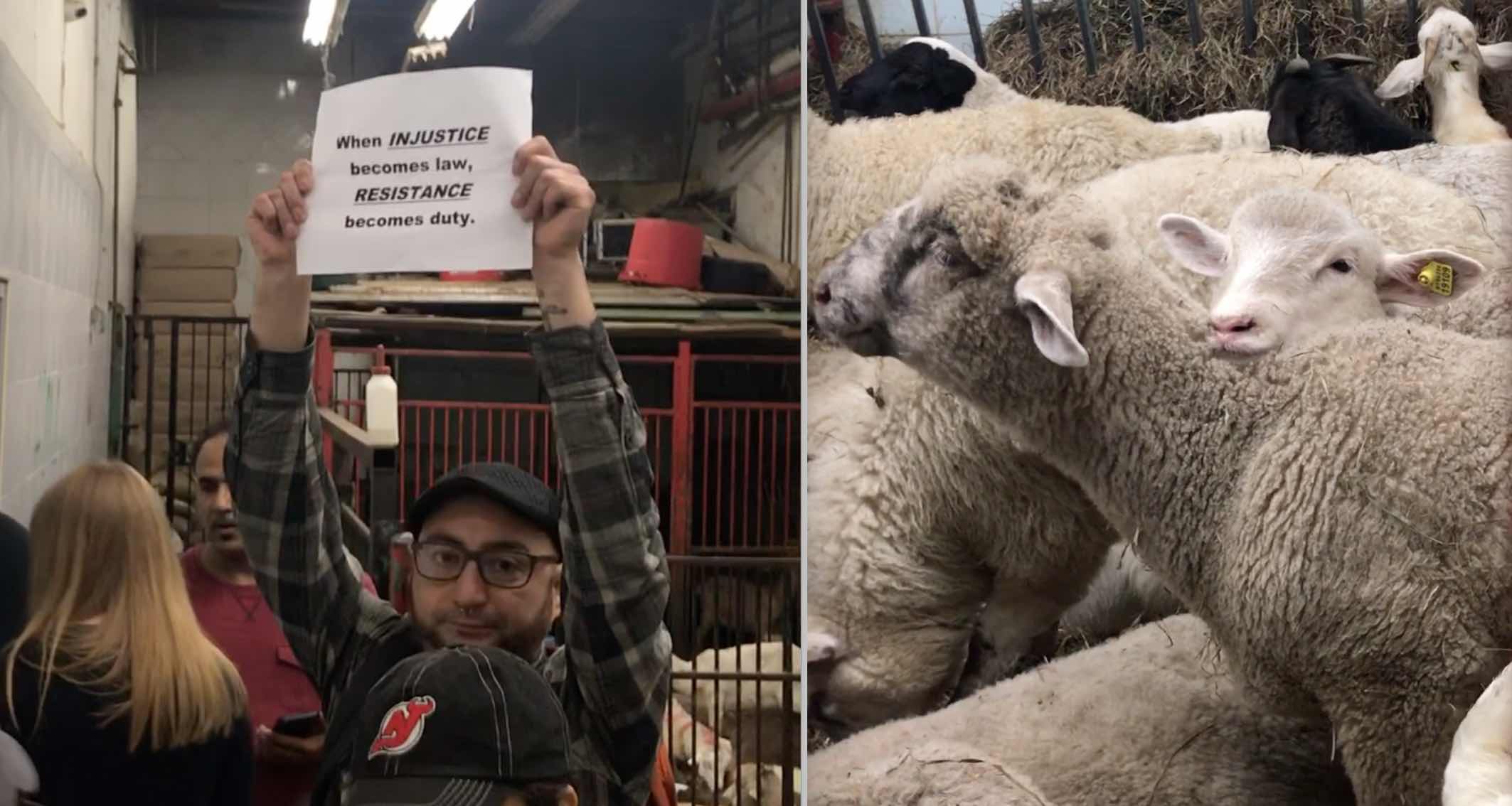
On Good Friday, 15 animal rights activists occupied a slaughterhouse in Brooklyn in an effort to draw public attention to the lambs who are killed for Easter dinner.  They remained inside until the police arrived 20 minutes later.  While they were unable to rescue any animals, they did capture footage of lambs and goats in their final moments.

“We wanted to appeal to the conscience of the management during the holiday weekend by giving them the chance to spare two lives,” said Jill Carnegie, one of the protest organizers. “Even with the theme of “new life” spanning multiple belief systems, they refused. As a result, we felt compelled to occupy their place of business.”

Animal rights activists ask slaughterhouse owner to show mercy during the Easter holiday by giving them two lambs.

During the Easter holiday weekend, animal rights activists around the world took to social media to address the inconsistency of eating animals during Easter, a holiday that celebrates life. Almost 1,000 people shared words of wisdom posted by vegan spokesperson Ed Winters, also known as Earthling Ed.

“The cultural tradition of butchering lambs for Easter is so brutally contradictory with our cultural fondness of lambs. Lambs are found in so many things related to human children – books, toys, clothes, decor, nursery rhymes and fairytales. We connect them with our own children as they are full of innocence and life.⁣

Sheep have a deep bond with their young, and lambs are known to form very close relationships with their mothers. Sheep, like all maternal parents (human and non-human), get distressed when they can’t find their children. So the sheep whose children are used for lamb ‘production’ suffer huge amounts of grief and turmoil when their babies are taken from them year after year. We eat babies in the name of tradition, and we destroy families in the name of peace. This isn’t in our nature, as we would never take a child to a slaughterhouse to witness how a ‘leg of lamb’ arrived at the family dinner table. ⁣

Easter is a celebration of life, so why must so many suffer and die? Blood does not need to be shed in order for us to celebrate. The foundations of so many of our traditions come from the idea of unity and togetherness, so indeed today and everyday let us live by those values and pledge to not only live in unity with our own species, but all species.⁣”

Ban the bunny: California aims to end post-Easter parade of unwanted rabbits

By Barbara Goldberg

NEW YORK (Reuters) – Californians can eat chocolate bunnies and snuggle plush Peter Cottontail dolls to their heart’s content this Easter.

But those who want to buy a live bunny as an Easter gift won’t find them for sale at pet stores this year after California became the first U.S. state to pass a law aimed at stemming a post-holiday deluge of maturing rabbits being abandoned or euthanized.

The legislation, which took effect in January, prohibits retail shops from selling commercially bred dogs, cats and rabbits. The idea is to encourage adoption of rescued animals and to crack down on the sale of pets from “puppy mills,” “kitty factories” and “bunny bundlers.”

Legislatures in New York, Massachusetts, Connecticut and Pennsylvania are considering similar bills. Dozens of cities, from Boston and Chicago to Salt Lake City already have local ordinances on the books.

The problem of abandonment and euthanasia is particularly acute for rabbits purchased in pet stores, as they tend to be impulse buys, especially in the days before Easter.

“In the one to three months after Easter, we traditionally see a spike in shelter rabbit intakes,” said Anne Martin, executive director of the House Rabbit Society, a nonprofit group that rescues rabbits and places them in foster care.

“In Northern California alone, thousands of stray and unwanted rabbits end up in the municipal shelter systems, and the majority of these rabbits are under a year old,” she said.

The Easter Bunny, an age-old symbol of fertility and renewal, plays an endearing role in the springtime holiday celebrating the resurrection of Jesus Christ, tempting parents to buy one of the cuddly-looking creatures for their families.

But to the surprise of many, rabbits are not low-maintenance balls of fur, their owners say, as they require daily cleaning and specialized medical care.

‘UNINTENTIONAL ANIMAL CRUELTY’

“There is a common misconception that a rabbit just can sit in a cage and eat carrots,” said Jacob Levitt, 44, a dermatologist who owns eight young, adopted bunnies that roam his New York City luxury apartment.

He said it was “unintentional animal cruelty” to keep a rabbit cooped up and to fail to give it a proper diet of grass hay.

Fulvio Roman, 32, whose fiance made a “spur of the moment” decision to buy a pet store rabbit, admitted to being unprepared for the demands of its care.

“Once she saw the bunny and was able to hold her, she immediately fell in love,” said Roman, who lives on Long Island and supervises kitchen workers in New York City public schools. “We didn’t know what it really took to have a bunny.”

Eight months later, after the rabbit resisted being picked up, chewed through air conditioner wires, and their landlord demanded a non-refundable $1,000 security deposit, they surrendered the rabbit to a shelter.

“Not everyone knows how much work a bunny takes. We ended up being educated by force,” Roman said.

Rabbits typically live 10 years and multiply every 30 days, with an average litter of eight babies. Pet stores often fail to neuter bunnies, according to House Rabbit.

Bunnies mature at 3 to 6 months and males spray urine and females become territorial. When they grow less adorable, house bunnies are left in backyard hutches or abandoned in fields or woods.

Under California’s Law, consumers can adopt animals from a shelter or buy them directly from a breeder.

Some 2.8 million U.S. households have rabbits as pets, according to the American Pet Products Association (APPA), compared with 60.2 million with a dog, 47.1 million with a cat, 7.9 million with a bird and 2.6 million with a horse.

The House Rabbit Society said bunnies are the third most abandoned pet in the United States. Advocates say rabbits are also the third most euthanized, based on a 2010 study of four shelters in Massachusetts and Rhode Island.

‘DISASTROUS CONSEQUENCES’ FOR INDUSTRY

In California, pet industry leaders, many of whom opposed the new law, say local shops that sell animals will suffer.

“We expect the California law will have disastrous consequences for the small, local business pet stores,” said Mike Bober, president and CEO of Pet Industry Joint Advisory Council.

But live animal sales account for just 3 percent of the industry’s roughly $70 billion in annual sales, according to APPA’s website. The bulk of U.S. pet store sales in recent years has been for food, vet care, supplies and over-the-counter medicines.

John Goodwin, a senior director at the Humane Society of the United States, urged Americans to pass on buying a live bunny as an Easter present.

“There are plenty of stuffed animals and chocolates in rabbit form,” Goodwin said.

(Reporting by Barbara Goldberg in New York; Editing by Frank McGurty and Bill Berkrot)

Owner faces jail time for abandoning dog to starve in locked home

Kyle Springer, 27, was taken into custody until sentencing scheduled for April 18

Kyle Springer, 27, faces jail time for abandoning his dog in a locked home without food for two months. The dog starved to death before being discovered. (Shane Fowler/CBC)

A 27-year-old man was sent to jail to await sentencing for leaving his dog to starve to death in a rented home he abandoned in 2015.

Kyle Springer was in Woodstock court Tuesday afternoon for sentencing on the criminal charge of cruelty to animals.

But after going over evidence, statements of fact and victim impact statements, Judge Julian Dickson said he needed more time to decide a sentence.

Springer is to be back in court April 18 at 1:30 p.m. for sentencing.

He was taken into custody until that time to the loud applause of a packed courtroom.

Two-and-a-half hours before Springer was scheduled to appear, the sidewalk in front of the Carleton County Courthouse was packed with nearly 100 protesters, many with their dogs, demanding a stiff penalty.

Springer pleaded guilty Jan. 8 to leaving his dog, Diesel, to starve to death in a locked rental home in the Woodstock area over the course of two months.

Protesters brought along some of their four-legged companions to the Woodstock courthouse Tuesday and called for a stiff sentence for Springer. (Shane Fowler/CBC)

According to the statement of facts read in court, the two-year-old shepherd mix was found dead in the fetal position near a window in the house weeks after Springer had left.

The dog had torn open everything in search of food and water, including bags of sugar, pillows and garbage bags. The home appeared covered with scratch marks and the living room, kitchen and bedroom floors were covered with the dog’s urine and feces.

‘Emaciation and dehydration’

RCMP were called to the house after the landlord found the dog Jan. 15, 2015. In June of that year, an arrest warrant was issued for Springer, who had left for Western Canada.

A necropsy performed by provincial veterinarian Jim Goltz found only two bits of plastic in the dog’s stomach. The animal lacked body fat, its eyes were sunken in, and its ribs protruded from its body.

Springer left his dog, Diesel, to starve to death in a locked rental home near Woodstock. (Submitted by Advocates for Animals)

The cause of death was “emaciation and dehydration,” said Crown prosecutor Nathalie Lajoie, reading from Goltz’s report.

According to western New Brunswick Crime Stoppers, Springer had moved to Alberta but was arrested after an anonymous tip when he returned for the 2018 holidays.

Nearly 100 protesters gathered outside the Woodstock courthouse Tuesday during the sentencing hearing for Springer. (Shane Fowler/CBC)

The statement of facts said Springer’s physical description as well as the make and model of his vehicle were shared with RCMP. Later in the parking lot of a Foodland grocery store in Florenceville-Bristol, police approached Springer in the vehicle described to them.

When police asked if he was Kyle Springer, Springer said ,”No.” He later admitted it was indeed his name when police requested he step out of the vehicle and placed him under arrest.

He was released on an undertaking and appeared in court on Jan. 8, when he pleaded guilty.

Sentence requests

The Crown argued Springer has obviously tried to avoid justice. Lajoie is requesting a jail sentence of five to six months,  along with a year of supervised probation and a 10-year ban from owning any animals. The request garnered gasps from the courtroom full of animal advocates.

Springer’s lawyer, Peter Hyslop, argued for a lighter sentence of 90 days in jail, to be served intermittently. Hyslop argued this was Springer’s first offence and his guilty plea should be considered a mitigating factor.

When Hyslop argued a stiff sentence could result in Springer losing his job with a fertilizer company and result in nobody in the area ever hiring him again, the judge was not having it.

“If he loses his job, there’s not much chance he’ll get another one in Carleton County in the foreseeable future,” said Hyslop.

“And whose fault is that?” Dickson said.

Thirteen seconds of uninterrupted applause followed Dickson’s response, and he demanded no further outbursts.

Animal advocate Susan Henley was pleased to see Springer remanded into custody until a sentence is delivered next Thursday. (Shane Fowler/CBC)

When asked if he had anything to say, Springer stood, wearing a plaid blue shirt and blue pants, and said: “I do feel bad for what happened to Diesel. That’s all, sir.”

Dickson then stated that he would need more time before handing down a sentence.

“I’m going to tell you right now an intermittent sentence is not in the cards,” Dickson said. “It will not be an intermittent sentence and I will give you full reason on the 18th, and, Mr. Springer, I’m remanding you into custody until then.”

Protesters react

Applause broke out again as Springer was handcuffed, but the outburst was quickly stopped by sheriffs.

On the courthouse steps afterward, protesters were pleased with the proceedings.

“I feel positive,” said Susan Henley, an animal advocate who travelled from Fredericton.

“We always want more. You come into these things praying for the most but expecting your heart to break at the end. But I really feel more positive than I have in a lot of cases that we’ve followed and gone to.”

Fellow advocate Stephanie Thornton said, “Hearing the shackles at the end was awesome.”

Vets Refuse to Treat Farm Sanctuary Animals Because They Disagree With Their Stance Against Animal Agriculture

Lead Image Source : Spring Farm Sanctuary

This Sweet Endangered Finless Porpoise Cried as It Was Sold for Meat

129,168 SUPPORTERS
130,000 GOAL
It was a horrific sight: a live porpoise cried as its captors auctioned it off for parts. Literally the animal had tears rolling down its face and it was making crying sounds. Luckily, two animal activists were able to purchase it and release it into the wild, but the trauma is done and whoever did this is still out there.

Sign on if you want Chinese authorities to investigate this act of animal cruelty and punish the responsible parties.

Poiposes are a lot like dolphins actually. And the porpoise in question is not only adorable, but it’s also endangered. The finless porpoise is on the red list. It’s believed there are only about 200 of them left and this one was almost murdered for parts! 

The sweet porpoise cried the whole time it was being auctioned off and it’s likely that it was injured because, when the activists took it out to sea, it had a difficult time swimming. It’s completely outrageous that someone captured this rare and endangered creature just to torture and ultimately murder it.

Catching and selling a finless porpoise is completely banned and illegal in China. That’s why we want to make sure the authorities find whoever did this and bring them to justice!

Photo credit: video screenshot

Lab-grown meat: Taste-testing chicken of the future

Where’s the beef? Actually, it’s a chicken nugget.

BY 

Chicken nuggets usually get a pretty bad rap. Whether they’re filled with mystery meat or come with a mouthful of additives, they also involve slaughtering an animal. But the nugget I’m about to eat from San Francisco-based Just was grown in a lab, using cells taken from a living chicken. It’s cultured meat (and cruelty-free).

Carnivores, breathe a sigh of relief.

Watch this: Trying a lab-grown chicken nugget
 7:58

Unlike entirely plant-based products such as the Impossible Burger, the Just chicken nugget is actual meat.

Cultured meat, also called lab-grown or clean meat, starts with the collection of cells, usually done through a biopsy so the animals aren’t harmed. Just says it has also been able to get cells from a chicken feather. The most viable cells are chosen and then given the right nutrients they need to grow in a bioreactor. In the case of this chicken nugget, those nutrients are plant-based.

Not only does cultured meat avoid sacrificing animals, it could take fewer resources to produce than traditional livestock. Around 14.5 percent of the world’s greenhouse gas emissions are from livestock, according to a report from the Food and Agriculture Organization of the United Nations. But one study questions how environmentally friendly clean meat products could be if the process is energy-intensive.

nugget-2
The chicken nugget once plated with Just’s plant-based mayo as a dipping sauce.

CNET

ADVERTISING

Just’s cultured chicken product takes around two weeks to grow in a bioreactor. The team of chefs plays a major part in creating the product once the scientists have developed the biology. “They are really the ones that can assemble everything and come up with the ideal ratios of cell types,” says Vitor Santo, director of cellular agriculture.

So what does it actually taste like? The crunch from the breading and the smell from the fry was exactly what I expected from a good chicken nugget. But I was pleasantly surprised at how similar the cultured chicken itself tasted compared to the real deal, even if it didn’t look like your typical KFC or McDonald’s nugget. You can watch the video to find out more.

Just’s next cultured meat product will be wagyu beef. Several other companies are also developing clean meat derived from animal cells, like Memphis Meats (chicken and duck) and SuperMeat (also chicken).

If you’re hankering to try your own cultured chicken nugget, you’ll have to hold tight a little longer. The nugget needs to get USDA and FDA approval in the US, but Just says it’ll first be available in selected high-end restaurants in Asia later this year once it gets regulatory approval.

The video on this page is an episode of Beta Test, the show that puts you in the front seat with me as I test out crazy tech products and experiences. Check back each month for a new show! You can also find the series on YouTube.

Animal Advocates Push for Vt. Coyote Hunting Regulations

The groups point to an incident this weekend, described by a homeowner as “extremely traumatic,” as one reason why new hunting rules are needed

A conflict this weekend between hunters and property owners in northeastern Vermont has reignited calls from animal advocates for more regulations.

Groups including Protect Our Wildlife and the Vermont Coyote Coexistence Coalition have been regularly advocating for Vermont to follow the lead of Massachusetts and set a formal season on the killing of coyotes.

Their multi-year campaigns added a new supporter after a scene that played out Saturday morning in the backyard of Diana Hansen of Craftsbury.

“It was, particularly for me, extremely traumatic,” Hansen told necn Tuesday.

Otto Warmbier’s Parents Respond to Trump

[NATL] Otto Warmbier’s Parents Respond to Trump

Fred and Cindy Warmbier responded to President Donald Trump’s claim that North Korean Leader Kim Jung Un was unaware of the mistreatment of their son during the 17 months he was detained in the North Korea.

(Published Friday, March 1, 2019)

Hansen said a hunter set his dogs on a coyote, and they chased the animal into Hansen’s backyard — biting and bloodying the coyote as her young children watched from a rear window, horrified.

“It was incredibly disturbing to see that kind of violence happening,” Hansen said.

The mom said the coyote pursuit also caused around $500 in damage to the family’s greenhouse when the dogs and their target climbed on the greenhouse, puncturing its plastic with their claws.

It is legal to hunt coyotes with hounds year-round in Vermont, but animal advocacy groups often criticize the practice.

“The use of hounds in hunting is really concerning,” said Barry Londeree of the Humane Society of the United States.

The Humane Society, along with Protect Our Wildlife and the Vermont Coyote Coexistence Coalition, wants to see tighter regulations in the state, including a specific hunting season for coyotes.

Hyundai, Kia Recalling Half a Million Vehicles

[NATL] Hyundai, Kia Recalling Half a Million Vehicles

Hyundai and Kia are recalling more than 500,000 cars over concerns of engine fires.

(Published Thursday, Feb. 28, 2019)

Londeree said the animals have an important role in the ecosystem, including preying on rodents like mice and rats.

“They shouldn’t be subject to year-round hunting with no limits,” Londeree said of coyotes.

For a response to the advocacy groups’ calls for a defined hunting season on coyotes, with limits, necn sought an interview with the Vermont Department of Fish & Wildlife.