Exposing the Big Game

Forget Hunters' Feeble Rationalizations and Trust Your Gut Feelings: Making Sport of Killing Is Not Healthy Human Behavior

Exposing the Big Game

Update on Ridgeland, Wisconsin Chicken Toss

http://upc-online.org/entertainment/190125_update_on_ridgeland_wisconsin_chicken_toss.html

We’re delighted that so many of you have responded to Wednesday’s Alert urging a polite call to three Dunn County, Wisconsin officials asking them to use their influence to stop the Ridgeland “chicken toss” in February.

Today’s Alert includes email addresses for these three Dunn County officials, plus links to our letter to District Attorney Andrea Nodolf, and very importantly, to the letters from University of California Emeritus Professor of Veterinary Medicine Nedim Buyukmihci, VMD in which Dr. Buyukmihci explains to the District Attorney and the County Supervisor why the chicken toss is inhumane and needs to be eliminated.

We understand that the offices are telling some callers that they’re not responsible for the chicken toss; however, these offices represent the county, including the village of Ridgeland. My conversation with County Supervisor Brian Johnson this week was cordial. While he did not say outright that he dislikes the chicken toss, he did not appear to support it either. He said it’s a sensitive “political” issue for those involved.

Whether we leave phone messages, send an email, or write a letter, we must always be courteous and keep the focus on the chickens, compassionate treatment, and humane education.

Thank you!

Karen Davis
President


— UPC Letter to Dunn County District Attorney, Jan. 25, 2019

— Letter from Nedim C. Buyukmihci, VMD to Dunn County Board Supervisor

— Letter from Nedim C. Buyukmihci, VMD to Dunn County District Attorney


Dunn County Officials


China’s latest monkey cloning tests are considered ‘monstrous’

China’s latest monkey cloning experiment has sparked outrage and been labeled “monstrous” by animals welfare advocates.

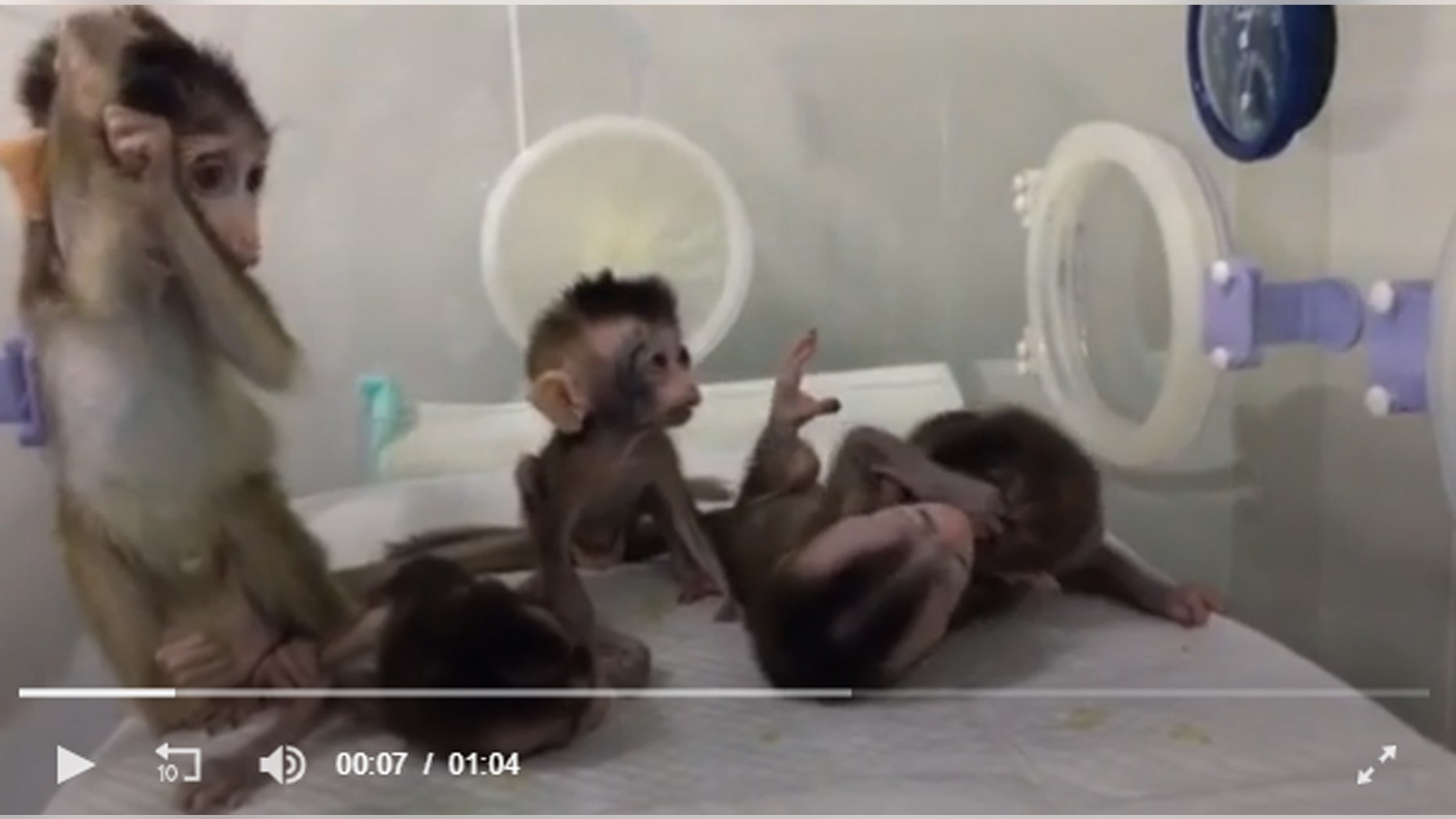
Researchers at the Chinese Academy of Sciences Institute of Neuroscience have cloned five monkey babies from a single donor with genes edited to cause diseases.

The Chinese scientists tinkered with a specific gene in the original donor monkey to produce the unhealthy animals which they say will help medical research.

The gene is BMAL1, which helps regulate the circadian rhythm but scientists made it inoperative using a gene-editing tool, known as CRISPR. With the gene turned off, the animals are at greater risk of developing sleeping problems, hormonal disorders and a host of diseases.

Researchers said the monkeys demonstrated increased anxiety and depression, reduced sleep time, and even “schizophrenia-like behaviors,” according to a pair of papers published by the scientists in the National Science Review.

All five macaques were born with identical genes, which include the mutation.

“Disorder of circadian rhythm could lead to many human diseases, including sleep disorders, diabetic mellitus, cancer, and neurodegenerative diseases, our BMAL1-knock out monkeys thus could be used to study the disease pathogenesis as well as therapeutic treatments” said Hung-Chun Chang, senior author and investigator of the Chinese Academy of Sciences Institute of Neuroscience in a statement.

Researchers used a cloning technique known as somatic cell nuclear transfer to produce the five macaques, the same method they used to generate the first two cloned monkeys this time last year.

It is also the same general method used to clone Dolly the sheep more than two decades ago.

The experiment to clone the two healthy monkeys, reported in the journal Cell in January last year, also caused some apprehension among the broader scientific community.

“The genie’s out of the bottle now,” said Jose Cibelli at the time, a cloning expert at Michigan State University in the US.

Animals rights advocated have slammed the latest experiment. Dr. Julia Baines, Science Policy Adviser at PETA UK, said: “Genetically manipulating and then cloning animals is a monstrous practice that causes animals to suffer.”

But speaking to news.com.au in June, Director of the Chinese Academy of Sciences Institute of Neuroscience and co-author of the latest papers, Dr Mu-ming Poo, defended the practice of using cloned animals for medical research.

“More cloned monkeys will soon be produced,” he said at the time. “Some of them will carry gene mutations known to cause human brain disorders, in order to generate useful monkey models for drug development and treatment.”

It’s important to note that because primates share approximately 95 percent of human genes and a number of physiological and anatomical similarities, biomedical research currently uses a large number of monkeys, sometimes up to 100,000 annually around the globe.

“This number will be greatly reduced by the use of monkeys with uniform genetic background that reduces the noise in experimental studies,” Dr. Poo said, pointing to the example of testing drug efficacy before clinical trials.

“This will greatly help the ethical use of non-human primates for biomedical purposes.”

The team behind the latest experiment reiterated that position in the statement this week, saying the institute is following strict international guidelines for animal research.

The gene-edited monkey clones come hot on the heels of a rogue Chinese scientist announcing he used CRISPR technology to create the world’s first gene-edited human babies.

The controversial doctor made headlines last November after claiming he altered human embryos resulting in the birth of genetically edited twin girls.

This story originally appeared in news.com.au.

Video Of Man Killing Opossum At Tulsa Nightclub Sparks Discussion

http://www.newson6.com/story/39722197/video-of-tulsa-man-stomping-on-baby-opossum-sparks-outrage?fbclid=IwAR38RB2KrBxFXHy6OZcXbyRdIG5hw1b63h0akeXS4rASx42x8Rs-XqZF78E#

Wednesday, January 2nd 2019, 6:14 PM CST
Updated: 

Play Video


TULSA, Oklahoma – **Warning: Video Above May Be Upsetting**

Video of a Tulsa man stomping a baby opossum to death is sparking a conversation about animal cruelty and wildlife laws in Oklahoma.

Animal advocacy groups from across the state are pushing for law enforcement to file charges in this case but game wardens say while the video is hard to watch it, none of the evidence they have seen so far, proves anyone broke the law.

The Oklahoma Alliance for Animals says the video shows “a disgusting act of felony cruelty.”

Wild Heart Ranch says the actions in the video clearly violate animal cruelty laws in Oklahoma.

In their statement, Wild Heart Ranch specially mentioned SS 1685 which says in part, “any person who shall willfully or maliciously torture, destroy or kill…any animal…whether wild or tame…shall be guilty of a felony.”

Tulsa County Game Warden Carlos Gomez says because of the way the laws are written they have found themselves in a grey area.

“After we get over the initial shock like anyone else of the repulsive behavior of somebody who takes a pretty harmless little critter out and steps on it…we enforce Title 29 wildlife statutes,” said Carlos Gomez Tulsa County Game Warden.

Gomez says he is talking with club employees to see if he can gather any new information but says right now -it does not look like charges will be filed.

“Obviously it’s abhorrent the way it was done. Within the framework of the statutes, they are on their own property, it’s a place of business, he is an employee, they deem it to be a nuisance animal,“ said Gomez, “I think it is wrong but that doesn’t make it illegal.”

Gomez says in order for animal cruelty charges to be filed, the city will have to get involved.

“If a person was hunting it for sport, for hide, they would have to have a Hunting License but on their own property removing nuisance animals….it’s not very different from somebody who, let’s say, is trapping a mouse,” said Gomez.

“The brutal killing of the young opossum at Rodeo is a disgusting act of felony cruelty. The killing is inexcusable, intolerable, and must be prosecuted to the fullest extent of the law. The Oklahoma Alliance for Animals supports law enforcement and prosecutors in the investigation and prosecution of this horrific crime. There simply is #NoExcuseForAnimalAbuse. Where animal cruelty exists, there are almost always other felony crimes.”

 The Oklahoma Alliance for Animals

“There is a video going around of a man stomping a young opossum to death that was found inside a Tulsa Night club. I will save you the viewing. It made me sick. Several people have sent it to me and I have forwarded it to our Game Wardens to handle. For anyone who believes it is okay in Oklahoma to stomp wildlife to death, beat them with bricks, or maim them while they are caught in a trap, below is the law that protects the animals and gives the State the ability to prosecute (copy of SS 1685). The challenge is to get these cases prosecuted. Since this crime is clearly a violation of the above law and comes with very clear evidence, I hope to see something done about it. I am here if needed to assist.”

-Wild Heart Ranch

On Thursday morning, Gomez told News On 6 he’s spoken with the couple who owns the club. He said the man in the video is the manager of the club who said he could have handled the situation better.

The owners told Gomez the incident happened on New Year’s Eve and the club had about 1,000 people in it at the time.  They told him the manager was concerned customers might have panicked because they may have thought it was a rat.

Gomez said the owners are meeting with the manager today and are cooperating with law enforcement.

Why My New Year’s Resolution Is To Speak Up About The Suffering Of Fish

A Fishes Article from All-Creatures.org

FROM Chas Newkey-Burden, PlantBasedNews.org
December 2018


Fish are gentle, sensitive, intelligent, and complex creatures – yet we massacre them in their billions. It’s time to speak out about the hell these creatures endure.
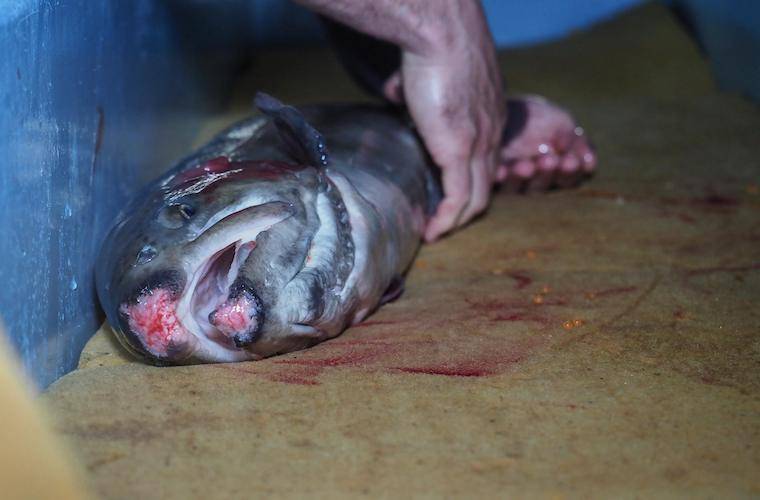
rainbow trout
A rainbow trout is manipulated for stripping – squeezing of eggs for artificial spawning – Photo: Compassion In World Farming

“But you can eat fish, right?” Lots of vegans and vegetarians have been asked this well-meant question and it reveals an important truth: when it comes to speciesism, the more a creature looks and acts like a human, the easier it is for most humans to appreciate it.

Small creatures that live in the water somehow seem less important than big creatures that live on the land, like us.

So fish get a particularly hard time – not breathing like us or moving like us, they are harder for us to relate to.

Hypocrisy

I’ve noticed this in myself over the years. As a kid, I raged about slaughterhouses, fly-posted about vivisection and spoke out against fox-hunting. My visceral horror was stirred up by thoughts of cows in abattoirs and cats in labs, and foxes in pieces. I’m sure I cared about fish and sea mammals, but I don’t remember feeling it the same way.

I do remember finding other people’s hypocrisy odd though. School friends were proud when the tuna in their sandwiches was ‘dolphin-friendly’ – meaning it was caught using methods that didn’t also kill dolphins. That’s great, I’d say, but what about the tunas?

One guy wore a ‘Save the Whale’ badge but ate fish and chips every Friday night. The double-standard seemed so glaring to me. Another friend who adored his pet dogs nevertheless bragged about ‘catching’ – ie killing – fish at the weekend.

I couldn’t get my head round it. I’d never heard of speciesism at the time. I just assumed I was a weirdo. Being a vegan in 2019 – especially with access to the internet – is a walk in the park compared to those days, trust me.

Even now I notice some fishy double-standards. There are people who campaign against fish abuse at SeaWorld yet eat fish fingers from intensive farms. These dreadful places kill fish in far worse conditions than SeaWorld.

Then there are the people who say we must stop using so much plastic because it hurts the fish…even though they chomp on the flesh of these fish.

A voice for the fish

Looking back, I do remember one time I spoke up for the water creatures. I was 12, and my aunt had taken me to a marine park. After a worker had proudly got dolphins to perform a whole series of tricks, he asked if anyone had any questions. I raised my hand and tore him, his work and the whole marine park to pieces. I still remember my aunt’s face.

Vegan advocacy as a whole is very focused on land animals: we concentrate on the animals killed for their meat, their milk, their eggs or their fur. Rarely the fishes. I’m as guilty as anyone because I’ve written dozens of articles about animal abuse for The Guardian and other papers, yet only one about fish.

The suffering of fish

Their experiences are horrific. Fish that get caught in trawl nets are often crushed to death under the weight of other fish. Their eyes balloon out. If they survive that, they are either left to slowly suffocate or they are disemboweled with a gutting knife while still conscious.

Fish from factory farms are usually cut across the gills and left to bleed to death, electrocuted in a water bath, or smashed over the head with a blunt instrument.

Fishermen say the fish don’t feel pain but this has been disproved. Professor Donald Broom, a scientific advisor to the government, said: “The scientific literature is quite clear. Anatomically, physiologically and biologically, the pain system in fish is virtually the same as in birds and mammals.”

Experts have found that lobsters may actually feel more pain than humans would. They say that lobsters, who can live up to 100 years in the wild, are ‘quite amazingly smart animals’. Yet restaurant diners often think nothing of picking one from a tank and asking for him to be boiled alive.

Fish aren’t stupid

The idea fish are stupid is stupid in itself. Researchers have shown that, contrary to legend, goldfish have longer ‘sustained attention’ spans than humans. Some fish woo potential partners by singing to them or creating art. Scuba divers tell beautiful stories of individual fish they have made friends with.

Dr. Sylvia Earle, a leading marine biologist, said: “They’re so good-natured, so curious. You know, fish are sensitive, they have personalities, they hurt when they’re wounded.”

These are the creatures we kill on an unimaginable scale. The fishing industry measures the losses in tonnes rather than individual lives. The global wild fish catch stands at about 90 million tonnes, with a further 42 million tonnes coming from fish farms. Trillions of lives.

We might not mourn the cods and haddocks in the same way we do the cows, sheep, and pigs. We may feel it differently. But we can each speak out in our own way.

That’s why my New Year’s Resolution is to put fish in the spotlight. It’s time to do more than wear a Sea Shepherd hoody – though, like so, so many vegans, I’ve got one of those.

After Franz Kafka went vegetarian, he saw some fish and thought: “Now at last I can look at you in peace, I don’t eat you anymore.”

This is beautiful. Every vegan can relate. But wouldn’t that peace be all the more blissful if, as well as not eating them, we lent them our voice too?

New Russian law forbids killing & mistreating animals, restricts petting zoos & illegal circuses

Published time: 28 Dec, 2018 15:23 Get short URL

New Russian law forbids killing & mistreating animals, restricts petting zoos & illegal circuses A tiger roars during a circus performance. © Sputnik / Evgeny Biyatov

We are responsible for those we tame. And it’s now a law in Russia as Vladimir Putin put his signature under new legislation, which bans killing, pitting and other forms of mistreatment of animals.

The Law on Responsible Treatment of Animals prohibits the killing of animals “under any pretext.” It also outlaws shooting or poisoning stray dogs and cats, which has been happening in many Russian cities in recent years. Homeless animals are to be captured, sterilized, vaccinated and released with a special microchip.

Organizing animal fights and hounding beasts at other animals or people has also been made illegal.

The law orders pets to be kept in proper conditions by their masters. It bans contact or petting zoos from being opened at the malls, which is a common thing across Russia, as well as hosting animals at bars and restaurants.
Also on rt.com Russian Hachiko: Loyal pooch spends weeks outside hospital awaiting master’s recovery (VIDEO)

In April, two bears escaped from a café and caused major havoc in Yaroslavl Region. One of the animals was captured, but the other went to the village and had to be shot dead.

The law makes life harder for numerous semi-legal circuses across Russia, which often use dangerous wild animals in their shows. In October, Russia was shocked after a lioness attacked a four-year-old girl during a traveling circus performance in Krasnodar Region. The child survived but suffered lacerated wounds to the face and other injuries.

The wild animals owned in violation of the law and without a proper license will from now be seized by the state. Hosting them at flats, residential homes and country houses has also been banned.

The new legislation states that an animal can’t be simply thrown into the street, but “should be passed to a new owner or the shelter.”
Camels, ostriches and other exotic creatures have been recently found in the wild in Russia after their disingenuous masters disposed of them.

Dog owners will also face some restrictions as the law obliges them to walk their companions only in specially designated areas. It also allows punishing those, who refuse to pick up feces left by their pets in the street, with fines.

READ MORE: Helpless dog saved from horrible death after getting stuck in middle of frozen Siberian lake (VIDEO)

The legislation, aimed at protecting animal rights, was first introduced to the parliament in 2010 and has taken almost eight years to be finalized by the lawmakers.

https://www.rt.com/russia/447604-russia-animal-rights-law/

Christmas Has Become A Festival Of Cruelty — The Peak Of Animal Abuse

An Animal Rights Article from All-Creatures.org

FROM

Chas Newkey-Burden, PlantBasedNews.org
December 2018

This time of year can be grueling for vegans, whose compassion is mocked and treated as a nuisance. But it’s worse for the animals who can’t escape exploitation.

free range Turkey
Free range, organic turkey at a small farm in Canada, 2006 (Photo: We Animals)

It’s often said that turkeys wouldn’t vote for Christmas. But why would any animal put a tick in that box? The 12 days have become a festival of cruelty – the annual peak of human abuse of animals.

The exploitation begins at Christmas fetes. Reindeers endure long journeys to these events across the country. The Born Free Foundation says the journeys and the shows themselves cause huge suffering for the reindeers. Animal Aid recently filmed undercover at UK reindeer centers and documented abuses, including a worker repeatedly kicking a reindeer.

Horses and camels are sometimes dragged along to these fetes, too. Like reindeers, they are sensitive animals who should be free and joyful in the wild, not used as props to be paraded around in chains for human entertainment at festive circuses.

Meanwhile, puppies are arriving in the UK to meet Christmas demand. The Dogs Trust says that thousands of puppies are illegally smuggled in at this time of year. They are shipped in shocking conditions: puppies as young as four weeks old spend protracted journeys eating their own feces as they are smuggled in cramped crates.

For dogs, Christmas can be a time of rejection. However much we are reminded that a dog is for life, not just for Christmas, many will be unwanted as presents. Within days they are dumped at refuges, or simply left tied on the street. Dogs and other pets are often left at home for long periods at this time of year, as people travel to far-flung family get-togethers.

The centerpiece of these get-togethers is usually the turkey and the pig. Once everyone has stuffed themselves with so much food that they feel sick, the leftovers are scraped into the bin. If killing animals to eat them is dreadful, then killing animals to not eat them is surely even worse.

More than 14 million turkeys were killed in the UK last year – two million of them in December. Most spent their short lives in crowded industrial sheds and were never allowed to go outside. Countless abuses have been exposed at British turkey farms, including workers playing baseball with turkeys at a Bernard Matthews farm.

Between the ages of just eight weeks and 26 weeks, turkeys are sent to the slaughterhouse. They are hung upside down by their legs and have their throats slit. Or they are killed with gas, or by strangulation. You won’t see that on the supermarkets’ Christmas ads.

Alongside turkey on the Christmas dinner plate is a new favorite: pigs in blankets. The pig’s route to the plate is no happier. About 60 percent of sows reared in the UK are kept in metal crates which are just centimetres bigger than them. Little piglets have their ears punctured, teeth clipped, and tails cut without anaesthetic before being grown to the required size. One-third of pigs in the UK are slaughtered in gas chambers.

From the factory farm to the gas chamber, to the shop to the dinner table to the bin – the lives, and deaths, of these animals shame humanity. But then what Christmas has become is nothing to be proud of either.

From early November, shop are crammed with ‘gift’ ideas that are little more than brainless fops – tacky, plastic-bound, panic buys with just a tenuous connection to the recipient. Rather than being imaginative, heartfelt gestures, they scream ‘That’ll do’ and demean the giver, the recipient, and the festival itself.

It’s a festival that can be a particularly challenging time for vegans. At family meals, there is often one tipsy, bored relative who treats our compassion as an irritant or a joke. As meals are planned, for 12 days, we will repeatedly be seen as the ‘difficult’ one because we won’t eat the corpses of traumatized animals.

But at least as humans can choose how much of modern Christmas we buy into. For animals there is no way out – and many face a final terror on New Year’s Eve, as firework displays terrify pets and wild animals alike.

The compassion and godliness of this religious festival have been lost. In fact, at this time of year, I am reminded of a quote from William Ralph Inge:

We have enslaved the rest of the animal creation, and have treated our distant cousins in fur and feathers so badly that beyond doubt, if they were able to formulate a religion, they would depict the Devil in human form.

Video Exposes Multiple Health Code Violations During Illegal Mass Animal Sacrifice in Brooklyn NOVEMBER 26, 2018 BY

NOVEMBER 26, 2018


Video Exposes Multiple Health Code Violations During Illegal Mass Animal Sacrifice in Brooklyn

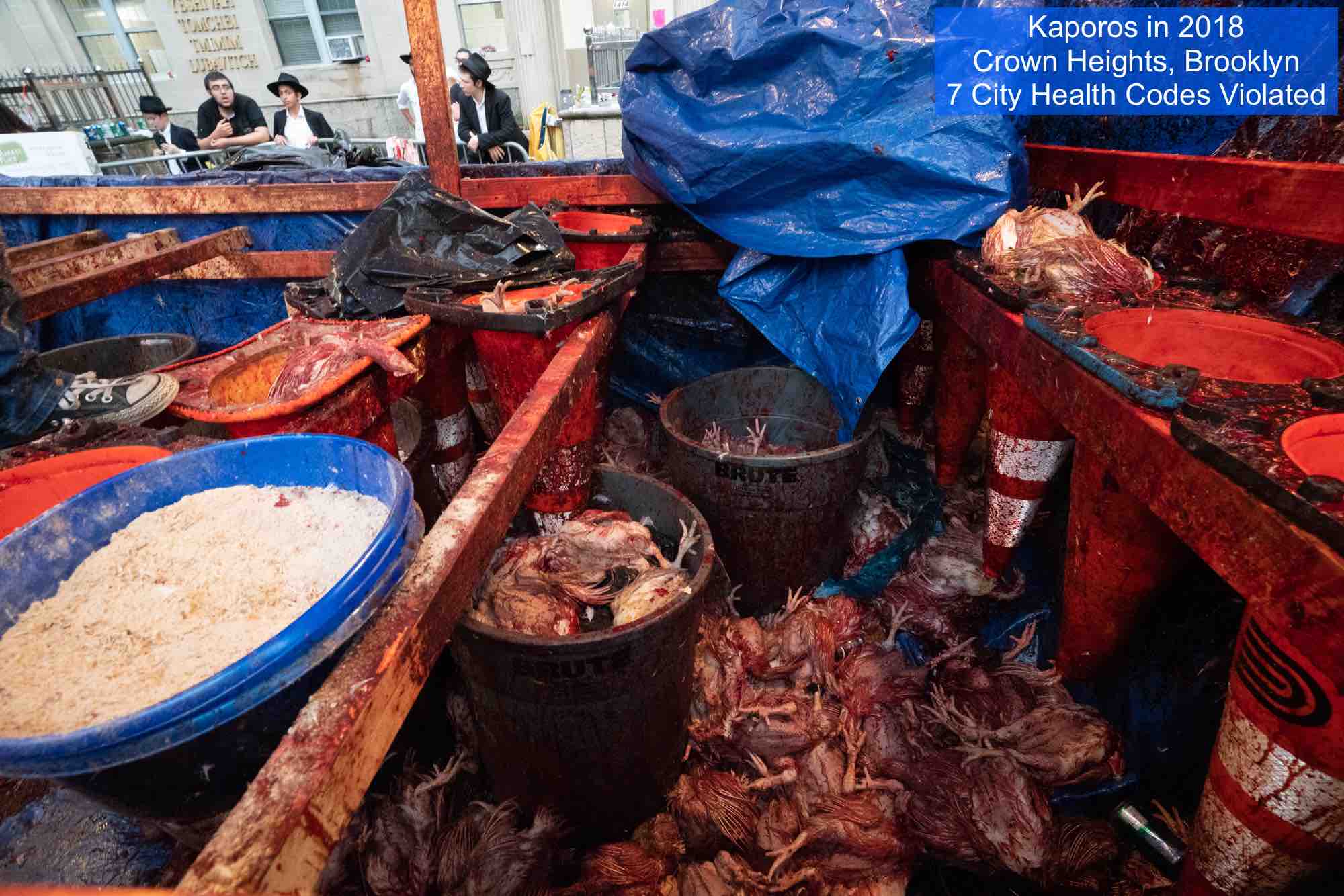
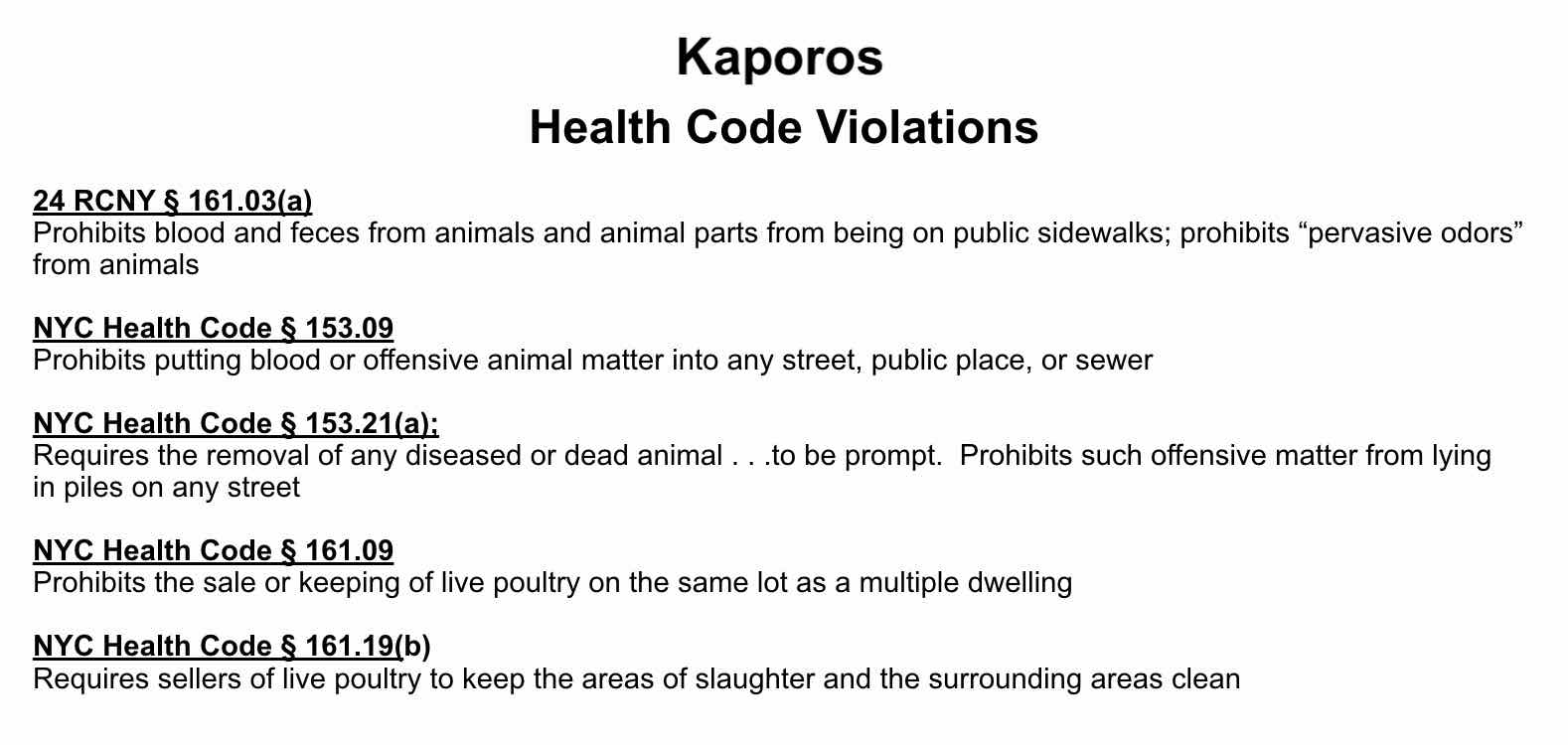
Every year during the week leading up to Yom Kippur, several sects of ultra-Orthodox Jews in Brooklyn sacrifice an estimated 60,000 chickens in makeshift slaughterhouses that are erected without permits on public streets.  The practitioners of the ritual slaughter, called Kaporos, violate multiple city health codes:

https://www.facebook.com/plugins/video.php?href=https%3A%2F%2Fwww.facebook.com%2Ftheirturn%2Fvideos%2F296108624577904%2F&show_text=0&width=560

The NYC Department of Health defends the illegal sacrifice, arguing that the city has not observed any “disease signals” associated with the practice. The NYPD, which is charged with enforcing the laws, instead aids and abets in the crimes.

A toxicology report confirmed that Kaporos poses a “significant public health hazard.”

“The Chief of Police and Health Commissioner are political appointees, and their boss, NYC Mayor Bill de Blasio, has clearly instructed them to assist in the illegal Kaporos massacre because the practitioners represent a powerful voting bloc,” said Donny Moss, an organizer in the effort to compel the city to enforce the laws. “Not only does the City provides police barricades, floodlights and an army of police officers and sanitation workers, but it also provides the traffic cones where tens of thousands of chickens are bled out into public streets.”

NYC Mayor Bill de Blasio instructs the NYPD to aid and abet in the illegal slaughter of an estimated 60,000 animals on the streets of NYC (Unparalleled Suffering Photography)

On October 17th, during oral arguments about Kaporos in the the New York State Court of Appeals, a city attorney confirmed that laws are broken but argued that the city has discretion over which laws to enforce.

City health codes that are violated during Kaporos

During Kaporos, an estimated 60,000 six-week old chickens are intensively confined in crates without food or water for up to several days before being slaughtered and discarded. Many die of starvation, thirst and exposure before the ritual takes place. A toxicology reported commissioned by residents in the neighborhoods that are contaminated with the blood, feces and body parts of chickens states that the ritual a “significant public health hazard.”

Alberta RCMP investigate ‘disturbing’ video of coyote slowly beaten to death

Warning: This story contains graphic details

<https://i.cbc.ca/1.4289572.1505403581!/fileImage/httpImage/image.jpg_gen/derivatives/square_140/wallis-snowdon.jpg>

Wallis Snowdon · CBC News · Posted: Nov 19, 2018 11:35 AM MT | Last Updated: November 19

<https://i.cbc.ca/1.4911611.1542653676!/fileImage/httpImage/image.jpg_gen/derivatives/16x9_780/coyote-beating.jpg>

These stills are taken from the video that was posted on Facebook over the weekend. (Facebook)

RCMP in Grande Prairie, Alta., are investigating after a video surfaced online showing two boys brutally beating a coyote to death.

The video, which appeared on Facebook Sunday, shows a lifeless coyote being piled into the back of a snowmobile. The rest of the 53-second clip shows how the animal died slowly after multiple blows to the head.

In the video, one boy picks up a coyote by its hind legs and smashes its head repeatedly into the back of a snowmobile.

The animal, still alive, is then pictured sitting in the snow, blinking and stunned. Someone off camera laughs.

Then, a boy curses at the animal and kicks it repeatedly in the head. As the coyote stands and begins to limp away, someone in a snowmobile chases after it and grabs it by the tail.

Due to the graphic nature of the video, CBC has decided to only broadcast a few seconds of the 53-second clip.

Warning: Video contains graphic content that may be disturbing to viewers:

<https://thumbnails.cbc.ca/maven_legacy/thumbnails/471/7/edm-coyotebeating-blurred-nov19_2500kbps_852x480_1374888003822.jpg?downsize=1280px:*>

CBC News Edmonton

WARNING GRAPHIC VIDEO: Coyote beating in northern Alberta

WATCH

00:00 00:17

This is a portion of a longer video showing a group of minors allegedly beating a coyote to death. CBC News has blurred the faces and disguised the voices of the minors involved. 0:17

A Grande Prairie man who shared the video with CBC News said he reported the incident to RCMP and Alberta Fish and Wildlife. He asked CBC News to keep his name confidential.

He said the incident happened in Sexsmith over the weekend.

In a news release, RCMP in Grande Prairie said they are investigating an online video “depicting the inhumane death of a wild animal.”

RCMP are in the preliminary stages of their investigation, Cpl. Maria Ogden told CBC News on Monday. She declined to provide further details.

Alberta Fish and Wildlife officials are also investigating.

“We believe we’ve identified the individuals involved, but it’s too early to speculate on specific offences or potential charges,” Fish and Wildlife spokesperson Jason Van Rassel said in an interview.

The man who reported the video described what he saw as grotesque and inhumane.

“Very disturbing,” he said. “That’s some very sociopathic behaviour. It’s blatantly criminal.”

The man said he doesn’t know the boys personally but felt compelled to report them. He said he hopes they are held accountable and “get some help.”

“I mean, just look at how disturbing that video is, especially when the coyote is sitting there with fear in its face and they zoom in on it and laugh.

“It’s just heart-wrenching and disturbing on two ends of the spectrum.

“No sane human would accept that.”

ABOUT THE AUTHOR

<https://i.cbc.ca/1.4289572.1505403581!/fileImage/httpImage/image.jpg_gen/derivatives/square_620/wallis-snowdon.jpg>

Wallis Snowdon

Journalist

Wallis Snowdon is a digital journalist with CBC Edmonton. She has nearly a decade of experience reporting behind her. Originally from New Brunswick, her journalism career has taken her from Nova Scotia to Fort McMurray. Share your stories with Wallis at wallis.snowdon@cbc.ca <mailto:wallis.snowdon@cbc.ca>

https://www.cbc.ca/news/canada/edmonton/coyote-beating-grande-prairie-rcmp-investigation-1.4911574

<https://www.cbc.ca/news/canada/edmonton/coyote-beating-grande-prairie-rcmp-investigation-1.4911574>

<https://www.cbc.ca/news/canada/edmonton/coyote-beating-grande-prairie-rcmp-investigation-1.4911574> Alberta RCMP investigate ‘disturbing’ video of coyote slowly beaten to death | CBC News

A Grande Prairie man who shared the video with CBC News said he reported the incident to RCMP and Alberta Fish and Wildlife. He asked CBC News to keep his name confidential.

http://www.cbc.ca <http://www.cbc.ca

Family Wants Answers After Cat Fatally Shot With Arrow

Follow KDKA-TVFacebook | Twitter

PITTSBURGH (KDKA) – A family pet in Brookline is dead after police say someone shot it through the chest with an arrow. The Orr family is now demanding answers and asking police to investigate.

Nathan Orr said he heard his cat, Ollie, meowing very loudly and in pain on Saturday night.

“I thought my cat was fighting with another cat and I looked out of the window and saw he had an arrow through his back and out of his chest,” said Orr. “And unfortunately my kids also witnessed that.”

ollie cat killed Family Wants Answers After Cat Fatally Shot With Arrow

(Photo Courtesy: Orr Family)

Orr said his two sons, ages 6 and 3, are devastated after this tragedy. The family lives on Elmbank Street, a dead-end street lined with single-family homes.

“It’s not a good first brush with a loved one passing on [for the boys],” said Orr. “It was a cat, but it was part of our family. Ollie was a part of our family.”

Orr thinks that someone targeted his cat.

“It looked deliberate,” said Orr. “Due to the fact that it was a target practice arrow leads me to believe it wasn’t a hunting accident.”

There is a wooded area behind Orr’s home, but not one that allows hunting.

ollie cat Family Wants Answers After Cat Fatally Shot With Arrow

(Photo Courtesy: Orr Family)

Orr said he rushed Ollie to an emergency vet in Castle Shannon, but it was too late. The arrow had punctured the cat’s lungs. He said he will now focus on comforting his fiancé, two sons and wait for police to investigate.

“They took it hard, they took it very hard,” said Orr. “Especially when we told my 3-year-old that he had to say goodbye.”

Pittsburgh Police’s Humane Officer Christine Luffey said she plans to knock on every door along Elmbank Street to investigate this incident.

Orr said that Ollie was an indoor cat, but every once in a while he would make a break for the backyard. He said he always stayed in the yard near the bushes. Orr thinks that’s where he was when he was struck with the arrow.

Officer Luffey told KDKA she wants to remind all cat owners to keep their cats inside because they face too many dangers outside: including being hit by vehicles, contracting diseases, being hurt by other animals, and human cruelty.

Anyone with information is asked to contact Pittsburgh Police.

If you’d like to donate to help cover the Orr family’s veterinarian bills, click here https://www.gofundme.com/JusticeForOllie

Comments (2)