What Parents Need to Know About Factory Animal Farms

https://www.ecowatch.com/factory-animal-farms-2637282001.html

What Parents Need to Know About Factory Animal Farms
By Ketura Persellin

You probably care a lot about how your fruits and vegetables are grown. You
may not think as much about where your family’s animal protein comes from,
but the conditions in which most meat, poultry and even dairy is produced
may give you and your kids pause — even those most likely to clamor for yet
another burger or hot dog.

Americans eat a lot of meat and poultry — 27 billion pounds of beef were
produced last year alone, most of it in “factory farms
<https://www.ewg.org/meateatersguide/interactive-graphic/confined-feedlots/>.”
All those animals produce lots of manure — quite literally tons of it. The
775 animal operations in the Maumee Basin of Western Lake Erie alone
produce 5.5 million tons of manure each year. The coastal plain of North
Carolina has 1,500 factory farms that produce as much as 4 billion gallons
of wet swine waste and 400,000 tons of dry poultry waste.

The mountains of waste smell terrible, but the stench is far from the worst
problem it creates. Bacteria
<https://www.ewg.org/release/study-fecal-bacteria-nc-hog-farms-infects-nearby-homes>,
such as from hog feces
<https://www.ewg.org/release/study-fecal-bacteria-nc-hog-farms-infects-nearby-homes>,
can get into the homes and lawns of neighbors and endanger their physical
and mental health. And the problem is getting worse
<https://www.ewg.org/agmag/2019/03/manure-unregulated-factory-farms-fuels-lake-erie-s-toxic-algae-blooms>.
From 2005 to 2018, the amount of manure produced in the Maumee Basin rose
by more than 40 percent.

All that waste has to go somewhere. Manure from large-scale animal farms
runs off into groundwater, lakes, rivers and streams. It pollutes drinking
water, hurts air quality and triggers tremendous stress for local
residents. That may be one reason life expectancy
<https://corporate.dukehealth.org/news-listing/nc-residents-living-near-large-hog-farms-have-elevated-disease-death-risks>
in
North Carolina communities near hog farms is particularly low, even after
adjusting for other socioeconomic factors.

Kids may love poop jokes, but the production and consumption of animal
protein is no laughing matter. You and your children might find the
conditions the animals that you eat are raised in outrageous and disgusting
— perhaps enough to drive even the most enthusiastic carnivore into the
ranks of committed vegans. The animals live in crowded, dirty conditions
often infested with flies and rodents. The water they drink or that’s used
to wash down the facility can get contaminated with any number of these
pollutants.

Here are a few other things to consider – and point out to the kids when
they clamor for yet another burger, hot dog or order of chicken McNuggets:

– Not all meat is produced in a factory farm. By buying certain kinds of
meat, you can avoid supporting a great deal of the harm of factory farms.
Look <https://www.ewg.org/research/labeldecoder/> for grass-fed,
pasture-raised or “free range” meat in lean cuts that have no antibiotics
or hormones and are certified organic. Check out EWG’s label decoder
<https://www.ewg.org/research/labeldecoder/> for help.

– It’s not just livestock raised for meat that’s raised in
industrial-scale animal operations — dairy cows are too. So if you’re not a
fan of large-scale animal production, you’ll may want to change your dairy
consumption habits, too. Buying organic milk, cheese and other dairy
products will be better for your family’s health and for the environment.

– Crowded living conditions in factory farms make animals sick, which
has driven the overuse of antibiotics for livestock. This has led to the
development of strains of bacteria in animals and humans that are
resistant <https://www.ewg.org/research/superbugs/> to life-saving
medicine — the last thing most parents want.

– Manure runoff contains chemicals that algae feed on, such as nitrates
and phosphorus. They’re responsible for the toxic algae blooms that
pollute <https://www.ewg.org/interactive-maps/toxicalgalblooms/> many
lakes and rivers (and sometimes make them off limits for swimming and
fishing). If you’ve seen “Do Not Swim” signs recently at the beach or your
area lake, or greenish scum floating on the water’s surface, you’re often
looking at the direct consequence of industrial-scale animal production.

– Factory farms aren’t going away any time soon. The amount of red meat
and poultry consumed in the U.S. fell after the Great Recession of 2008 but
rebounded and was projected to reach 222.2 pounds
<https://www.globalagriculture.org/whats-new/news/en/32921.html> per
person per year in 2018. It’s expected to go up in the rest of the world,
too. Dairy consumption in this country is also on the rise. Your family can
do its part to avoid adding to the problem. For starters, consider going
meatless <https://www.meatlessmonday.com/> (and without dairy) once a
week.

*If there are no dogs in Heaven, then when I die I want to go where they
went. (Will Rogers)*

*the wild, cruel beast is not behind the bars of the cage. he is in front
of it – axel munthe*

*”Never doubt that a small group of dedicated citizens can change the
world. Indeed, it’s the only thing that ever has.” Margaret Mead*

*Until every cage is empty. Until every animal is free*

Hollywood Remembers Doris Day: Paul McCartney, Tony Bennett, Goldie Hawn Sing Icon’s Praises

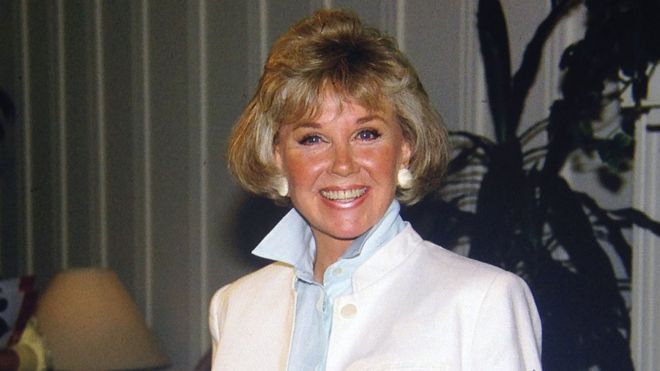
Doris Day, 2001Shutterstock

Refresh for updates… Hollywood was quick to remember Doris Day, the beloved actress, singer and animal rights activist who died today at age 97. “The great Doris Day left us and took a piece of the sun with her,” tweeted Goldie HawnTony Bennett recalled what a thrill it was for him to appear on The Doris Day Show in 1970, and said he’d miss her “beautiful smile.”

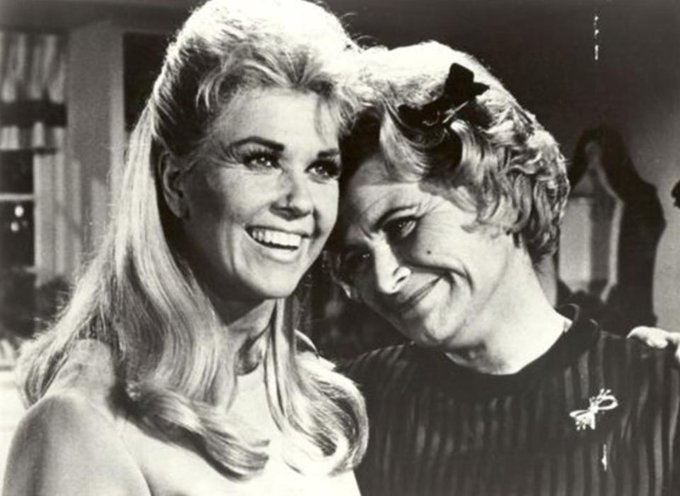
Meanwhile, songwriter Diane Warren tweeted an absolutely appropriate string of animal emojies in honor of one of Hollywood’s earliest and staunchest animal rights activists. The family of Day’s The Doris Day Show co-star Rose Marie shared a memory and a photo (see it below).

Rose Marie-Official

@RoseMarie4Real

Sorry to hear of Doris Day’s passing. We got to know Doris when Mom worked with her. They talked frequently until Mom’s passing. We all shared our love for animals. I’m happy & proud to say I knew her & loved seeing her close friendship with my mother. They truly loved each other

96 people are talking about this

The Academy

@TheAcademy

Today, we remember Doris Day, who brought us so much joy with her humor, extraordinary talent and kind heart. Farewell to a Hollywood legend.

1,081 people are talking about this

Mitzi Gaynor

@TheMitziGaynor

Bravo wonderful Doris Day on a life beautifully lived. Thank you for the great gifts you shared with all of us, they will live forever.

82 people are talking about this

Lisa Lange, PETA Senior Vice President: “Doris Day was a silver screen and singing legend, but PETA will always remember her for her most important role: animal champion. She personally rescued, fostered, and found loving homes for hundreds of animals; founded an organization to stop animal homelessness through spaying and neutering; and formed the Doris Day Animal League, which joined PETA in opposing cruel chemical tests on animals. Day was a warm, kind, generous person, and she will be missed by all of us here at PETA.”

Doris Day Dies: Iconic Actress, Singer, Animal Rights Activist Was 97

Sharon Lawrence

@sharonlawrence

Nobody like her. And there never will be again. RIP You made the world better. https://www.youtube.com/watch?v=5MnUrhptPSo 

See Sharon Lawrence’s other Tweets

carl reiner

@carlreiner

This morning I was saddened to learn that Doris Day who starred in a film I had written “The Thrill Of It All” had passed away at 97. Just a week ago, I contacted her and welcomed her to the 97 Year Actor’s Club.

1,272 people are talking about this

Paul McCartney: “So sad to hear of Doris Day passing away. She was a true star in more ways than one. I had the privilege of hanging out with her on a few occasions. Visiting her in her Californian home was like going to an animal sanctuary where her many dogs were taken care of in splendid style. She had a heart of gold and was a very funny lady who I shared many laughs with. Her films like ‘Calamity Jane’, ‘Move Over, Darling’ and many others were all incredible and her acting and singing always hit the mark. I will miss her but will always remember her twinkling smile and infectious laugh as well as the many great songs and movies she gave us. God bless Doris.”

Stella McCartney

@StellaMcCartney

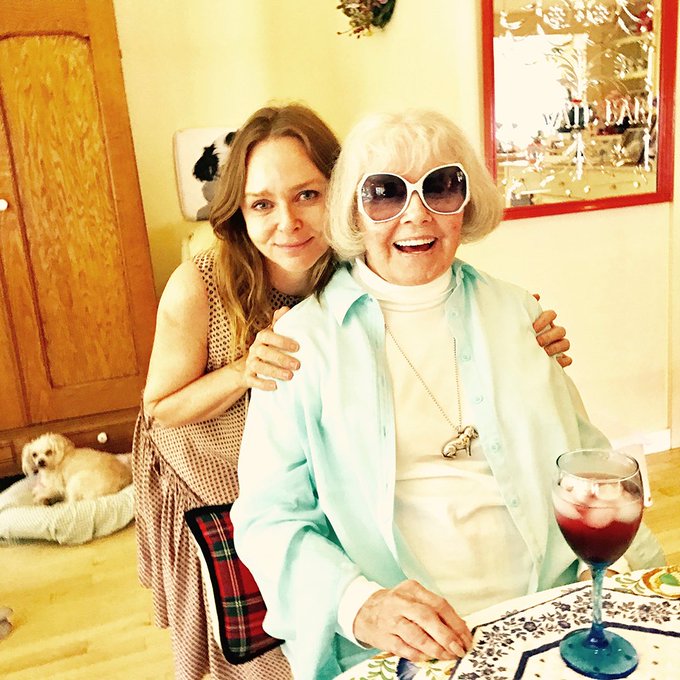
The one, the only, the woman who inspired so much of what I do… Doris Day I love you, my calamity Jane. An iconic woman who I was hugely honoured to meet and share precious moments with. Rest in peace x

246 people are talking about this

John Barrowman MBE

@JohnBarrowman

RIP Doris Day such an amazing career. ‘Perhaps Perhaps Perhaps’ is one of our favorite songs. @scottmale jb @ Palm Springs, California https://www.instagram.com/p/BxaLC3anrlq/?igshid=11pydlwc58f2j 

42 people are talking about this
47 people are talking about this

Candace Cameron Bure

@candacecbure

Throughout my career, I always dreamed of being a modern
Doris Day 💗💕💗
Thank you for being a role model. https://www.instagram.com/p/BxaJiFYBdaf/?utm_source=ig_twitter_share&igshid=g7ul3dazi7r4 

27 people are talking about this

William Shatner

@WilliamShatner

Condolences to the family of Doris Day. She was the World’s Sweetheart and beloved by all. ❤️ Que Será, Será!😞

579 people are talking about this

Seth MacFarlane

@SethMacFarlane

We’ve lost another great Hollywood talent. Take a minute to appreciate the legendary Doris Day: https://youtu.be/Ktsfe2y3sIE 

707 people are talking about this

Luke Evans

@TheRealLukevans

Goodbye Doris Day, there was only one of you! I have always loved your voice and the beautiful songs you made eternal. RIP. Hollywood actress and singer, dies aged 97 https://www.bbc.co.uk/news/entertainment-arts-48257670 

Breaking News image

Actress Doris Day dies aged 97

Hollywood star Doris Day, whose films made her one of the biggest female stars of all time, has died aged 97

bbc.co.uk

218 people are talking about this

George Takei

@GeorgeTakei

For those of us in my generation, Doris Day was synonymous with Hollywood icon. She would no doubt remind us, upon this day of her passing, “Que sera sera,” but we will miss her dearly anyway. Rest now in our hearts forever, Ms. Day.

2,250 people are talking about this

Paul Rudnick@PaulRudnickNY

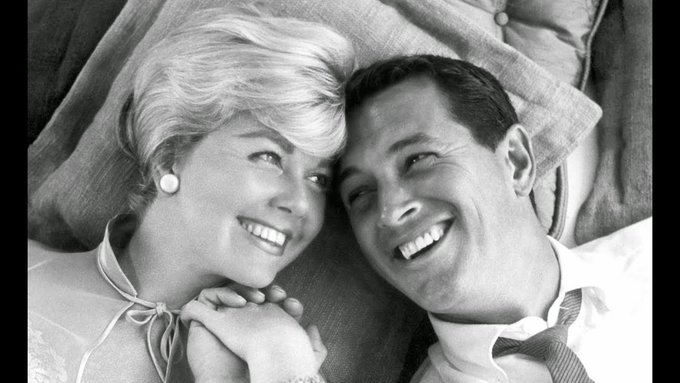
Doris Day was kind and decent, onscreen and off; she maintained her friendship with Rock Hudson after his AIDS diagnosis, in a climate of fear and abandonment – one of his last appearances was on a TV show with her. Here they are in younger days:

513 people are talking about this

Royal Albert Hall

@RoyalAlbertHall

Farewell to the great Doris Day.
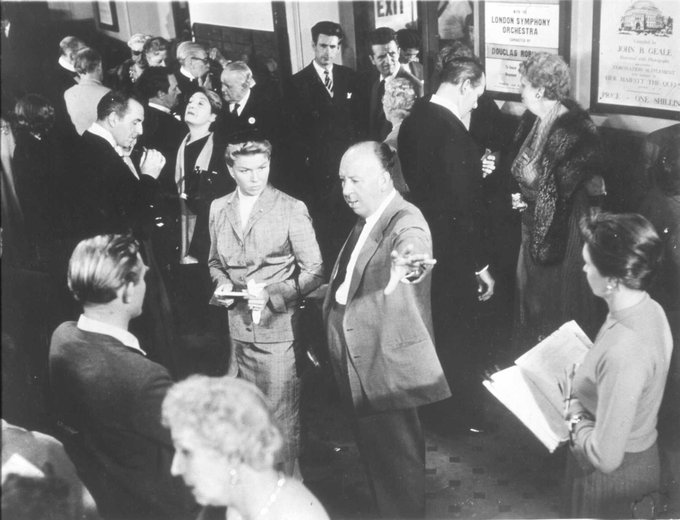
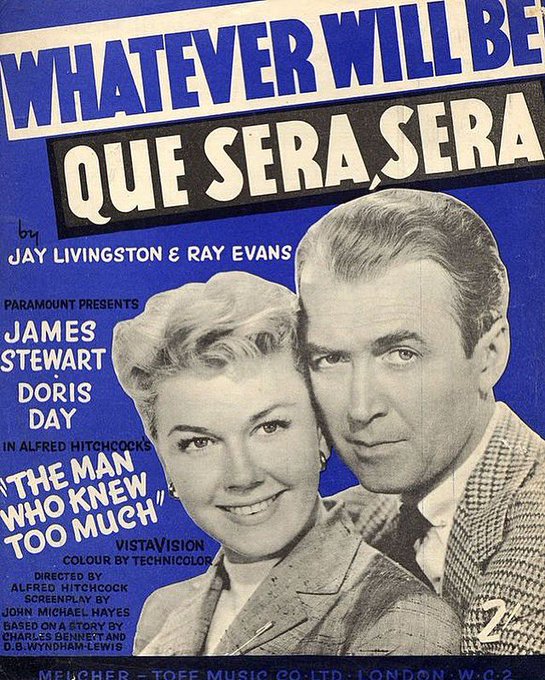
Here’s the legendary actor and singer at the Hall in 1955, being directed by Alfred Hitchcock. She’s about to spot a bad guy in our Door 6 porch, setting up the nerve-shredding finale of ‘The Man Who Knew Too Much’ 🎥

145 people are talking about this

Nigel Lythgoe OBE

@dizzyfeet

I fell in love with when I was 10 years old.

See Nigel Lythgoe OBE’s other Tweets
145 people are talking about this

The Humane Society of the United States

@HumaneSociety

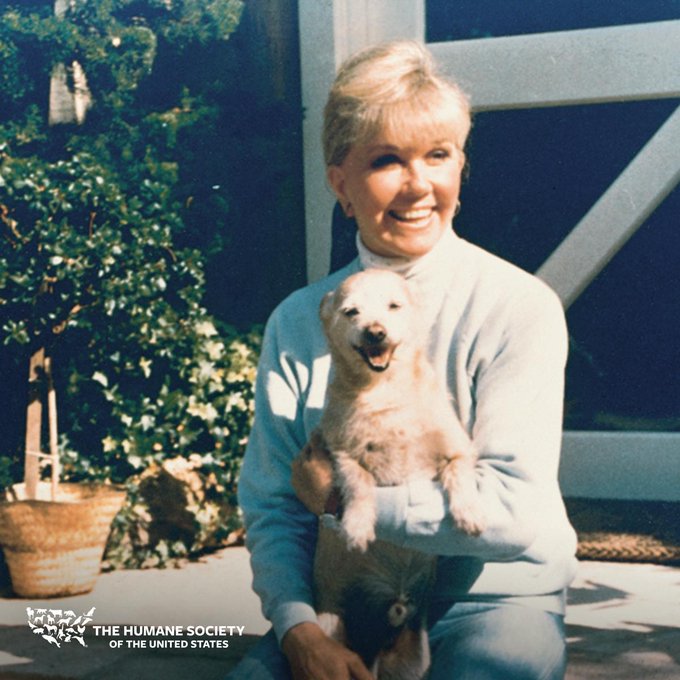
It is with profound sadness that we say goodbye to our friend Doris Day, legendary actress, singer, & fierce animal advocate.

Though she will be missed, we can’t thank her enough for her admiration & devotion to animals.

350 people are talking about this

Goldie Hawn

@goldiehawn

The great Doris Day left us and took a piece of the sun with her. She brighten our lives and lived out her life with dignity. May she rest peacefully. ❤️

587 people are talking about this

Tony Bennett

@itstonybennett

Susan and I are saddened to hear of Doris Day’s passing. She was a wonderful friend to us and a lovely and very talented lady. We will miss her beautiful smile and it was such a thrill to appear on The Doris Day Show back in 1970https://www.youtube.com/watch?v=ZYHzJ5lwYtY 

117 people are talking about this

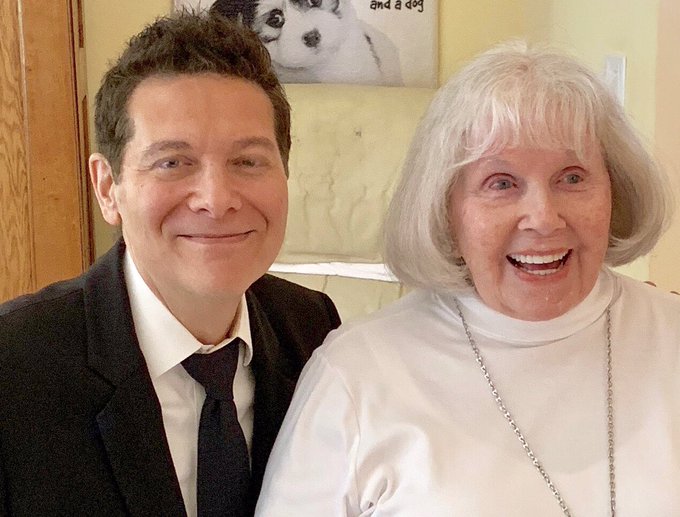
Michael Feinstein

@MichaelFeinstei

There are moments in life that you cherish forever. Singing to for her 97th b’day was one of those moments. Doris lived a life full of highs and lows, but always with love exuding from her heart. God bless you Doris. You were a beacon of talent, beauty, grace, and love.

51 people are talking about this

Diane Warren

@Diane_Warren

Doris Day is 🐵🐱🐶🐺🐎🐈🦁🐯🐅🐮🐆🐎🦄🦌🦌🐃🐄🐽🐏🐑🐐🐪🐁🐀🐀🦏🦛🐭🐁🐁🐀🐰🐿💔💔💔💔❤

See Diane Warren’s other Tweets

Embedded video

TCM

@tcm

Today, we wave goodbye to the iconic Doris Day, who brought so much joy to her fans throughout her legendary career.

1,285 people are talking about this

Brent Spiner

@BrentSpiner

Farewell Doris Day. She could do it all. Spectacularly!

73 people are talking about this

James Duke Mason

@JamesDukeMason

RIP the great Doris Day- here she is with my grandfather and Judy Garland in 1954 ❤️

20 people are talking about this

edgarwright

@edgarwright

RIP to the one, the only Doris Day.

164 people are talking about this


Doris Day, Hollywood actress and singer, dies aged 97

Media captionDavid Sillito looks back at Doris Day’s illustrious career

Hollywood legend Doris Day, whose films made her one of the biggest stars of all time, has died aged 97.

The singer turned actress starred in films such as Calamity Jane and Pillow Talk and had a hit in 1956 with Que Sera, Sera (Whatever Will Be, Will Be).

Her screen partnership with Rock Hudson is one of the best-known in the history of romantic movies.

In a statement, the Doris Day Animal Foundation said she died on Monday at her home in Carmel Valley, California.

It said she had been “in excellent physical health for her age, until recently contracting a serious case of pneumonia”.

“She was surrounded by a few close friends as she passed,” the statement continued.

Born Mary Ann Von Kappelhoff in April 1922, Day originally wanted to be a dancer but had to abandon her dream after breaking her right leg in a car accident.

Instead she began her singing career at the age of 15. Her first hit, Sentimental Journey, would become a signature tune.

Her films, which included Alfred Hitchcock’s The Man Who Knew Too Much and That Touch of Mink, made her known around the world.

But she never won an Oscar and was nominated only once, in 1960, for Pillow Talk, the first of her three romantic comedies with Hudson.

Honours she did receive included the Presidential Medal of Freedom in 2004 and a lifetime achievement Grammy in 2008.

Her last release, the compilation album My Heart, went to number one in the UK in 2011.

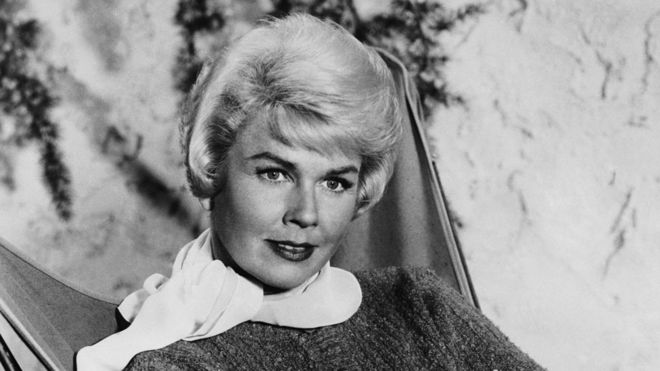
Doris DayImage copyrightGETTY IMAGES
Image captionDay’s real life was not as upbeat as her on-screen persona

Day’s wholesome, girl-next-door image was a popular part of her myth that sometimes invited ridicule.

“I’ve been around so long, I knew Doris Day before she was a virgin,” the musician Oscar Levant once remarked.

Day herself said her “Miss Chastity Belt” image was “more make-believe than any film part [she] ever played.”

Her life was certainly not as sunny. She married four times, was divorced three times and was widowed once.

She also suffered a mental breakdown and had severe financial trouble after one husband squandered her money.

In the 1970s, she turned away from performing to focus her energies on her animal foundation.

According to the organisation, she wished to have no funeral, memorial service or grave marker.

Doris Day in 1985Image copyrightGETTY IMAGES
Image captionIn later life she became an advocate for animal welfare

Star Trek actor William Shatner remembered Day on Twitter as “the World’s Sweetheart,” saying she was “beloved by all”.

Fellow Star Trek cast member George Takei said she was “synonymous with Hollywood icon“, while Spanish actor Antonio Banderas wrote: “Thank you for your talent.”

Novelist Paulo Coelho marked her passing by quoting lyrics from Secret Love, one of her numbers in Calamity Jane.

“We’ve lost another great Hollywood talent,” tweeted Family Guy creator Seth MacFarlane, while actor Luke Evans said he had “always loved” her voice and “beautiful” songs.

Lucy’s Law: Puppy farm ban set to be confirmed

PuppiesImage copyrightPA

A new law aimed at cracking down on so-called puppy farms in England is being presented to Parliament on Monday.

Known as Lucy’s Law, it will ban the sale of kittens and puppies from third parties from spring 2020, making buyers deal with breeders directly.

Environment Secretary Michael Gove said the new rules would give animals “the best possible start in life”.

The RSPCA said it was “absolutely thrilled” with the legislation – but stressed it required enforcement.

Presentational grey line

The new law would require animals to be born and reared in a safe environment, with their mother, and to be sold from their place of birth.

The rules, which will apply to England, are also designed to deter smugglers who abuse the Pet Travel Scheme to bring young animals into the UK to be sold.

Named after Lucy, a Cavalier King Charles Spaniel who died in 2016 after being poorly treated on a puppy farm, the ban is scheduled to come into force on 6 April next year, the Department for Environment, Food and Rural Affairs said.

Presentational white space

Marc Abraham, Lucy’s Law campaigner and founder of Pup Aid, said: “I’m absolutely thrilled that Lucy’s Law is now being laid in Parliament and will come into effect from April 2020.

The story of the dog behind Lucy’s Law

Rogue puppy farmers hit with £1m tax bill

What are conditions like inside a puppy farm?

“Lucy’s Law is named after one of the sweetest, bravest dogs I’ve ever known, and is a fitting tribute to all the victims of the cruel third-party puppy trade, both past and present.”

But Paula Boyden, veterinary director at Dogs Trust, the UK’s largest dog welfare charity, urged the government to go further.

She said: “We would like to see additional measures introduced to ensure the ban is as robust as possible.

“There is time before April 2020 for the government to consider regulation of re-homing organisations and sanctuaries, ensure full traceability of all puppies sold, and strengthening of the pet travel scheme.”

Coyote pup rescued after mother is hit, killed by car while crossing road

Play Video

A state trooper helped rescue a coyote pup Sunday night after the pup’s mother was hit and killed by a car while crossing the road near Suffolk Downs.

State police said Trooper Carlo Mastromattei was originally dispatched to a report about a wounded dog Sunday night, but found the frightened pup on the busy Revere Beach Parkway. The trooper called various state agencies for help, but none were available.

Lisa Cutting, of Oceanview Kennel in Revere, was able to respond and brought a crate for the 4-week-old pup.

Mastromattei brought the pup home in the crate overnight, state police said.

Oceanview Kennel brought the pup, which was named Carlos, to Tufts Wildlife Center in Grafton the next day.

Veterinarians there examined the pup and found he was healthy, state police said.

“The little guy is going to be transferred to the care of a wildlife specialist in the Berkshires, who will rehabilitate him and acclimate him to life in the wild, where he will eventually be released,” state police said.

Follow this story to get instant e-mail alerts from WCVB on the latest developments and related topics.

Tyson Chicken recalls almost 12 million pounds of frozen chicken


Photo credit: MGN

EDITOR’S NOTE: This release is being reissued as an expansion of the March 21, 2019 recall, which consisted of 69,093 pounds of frozen, ready-to-eat chicken strip products. The scope of this recall expansion now includes more information and an additional 11,760,424 pounds of product.

Tyson Foods, Inc., a Rogers, Ark. establishment, is recalling approximately 11,829,517 million pounds of frozen, ready-to-eat chicken strip products that may be contaminated with extraneous materials, specifically pieces of metal, the U.S. Department of Agriculture’s Food Safety and Inspection Service (FSIS) announced today.

The frozen, ready-to-eat chicken strip items were produced on various dates from Oct. 1, 2018 through March 8, 2019 and have “Use By Dates” of Oct. 1, 2019 through March 7, 2020. The chart contains a list of the products subject to recall.

The products subject to recall bear establishment number “P-7221” on the back of the product package. These items were shipped to retail and Department of Defense locations nationwide, for institutional use nationwide and to the U.S. Virgin Islands.

The problem was discovered when FSIS received two consumer complaints of extraneous material in the chicken strip products. FSIS is now aware of six complaints during this time frame involving similar pieces of metal with three alleging oral injury.

Anyone concerned about an injury or illness should contact a healthcare provider.

FSIS is concerned that some product may be in consumers’ freezers. Consumers who have purchased these products are urged not to consume them. These products should be thrown away or returned to the place of purchase.

FSIS routinely conducts recall effectiveness checks to verify recalling firms notify their customers of the recall and that steps are taken to make certain that the product is no longer available to consumers. When available, the retail distribution list(s) will be posted on the FSIS website at www.fsis.usda.gov/recalls.

Consumers with questions about the recall can contact Tyson Foods Consumer Relations at 1-866-886-8456. Members of the media with questions about the recall can contact Worth Sparkman, Public Relations Manager, Tyson Foods, Inc., at Worth.Sparkman@Tyson.com (479) 290-6358.

Consumers with food safety questions can “Ask Karen,” the FSIS virtual representative available 24 hours a day at AskKaren.gov or via smartphone at m.askkaren.gov.

The toll-free USDA Meat and Poultry Hotline 1-888-MPHotline (1-888-674-6854) is available in English and Spanish and can be reached from 10 a.m. to 6 p.m. (Eastern Time) Monday through Friday.

Recorded food safety messages are available 24 hours a day. The online Electronic Consumer Complaint Monitoring System can be accessed 24 hours a day at http://www.fsis.usda.gov/reportproblem.

Burger King plans to roll out Impossible Whopper across the United States

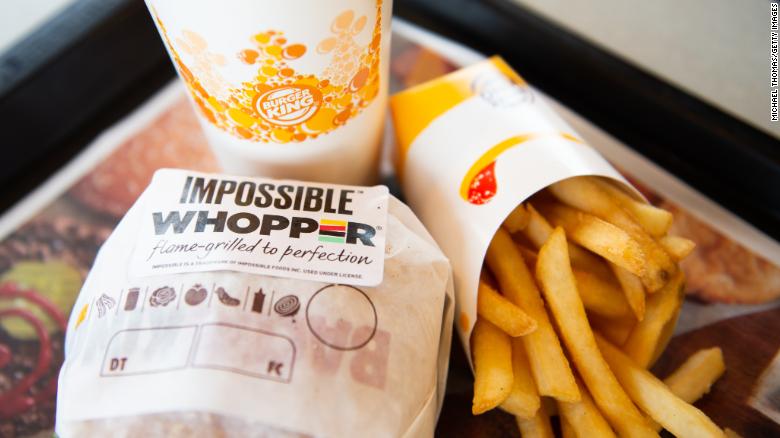
New York (CNN Business)Burger King’s test of a vegetarian version of its signature Whopper was such a success, the chain is planning to roll the Impossible Whopper out nationally this year.

On April 1, Burger King started testing the vegetarian burger, using a plant-based patty from Impossible Foods. The test took place in St. Louis and “went exceedingly well,” a spokesperson for Restaurant Brands International (QSR), Burger King’s parent company, said. The spokesperson added that the sales of the Impossible Whopper are complementary to the regular Whopper.
That’s exactly what Burger King wants.
With the Impossible Whopper, Burger King is primarily targeting meat eaters who seek more balance in their diet. The new product is designed to “give somebody who wants to eat a burger every day, but doesn’t necessarily want to eat beef everyday, permission to come into the restaurants more frequently,” Chris Finazzo, president of Burger King North America, told CNN Business when discussing the initial test.
Burger King started testing out the Impossible Whopper in St. Louis.

The Impossible Whopper is supposed to taste just like Burger King’s regular Whopper. Unlike veggie burgers, Impossible burger patties are designed to mimic the look and texture of meat when cooked. The plant protein startup recently revealed a new recipe, designed to look and taste even more like meat. That version is being used in Burger King’s Impossible Whoppers.
The company plans to expand to more markets “in the very near future” before making the sandwich available nationally by the end of the year. Burger King had about 7,300 US locations at the close of last year.
There’s public interest in plant-based protein because of concerns about animal welfare and the environmental impact of factory farming, and because some consumers are interested in reducing their consumption of meat for health reasons.
And the interest appears to be growing. The global market for meat substitutes is forecast to grow from an estimated $4.6 billion in 2018 to $6.4 billion by 2023, according to research firm MarketsandMarkets.
Beyond Meat, Impossible Food’s primary competitor, thinks that the potential is bigger. In an SEC filing detailing plans for the 10-year-old company’s IPO, Beyond Meat projected that over time the plant based-meat market could reach $35 billion in the United States. Beyond Meat plans to start trading in early May.

BEYOND MEAT’S VEGAN BURGERS COULD CHANGE THE WAY WE THINK ABOUT MASCULINITY

hamburger
Reuters/Lucy Nicholson
Changing minds, one meatless patty at a time.

Beyond Meat wants to change the way we eat. That means the plant-based protein company, currently in the midst of planning an initial public offering expected to put its value at $1.2 billion, needs to ensure that its products appeal to all kinds of people—including men.

That’s a tall order, given that meat-eating has long been associatedwith masculinity. And so the Los Angeles-based company, in its mission to make meatless choices mainstream, has leaned into the manliness of a hearty, red-liquid-dripping burger (even if that liquid isn’t blood). Its marketing strategies avoid potentially off-putting words like “vegan” or “veggie burger.” As Fast Company’s Rina Raphael puts it, both Beyond Meat and its biggest meatless competitor, Impossible Foods, “entice men where they can be found—in sports, at popular burger joints, and in the BBQ meat section at stores.”

Beyond Meat’s Instagram feed features endorsements from the NBA’s Kyrie Irving and Chris Paul (both also investors), while promoting deals with fast-food joints such as Del Taco and Carl’s Jr. (You can also chow down on an Impossible Burger at White Castle and Red Robin.) And both Beyond Meat and Impossible Foods both boast that their burgers “bleed,” a choice that serves no purpose other than to more closely imitate the viscerally satisfying, caveman-like experience of biting into a juicy beef patty.

The strategy is a practical one: Rather than trying to push men to eat less meat and embrace plant-based diets, Beyond Meat and Impossible Foods want to expand the definition of what meat is. “What consumers value about meat has nothing to do with how it’s made,” Impossible Foods CEO Patrick Brown told Quartz last year. “I mean, animals have just been the technology we have used up until now to produce meat, which is a food that is defined by its flavor profile, its sensory profile, its nutrition, utility, and stuff like that.”

If Beyond Meat and Impossible Foods succeed in instilling this new idea of meat, the cultural link between meat and masculinity may well remain intact. “We can’t just eat our way out of toxic masculinity,” says Max Elder, the research director at the Institute for the Future, a nonprofit research center in Silicon Valley.

Elder, who has a background in food ethics, thinks Beyond Meat and Impossible Foods won’t necessarily challenge gender norms. He points out that because these companies emphasize how similar their products are to meat in taste and texture, they may be less likely to make people question their meat-eating habits and engage in deeper reflections about the relationship between food and gender.

“Are these plant-based meat alternatives sufficiently different that they will challenge existing ideologies?” he asks. “I’m sort of skeptical that we can both preserve everything that these companies want from meat, and get rid of everything these companies don’t want from meat at the same time.”

But there’s also a far more optimistic possibility—that the rise of meatless meat could be part and parcel of a broader cultural shift. Whether this will happen turns on a question of causality. We know that ideology shapes our behaviors. But can changing our behaviors—say, by chowing down on a meatless burger that looks and tastes just like a regular one—shift our ideology over time?

The social pressure to eat meat

The gender politics of meat-eating can be traced all the way back to the Bronze Age. One 2017 analysis of the bones of 175 people who lived in China found that both men and women ate a combination of meat and grains during the Neolithic period. But by the Bronze Age, meat was off the menu for women—a change that corresponded with a downgrade in women’s social status. Meanwhile, the Book of Leviticus details how sacrificial meat was reserved for priests and the sons of Aaron, as Carol J. Adams explains in her 1990 book The Sexual Politics of Meat.

In the modern era, women in wealthy countries have far greater access to meat. Nonetheless, eating meat continues to be seen as a particularly macho thing to do, a concept that shows up everywhere from Hungry-Man frozen dinners to macho fast-food ads and Jordan Peterson’s all-meat diet (a mode of eating so on-brand with the controversial psychologist’s vigorous defense of the patriarchal orderthat it verges on self-parody).

There are certainly plenty of men today who have no qualms about swapping out steak or pulled pork for legumes, eggs, fish, and tofu. But research shows that making vegetarian choices still carries a certain gendered stigma. One 2011 study by researchers at the University of British Columbia, published in the journal Appetite, found that people who eat vegetarian diets are perceived as both “more virtuous and less masculine” than their meat-eating peers.

“Manhood is still considered a precarious state, easily lost and requiring constant validation,” the researchers note—and because social conditioning has taught us that meat-eating is manly, ordering steak at a dinner date is a way to reaffirm one’s strength and virility.

And so, at a time when scientists and public-health experts are urging people around the world to eat less meat (pdf) because of health and environmental concerns, some men have been loathe to change their habits. One nationally representative survey (pdf) of over 1,000 Americans, published in the journal Public Health Nutrition, found that men were less likely than women to reduce their meat consumption and more likely to say that meat was part of a healthy diet and that meals were boring, incomplete, or insufficiently filling without meat.

Emma Roe, an associate professor in human geography at the University of Southampton in the UK, suggests that the key to changing this mindset is to normalize vegetarian choices for men.

“Even men who don’t like meat, men who find it upsets their digestion, or have been asked by the doctor to eat less meat, still find it hard to choose the vegetarian option in public around other men,” she writes in a blog post. “What we have discovered is that many men are interested in eating less meat, they just need social permission to do so.” She suggests that the more meatless options become widely available in everyday spaces—at fast-food restaurants and neighborhood cookouts—the less stigma men will feel about giving beef a pass.

Changing minds, one meatless patty at a time

Whatever an individual’s motivation for cutting back on meat, it’s likely to have health benefits. A 2017 article, published in the journal Gender, Place, and Culture, also suggests that when men change their meat-eating habits, they can wind up changing gender norms in their social circles.

Doing vegetarianism in interactions drives social change, contributing to the de-linking of meat from gender hegemony,” writes researcher Anne DeLessio-Parson, who conducted interviews with 23 male and female pescetarians and vegetarians in La Plata, Argentina.

In a culture where meat-heavy asados play a huge role in national identity, the men in the interviews said they’d faced some pushback after going vegetarian. But they fought back, pushing an alternative model of masculinity in the process. “Armed with moral clarity, science, and ‘rational’ arguments, they confronted meat-eaters,” DeLessio-Parson reports. “They redefined meat-eating as a behavior that communicates weakness, rather than strength, and once established, gained respect and in some cases even admiration from others.”

Moreover, she notes that on a practical level, men who become vegetarian upset the traditional gendered division of space at an asado, in which men cook meat on the grill while women prepare salads inside. “If a vegetarian man does not want to be ‘complicit’ and see meat on the grill, where should he go? Will he be accepted in the kitchen, where women traditionally prepare salads? What happens when everyone heads for the shared table?”

One needn’t rely on men giving up meat entirely in order to see how more men eating plant-based meat could spark bigger shifts in gender roles and relations. As Adams explains in a blog post, popular culture often suggests that “refusing meat raises questions about one’s masculinity and sexuality.” She cites a German ad campaign that proposed the slogan “tofu is gay meat” and a Brooklyn deli that peddled a vegetarian sandwich called the “Gayboy.” Similarly, Michael Ian Black recounts in a New York Times op-ed being called “soy boy” as a slur insulting his manhood, after he posted a thread about masculinity on Twitter.

A son who grows up watching his father tucking into a crunchy salad or a vegan sausage, however, receives at least some level of indoctrination against such stereotypes. That’s a big deal, given that boys are still growing up with a rigid model of masculinity. In a 2018 nationally representative survey (pdf) of 1,000 kids between the ages of 10 and 19, for example, conducted by Plan International USA, an overwhelming 82% of boys said that they had heard someone criticize a boy for “acting like a girl.” Parents play a big role in socializing their children’s ideas about gender, according a 2018 briefpublished in the Journal of Adolescent Health—a power that can be used for good or for ill.

Similarly, a man who feels perfectly comfortable ordering a meatless burger in front of his friends at a restaurant signals to his peers that it’s all right to deviate from strict gender norms—in eating habits, yes, but perhaps in other ways, too.

On that front, Elder says there’s reason for optimism. “Insofar as Beyond Meat is creating the permission space for eaters to interrogate their food in a new way, I’m hopeful and I’m happy,” he says. Most problems with our current food system, he notes, can be traced back to a lack of critical thinking about the alternative possibilities we might explore. The marketing around Beyond Meat, Impossible Foods, and other plant-based and “clean meat” options will play a crucial role in determining the kinds of conversations we have about meat and masculinity, Elder added.

A recent Carl’s Jr. ad for Beyond Meat burgers may offer a hint at what we can expect. For years, Carl’s Jr. was known for its highly sexualized ads featuring Paris HiltonKate Upton, and other scantily-clothed actresses and models biting into burgers—messaging that promoted the idea that “women, like chicken and steak, exist to be salivated over and consumed by men,” as Deena Shanker wrote for Quartz.

In 2017, the company announced that it was forgoing this kind of advertising—not because of any ideological awakening, but simply because sex wasn’t selling the way it used to. Its Beyond Meat spot, which debuted earlier this year, offers insight into its new direction.

In the advertisement, the camera zooms out from a closeup of a tough, grizzled cowboy to reveal that he’s in the midst of a beachside yoga class, a Carl’s Jr. Beyond Famous Star (a burger made with a Beyond Meat patty) by his side. “When the wagon of change comes, you ride along with it,” he declares, striking a warrior pose. While he’s surrounded mostly by women in the yoga class, there are at least one or two men in the mix with him.

The message is clear: The tough cowboy can eat meatless burgers and do yoga, and still be himself.

Much like Carl’s Jr., the ad isn’t perfect. It doesn’t erase the sexist history of the fast-food chain or meat in general. And guys like this cowboy—that is, men who are looking to cut back on meat—are still in the minority. But hey: It’s a start.