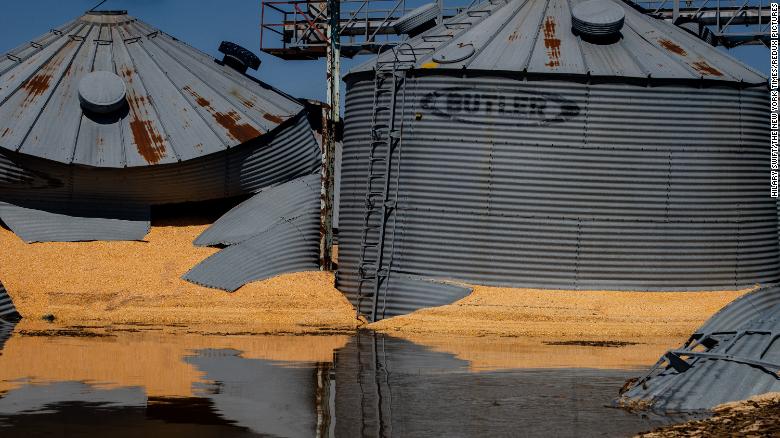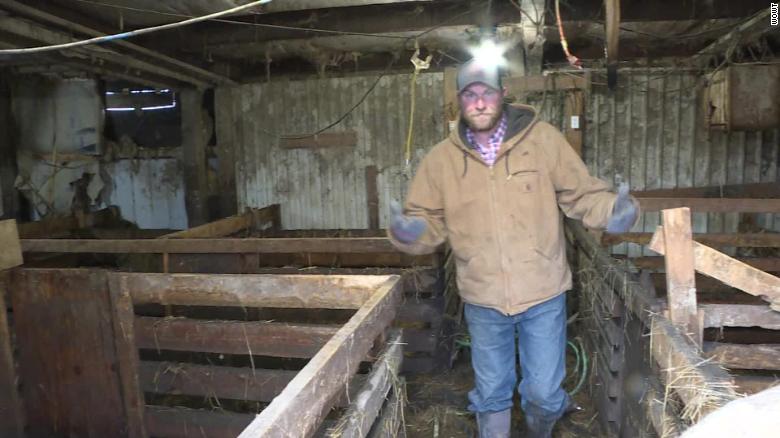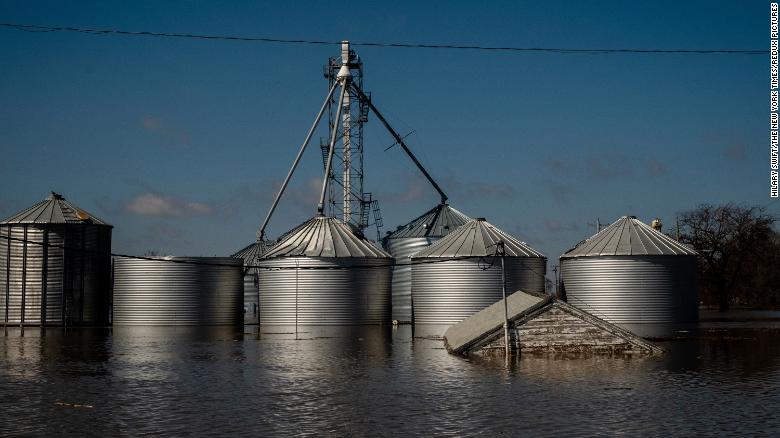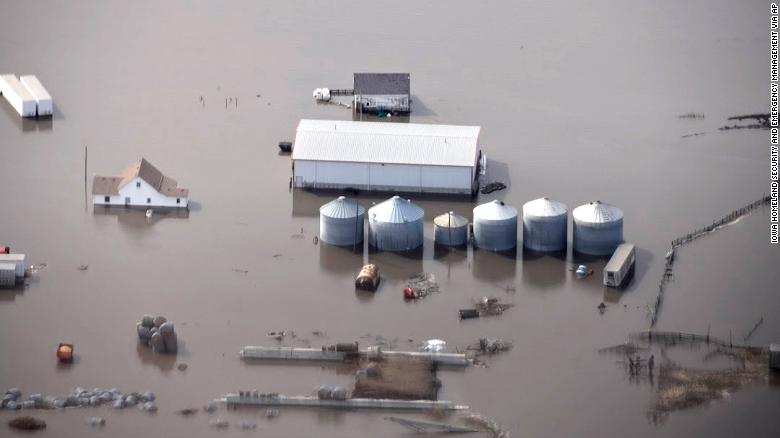
(CNN)Farmers in parts of Nebraska and Iowa had precious little time to move themselves from the floodwaters that rushed over their lands last week, so many left their livestock and last year’s harvest behind.
Posted Mar 09, 2019
“We like to see ourselves as special, but whatever the difference between humans and animals may be, it is unlikely to be found in the emotional domain.” (Frans de Waal)
A recent New York Times easy by renowned Emory University primatologist Dr. Frans de Waal called “Your Dog Feels as Guilty as She Looks” with the subtitle “Animals are no less emotional than we are” has generated a good deal of interest including a good number of emails to me that arrived yesterday and overnight. Dr. de Waal’s piece is an excerpt from his new book titled Mama’s Last Hug: Animal Emotions and What They Tell Us About Ourselves that was reviewed by Sy Montgomery in which she writes, “In this book, de Waal sets the record straight. Emotions are neither invisible nor impossible to study; they can be measured. Levels of chemicals associated with emotional experiences, from the ‘cuddle hormone‘ oxytocin to the stress hormone cortisol, can easily be determined. The hormones are virtually identical across taxa, from humans to birds to invertebrates.” She also notes that to avoid charges of being anthropomorphic, “researchers have invented a glossary of contorted terms: Animals don’t have friends but ‘favorite affiliation partners’; chimps don’t laugh when tickled, but make ‘vocalized panting’ sounds. This isn’t just silly; it’s dangerous. Instead of worrying about anthropomorphizing animals, we should fear making a far worse mistake, what de Waal calls ‘anthropodenial.’ When we deny the facts of evolution, when we pretend that only humans think, feel and know, ‘it stands in the way of a frank assessment of who we are as a species,’ he writes.”
Dr. de Waal similarly ends his piece by writing, “For the longest time, science has depicted animals as stimulus-response machines while declaring their inner lives barren. This has helped us sustain our customary ‘anthropodenial’: the denial that we are animals. We like to see ourselves as special, but whatever the difference between humans and animals may be, it is unlikely to be found in the emotional domain.”
I couldn’t agree more with the above views, and it astounds me that there still are some people who ignore the results of ample comparative research on the emotional lives of nonhuman animals (animals). According to a colleague who wrote a detailed email about all that we really know about animal emotions, the denialists’ views are “anti-scientific & dumb.” A good number of emails weren’t as friendly, because so many people are simply sick and tired of people ignoring what we know and making sweeping and false claims about how other animals simply are automatons and don’t experience emotions. For those who want to peruse all that we know about animal emotions please click here for numerous essays in popular and scientific media and for a long list of scientific studies click here. You’ll easily see that ignoring the rich and deep emotional lives of animals truly is “anti-scientific & dumb.”
What do we really know about dogs and guilt?
The title of Dr. de Waal’s essay also caught my eye because I’m interested in everything “dog.” So, when he writes, “Your Dog Feels as Guilty as She Looks,” I immediately thought of discussions along the lines that research shows that dogs don’t experience guilt. This isn’t so. (For a more detailed discussion see Canine Confidential: Why Dogs Do What They Do, Unleashing Your Dog: A Field Guide to Giving Your Canine Companion the Best Life Possible, many essays here, and links and references therein.) In an essay called “Dogs and Guilt: We Simply Don’t Know,” I wrote about how the results of an experiment by noted Barnard College dog researcher, Dr. Alexandra Horowitz, have routinely been misinterpreted by many people who haven’t read what she actually wrote. In an essay published in 2009 titled “Disambiguating the ‘guilty look’: salient prompts to a familiar dog behaviour,” Dr. Horowitz discovered that we are not very good at reading guilt, but this does not mean that dogs can’t or don’t feel.
I asked Dr. Horowitz to comment on this and she wrote:
“Spot on, on ‘guilt.’ Thanks so much for alerting me to and correcting the ubiquitous error about my study, some years back, which found that dogs showed more ‘guilty look’ when a person scolded or was about to scold them, not when the dog actually disobeyed the person’s request not to eat a treat. Clearly what the results indicated was that the ‘guilty look’ did not most often arise when a dog was actually ‘guilty.'”
“My study was decidedly NOT about whether dogs ‘feel guilt’ or not. (Indeed, I’d love to know…but this behavior didn’t turn out to indicate yay or nay.) I would feel dreadful if people then thought the case was closed on dogs (not) feeling guilt, which is definitely not the case. Many secondary sources got this right, but it must require reading the study to appreciate exactly what I did.”
So, I’m glad Dr. de Waal selected the title he did for his essay because while we really don’t know if dogs feel guilt, I do agree that when the proper research is done we’ll learn they do. It’s extremely important to get things right, and it’s essential to pay attention to what researchers actually study and discover in their research. There’s also no reason why dogs shouldn’t be able to feel guilt, as do other mammals, so let’s wait and see what we learn in future work.
There have been similar discussions of whether or not dogs feel jealous, with some people saying something like, “Of course they don’t” and others saying “Yes they do.” In fact, after the proper studies were done, we’ve learned they do. (See “Jealousy in Dogs: Brain Imaging Shows They’re Similar to Us” and “Dogs Know When They’ve Been Dissed, and Don’t Like It a Bit” in which I discuss a research essay called “Jealousy in Dogs.”) It’s not clear why some people continue to ignore what we know and strip dogs of jealousy and guilt and rob other animals of their emotions, but that another story.
Evolutionary continuity
“It’s time to accept these strongly supported facts and accept that the real question at hand is why have emotions evolved, not if they have evolved, and learn more about them.”
In the description of Mama’s Last Hug, we read, “De Waal discusses facial expressions, the emotions behind human politics, the illusion of free will, animal sentience, and, of course, Mama’s life and death. The message is one of continuity between us and other species, such as the radical proposal that emotions are like organs: we don’t have a single organ that other animals don’t have, and the same is true for our emotions.” Also recall Charles Darwin’s ideas about evolutionary continuity, in which differences among species are seen to be variations in degree rather than kind: “If we have or experience something, ‘they’ (other animals) do too.” Arguments based on continuity support the claim that discovering jealousy in dogs is not all that surprising, and it won’t be all that surprising to learn that dogs also experience guilt. But, of course, we need to wait for the proper studies to be done. Along these lines, Dr. de Waal writes, “We like to see ourselves as special, but whatever the difference between humans and animals may be, it is unlikely to be found in the emotional domain.”
All sorts of scientific research, ranging from observational studies to neuroimaging projects, strongly supports the fact that we are not alone in the emotional arena. So, it’s time to accept these strongly supported facts and accept that the real question at hand is why have emotions evolved, not ifthey have evolved, and learn more about them.
What makes the field of cognitive ethology—the study of animal minds—so exciting is that there is so much fascinating research to be done. There’s no doubt that many animals experience rich and deep emotions. We must never forget that our emotions are the gifts of our ancestors, our nonhuman animal kin. We have feelings and so too do other animals.

One of the US’s most dangerous industries is becoming even more hazardous for workers, as animal welfare and consumer safety are also put on the line. The federal government is allowing more and more slaughter plants to kill animals at increasingly dangerous rates.
At the end of September, the Trump administration announced that the Food Safety and Inspection Service (FSIS) of the United States Department of Agriculture (USDA) would be granting waivers allowing chicken slaughter plants to operate at higher kill speeds — going from a staggering 140 birds killed per minute (or more than two birds every single second) to 175.
This misguided decision benefits only the profit-driven meat industry. It does so at the expense of millions of animals, workers and consumers.
Four waivers have recently been granted to chicken plants that will join 20 already killing as many as 175 birds each minute. A gut-wrenching new undercover investigation by my organization, Compassion Over Killing (COK), reveals high-speed horrors behind the closed doors of one of those initial 20 plants, and why these waivers must come to a screeching halt.
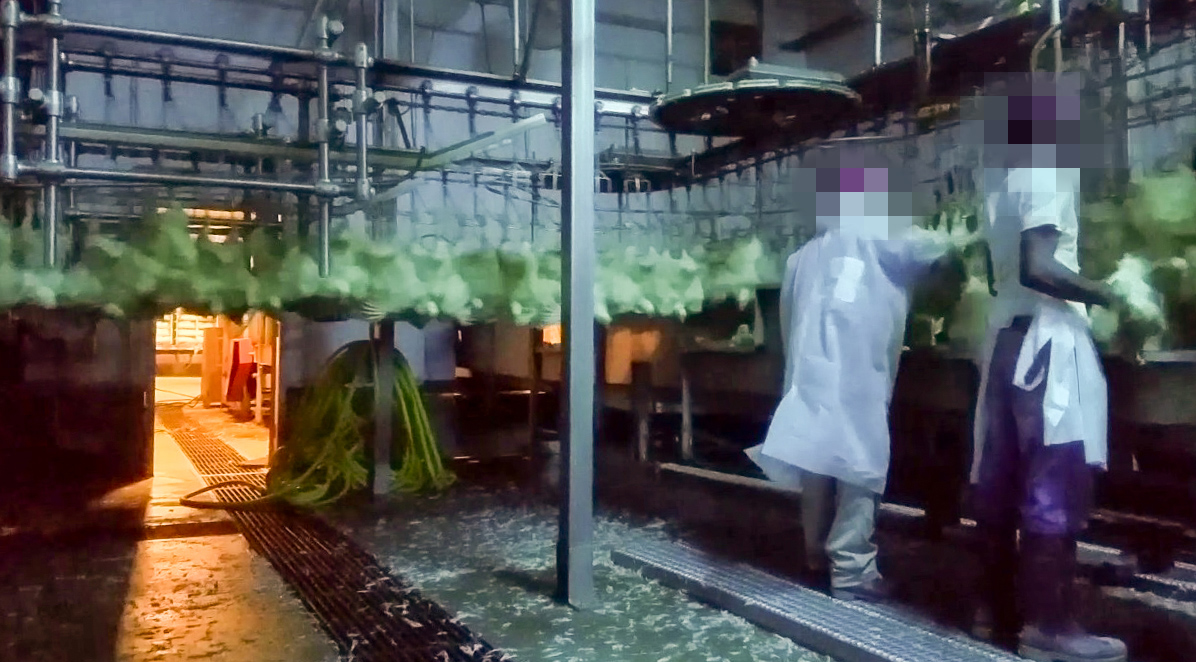
Marking the second time in just three years that a COK investigator has exposed the alarming consequences of high-speed slaughter, this heartbreaking hidden-camera footage was filmed inside Amick Farms in Hurlock, Maryland.
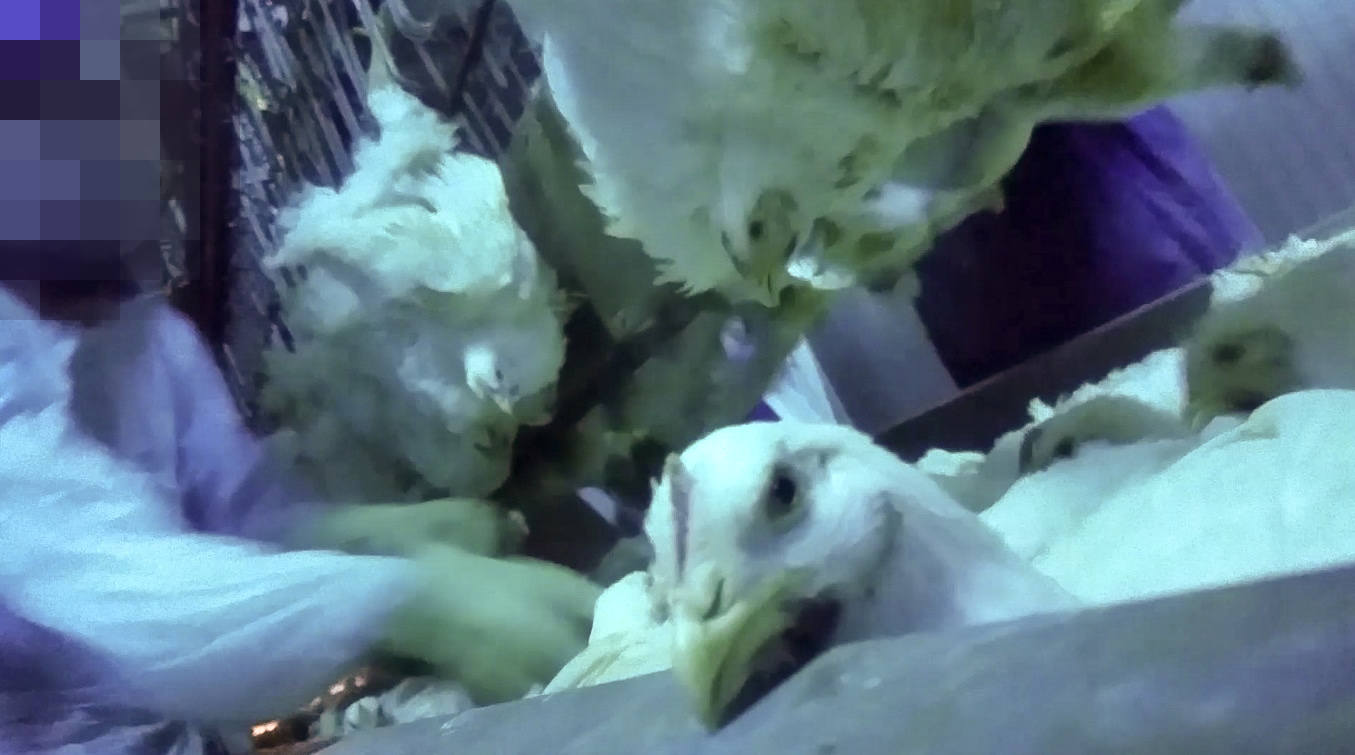
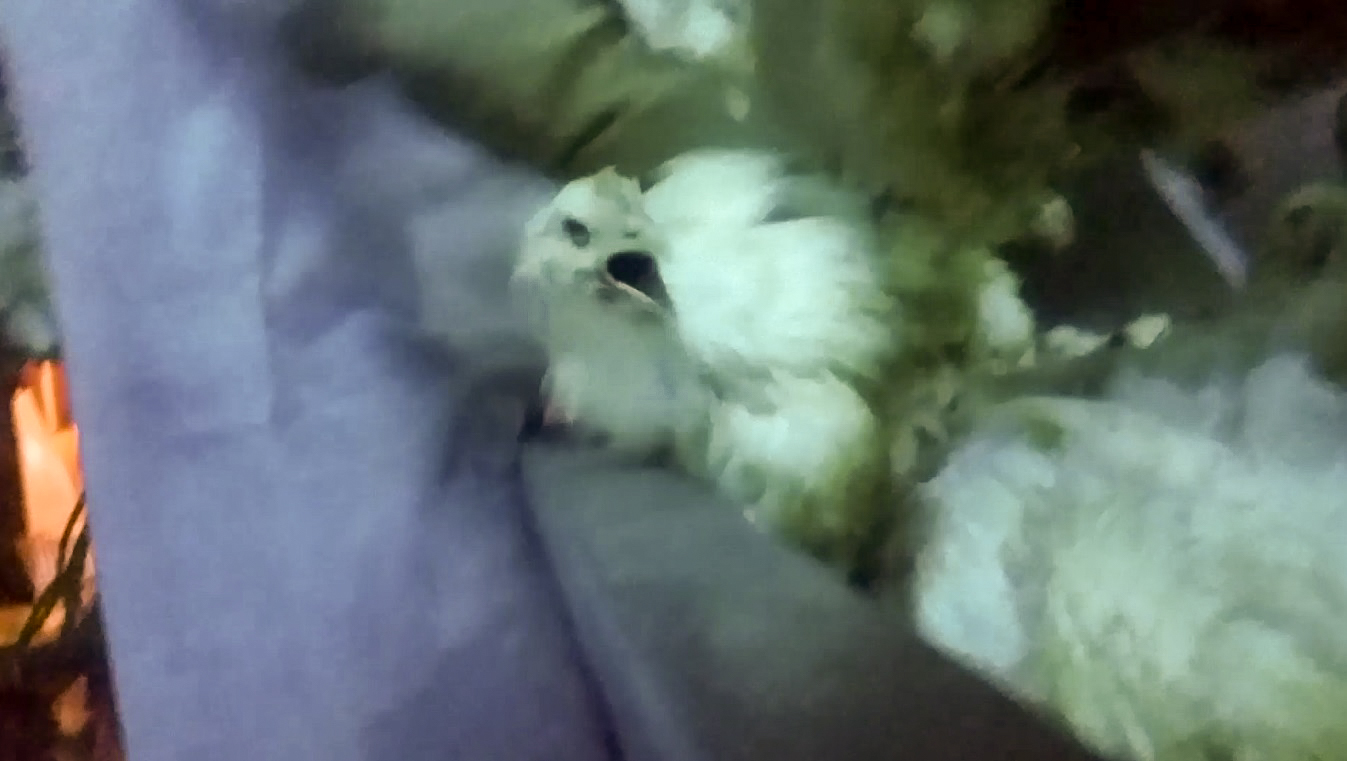
COK’s investigator documented workers punching, shoving or throwing birds down the hurtling line; birds slowly drowning in electrified stunning baths during equipment breakdowns; and “red birds,” chickens who were not fully bled out before entering the scalding tank — evidence that they entered the tank while still alive.
“Birds can be seen — still hanging from the shackles — in the water bath. … It is likely that the birds would have experienced prolonged, possibly painful electrical shock while they died of drowning,” said Dr. Sara Shields, a farm animal behavior and welfare specialist at Humane Society International, in an expert statement in response to COK’s footage. “This situation is totally unacceptable from an animal welfare perspective.”


COK submitted its video evidence to local authorities as well as to FSIS, urging the agency to revoke increased line speeds at Amick Farms and other high-speed plants, and stop issuing any further waivers. Though the criteria for receiving a waiver specifies that plants “must be able to demonstrate that … faster line speeds will maintain or improve food safety,” among other requirements, COK’s new investigation has shown that faster lines lead to enormous animal suffering.
Amick Farms responded to The Washington Post’s coverage of the investigation, neglecting to take any real responsibility for the cruelties happening behind the doors of its slaughterhouse.
At current rates of 140 birds slaughtered per minute at most plants, birds are already enduring horrific suffering. In addition, workers, who must keep up with the fast-paced assembly line environment, are forced to take inhumane shortcuts. Yet, with the government’s recent announcement, we’re moving quickly backward from bad to much worse.
Other COK investigations have documented birds being improperly shackled, dumped onto the conveyor belt and being roughly handled by workers struggling to keep up with rapidly moving lines. Birds suffer during this short and tragic journey to the kill line — already having endured severely overcrowded and filthy conditions on factory farms where they were bred for unnaturally rapid growth.
After these birds spend their lives standing, eating and sleeping in their own waste (often causing painful ammonia burns on their skin) and possibly even having their legs collapse under the unnatural weight of their own genetically manipulated bodies, the life of a “broiler” chicken farmed for food culminates in the horror of painful slaughter.
In addition to the obvious cruelty toward farmed animals in the final moments of their short lives, high-speed slaughter lines also pose grave danger to workers. Many employees at slaughter plants are already vulnerable undocumented workers exploited in one of the nation’s most dangerous industries to work. Even at current line speeds, they’re often denied bathroom breaks to keep up the pace at all costs, and can suffer painful medical issues and severe injuries — even amputations.
But instead of taking pause to address the dangers of this reckless program, the USDA is expanding it — and not just for chickens.
In late 2015, a COK undercover investigator worked at Quality Pork Processors (QPP) in Austin, Minnesota, a pig slaughterhouse that exclusively supplies to Hormel, the maker of SPAM and other pork products. Held up as a model plant for the USDA’s high-speed pig slaughter program — the Hazard Analysis Critical Control Point-Based Inspection Model Project — QPP kills approximately 1,300 pigs every hour.
The terrifying truth revealed in undercover footage paints a picture very much like the horrors seen at Amick Farms: pigs being beaten, shocked and dragged to the kill floor. Many were also improperly stunned, possibly leading them to enter the scalding tank alive — just like the “red birds” documented at Amick. In this fast-paced environment, pigs covered in feces or pus-filled abscesses were also seen processed for human consumption — all with a USDA inspection seal of approval.
In April 2018, Compassion Over Killing’s former investigator, now out from behind the camera after his work at QPP and other slaughterhouses, delivered a quarter-million signatures to the USDA demanding it to end its regressive high-speed pig slaughter program.
Yet the USDA continues to frame its high-speed program as a “modernization” of the meat industry. There’s nothing modern about reducing already minimal protections for consumers, animals and workers.
Though animal organizations and workers’ rights advocates alike are fighting these reckless speed increases, and the USDA has received more than 83,000 comments regarding this program — many opposed to it — the enormous lobbying power of the National Chicken Council continues has put pressure on the USDA to eliminate speed caps altogether. The USDA has denied a countrywide increase so far, but there’s little stopping the agency from granting waivers for individual slaughter plants across the United States.
To stand in solidarity with exploited workers, tortured animals and unknowingly duped consumers, the easiest solution is to leave these cruelly mass-produced animal products off our plates. By voting with our dollars and avoiding these products altogether, we show the USDA, National Chicken Council and huge corporations running these plants that we do not support these cruel practices that harm human and non-human animals in the name of profit.
Allowing slaughterhouses to run their kill lines at even faster speeds is a reckless decision by this administration that will lead to increased animal suffering, continued worker exploitation and compromised food safety. Tell the USDA: Not so fast. Take action and sign the petition at HighSpeedHorrors.com.
This article was produced by Earth | Food | Life, a project of the Independent Media Institute, and originally published on Truthout.

United Poultry Concerns is joining Wisconsin-based Alliance for Animals again this year in politely urging the village of Ridgeland in Dunn County, Wisconsin to cancel the “Chicken Toss” in February (most likely Saturday, Feb. 16th since it is always held in mid-February although we could not confirm the date as yet).
The chicken toss consists of throwing many chickens, one or two at a time, up in the air from a roof. Crowds scramble to grab the birds as they fall to the ground. The chickens huddle together, freezing and fearful, in crates and bags waiting to be thrown by participants who consider this activity fun.
There is no similarity between a chicken being pulled from a container and thrown roughly up in the air from a roof in the midst of a screaming mob, and a chicken fluttering voluntarily to the ground from a perch in a quiet place.
Please call these Dunn County officials, and politely urge them to prohibit the “chicken toss” this year. Whether you reach a live person or a recording, leave a brief, clear, and respectful message expressing your concern for the chickens: their fear and possible injury and the frigid weather.
http://upc-online.org/alerts/190123_chicken_toss_happening_again_in_february_please_make_a_call.html
https://www.peta.org/action/action-alerts/urgent-insidious-opossum-drop-andrews-north-carolina/
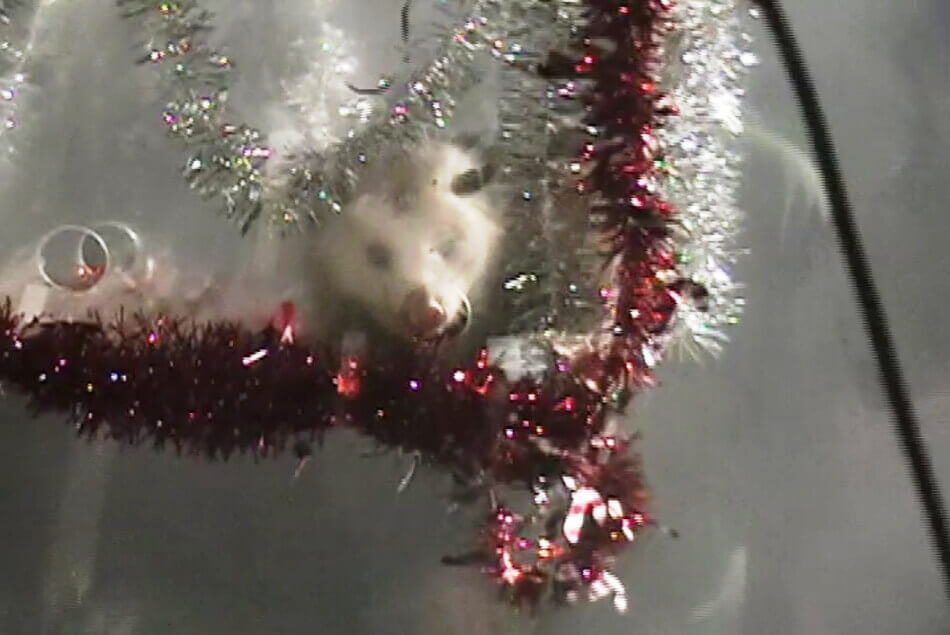
Andrews, North Carolina, apparently intends to “celebrate” New Year’s Eve by hosting a sadistic so-called “opossum drop,” during which a wild-caught opossum would be imprisoned inside a Plexiglas box for hours above a rowdy crowd. At midnight—after being forced to endure a near-constant barrage of live music, a noisy marching band leading the animal in, and fireworks displays replete with the usual explosions and smoke—the terrified opossum would be slowly lowered to signify the dawning of the new year. Because this sensitive and elusive prey species naturally avoids human contact at all costs, subjecting one of them to hordes of partiers, chaos, and blaring noise is inhumane and would very likely result in potentially fatal stress-induced conditions. PETA scheduled a meeting with Mayor James Reid in order to describe our concerns and to encourage city officials to “drop” any one of countless nonliving articles that won’t suffer, but he canceled the meeting at the last minute, even declining to discuss the matter by phone—so now it’s your turn!

Please politely urge the following city officials and event sponsors to cancel the cruel event, then spread this alert far and wide. Remember, it’s vital that you keep it polite! Polite comments can be directed to:
The Honorable James Reid
Mayor of Andrews, North Carolina
mayor@andrewsnc.com
https://www.facebook.com/james.reid.735
Mr. Steve Jordan
Alderman and Mayor Pro Tempore
Town of Andrews, North Carolina
s.jordan@andrewsnc.com
Ms. Richelle Phillips
Alderman
Town of Andrews, North Carolina
r.phillips@andrewsnc.com
Mr. Mike Sheidy
Alderman
Town of Andrews, North Carolina
m.sheidy@andrewsnc.com
Mr. Scott Stalcup
Alderman
Town of Andrews, North Carolina
s.stalcup@andrewsnc.com
Ms. Sandra Daley, Chair
Cherokee County Tourism Development Authority (Event Sponsor)
sandra.daley.sd@gmail.com
Mr. Mark Kimball, CEO
Erlanger Murphy Medical Center (Event Sponsor)
Mark.Kimball@erlanger.org
Mr. Joel Storrow
President
McGill Associates (Event Sponsor)
joel.storrow@mcgillengineers.com
Chimpanzees and elephants first

Happy was one of seven Asian elephant calves captured, probably from the same herd, in Thailand in the early 1970s. Named after Disney’s seven dwarves, they were shipped to America and sold to circuses and zoos. Happy and Grumpy ended up in the Bronx zoo, where they lived in an enclosure for 25 years. In 2002 they were transferred to a larger enclosure with a second pair of pachyderms, Patty and Maxine. Their new environment was a little closer to the wild one, in which elephants form large families. But Patty and Maxine charged at Grumpy, injuring her. Unable to walk and with suppurating wounds, Grumpy was euthanised.
Happy was then paired with a younger female elephant, Sammy. She died of kidney failure in 2006. But meanwhile Happy had become a scientific celebrity. In 2005 she became the first elephant to pass the “mirror self-recognition test”, an indicator of self-consciousness. Scientists painted a white cross over her left eye, and led her to a large mirror. Happy repeatedly touched the marking with her trunk, showing that she recognised herself. Most animals (and human infants) cannot do this.

https://www.livekindly.co/ivanka-trumps-vegetarian-thanksgiving-white-house-turkey-pardon/
Ivanka Trump’s children, Joseph and Arabella, requested a vegetarian
thanksgiving after watching the president – their grandfather – pardon the
Thanksgiving turkeys this year.
Presidents and turkeys go way back, with reports of gifts of the animal
being sent to the White House dating back to 1870. However, it was in 1989
– when George H.W. Bush was the American head of state – that the White
Houses’ official turkey pardoning ceremony tradition was cemented.
According to White House History
<https://www.whitehousehistory.org/pardoning-the-thanksgiving-turkey>,
after being presented with a turkey – wary of animal rights activists
picketing nearby – Bush stated, *“Let me assure you, and this fine tom
turkey, that he will not end up on anyone’s dinner table, not this guy —
he’s granted a Presidential pardon as of right now — and allow him to live
out his days on a children’s farm not far from here.”*
This year, it was the turn of turkeys Peas and Carrots to be pardoned by
the President
<https://www.livekindly.co/irelands-former-president-mary-robinson-go-vegan-global-warming/>,
and his grandchildren were quite taken with the pair. According to Trump
<https://www.livekindly.co/vegan-pamela-anderson-reason-melania-trump-kim-kardashian-ditched-fur/>,
who posted pictures of Arabella, Joseph, and Theodore meeting the turkeys
on her Instagram account, *“After watching their Grandpa pardon Peas and
Carrots at the White House on Tuesday, Joseph and Arabella have sworn off
turkey and are insisting on a vegetarian Thanksgiving!”*
The children are not alone in asking for a turkey-free holiday. A number of
celebrities urged their fans to leave meat off the table this year,
including star of “The Big Bang Theory” Kaley Cuoco.
<https://www.livekindly.co/vegetarian-big-bang-theory-kaley-cuoco-adopt-turkeys-thanksgiving/>
In a video for the animal rescue organization Farm Sanctuary, the
vegetarian actor said, *“Each year 46 million turkeys
<https://www.livekindly.co/vegan-james-cromwell-helps-rescue-100-turkeys/> are
inhumanely raised and slaughtered for Thanksgiving. The majority of these
birds are raised on factory farms, which are linked to numerous
environmental problems hurting us and our planet.”*
Filmmaker Kevin Smith
<https://www.livekindly.co/filmmaker-kevin-smith-urges-americans-go-vegan-thanksgiving/>
–
who turned vegan at the beginning of this year following a heart attack –
also asked consumers to consider choosing a cruelty-free option over a
turkey ahead of this years’ Thanksgiving
<https://www.livekindly.co/this-vintage-vegan-thanksgiving-ad-with-joaquin-phoenix-is-back-from-the-90s/>.
Speaking to two of the animals – again in a video for Farm Sanctuary –
Smith, who appeared alongside his daughter Harley Quinn, said, *“You have
my solemn word ladies, I will never eat another turkey. And I will go out
of my way to see that others might not as well.”*
To coincide with World Vegan Month, the Oxford Centre for Animal Ethics has published a new book exploring why people give up meat and dairy.
<https://gallery.mailchimp.com/e8078cc8a96065221b73d9ab6/images/8326ba85-1398-417e-be7f-df40866f41cb.jpg>
The protest against meat eating may turn out to be one of the most significant movements of our age. In terms of our relations with animals, it is difficult to think of a more urgent moral problem than the fate of billions of animals killed for human consumption.
Ethical Vegetarianism and Veganism outlines three principal considerations that lead people to modify their diet. The first concerns the morality of killing sentient beings when it isn’t strictly necessary, the second concerns the abuse and cruelty that animals often endure during farming, and the third explores the human and environmental costs, including animal agriculture and climate change.
The book argues that vegetarians and vegans are not only protesters, but also moral pioneers. It provides 25 chapters which stimulate further thought, exchange, and reflection on the morality of eating meat.
A rich array of philosophical, religious, historical, cultural, and practical challenge our assumptions about animals, and how we should relate to them.
Published by Routledge, the book provides global perspectives and insights from 11 countries: US, UK, Germany, France, Belgium, Israel, Austria, the Netherlands, Canada, South Africa, and Sweden.
The volume is edited by the directors of the Centre, Andrew Linzey and Clair Linzey. They comment: “The aim of the Centre has always been to pioneer ethical perspectives on animals through academic research, teaching, and publication, and this is our contribution to what has now become a world-wide movement for moral change.”
Please recommend the book to your university or college library.
Further information (including special discounts on hardback, paperback, and eBook versions) is available <https://oxfordanimalethics.us6.list-manage.com/track/click?u=e8078cc8a96065221b73d9ab6&id=8df0755a87&e=8cb4ff7382> here.
To request a review copy, see <https://oxfordanimalethics.us6.list-manage.com/track/click?u=e8078cc8a96065221b73d9ab6&id=93b34642e0&e=8cb4ff7382> here.
Andrew Linzey is the director of the Oxford Centre for Animal Ethics. He has written or edited twenty books, including Animal Theology and Why Animal Suffering Matters.
Clair Linzey is the deputy director of the Oxford Centre for Animal Ethics and co-editor of the Palgrave Handbook of Practical Animal Ethics and The Routledge Handbook of Religion and Animal Ethics.
Copyright © 2018 Oxford Centre for Animal Ethics, All rights reserved.
*The Sheds Were Already Empty*
Thanksgiving Tragedy: A Visit to a Turkey Farm
<https://www.youtube.com/watch?v=lI7Sf0HxWmM>
A group of UPC activists in Northern California wanted to go to a turkey
farm a
few days before Thanksgiving to pay their respects to the birds destined for
slaughter. When they arrived, they were heartbroken to find they were too
late,
the sheds were empty, and there was nothing but a sprinkling of white
feathers
and silence. Please watch and share this important video and witness the
reality
of this heart wrenching holiday:
__________________
*UPC Hosts Happy Thanksgiving for Turkeys: CBS Channel 9 Eyewitness News
(1994)*
UPC Thanksgiving Dinner for Turkeys
<https://www.youtube.com/watch?v=VX5hYIaR7cY>
Forty people attended a festive Thanksgiving celebration at UPC in honor of
Wanda and Willow, two rescued factory farm turkey hens adopted from Farm
Sanctuary. Washington, DC’s CBS channel 9 provided excellent coverage of our
dinner as did local radio stations and The Potomac Almanac newspaper. Allan
Cate
read aloud to an entranced audience including Wanda, *’Twas the Night
Before*
*THANKSGIVING*, by Dav Pilkey, giving thousands of TV viewers a chance to
see a
turkey enjoying herself in friendly company. PSYeta president Ken Shapiro’s
son,
Joel, contributed a wonderful story about three turkey gobblers who got
away!
As for us –
*”We feasted on veggies *
*With jelly and toast, *
*And everyone was thankful *
*(The turkeys were most!).”*
For more information see: ‘Twas the Night Before Thanksgiving
<http://www.upc-online.org/merchandise/humane_child.html#night_before_thanksgiving>
—
United Poultry Concerns is a nonprofit organization that promotes
the compassionate and respectful treatment of domestic fowl.
Don’t just switch from beef to chicken. Go Vegan.
http://www.UPC-online.org/ http://www.twitter.com/upcnews
http://www.facebook.com/UnitedPoultryConcerns
View this article online
<http://upc-online.org/turkeys/181121_turkeys-two_short_videos_show_different_worlds.html
|