


And while that happens, all of us can stop supporting the disgusting meat industry by refusing to buy its products. Learn more here.

About 3.4 million chickens and turkeys and 5,500 hogs have been killed in flooding from Florence as rising North Carolina rivers swamped dozens of farm buildings where the animals were being raised for market, according to state officials.
The N.C. Department of Agriculture issued the livestock mortality totals Tuesday, as major flooding is continuing after the slow-moving storm’s drenching rains. Sixteen North Carolina rivers were at major flood stage Tuesday, with an additional three forecasted to peak by Thursday.
The Department of Environmental Quality said the earthen dam at one hog lagoon in Duplin County had breached, spilling its contents. Another 25 of the pits containing animal feces and urine have either suffered structural damage, had wastewater levels go over their tops from heavy rains or had been swamped by floodwaters. Large mounds of manure are also typically stored at poultry farms.
North Carolina is among the top states in the nation in producing pork and poultry, with about 9 million hogs at any given time and 819 million chickens and 34 million turkeys raised each year.
The N.C. Pork Council, an industry trade group, said the livestock losses from the storm should be taken in the context.
“Our farmers took extraordinary measures in advance of this storm, including moving thousands of animals out of harm’s way as the hurricane approached,” the group said in a statement issued Tuesday. “We believe deeply in our commitment to provide care for our animals amid these incredibly challenging circumstances.”
The industry lost about 2,800 hogs during flooding from Hurricane Matthew in 2016.
Sanderson Farms, a major poultry producer in the state, said it lost about 1.7 million chickens after flooding at more than 60 of the independent farms that supply its poultry processing plants. The company said its facilities suffered no major damage, but supply disruptions and flooded roadways had caused shutdowns at some plants.
In addition, about 30 farms near Lumberton have been isolated by flood waters, hampering the delivery of feed to animals. The lack of food could cause additional birds to die if access isn’t restored quickly, the company said.
Smithfield Foods, the world’s largest pork producer, said its plants also suffered no significant damage and are operating at limited capacity. The company said it would ramp up production as roads become passable.
An environmental threat is also posed by human waste as low-lying municipal sewage plants flood. On Sunday, the Cape Fear Public Utility Authority reported that more than 5 million gallons of partially treated sewage had spilled into the Cape Fear River after power failed at its treatment plant.
The Environmental Protection Agency said Monday that 16 community water treatment facilities in North Carolina are unable to supply drinking water and that seven publicly owned sewage treatment works are non-operational due to the flooding.
Duke Energy is continuing cleanup operations Tuesday following a weekend breach at a coal ash landfill at its L.V. Sutton Power Station near Wilmington.
Duke spokeswoman Paige Sheehan said a full assessment of how much ash escaped from the waterlogged landfill is ongoing. The company initially estimated Saturday that about 2,000 cubic yards (1,530 cubic meters) of ash were displaced, enough to fill about 180 dump trucks.
The coal-fired Sutton plant was retired in 2013 and replaced with a new facility that burns natural gas. The company has been excavating millions of tons of leftover ash from old pits there and removing the waste to a new lined landfill constructed on the property. The gray ash left behind when coal is burned contains toxic heavy metals, including arsenic, lead and mercury.
Photos from the site provided to AP by Cape Fear River Watch, an environmental advocacy group, show cascades of gray-colored water spilling from at least two breaches at the landfill and flowing toward Sutton Lake, the plant’s former cooling pond which is now used for public recreation, including fishing and boating.
Sutton Lake drains into the Cape Fear River. Sheehan said Duke’s assessment is that there was minimal chance any contaminants from the spill had reached the river.
At a different power plant near Goldsboro, three old coal ash dumps capped with soil were inundated by the Neuse River. Duke said they had no indication those dumps at the H.F. Lee Power Plant were leaking ash into the river.
Duke’s handling of ash waste has faced intense scrutiny since a drainage pipe collapsed under a waste pit at an old plant in Eden in 2014, triggering a massive spill that coated 70 miles (110 kilometers) of the Dan River in gray sludge. The utility later agreed to plead guilty to nine Clean Water Act violations and pay $102 million in fines and restitution for illegally discharging pollution from ash dumps at five North Carolina power plants. It plans to close all its ash dumps by 2029.
In South Carolina, workers with electricity provider Santee Cooper erected a temporary dike in hopes of preventing flooding of an old coal ash dump at the demolished Grainger Generating Station near Conway. The dump is adjacent to the Waccamaw River, which is expected to crest at nearly 20 feet (6 meters) this weekend. That’s nine feet above flood stage and would set a new record height.
Scientists and officials in China are trying to isolate a deadly pig virus potentially threatening the nation’s pork industry.
According to Reuters, an outbreak of African swine fever was discovered on a farm in inner Mongolia. Eight pigs died and 14 more were infected.
Since August 1, the virus has spread to seven provinces in China, reports Bloomberg. About 40,000 pigs have died, disrupting a pork industry valued at $128 billion.
China has introduced several new rules to attempt to curb the spread of the virus. Reuters reports Chinese officials have banned transporting live hogs or pig products from areas bordering a province with an outbreak.
More: 458 pigs found hoarded on Kentucky farm will be euthanized if not rescued, nonprofit says
More: U.S. slaps tariffs on another $200 billion in Chinese goods as trade tensions escalate
China also introduced bans on feeding kitchen waste or using feed from pig blood, reports Reuters.
African swine fever is a virus affecting pigs. There is currently no vaccine to combat the disease, reports Bloomberg. The virus does not affect humans.
Last month, the U.N.’s Food and Agriculture Association warned the outbreak could move to neighboring countries in Asia, reports The Associated Press

File photograph of a puma. Photograph: AFP/Getty Images
An animal welfare group has set up traps and surveillance cameras after receiving several reports of a cougar or puma being seen in parts of Co Cork over the past fortnight.
Vincent Cashman of the Cork Society for the Prevention of Cruelty to Animalssaid the reports they had received of a cougar being seen near Fountainstownand Crosshaven had yet to be confirmed.
However he said that while the sightings were “out of the ordinary but not impossible”, the CSPCA felt that they had to give them credence such was the adamant belief of those who contacted them.
Speaking on the Neil Prendeville Show on Cork’s Red FM, Mr Cashman said it was possible that a cougar or puma had been brought into Ireland illegally as a pet and escaped from its owner.
“We’ve had no confirmation yet this is a puma but the people we have been dealing with are very credible – it is a very large cat and the reports we’ve received have been too credible to ignore.”
Mr Cashman said cougars are solitary animals and tend not to confront people and while they had received no reports of any sheep being attacked, cougars could live off smaller animals like rabbits.
Male cougars can roam over areas of up to 300 square miles while females can cover areas of up to 200 square miles but the CSPCA had targeted the locations of reported sightings to set up cameras.
“We have trail cameras set up in areas where this animal has been seen passing so as soon it passes, it starts filming so we have it on film and we have infra red as well so it picks it up at night as well.”
Mr Cashman said that the CSPCA was continuing to monitor the trail cameras and ultimately hoped to trap the animal and establish what exact species it was, but that could take some time.
“Our ultimate goal is to trap it but at the moment, there are too many rabbits around and plus there’s a bad bout of myxomatosis going around, so catching rabbits is much, much easier now.”
“When the myxo dies off a little bit, and the rabbit population normalises, then he may find getting food a little bit harder and so he may be encouraged towards our traps,” said Mr Cashman.
Gardaí in Togher, with responsibility for the Crosshaven and Fountainstown areas, said that they had received no reports of cougars being seen in the area or any reports of cougars going missing.
The nearest wildlife park to Crosshaven and Fountainstown is Fota Wildlife Park on the other side of Cork Harbour but Fota does not have cougars. It does keep lions, tigers and cheetahs.
There have been numerous reports of large cats being seen in the wild throughout Ireland in recent years, with several reports of pumas or panthers being seen in various parts of Northern Ireland.
In June 2017, the PSNI posted a warning on its Facebook page about sightings of a possible panther in the Newry area and urged people not to approach the animal if they saw it.
The PSNI and the Ulster Society for the Prevention of Cruelty to Animals began hunting for a suspected puma in August 2003 after a large animal killed a pedigree ram on a farm in Co Antrim.
According to Stephen Philpott of the USPCA, there were also sightings of wild cats around the same time in Derry and Tyrone, where a newborn calf was killed on a farm near Cookstown.
New law, denounced as ‘anti-Semitism’ by Jewish leaders, comes after country controversially slaughtered a giraffe in public and fed him to lions
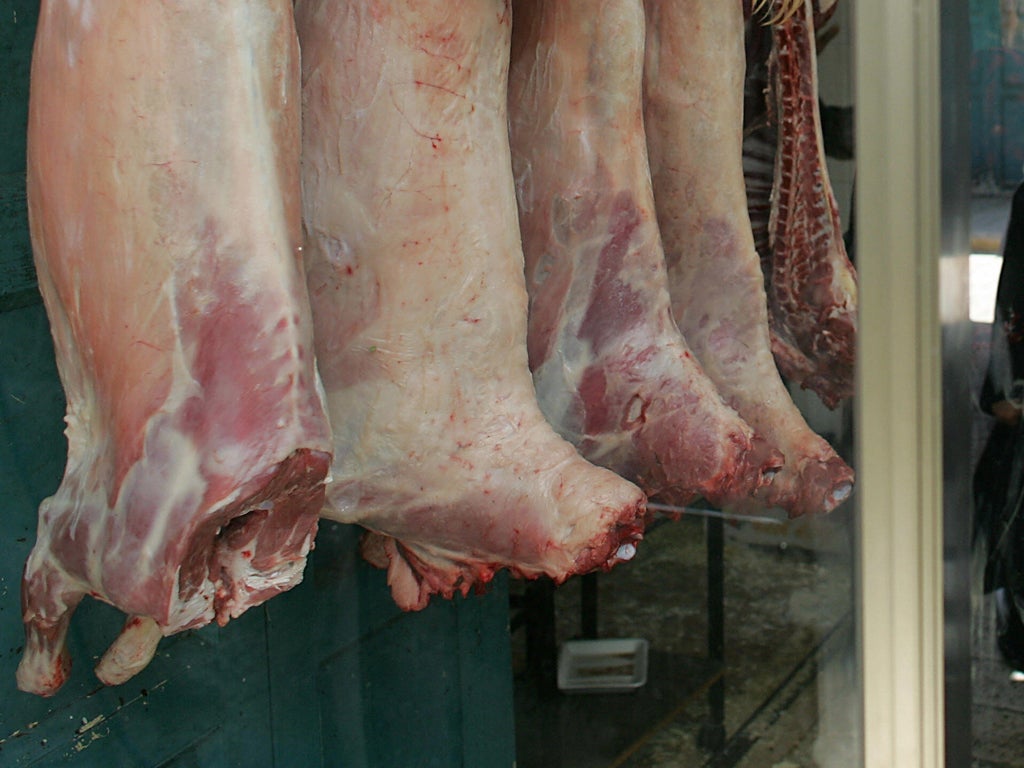
Denmark’s government has brought in a ban on the religious slaughter of animals for the production of halal and kosher meat, after years of campaigning from welfare activists.
The change to the law, announced last week and effective as of yesterday, has been called “anti-Semitism” by Jewish leaders and “a clear interference in religious freedom” by the non-profit group Danish Halal.
European regulations require animals to be stunned before they are slaughtered, but grants exemptions on religious grounds. For meat to be considered kosher under Jewish law or halal under Islamic law, the animal must be conscious when killed.
Yet defending his government’s decision to remove this exemption, the minister for agriculture and food Dan Jørgensen told Denmark’s TV2 that “animal rights come before religion”.
Commenting on the change, Israel’s deputy minister of religious services Rabbi Eli Ben Dahan told the Jewish Daily Forward: “European anti-Semitism is showing its true colours across Europe, and is even intensifying in the government institutions.”
Al Jazeera quoted the monitoring group Danish Halal, which launched a petition against the ban, as saying it was “a clear interference in religious freedom limiting the rights of Muslims and Jews to practice their religion in Denmark”.
The ban has divided opinions in the country, particularly after it recently made headlines for animal welfare policy after Copenhagen Zoo slaughtered the “surplus” young male giraffe Marius.
On Twitter, David Krikler (@davekriks) wrote: “In Denmark butchering a healthy giraffe in front of kids is cool but a kosher/halal chicken is illegal.”
Byakuya Ali-Hassan (@SirOthello) said it was “disgusting” that “the same country that slaughtered a giraffe in public to be fed to lions… is banning halal meat because of the procedures”.
Mogens Larsen (@Moq72), from Aalborg in Denmark, tweeted: “Denmark bans the religious slaughter of animals. Not even zoo lions are allowed a taste of halal giraffe.”
Last year politicians in Britain said they would not be outlawing religious slaughter despite “strong pressure” from the RSPCA, the National Secular Society and other activists.
A dog who was ‘left for dead’ with serious leg injuries is recovering at an RSPCA hospital.

Five-year-old Saluki Zach was found with serious injuries on Fambridge Road in Maldon earlier this month.

Zach suffered a broken leg and also had a nasty open wound. He will require surgery although vets hope to save the leg.

Police were also called to the scene after the driver of the car failed to stop following the accident.
On Tuesday, a law goes into effect that prohibits calling plant-based meat alternatives “meat.” The legislation is supposed to clear up shopper confusion. However, not everyone is on board. Wochit
On Tuesday, Missouri became the first state in the country to have a law on the books that prohibits food makers from using the word “meat” to refer to anything other than animal flesh.
This takes aim at manufacturers of what has been dubbed fake or nontraditional meat.
Clean meat – also known as lab-grown meat – is made of cultured animal tissue cells, while plant-based meat is generally from ingredients such as soy, tempeh and seitan.
The state law forbids “misrepresenting a product as meat that is not derived from harvested production livestock or poultry.” Violators may be fined $1,000 and imprisoned for a year.
A similar argument is unfolding on the federal level.
The meat-substitute market is expected to reach $7.5 billion-plus globally by 2025, up from close to $4.2 billion last year, according to Allied Market Research.
The Missouri Cattlemen’s Association, which worked to get the law passed, has cited shopper confusion and protecting local ranchers as reasons for the legislation.
“The big issue was marketing with integrity and … consumers knowing what they’re getting,” Missouri Cattlemen’s Association spokesman Mike Deering said. “There’s so much unknown about this.”
The bill was signed into law by then-governor Eric Greitens on June 1.
On Monday, the company that makes Tofurky filed an injunction in a Missouri federal court to prevent enforcement of the statute, alleging the state has received no complaints about consumers befuddled by the term “plant-based meats” and that preventing manufacturers from using the word is a violation of their First Amendment rights. Plus, it pointed out, “meat” also refers to the edible part of nuts and fruit.
The statute “prevents the sharing of truthful information and impedes competition,” according to documents filed in U.S. District Court for the Western District of Missouri. “The marketing and packaging of plant-based products reveals that plant-based food producers do not mislead consumers but instead distinguish their products from conventional meat products.”
The co-plaintiff is the Good Food Institute, a Washington, D.C.-based advocacy group.
Deering said he was surprised by the suit because the primary target of the law was lab-grown meat.
Tofurky’s main ingredient is the the first two syllables of its name – tofu.
“I have always envisioned Tofurky serving a greater purpose beyond the plate, acting as an engine for global change,” said Tofurky CEO Jaime Athos in a statement about the suit. “Using our privately-held position to extinguish threats to legal definitions of terms like “meat,” is one way we can further our mission to help reduce global dependence on animal agriculture; therefore, improving environmental sustainability, animal welfare and human health.”
In June, the U.S. Food and Drug Administration announced it would regulate lab-grown meat. Traditional animal proteins are the jurisdiction of the U.S. Department of Agriculture.
Ernest Baskin, an assistant professor of food marketing at St. Joseph’s University, said consumers use the word “meat,” when applied to nonanimal protein as a shortcut to understand how they eat the food they see on supermarket shelves.
“There’s a segment of consumers that doesn’t have to eat alternative products but wants to,” he said. “In those cases, putting those options together in front of consumers gives them the thought that ‘Hey, maybe these two are similar. Maybe I can substitute.’ “
Chili’s new Boss Burger contains nearly a day’s worth of calories and a week’s worth of guilt. Nathan Rousseau Smith shows us the 1/2 foot tall sandwich. Buzz60

JUL 17, 2018 — “It’s shameful that the practice of fur farming takes place in Ireland”: Cork Green Party calls on Minister for Agriculture to ban fur farming. Read more in the Cork.ie report –https://www.thecork.ie/2018/07/15/cork-green-party-want-to-stop-fur-farming-in-ireland/
ACTION ALERT
Please contact your TDs now and urge them to support Solidarity’s forthcoming “Ban Fur Farming” bill. Contact details for TDs can be found at https://www.oireachtas.ie/en/members/tds/?term=/ie/oireachtas/house/dail/32
Watch ICABS video footage showing the cruelty of fur farming
https://www.youtube.com/watch?v=BvX1O9GvsQ4
Email “Ban fur farming NOW” to Taoiseach Leo Varadkar and Agriculture Minister Michael Creed – Leo.Varadkar@oir.ie, michael.creed@oir.ie, taoiseach@taoiseach.gov.ie, AnimalHealthAndWelfareAct@agriculture.gov.ie
Tel: +353 (0)1 6194000 (Leo Varadkar)
Tel: 01-607 2000 or LoCall 1890-200510 (Michael Creed)
Tweet: @campaignforleo @creedcnw Ban fur farming NOW
Comment on Facebook:
https://www.facebook.com/campaignforleo/
https://www.facebook.com/michaelcreedtd
SAMPLE LETTER
Dear Taoiseach Leo Varadkar and Minister Michael Creed,
I support a total ban on fur farming and an immediate closure of Ireland’s fur farms.
In these hellholes, animals suffer a horrendous life of misery before being cruelly gassed to death. There is absolutely no justification for allowing this cruelty to continue.
Please ban fur farming now.
Yours sincerely,
[Name/Location]


 Exposing the Big Game